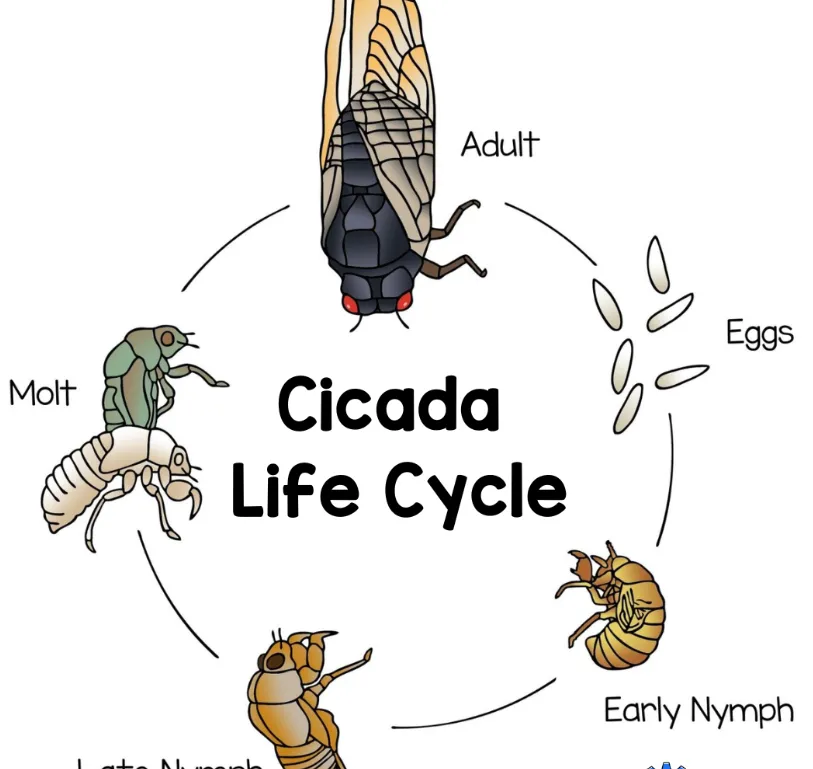
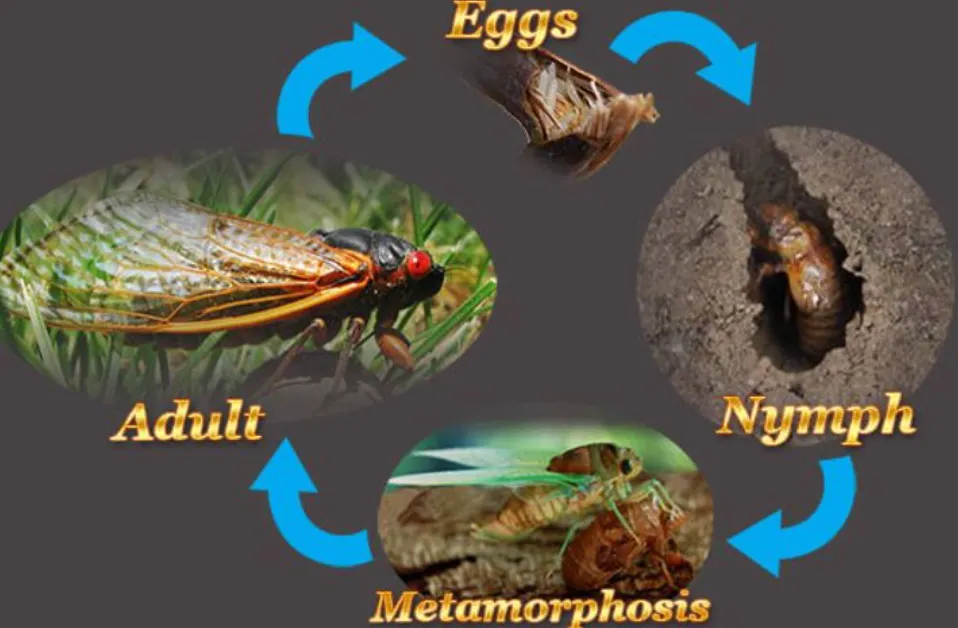
The life cycle of a cicada is one of the most fascinating and mysterious processes in the natural world. These unique insects, often known for their loud buzzing, spend most of their lives hidden underground before emerging in dramatic numbers. Whether you’ve seen a cicada shell clinging to a tree or heard their deafening chorus in summer, cicadas are truly remarkable.
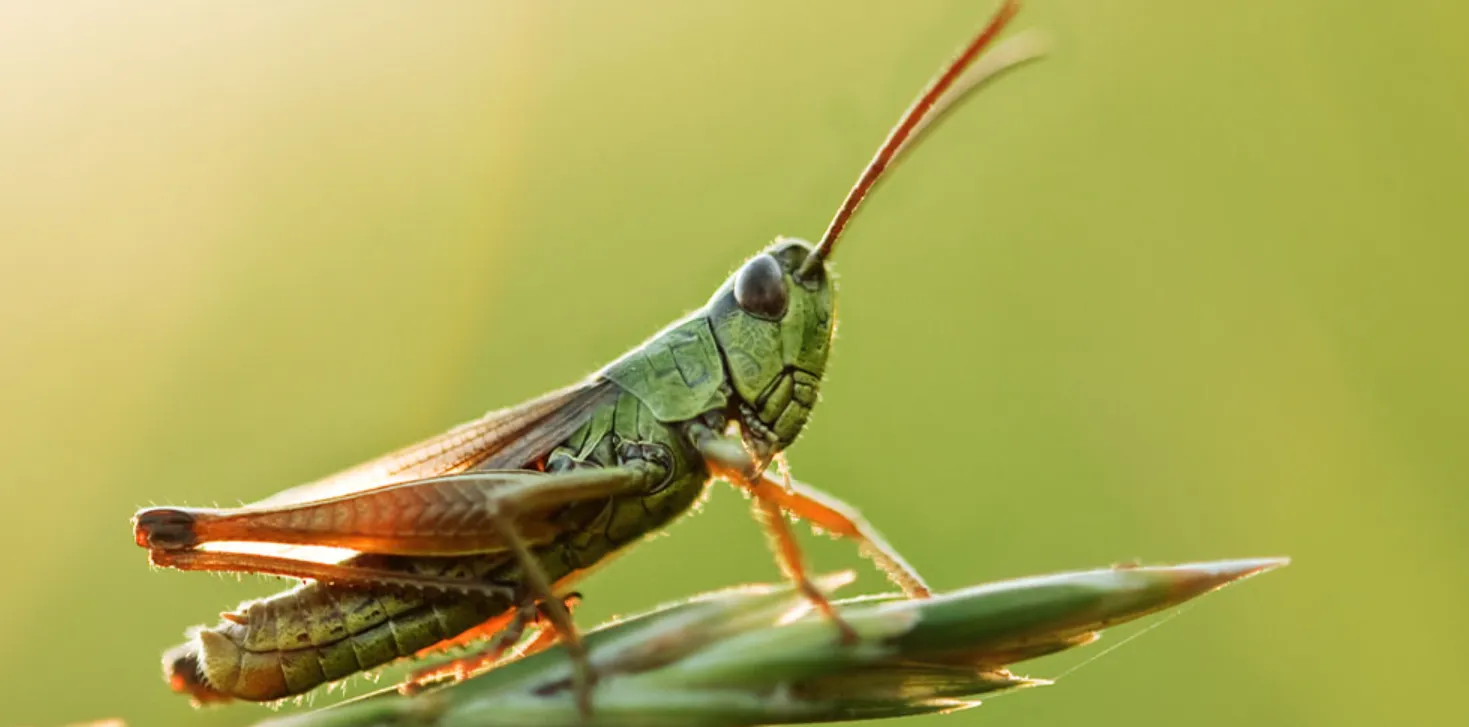
Cicadas are often confused with locusts, but they are entirely different insects with distinct behaviours and life cycles. Understanding the Cicada life cycle not only helps you appreciate nature but also reveals how these insects contribute to ecosystems.
Quick Answers (Most Common Questions)
1. How long do cicadas live?
Cicadas can live 2 to 17 years, depending on the species, with most of that time spent underground.
2. Why are cicadas so loud?
Male cicadas produce loud sounds to attract females using specialised organs called tymbals.
3. Are cicadas harmful?
No, cicadas are generally harmless to humans but may cause minor damage to young plants.
Quick Life Cycle Table
| Stage | Duration | Description |
| Egg Stage | 6–10 weeks | Eggs laid in tree branches |
| Nymph Stage | 2–17 years | Lives underground, feeding on roots |
| Emergence | Few weeks | Nymphs emerge and shed skin |
| Adult Stage | 2–6 weeks | Mating, singing, reproduction |
| Death | After the mating cycle | Life cycle completes |
The History Of Their Scientific Naming
The scientific classification of cicadas has evolved over centuries. Here are key highlights:
- Cicadas belong to the order Hemiptera, known as “true bugs.”
- They are classified under the superfamily Cicadoidea.
- The word “cicada” comes from Latin, meaning “tree cricket.”
- Early naturalists, such as Carl Linnaeus, played a major role in naming cicadas.
- Periodical cicadas are classified under the genus Magicicada, known for their 13- and 17-year cycles.
- Annual cicadas belong to genera such as Neotibicen.
- Scientific naming helps differentiate cicadas from locusts, which belong to a completely different order (Orthoptera).
This classification system helps scientists study their behaviour, evolution, and ecological role more effectively.
Their Evolution And Their Origin
Cicadas have an ancient lineage that dates back over 200 million years, making them one of the oldest insect groups still alive today.
Fossil records show that cicadas existed during the Jurassic period, living alongside dinosaurs. Over time, they adapted to changing climates and environments, developing their unique underground life cycle.
One of the most fascinating evolutionary traits is their long period of dormancy. Periodical cicadas evolved 13- and 17-year cycles as a survival strategy. These prime-number cycles help avoid synchronisation with predators, thereby reducing the risk of mass predation.
Their ability to remain underground for years is supported by:
- Slow metabolism
- Efficient nutrient absorption from tree roots
- Natural camouflage during emergence
Additionally, cicadas evolved their famous sound-producing mechanism. Male cicadas developed tymbals, which allow them to produce some of the loudest insect sounds in the world—up to 100 decibels.
Geographically, cicadas are found worldwide, especially in warm regions like Asia, Africa, and North America. Their evolutionary success lies in their adaptability, resilience, and unique reproductive timing.
Their main food and its collection process
Cicadas primarily feed on plant fluids, making their diet simple yet effective.
Main Food Sources
- Tree sap (xylem fluid)
- Root juices underground
- Fluids from shrubs and grasses
Collection Process
- Cicadas use a specialised mouthpart called a proboscis.
- This needle-like structure penetrates plant tissues.
- They extract sap directly from roots or branches.
- Nymphs feed underground, while adults feed above ground.
Key Characteristics of Feeding
- They do not chew leaves like other insects.
- Feeding causes minimal damage to mature plants.
- Excess fluid is excreted as a watery substance sometimes called “cicada rain.”
Their feeding process supports their long underground life by providing consistent hydration and nutrients.
Their life cycle and ability to survive in nature
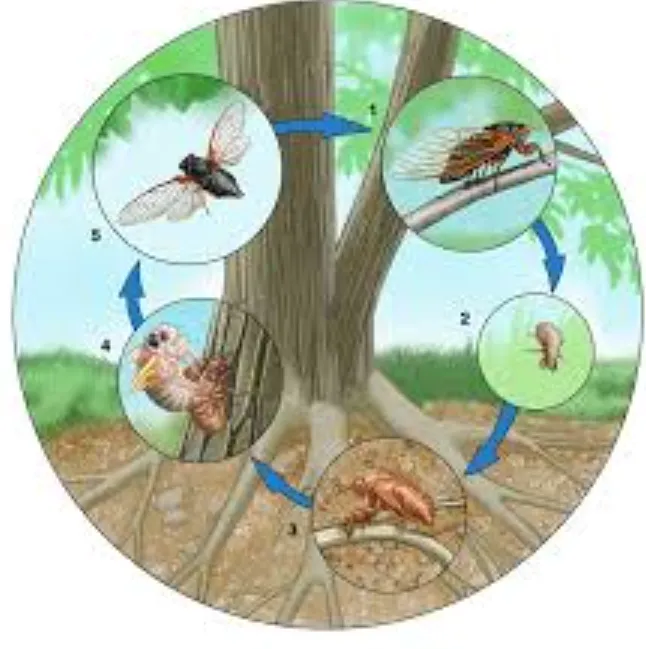
Egg Stage
Female cicadas lay eggs in small slits in tree branches. After a few weeks, the eggs hatch into tiny nymphs.
Nymph Stage
This is the longest phase. Nymphs fall to the ground and burrow into the soil.
- They feed on root fluids.
- They grow slowly over the years.
- They moult multiple times underground.
Emergence Stage
When soil temperature reaches about 18°C (64°F), nymphs emerge.
- They climb trees or surfaces.
- Shed their outer skin (forming the cicada shell).
Adult Stage
Adults live only a few weeks but are highly active.
- Males produce loud sounds to attract mates.
- Females lay eggs, restarting the cycle.
Survival Strategies
- Mass emergence overwhelms predators.
- Underground living protects them from threats.
- Camouflage and timing ensure survival.
Their Reproductive Process and raising their children
Cicadas follow a highly synchronised reproductive process.
Reproductive Process
- Male cicadas produce loud mating calls.
- Females respond to specific sounds.
- Mating occurs shortly after emergence.
Egg Laying
- Females use ovipositors to cut into branches.
- Each female lays hundreds of eggs.
Raising Offspring
- No parental care is provided.
- Eggs hatch independently.
- Nymphs drop to the ground and burrow.
Unique Traits
- Synchronisation increases survival rates.
- Massive numbers reduce predator impact.
- Genetic timing ensures species continuity.
The importance of them in this Ecosystem
Soil Health Improvement
Cicada nymphs aerate the soil, improving root growth and water absorption.
Nutrient Recycling
When cicadas die, their bodies decompose, enriching the soil with nutrients.
Food Source for Animals
Cicadas provide food for:
- Birds
- Mammals
- Reptiles
Plant Growth Support
Their feeding stimulates plant responses that can enhance growth.
Biodiversity Balance
Cicadas play a role in maintaining ecological balance by supporting food chains.
Important Things That You Need To Know
Understanding cicadas also means knowing key related concepts and differences.
Cicada vs Locust
- Cicadas are Hemiptera, while locusts are Orthoptera.
- Locusts swarm and destroy crops; cicadas rarely do.
Cicada Sound
The iconic cicada sound is produced by males using tymbals. It can reach extremely high volumes and is essential for mating.
Cicada Bug
The term cicada bug is informal. Scientifically, cicadas are not typical bugs but part of a specialised insect group.
Cicada Shell
The empty cicada shell (exoskeleton) is left behind after moulting and is often found attached to trees.
Cicada Life Cycle
The cicada life cycle is unique for its long underground phase and synchronised emergence.
These facts help distinguish cicadas from other insects and highlight their uniqueness in nature.
What to do to protect them in nature and save the system for the future
Protecting cicadas is essential for maintaining ecological balance.
- Preserve natural habitats by avoiding deforestation.
- Reduce pesticide use to prevent harming cicadas.
- Protect young trees during cicada emergence periods.
- Encourage biodiversity in gardens and forests.
- Educate communities about the importance of cicadas.
- Support conservation programs focused on insect life.
- Avoid unnecessary disturbance during emergence cycles.
- Plant native trees to support cicada populations.
These actions ensure that cicadas continue to thrive and support ecosystems.
Frequently Asked Questions (FAQs)
1. What is the life cycle of a cicada?
It includes egg, nymph, emergence, adult, and death stages.
2. Why do cicadas stay underground for so long?
To grow safely and avoid predators.
3. What triggers cicadas to emerge?
Soil temperature is reaching around 18°C.
4. Do cicadas bite humans?
No, cicadas are harmless.
5. What is the difference between cicadas and locusts?
Cicadas don’t swarm or destroy crops like locusts.
6. Why do cicadas leave shells behind?
They shed their exoskeleton during moulting.
7. How loud is a cicada’s sound?
Up to 100 decibels, similar to a lawnmower.
8. Are cicadas beneficial?
Yes, they improve soil health and support ecosystems.
Conclusion
The life cycle of a cicada is a remarkable example of nature’s complexity and resilience. From spending years underground as nymphs to emerging in massive numbers for a brief but intense adult life, cicadas showcase one of the most unique survival strategies in the insect world.
Their role goes far beyond their loud summer presence. Cicadas contribute to soil health, nutrient cycling, and the food chain, making them vital to ecosystems. Understanding their behaviour, evolution, and ecological importance helps us appreciate their value and encourages conservation efforts.
By protecting their habitats and promoting awareness, we can ensure that future generations continue to witness the fascinating journey of cicadas. These insects are not just seasonal visitors—they are essential contributors to the balance of nature.
Also Read: life cycle of a sunflower