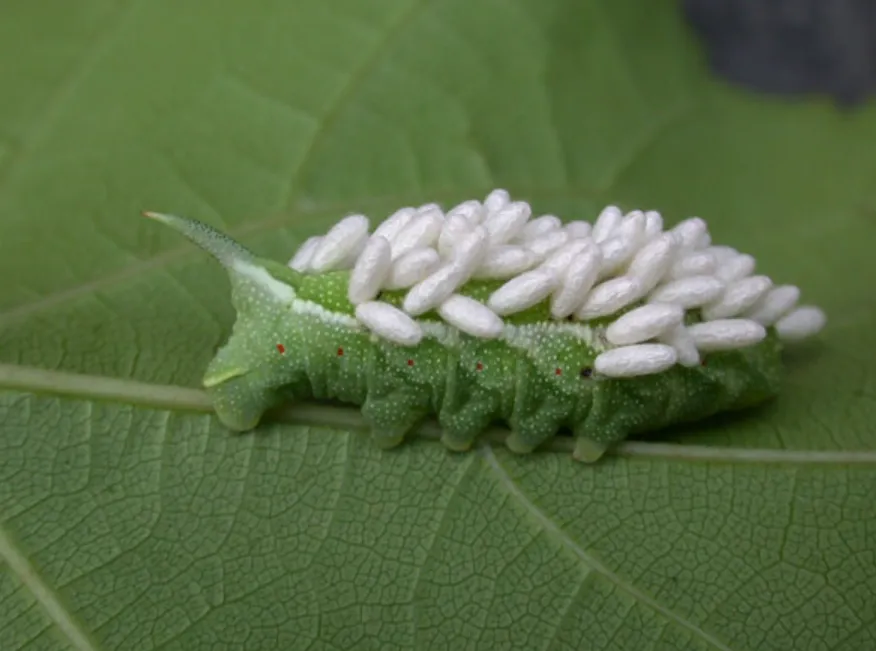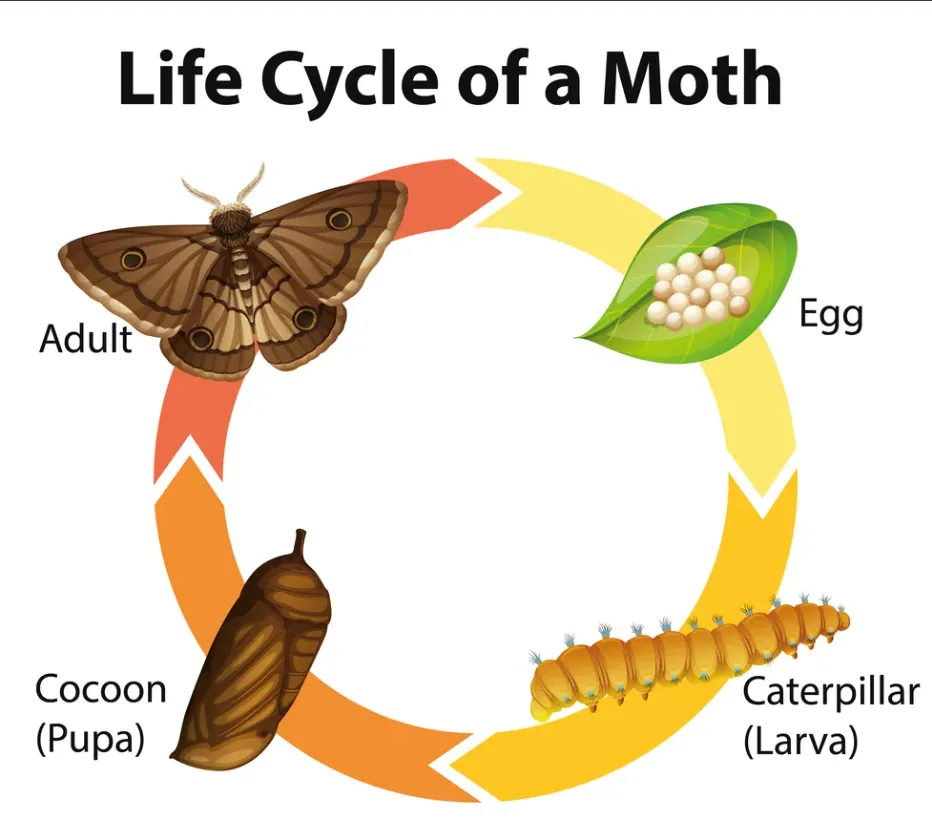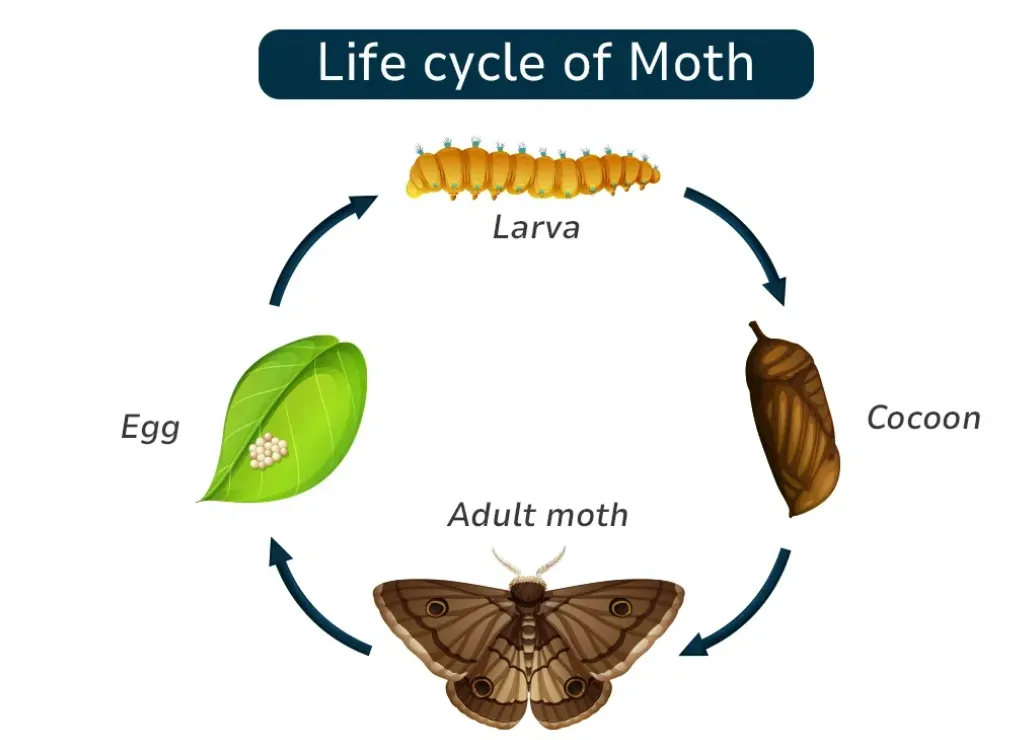
Food moths are small stored-product moths that commonly infest dry foods such as flour, rice, cereal, pasta, spices, nuts, dried fruit, bird seed, and dog food. The most common household food moth is the Indianmeal moth, scientifically known as Plodia interpunctella. It is also called a pantry moth, grain moth, or flour moth. Adult moths are usually noticed flying around kitchens, cupboards, food shelves, pet food storage areas, or grain stores.
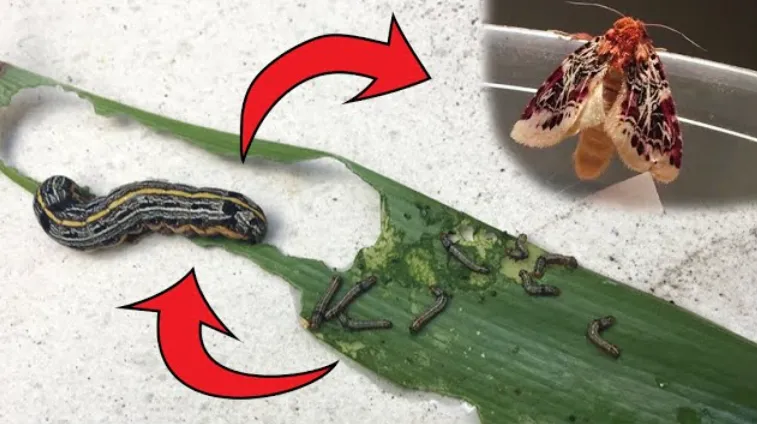
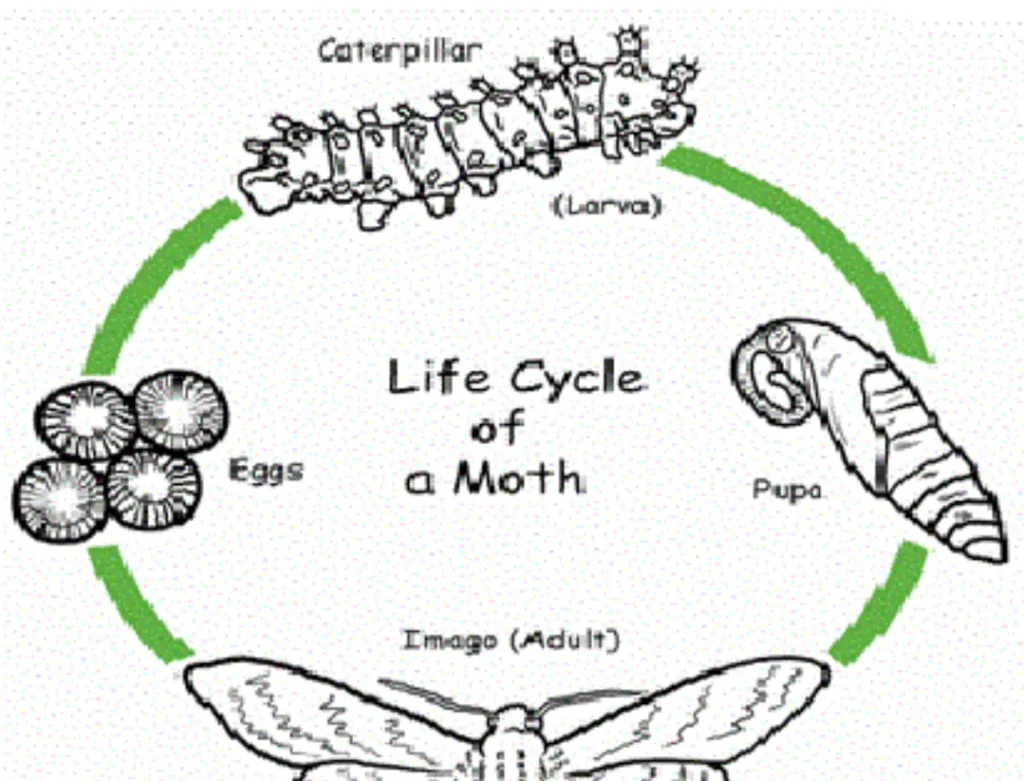
The food moth’s life cycle has four main stages: egg, larva, pupa, and adult moth. The larval stage is the most damaging because larvae feed directly on stored food and leave behind silk webbing, cast skins, and waste. Adult moths do not usually eat the stored food; their main role is mating and laying eggs on or near food sources. Female pantry moths can lay many eggs on dry foods, which is why a small, unnoticed infestation can quickly escalate into a larger problem.
Food moths are not a sign of dirty housekeeping. In many cases, they enter homes through already-infested grocery items, pet food, birdseed, bulk grains, or poorly sealed packages. Their larvae can also chew through thin cardboard and plastic packaging, which makes airtight storage very important.
Quick Answers: Most Common Questions
Q: What is the full food moth’s life cycle?
A: The full food moth’s life cycle includes egg, larva, pupa, and adult moth. The larva is the feeding and damaging stage.
Q: How long does the food moth’s life cycle take?
A: Under warm conditions, development can be completed in about a month, but in cooler or less suitable conditions, it may take several months.
Q: Are food moths harmful to humans?
A: Food moths are not known as dangerous biting insects, but they contaminate stored foods with larvae, webbing, and waste, so infested food should be discarded.
Quick Life Cycle Table
| Stage | What Happens | Common Location | Why It Matters |
| Egg | Females lay eggs on or near dry food | Flour, grains, cereal, pet food | Hard to see; it starts an infestation |
| Larva | Caterpillar feeds and makes webbing | Inside food packages | Main damaging stage |
| Pupa | Larva forms a cocoon and transforms | Shelf cracks, corners, and packaging folds | Hidden stage; can survive cleaning if missed |
| Adult | Moth emerges, mates, and lays eggs | Pantry, kitchen, storage room | Visible sign of infestation |
Important Things That You Need To Know
Understanding related search terms helps explain the real household problem behind the food moth’s life cycle. Many people search for information on food moths, how to get rid of food moths, bird food moths, dog food moths, and the difference between clothes and food moths, because the same pest can appear in different storage areas.
Food moths usually mean pantry moths that infest dry foods. They are different from clothes moths because pantry moth larvae feed on stored food, while clothes moth larvae feed on animal-based fibers such as wool, fur, silk, or feathers. Clothes moths also prefer darker, undisturbed places, while pantry moths are often seen flying near kitchens and food cupboards.
People also search for bird food moths because bird seed is a common source of infestation. Seeds, cracked corn, and grain-based bird feed can carry eggs or larvae before they enter the home. Dog food moths are also common because dry pet food often contains grains, fats, and protein-rich ingredients that can support larval feeding.
The phrase “food moths: how to get rid of them” is important because killing only the flying adults is not enough. The real solution is to find the infested food, discard it, vacuum shelves and cracks, clean storage areas, and store new dry foods in strong airtight containers. Traps can help monitor adults, but they cannot remove larvae hidden inside food.
The History of Their Scientific Naming, Evolution, and Origin
Scientific Name and Classification
The most common household food moth is the Indian meal moth, scientifically known as Plodia interpunctella. It belongs to the family Pyralidae and the order Lepidoptera, the same order that includes butterflies and moths. Hübner described the species in the early nineteenth century, and Guenée later established the genus Plodia.
Why It Is Called Indianmeal Moth
The name Indianmeal moth does not mean the insect comes from India. The common name comes from “Indian meal,” an old term used for maize or cornmeal in North America. The moth received attention because its larvae were found infesting cornmeal and other stored-grain products.
Evolution and Origin
Like many stored-product insects, food moths became successful because they adapted to dry seeds, grains, nuts, and stored plant materials. Human agriculture, grain storage, trade, and packaged foods created ideal artificial habitats for them. Today, Plodia interpunctella is considered a worldwide stored-product pest because it can survive in homes, grocery stores, warehouses, mills, and food-processing facilities.
Their Reproductive Process, Giving Birth And Rising Their Children
Mating and Egg Laying
Food moths do not give birth to live young. They reproduce by laying eggs. After adult moths emerge from the pupal stage, males and females mate. The female then searches for suitable dry food for her larvae to feed on after hatching.
A female Indianmeal moth can lay hundreds of eggs during her adult life, usually directly on or near stored food. Eggs may be laid in cracks of packaging, folds of bags, grain dust, cereal crumbs, or pet food containers.
No Parental Care
Food moths do not raise their young. Once the eggs are laid, the female no longer feeds, protects, or guides the larvae. Survival depends on whether the eggs are placed close to a suitable food source.
This is why pantry moths are successful in homes. If eggs are laid inside a bag of flour, rice, bird seed, cereal, or dog food, the newly hatched larvae do not need to travel far. They begin feeding almost immediately.
Larvae Grow Independently
After hatching, the larvae behave like tiny caterpillars. They feed, move through food, and spin silk webbing. As they grow, they pass through several larval stages before leaving the food source or moving to a protected place to pupate.
This independent larval growth is the main reason infestations are difficult to remove. Adult moths are easy to see, but eggs and larvae may remain hidden inside food packages, shelf corners, or packaging seams.
Stages of the Food Moths’ Life Cycle
Stage 1: Egg
The egg stage begins when the female moth lays tiny eggs on or near food. These eggs are very small and difficult to notice with the naked eye. They may be hidden in grain dust, flour residue, cereal crumbs, nut bags, pet food, or bird seed.
Depending on temperature and food conditions, eggs may hatch within a few days to about two weeks. Warm storage areas usually speed up development. This is why pantry moth infestations often become more active in warm kitchens, summer months, or heated storage rooms.
Stage 2: Larva
The larval stage is the most important in the food moth’s life cycle. Larvae are small caterpillar-like insects that feed on dry stored food. They may look cream, white, pinkish, greenish, or light brown, depending on the food they are eating.
Larvae create silk webbing as they move and feed. This webbing can make food appear clumped, sticky, or dirty. If you see webbing inside cereal, flour, rice, nuts, or pet food, it is a strong sign of a food moth infestation.
Stage 3: Pupa
When larvae are fully grown, they stop feeding and search for a safe place to transform. They may pupate inside food, under shelves, in cracks, behind labels, inside box folds, or in cupboard corners.
The pupal stage is a hidden stage of transformation. Inside the cocoon, the larva changes into an adult moth. This stage matters because even after throwing away infested food, pupae left in cracks can later produce new adult moths.
Stage 4: Adult Moth
The adult stage is the flying stage. Adult food moths are usually small, narrow-winged moths. Indianmeal moths often have wings that appear pale near the body and darker copper-brown toward the outer part.
Adults are mostly responsible for mating and egg laying. Seeing adult moths flying in the kitchen usually means larvae may already be feeding somewhere nearby. Adult traps may reduce mating, but they do not replace deep cleaning and food inspection.
Their main diet, food sources, and collection process are explained
Main Diet of Food Moths
The main diet of food moth larvae is dry stored food. They prefer grain-based and plant-based products because these foods are dry, nutrient-rich, and easy for larvae to tunnel through.
Common foods include:
- Flour
- Rice
- Cereal
- Pasta
- Oats
- Cornmeal
- Nuts
- Seeds
- Dried fruit
- Spices
- Chocolate
- Dry pet food
- Bird seed
The Natural History Museum notes that Indianmeal moth larvae commonly feed on dried food products, especially cereals, nuts, seeds, and dried fruit.
Food Sources in Homes
In homes, food moths often begin in one forgotten package. A half-used bag of flour, an old cereal box, a birdseed bag, or an open dog food sack can support the whole life cycle.
They are also found in bulk foods because bulk storage may expose products to eggs or larvae before purchase. Pantries with many open packages are especially vulnerable.
How They Collect and Consume Food
Food moths do not “collect” food like ants or bees. The larvae live inside or near the food source and feed directly from it. As they eat, they leave silk threads, waste particles, and small tunnels through the food.
Adult moths do not need to collect food for their young. Their strategy is simple: lay eggs close to a suitable food source so the larvae can feed immediately after hatching.
How Long Does A Food Moth’s Life Cycle Last
The lifespan of food moths depends strongly on temperature, humidity, food quality, and storage conditions. In warm indoor environments with ample dry food, the life cycle can progress quickly. In cooler conditions, development slows down.
Important lifespan points include:
- Egg stage: Eggs may hatch within a few days to around two weeks when conditions are suitable.
- Larval stage: It can last several weeks. This is the longest and most damaging part of the life cycle because larvae actively feed on stored food.
- Pupal stage: The pupal stage often lasts around one to two weeks, but timing can vary depending on temperature and environment.
- Adult stage: Adult moths usually live long enough to mate and lay eggs. Their main biological purpose is reproduction, not feeding.
- Full life cycle: Under warm, favorable conditions, development may be completed in about a month. Under cooler or less favorable conditions, the cycle can stretch for several months.
- Temperature effect: Warm kitchens, heated cupboards, and poorly ventilated storage rooms can help food moths reproduce faster.
- Food effect: High-quality foods such as grains, nuts, and seeds, as well as pet food, can support better larval growth.
- Hidden survival: Even if adults disappear, eggs, larvae, or pupae may remain hidden. This is why infestations can return after a few weeks.
- Multiple generations: In indoor spaces, food moths can produce repeated generations if food sources remain available.
- Control timing: Cleaning once may not solve the problem if pupae are hidden in cracks. Rechecking shelves for several weeks is often necessary.
In short, a food moth does not live long as an adult, but the whole infestation can continue for months if the larval food source is not removed.
Food Moths Life Cycle Lifespan in the Wild vs. in Captivity
In the Wild
In nature, food moths and related moth species live around seeds, dried plant matter, fallen fruits, bird nests, animal nests, and natural grain-like materials. Their development is affected by weather, predators, food availability, and seasonal temperature changes.
Wild conditions are less stable than kitchen cupboards. Rain, cold, parasites, birds, spiders, and other insects can reduce survival. Food may also dry out, decay, or disappear.
In Homes and Storage Areas
A pantry, warehouse, grain bin, or pet food storage room can function as a protected, “captivity-like” environment. There is shelter, steady temperature, fewer predators, and a constant food supply.
This is why food moths often do better in human storage spaces than in open natural environments. Stored food creates an artificial habitat where larvae can feed without many natural enemies.
In Laboratory or Controlled Conditions
In controlled insect-rearing settings, moths can be studied under stable temperatures, known diets, and protected containers. Such conditions help researchers understand egg laying, development, mating, and pest control methods.
For homeowners, the key lesson is simple: when food is stored in weak packaging, a pantry can become the perfect breeding site.
Importance of the Food Moths’ Life Cycle in this Ecosystem
Part of the Food Web
Although food moths are pests in homes, moths are still part of the wider ecosystem. In natural settings, moths and their larvae can provide food for birds, spiders, beetles, parasitic wasps, reptiles, and small mammals.
The food moths’ life cycle supports this food web because different predators can eat each stage. Tiny parasitoids may attack eggsTiny parasitoids may attack eggs, predatory insects may eat larvaepredatory insects may eat larvae, and birds or bats may consume adults.
Natural Decomposition Role
Larvae that feed on dried plant material help break down seeds, grains, and organic matter. This role is not welcome in a pantry, but in nature, it contributes to nutrient recycling.
They help convert stored plant material into biomass that becomes available to other organisms through predation and decomposition.
Scientific and Pest Management Value
Food moths are also important in science because they help researchers study stored-product pest behavior, packaging resistance, pheromone traps, biological control, and insect development.
Understanding the food moth’s life cycle helps reduce food waste, protect stored products, and improve safe pest management without unnecessary chemical use.
What to do to protect them in nature and save the system for the future
Protect Natural Moth Diversity
- Do not treat every moth as harmful. Many moth species are pollinators or food sources for wildlife.
- Support native plants that provide habitat for different moth species.
- Avoid destroying outdoor moth habitats unnecessarily.
Reduce Unnecessary Pesticide Use
- Avoid spraying broad-spectrum insecticides in gardens unless necessary.
- Use targeted pest management indoors instead of heavy chemical use.
- Never spray insecticides directly on food shelves or stored food.
Keep Pantry Control Separate from Nature Protection
- Food moths inside the pantry should be controlled because they contaminate food.
- Outdoor moth populations should be respected as part of biodiversity.
- The goal is not to protect pantry infestations, but to protect the ecological balance outside.
Support Birds, Bats, and Natural Predators
- Birds, bats, spiders, and parasitic insects help control moth populations naturally.
- Planting native shrubs and reducing nighttime light pollution can support these predators.
- A balanced ecosystem naturally reduces pest outbreaks.
Prevent Human-Caused Spread
- Store grains, seeds, pet food, and bird seed properly.
- Do not dump infested pantry food outdoors, where it may spread pests.
- Seal waste before disposal and clean storage areas responsibly.
Fun & Interesting Facts About Food Moths’ Life Cycle
- Food moths are often noticed as adults, but the larvae cause the real damage.
- Adult pantry moths may appear far away from the original food source because mature larvae can crawl away before pupating.
- The Indianmeal moth is one of the easiest stored-product moths to identify because of its two-toned wing pattern.
- Larvae can leave silk webbing inside food, making grains or flour look clumped.
- A pantry moth infestation can begin from a single contaminated food package.
- Bird food moths are common because bird seed often contains grains and seeds that larvae can eat.
- Dog food moths can appear when dry pet food is stored in open bags or thin plastic packaging.
- Pantry moth larvae may chew through weak packaging, including thin cardboard and soft plastic.
- Seeing one moth does not always mean a major infestation, but it is a signal to inspect dry foods carefully.
- Pheromone traps mainly catch male moths, so they are useful for monitoring but cannot remove eggs or larvae on their own.
- Freezing newly bought grains, flour, seeds, or pet food can help reduce the chance of hidden eggs or larvae surviving.
- Airtight glass, metal, or strong plastic containers are much better than paper bags or thin cardboard boxes.
Frequently Asked Questions (FAQs)
Q: What are food moths?
A: Food moths are small stored-product moths that infest dry foods such as flour, cereal, rice, nuts, seeds, dried fruit, spices, bird seed, and dry pet food. The most common household pest is the Indian meal moth.
Q: How do I know if I have food moths?
A: Common signs include small moths flying in the kitchen, larvae crawling in food, silk webbing inside packages, clumped grains, damaged packaging, or tiny cocoons near shelves and corners.
Q: How to get rid of food moths naturally?
A: Find and discard infested food, vacuum shelves and cracks, clean cupboards, wash containers, and store all dry foods in airtight containers. Traps can help monitor adult moths, but cleaning and removing infested food are the most important steps.
Q: What is the difference between clothes and food moths?
A: Food moths infest dry stored food, while clothes moths infest fabrics made from animal fibers such as wool, fur, feathers, and silk. Clothes moths usually prefer dark closets, while food moths are often seen near kitchens and pantries.
Q: Can food moths come from dog food or bird seed?
A: Yes. Dog food moths and bird food moths are common because dry pet food and bird seed contain grains, seeds, and other ingredients that support moth larvae. Store them in sealed containers and inspect them before bringing large quantities indoors.
Conclusion
The food moth’s life cycle is simple but highly effective. These insects move through four stages: egg, larva, pupa, and adult moth. The larval stage is the most damaging because larvae feed on dry stored foods and contaminate them with webbing and waste. Adult moths are the visible warning sign, but the hidden eggs, larvae, and pupae are the real reason infestations continue.
To manage food moths, focus on the source. Inspect dry foods, remove infested items, clean shelves deeply, and store grains, flour, cereal, nuts, pet food, and bird seed in airtight containers. At the same time, remember that moths in nature have ecological value as food for wildlife and part of nutrient recycling. The best approach is balanced: control pantry infestations safely while protecting natural moth diversity outdoors.
Also Read: dogs life cycle