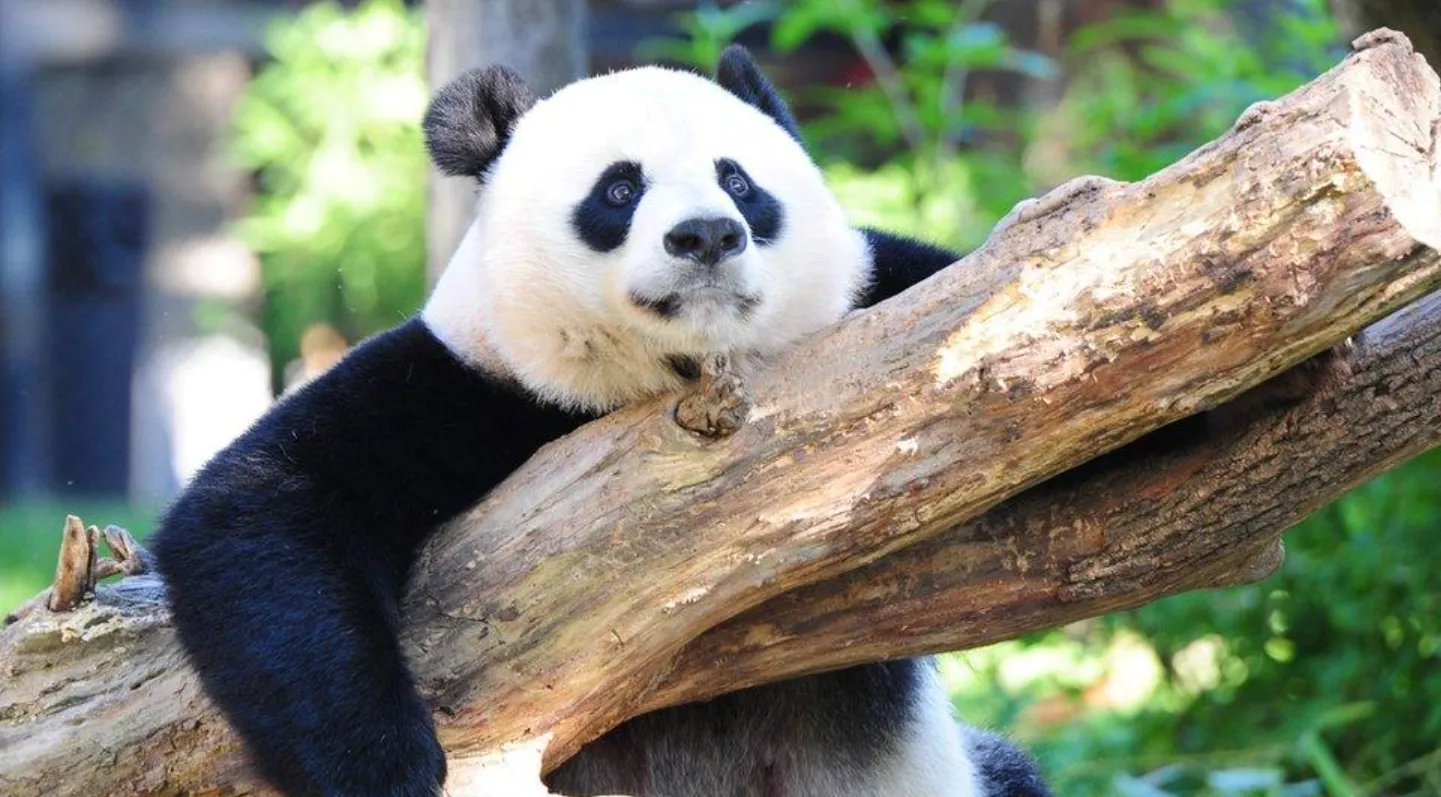
The panda’s life cycle is one of nature’s most surprising stories. A full-grown giant panda looks strong, round, and calm, but its life begins in a very fragile way. A newborn panda cub is tiny, blind, pink, and completely dependent on its mother. Over time, that helpless cub grows into a powerful bamboo-eating bear that can climb trees, mark territory, survive cold mountain forests, and play an important role in China’s bamboo ecosystem.
Today, the giant panda is still a symbol of wildlife conservation. Its status improved from “Endangered” to “Vulnerable,” but that does not mean pandas are completely safe. Current conservation information still places wild numbers at roughly fewer than 1,900 individuals, with habitat loss and forest fragmentation remaining serious threats.
Pandas live mainly in the mountain forests of central and southwestern China. Their world depends on bamboo, cool forests, clean water, and quiet spaces where mothers can raise cubs. Understanding the panda life cycle helps us understand why every stage of their survival matters.
Q: How long is the life cycle of the panda?
A: A panda usually lives around 15–20 years in the wild, though pandas in human care may live close to 30 years or more.
Q: What is the first stage of a panda’s life cycle?
A: The first stage is the newborn cub stage. A cub is born blind, weak, and very small, so it needs constant warmth, milk, and protection from its mother.
Q: What do pandas eat during their life cycle?
A: Young cubs first drink milk. Later, they begin eating bamboo. Adult giant pandas eat mostly bamboo, which makes up about 90–99% of their diet.
Quick Life Cycle Table
| Life Cycle Stage | Approximate Age | Main Features | Survival Needs |
| Newborn Cub | Birth to 2 months | Pink, blind, tiny, fully dependent on mother | Warmth, milk, protection |
| Growing Cub | 2 to 6 months | Fur pattern develops, begins moving and exploring | Mother’s care, safe den, milk |
| Young Panda | 6 to 18 months | Starts tasting bamboo but still relies on the mother | Learning, climbing, and feeding practice |
| Weaning Stage | 18 to 24 months | Becomes more independent and eats more solid food | Bamboo access, safe habitat |
| Juvenile Panda | 2 to 4 years | Lives separately, learns the territory and feeding habits | Bamboo forest, water, shelter |
| Adult Panda | 4 to 8 years onward | Reaches breeding age and lives mostly alone | Territory, mating chance, bamboo |
| Mature/Senior Panda | 15+ years | Slower movement, lower breeding ability | Stable food, low disturbance |
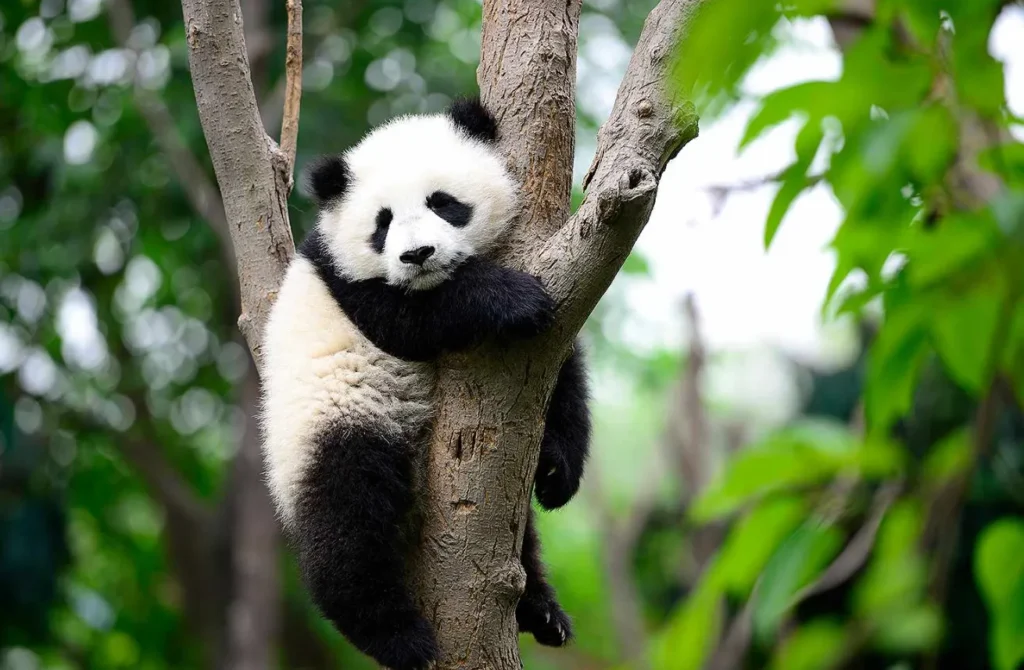
Important Things That You Need To Know
When people search for the life cycle of the panda, they may also search for words like panda, giant panda, red panda, panda drawing, and Bored Panda. These terms do not all mean the same thing, so it is useful to understand them clearly.
The word panda usually refers to the giant panda, the black-and-white bear from China. This is the animal most people imagine when they think about bamboo forests, conservation, and cute cubs. The giant panda belongs to the bear family and is known scientifically as Ailuropoda melanoleuca.
The red panda is different. It is smaller, reddish-brown, tree-loving, and belongs to a different family. Red pandas also eat bamboo, but they are not baby giant pandas. They are their own species and are listed as endangered. Their bamboo-based diet and mountain forest habitat sometimes make people confuse them with giant pandas.
A panda drawing is another common search term because pandas are popular in school projects, wildlife posters, and children’s learning materials. Their round face, black eye patches, and simple body shape make them easy to draw.
Bored Panda, however, is not an animal term. It is commonly known as a media and entertainment platform name. So, when writing or learning about panda biology, it is better to focus on the animal’s meaning rather than unrelated search results.
The History of Their Scientific Naming
The scientific name of the giant panda is Ailuropoda melanoleuca. This name helps scientists identify the species clearly, regardless of the language people speak.
Here is the naming history in simple points:
- Ailuropoda comes from Greek roots often understood as “cat-foot” or “cat-like foot.” This refers to the panda’s unusual paw structure.
- Melanoleuca means black and white, which describes the panda’s famous coat.
- The giant panda was scientifically described in the 19th century. The name became important because early scientists debated whether pandas were more closely related to bears, raccoons, or red pandas.
- Modern research places the giant panda in the bear family, Ursidae. Britannica also identifies the giant panda as a bear species living in the bamboo forests of central China.
- The red panda was described earlier than the giant panda, which is why some older writing used “panda” for the red panda first.
This naming history matters because common names can confuse people. Scientific names maintain identity and precision.
Their Evolution And Their Origin
The giant panda has a long evolutionary story. Although it eats mostly bamboo today, it belongs to the order Carnivora, the same broad group that includes bears, cats, dogs, and other meat-eating mammals. The strange part is that pandas evolved into bamboo specialists while keeping many features of their carnivore ancestry.
Their ancestors were not always strict bamboo eaters. Over millions of years, pandas adapted to China’s mountain forests, where bamboo was abundant and available year-round. Fossil evidence suggests pandas have relied strongly on bamboo for millions of years. Britannica notes that fossilized dental remains indicate that the giant panda had adopted bamboo as its main food source at least 3 million years ago.
One of their most famous adaptations is the pseudo-thumb. This is not a true thumb like humans have. It is an enlarged wrist bone that helps pandas hold bamboo stalks while eating. San Diego Zoo explains that pandas use this wrist bone with their five digits to grip bamboo, peel it, and bring it toward the mouth.
Their skulls, jaw muscles, and large molars also changed over time. These features help them crush hard bamboo stems. Still, their digestive systems are not as efficient as a cow’s or a deer’s. Because bamboo gives limited energy, pandas must eat for many hours each day.
The panda’s origin is tied closely to the mountain forests of China. Today, they live mainly in Sichuan, Shaanxi, and Gansu provinces, where cool forests, bamboo understory, and water sources support their survival.
Their main food and its collection process
The main food of the giant panda is bamboo. Even though pandas are bears, bamboo makes up nearly all of their daily diet. Depending on the part of the plant and season, an adult panda may eat leaves, shoots, and stems.
Pandas do not collect food the way humans collect crops. Instead, they move through their forest habitat and choose bamboo based on freshness, season, and nutrition.
Key points about their food and feeding process:
- Bamboo shoots are often preferred when available because they are softer and more nutritious.
- Bamboo leaves are eaten by stripping them from the stem and gathering them into the mouth.
- Bamboo stems are harder, so pandas use strong jaws and flat back teeth to crush them.
- The pseudo-thumb helps the panda hold bamboo firmly, almost like a hand.
- Pandas spend much of the day feeding. San Diego Zoo notes that giant pandas may spend at least 12 hours a day eating bamboo.
- WWF states that pandas may eat around 26 to 84 pounds of bamboo per day, depending on which part of the bamboo they consume.
Pandas also need more than bamboo alone. They need old-growth forest, water, hollow logs, and safe den sites. A forest with only bamboo but no cover or den space is not enough for raising cubs.
Sometimes pandas may eat grasses, fruits, insects, small animals, or carrion, but these are minor parts of the diet. Their survival still depends mainly on healthy bamboo forests.
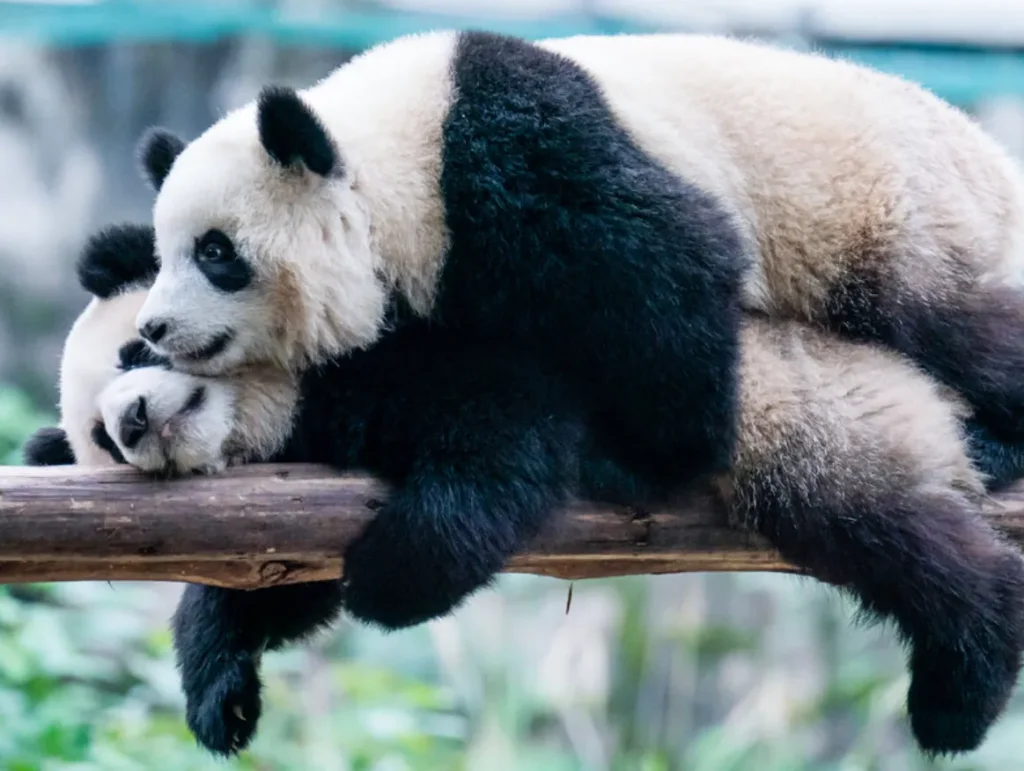
Their life cycle and ability to survive in nature
Newborn Stage
The panda’s life begins in a very delicate state. A newborn cub is tiny, blind, and helpless. It cannot walk, see, regulate its body, or search for food. At this stage, the mother’s care is everything.
Cub Growth Stage
After a few weeks, the cub’s black-and-white pattern becomes clearer. It starts gaining weight, moving more, and reacting to its surroundings. The mother keeps the cub warm, nurses it, and protects it from danger.
Learning Stage
As the cub grows, it begins crawling, climbing, playing, and watching the mother. This is an important learning period. The cub slowly learns how pandas move, rest, climb, and feed.
Bamboo Feeding Stage
Around several months of age, the young panda begins tasting bamboo. Milk remains important at first, but bamboo slowly becomes the main food.
Independent Stage
In the wild, cubs usually wean between 18 and 24 months. At that point, they eat more bamboo and solid foods and begin moving toward independence.
Adult Survival
Adult pandas survive by living mostly alone, finding bamboo-rich areas, avoiding unnecessary conflict, climbing trees when needed, and using scent marks to communicate. Their thick coat helps them survive cold, misty mountain forests.
Their Reproductive Process and raising their children
The reproductive process of the giant panda is slow and sensitive. This is one reason panda conservation needs careful planning.
Important points about panda reproduction and cub care:
- Breeding season usually happens in spring.
- Female pandas are fertile for only a short time each year, often just a few days.
- Male pandas use scent, sound, and movement to find females during the breeding season.
- Female pandas usually give birth to one cub, though twins can occur.
- In the wild, if twins are born, the mother often raises only one because caring for two tiny cubs is extremely difficult.
- The newborn cub is very small compared with the mother, making early care risky.
- The mother holds the cub close, nurses it, keeps it warm, and protects it in a den.
- The father does not help raise the cub. The mother mainly does Panda parenting.
- Cubs begin exploring slowly but remain dependent for many months.
- By around 18–24 months, young pandas are usually ready to become independent in the wild.
Raising a panda cub takes patience and energy. The mother must balance two hard jobs: feeding herself enough bamboo and staying close enough to protect her cub. Since bamboo is low in energy, this is not easy.
That is why safe habitat matters so much. A mother panda needs bamboo, water, cover, and a quiet den area to raise her young successfully.
The importance of them in this Ecosystem
Bamboo Forest Health
Pandas are closely connected to bamboo forests. Their feeding, movement, and habitat needs help keep attention on forest protection. When the panda habitat is protected, many other plants and animals are protected too.
Umbrella Species Role
The giant panda is often called an umbrella species. This means protecting the panda habitat also protects many other species living in the same forest. Birds, insects, small mammals, amphibians, and plants all benefit from panda conservation areas.
Forest and Water Protection
Panda forests help hold soil, reduce erosion, and support clean water systems. Mountain forests in China are important not only for wildlife but also for people living downstream.
Conservation Awareness
Few animals have done more to raise global awareness of conservation than the panda. Because people love pandas, they become more interested in protecting forests, endangered animals, and natural habitats.
Balance in Nature
Pandas are not top predators in the usual sense, but they still play a role in the natural balance of their Ecosystem. Their presence shows that a forest has enough bamboo, enough cover, and enough quiet space for large wildlife.
Protecting pandas is not just about saving one cute animal. It is about saving a whole forest system.
What to do to protect them in nature and save the system for the future
Protecting the panda’s life cycle means protecting every stage, from the newborn cub to the mature adult. Conservation must focus on forests, food, breeding, and people living near panda habitats.
- Protect bamboo forests: Pandas cannot survive without bamboo-rich mountain forests.
- Create wildlife corridors: Isolated panda groups need safe forest paths to move, find mates, and reduce inbreeding.
- Stop illegal logging: Forest destruction breaks panda habitat into small, unsafe patches.
- Reduce human disturbance: Roads, farms, and construction near panda habitat can interrupt feeding, breeding, and cub raising.
- Support local communities: People living near panda forests need income options that do not depend on cutting forest resources.
- Monitor wild populations: Regular research helps conservation teams understand panda numbers, health, and movement.
- Protect denning areas: Mother pandas need quiet places with hollow trees, logs, or safe shelter for cubs.
- Control livestock pressure: Livestock can damage bamboo growth and disturb panda habitat.
- Support responsible conservation centers: Captive breeding, research, and rewilding programs can be effective when carefully implemented.
- Teach children about pandas: Education builds long-term support for wildlife protection.
The panda’s future depends on connected forests, healthy bamboo, and long-term conservation work.
Frequently Asked Questions (FAQs)
Q: What is the life cycle of the panda?
A: The panda life cycle includes newborn cub, growing cub, young panda, weaning stage, juvenile stage, adult stage, and mature adult stage.
Q: How small is a newborn panda cub?
A: A newborn panda cub is extremely small compared with its mother. It is born blind, pink, weak, and fully dependent on care.
Q: When do panda cubs start eating bamboo?
A: Panda cubs begin tasting bamboo at several months old, but milk remains important during the early part of life.
Q: When do pandas become independent?
A: In the wild, young pandas usually become independent around 18 to 24 months after birth.
Q: What is the scientific name of the giant panda?
A: The scientific name of the giant panda is Ailuropoda melanoleuca.
Q: Is the giant panda still endangered?
A: The giant panda is currently listed as Vulnerable, not Endangered, but it is still at risk because of habitat loss and fragmented forests.
Q: What do pandas eat the most?
A: Pandas eat mostly bamboo, including shoots, leaves, and stems. Bamboo makes up nearly all of their diet.
Q: Are red pandas and giant pandas the same animal?
A: No. The red panda and the giant panda are different animals. Red pandas are smaller, reddish, tree-dwelling mammals, while giant pandas are black-and-white bears.
Conclusion
The life cycle of the panda shows how fragile and powerful nature can be at the same time. A panda begins life as a tiny, helpless cub that depends completely on its mother. With time, it grows into a strong bamboo-eating bear built for cool mountain forests.
But every stage of this life cycle depends on one thing: a healthy habitat. Without bamboo forests, clean water, den sites, and safe movement corridors, pandas cannot feed, breed, or raise cubs successfully.
The story of the giant panda is also a story of hope. Conservation work has helped panda numbers recover, but the work is not finished. Pandas still need protection from habitat loss, climate pressure, and forest fragmentation.
Saving pandas means saving more than one species. It means protecting forests, water, wildlife, and the natural balance that future generations will depend on.
Also Read: life cycle of a moth