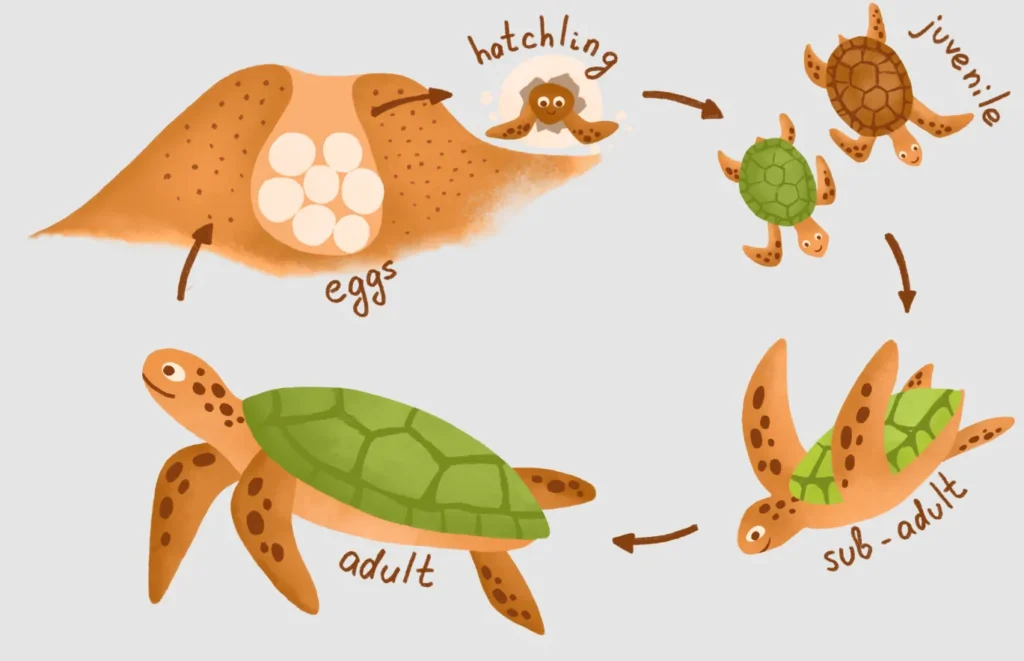
The life cycle of a sea turtle is one of the most remarkable journeys in the natural world. A tiny hatchling begins life under warm beach sand, breaks out of its egg with dozens of siblings, and crawls toward the sea guided mostly by moonlight and the brighter ocean horizon. From there, it enters a dangerous world where predators, currents, plastic waste, fishing gear, storms, and climate change all shape its chance of survival.
A sea turtle may travel thousands of miles during its lifetime. Some species, like the leatherback sea turtle, cross entire oceans. Others, such as the green sea turtle, often return to coastal feeding areas rich in seagrass and algae. The hawksbill sea turtle helps coral reefs by eating sponges, while the loggerhead sea turtle uses its strong jaws to crush hard-shelled prey.
Today, sea turtles are still facing serious threats. NOAA lists major dangers such as fishing bycatch, habitat loss, pollution, climate change, egg collection, marine debris, and vessel strikes. Still, conservation work has helped some populations recover. For example, the green sea turtle was updated to Least Concern globally by the IUCN in 2025, though several regional populations still need protection.
Q: How long is the life cycle of a sea turtle?
A: A sea turtle’s life cycle can last several decades. Many species take 20 to 50 years to reach breeding age, depending on species, food supply, and environment.
Q: Where does the life cycle of a sea turtle begin?
A: It begins on a sandy nesting beach, where a female lays eggs in a nest above the high-tide line.
Q: Do sea turtles raise their babies?
A: No. Female sea turtles leave after covering the nest. Hatchlings survive on instinct from the moment they emerge.
Quick Life Cycle Table
| Life Cycle Stage | What Happens | Main Survival Challenge |
| Egg Stage | The female lays eggs in a sandy beach nest. | Flooding, predators, heat, and human disturbance |
| Hatchling Stage | Baby turtles break out and crawl to the sea. | Birds, crabs, lights, beach obstacles |
| Lost Years | Young turtles drift in ocean currents and along floating seaweed. | Predators, plastic, and lack of food |
| Juvenile Stage | Young turtles move into feeding areas and grow stronger. | Fishing gear, pollution, and predators |
| Subadult Stage | Turtles begin longer migrations and develop adult habits. | Boat strikes, habitat loss, and climate stress |
| Adult Stage | Mature turtles feed, migrate, mate, and reproduce. | Bycatch, nesting beach loss, and illegal harvest |
| Nesting Stage | Females return to beaches to lay eggs. | Coastal development, artificial lights, storms |
Sea turtles spend most of their lives in the ocean, moving between feeding grounds and breeding beaches. Their life cycle depends on both healthy beaches and healthy marine habitats.
The History of Their Scientific Naming
The scientific naming of sea turtles helps researchers identify each species clearly across countries and languages. Common names can vary from place to place, but scientific names tend to be more stable.
Here are the main scientific names used for modern sea turtles:
- Green sea turtle — Chelonia mydas
- The name “green” does not mainly come from the shell color. It refers to the greenish fat under the body, linked to its mostly plant-based diet as an adult.
- Leatherback sea turtle — Dermochelys coriacea
- This name refers to its leathery, flexible shell. Unlike other sea turtles, it lacks a hard, bony outer shell.
- Hawksbill sea turtle — Eretmochelys imbricata
- “Hawksbill” describes its narrow, bird-like beak. “Imbricata” refers to overlapping shell plates.
- Loggerhead sea turtle — Caretta caretta
- The name reflects its large head and powerful jaw muscles.
- Olive ridley sea turtle — Lepidochelys olivacea
- Its olive-colored shell gives it the common name.
- Kemp’s ridley sea turtle — Lepidochelys kempii
- It was named after Richard Kemp, who helped raise awareness of the species.
- Flatback sea turtle — Natator depressus
- This species has a flatter shell and is mostly found around Australia.
Scientific names are important because they support conservation efforts, population tracking, and research. The IUCN Marine Turtle Specialist Group uses these names when assessing global and regional conservation status.
Their Evolution And Their Origin
The origin of sea turtles goes back deep into the age of reptiles. Their ancestors lived long before humans existed, and sea turtles have been swimming through Earth’s oceans for tens of millions of years. They survived major climate shifts, changing sea levels, and the extinction event that wiped out many large reptiles.
Modern sea turtles belong to an ancient reptilian group that gradually evolved from land-dwelling ancestors to marine life. Their legs became flipper-like limbs. Their shells became smoother for swimming. Their bodies developed ways to hold oxygen longer during dives. These changes helped them travel across open oceans, feed underwater, and return to land only for nesting.
Unlike fish, sea turtles still breathe air. They must come to the surface, but they can stay underwater for long periods when resting or feeding. Their strong front flippers work like wings in water, while the rear flippers help with steering and nest digging.
The leatherback sea turtle is especially unusual. It belongs to a different family from hard-shelled sea turtles and has a soft, leathery carapace with long ridges. This body design helps it dive deep and swim in cooler waters while searching for jellyfish.
Sea turtles also show an amazing link between the ocean and land. They spend nearly all their lives at sea, yet reproduction still depends on beaches. This ancient pattern is one reason they are so vulnerable today. A turtle may survive ocean travel for decades, but if nesting beaches are lost to buildings, erosion, artificial light, or rising seas, the next generation suffers.
Their evolution made them powerful travelers. But it did not prepare them for modern threats like plastic bags, industrial fishing gear, coastal hotels, speedboats, and warming sand.
Their main food and its collection process
A sea turtle‘s diet depends on its species, age, and habitat. Hatchlings often eat small floating animals and plants, while adults may become more specialized. This diet variety is one reason sea turtles support many parts of the marine Ecosystem.
- Green sea turtle
- Adult green turtles mainly eat seagrass and algae. They graze slowly, almost like underwater lawn keepers. By trimming seagrass beds, they help keep those habitats healthy and productive.
- Leatherback sea turtle
- Leatherbacks mostly eat jellyfish and other soft-bodied animals. Their mouths and throats have backward-pointing structures that help keep slippery prey from escaping.
- Hawksbill sea turtle
- Hawksbills feed heavily on sponges found around coral reefs. This helps prevent sponges from outcompeting corals, giving reef fish more space to live.
- Loggerhead sea turtle
- Loggerheads eat crabs, conchs, clams, horseshoe crabs, and other hard-shelled prey. Their large heads and strong jaws are built for crushing.
- Olive ridley and Kemp’s ridley sea turtles
- These species often eat crabs, shrimp, jellyfish, fish, snails, and other small marine animals.
- Flatback sea turtle
- Flatbacks feed on soft corals, sea cucumbers, jellyfish, shrimp, and other animals found in shallow coastal waters.
Young turtles may eat fish eggs, small crustaceans, mollusks, jelly-like animals, and floating seaweed material. Sea Turtle Conservancy notes that hatchling diets differ from those of adults, especially in green turtles, which become more herbivorous as they mature.
Sea turtles do not “collect” food the way birds gather nesting material. They search, graze, bite, tear, crush, or swallow prey depending on their body design. Instinct, migration routes, water temperature, and seasonal food availability shape their feeding process.
Important Things That You Need To Know
When people search for the life cycle of sea turtles, they often come across related topics such as green sea turtles, leatherback sea turtles, hawksbill sea turtles, loggerhead sea turtles, sea turtle drawings, sea turtle tattoos, and even leatherback sea turtle bites. These terms may look different, but they all connect to how people learn about sea turtles.
The green sea turtle is one of the best-known species because of its wide range and conservation story. In 2025, its global IUCN status improved to Least Concern, showing how long-term protection can work. Yet this does not mean every population is safe. Some regional groups are still threatened.
The leatherback sea turtle is the largest living sea turtle. It is famous for long migrations, deep dives, and a diet rich in jellyfish. People may search for a leatherback sea turtle bite, but these turtles are not aggressive toward humans. The real risk is disturbing or touching wild animals. A leatherback’s mouth is built for slippery prey, not for attacking people.
The hawksbill sea turtle is closely linked with coral reefs. Its sharp beak helps it feed on sponges. The loggerhead sea turtle is known for its powerful head and hard prey diet.
Creative searches like ‘sea turtle drawing‘ and ‘sea turtle tattoo‘ showcase the cultural side of sea turtles. Many people see them as symbols of patience, survival, protection, ocean life, and long journeys. Still, beyond art and meaning, the real animal needs clean beaches, safe oceans, and strong protection.
Their life cycle and ability to survive in nature
Egg Stage: Life Begins Under Sand
The life cycle of a sea turtle starts when a female comes ashore, usually at night, and digs a nest with her rear flippers. She lays a clutch of eggs, covers them with sand, and returns to the ocean.
The eggs are left alone. Warm sand helps them develop. Temperature can also influence the sex of hatchlings in many sea turtle species.
Hatchling Stage: The First Dangerous Journey
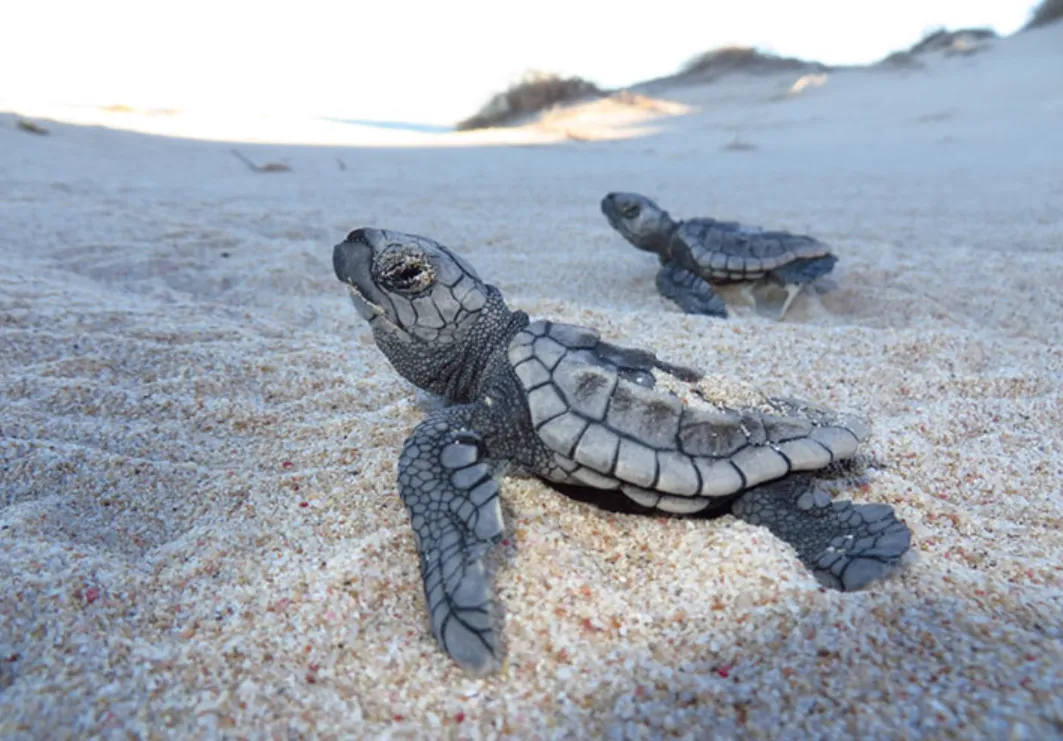
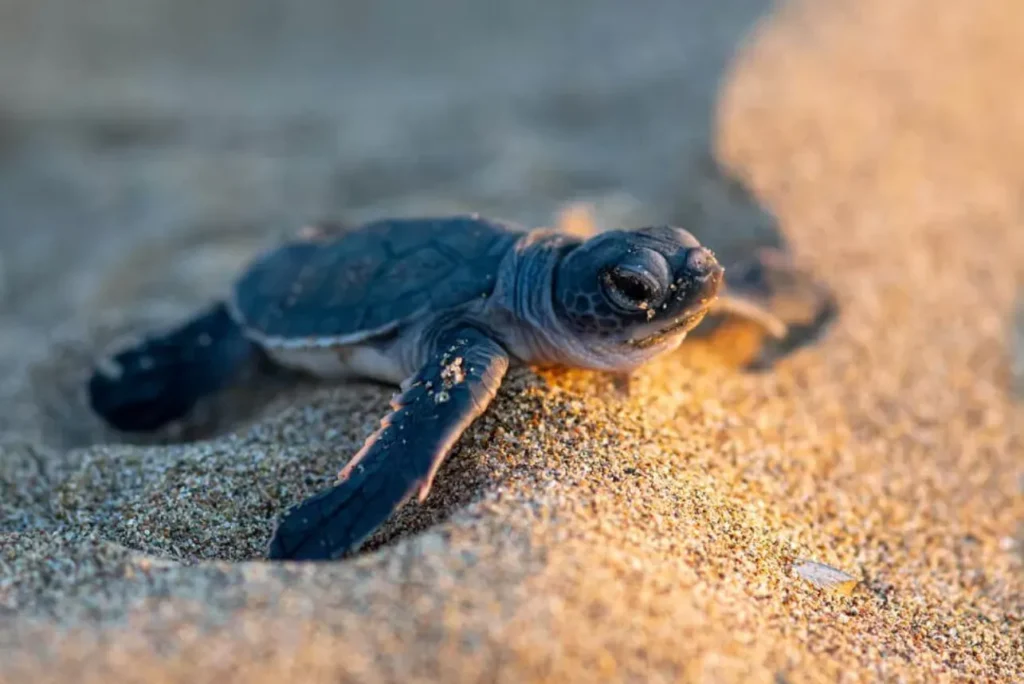
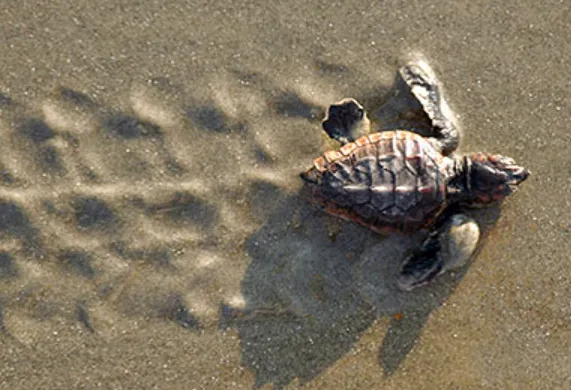
After several weeks, hatchlings break out of their shells and climb upward together. They usually emerge at night, when the sand is cooler, and predators may be fewer.
Their first task is simple but dangerous: reach the ocean. Crabs, birds, raccoons, dogs, artificial lights, tire tracks, and beach furniture can stop them.
Oceanic Juvenile Stage: The Lost Years
Once in the water, young turtles enter a stage often called the lost years. They drift with currents and may live around floating seaweed mats, where they find food and shelter.
This stage is hard for scientists to study because the turtles are small and spread across huge ocean areas.
Adult Stage: Migration and Survival
As turtles grow, they move into feeding grounds. Adults may migrate between feeding and nesting areas. Some migrations cover hundreds or thousands of miles.
Their survival depends on strong instincts, suitable food, clean water, safe beaches, and the ability to avoid fishing nets, plastic waste, and boats.
Their Reproductive Process and raising their children
Sea turtle reproduction is powerful, ancient, and mostly hands-off. Adults may migrate long distances from feeding areas to breeding grounds. Mating usually takes place in coastal waters near nesting beaches.
- Females return to land to nest.
- Only female sea turtles come ashore to lay eggs. Males usually remain at sea after they first enter the ocean as hatchlings.
- Many females return to their natal beaches.
- Female turtles often return to the same general beach area where they hatched. This is called natal homing.
- A female may nest more than once in a season.
- Many females lay multiple nests in one nesting season. Sea Turtle Conservancy notes that most females nest at least twice in a mating season, and some may nest many more times.
- Eggs are buried, not guarded.
- After laying eggs, the female covers the nest with sand and returns to the ocean. She does not guard the nest.
- There is no parental care.
- Sea turtles do not raise their children. Hatchlings must dig out, crawl to the sea, swim, feed, hide, and survive on their own.
- Many eggs are laid because survival is low.
- A female may lay many eggs because only a small number of hatchlings survive to adulthood.
- Reproduction is slow
- Sea turtles take many years to mature. This slow life history means population recovery can take decades, even with protection.
Their reproductive process is one of nature’s strongest examples of instinct. The mother gives the next generation a starting place, but the ocean decides the rest.
The importance of them in this Ecosystem
Sea Turtles Keep Seagrass Beds Healthy
The green sea turtle grazes on seagrass. This feeding keeps seagrass from becoming overgrown and helps young shoots grow. Healthy seagrass beds provide shelter for fish, crabs, shrimp, and many small marine animals.
Seagrass also stores carbon and protects coastlines. So when green turtles feed naturally, they support more than their own species.
Hawksbills Help Coral Reefs
The hawksbill sea turtle eats sponges on coral reefs. Without this feeding, some sponges can grow too much and compete with corals for space.
By controlling sponge growth, hawksbills help protect reef balance. Coral reefs then support fish, tourism, coastal protection, and local food systems.
Leatherbacks Help Control Jellyfish
The leatherback sea turtle eats large numbers of jellyfish. This matters because jellyfish can compete with fish larvae for food. In some areas, too many jellyfish can signal an imbalance in the marine Ecosystem.
Leatherbacks are not the only jellyfish predators, but they are among the most impressive.
Eggs and Hatchlings Feed Beach Wildlife
Not every egg becomes a turtle. Some eggs and hatchlings feed birds, crabs, insects, and other beach animals. Even broken eggshells add nutrients to beach and dune systems.
Sea Turtles Connect Land and Ocean
Sea turtles carry energy between marine and coastal ecosystems. They feed in the sea, nest on land, and support life in both places.
This is why protecting sea turtles means protecting beaches, reefs, seagrass meadows, open oceans, and coastal communities simultaneously.
What to do to protect them in nature and save the system for the future
- Keep beaches dark during nesting season
- Artificial lights confuse nesting females and hatchlings. Use turtle-friendly lighting near beaches.
- Do not disturb nests.
- Never dig up, touch, or move sea turtle eggs unless you are part of an authorized rescue or conservation team.
- Remove beach furniture at night.
- Chairs, umbrellas, nets, and toys can block nesting females and trap hatchlings.
- Reduce plastic use
- Plastic bags, balloons, wrappers, and fishing line can be swallowed by turtles or cause entanglement.
- Support responsible fishing
- Bycatch in fishing is a major threat to sea turtles. Turtle Excluder Devices and safer fishing practices can reduce deaths.
- Never buy turtle shell products.
- The illegal trade in turtle shells, especially from hawksbills, still harms wild populations.
- Keep a distance from nesting turtles.
- Watch quietly from far away. Flashlights, camera flashes, loud noises, and touching can cause stress.
- Protect coral reefs and seagrass beds
- Healthy feeding areas are just as important as nesting beaches.
- Drive carefully near coastal nesting areas
- Vehicles can crush nests, create tire tracks, and block hatchlings.
- Support trusted conservation groups.
- Nest monitoring, beach patrols, rescue centers, and community education can make a real difference.
- Choose reef-safe and ocean-safe habits.
- Reduce chemical pollution, avoid littering, and support cleaner coastal tourism.
- Teach children about sea turtles.
- A simple sea turtle drawing activity can turn into a lesson on ocean protection.
NOAA continues to identify bycatch, habitat loss, pollution, egg collection, marine debris, vessel strikes, and climate change as major threats to sea turtles.
Frequently Asked Questions (FAQs)
Q: What is the life cycle of a sea turtle?
A: The life cycle includes the egg stage, hatchling stage, oceanic juvenile stage, coastal juvenile stage, subadult stage, adult stage, mating, and nesting. It starts on a beach and continues across the ocean.
Q: How many eggs does a sea turtle lay?
A: Many sea turtles lay around 80 to 120 eggs in one nest, though the number changes by species, female size, and nesting condition.
Q: How long do sea turtle eggs take to hatch?
A: Sea turtle eggs often hatch after about 45 to 70 days. Sand temperature, moisture, and species can affect the exact time.
Q: Why do baby sea turtles go to the ocean at night?
A: Night emergence helps reduce heat stress and may lower predator risk. Hatchlings naturally move toward the brighter ocean horizon, but artificial lights can confuse them.
Q: What does a green sea turtle eat?
A: Adult green sea turtles mostly eat seagrass and algae. Young green turtles eat more varied food, including small animals.
Q: Is the leatherback sea turtle dangerous?
A: The leatherback sea turtle is not considered aggressive toward humans. It has a strong mouth designed for jellyfish, but people should never touch or disturb any wild sea turtle.
Q: Why is the hawksbill sea turtle important?
A: The hawksbill sea turtle helps coral reefs by eating sponges. This supports coral growth and reef balance.
Q: Why are loggerhead sea turtles called loggerheads?
A: The loggerhead sea turtle gets its name from its large head and powerful jaws, which help it crush crabs, clams, and other hard-shelled prey.
Q: Do sea turtles return to the same beach?
A: Many female sea turtles return to the same general beach area where they were born. This behavior is called natal homing.
Q: Why are sea turtles endangered or threatened?
A: Sea turtles face fishing bycatch, plastic pollution, coastal development, illegal egg harvest, climate change, habitat loss, and boat strikes. Some species and regional populations are recovering, but many still need long-term protection.
Conclusion
The life cycle of a sea turtle is a story of instinct, danger, distance, and survival. From a soft-shelled egg buried in warm sand to a powerful adult crossing open oceans, each stage depends on nature working in balance.
Sea turtles are not just beautiful marine reptiles. They protect seagrass beds, support coral reefs, help control jellyfish, feed beach wildlife, and connect ocean life with coastal ecosystems. The green sea turtle, leatherback sea turtle, hawksbill sea turtle, and loggerhead sea turtle each play a different role in keeping the sea alive.
Their future depends on what people do now. Cleaner beaches, safer fishing, darker nesting shores, less plastic, and stronger habitat protection can help more hatchlings reach the waves and return years later as adults.
Also Read: life cycle of cricket insect