The tick’s life cycle is one of the most important topics to understand if you want to know how ticks survive, spread, and affect animals, humans, and the natural environment. Ticks are tiny blood-feeding arachnids, closely related to spiders and mites. They are often found on wild mammals, birds, reptiles, livestock, pets, and sometimes on people. Because ticks on dogs and ticks on humans can transmit serious diseases, many people want to know what ticks look like, where they live, and how quickly they reproduce.
Before going deep into the topic, here are 3 quick answers to common questions:
1. What is the life cycle of a tick?
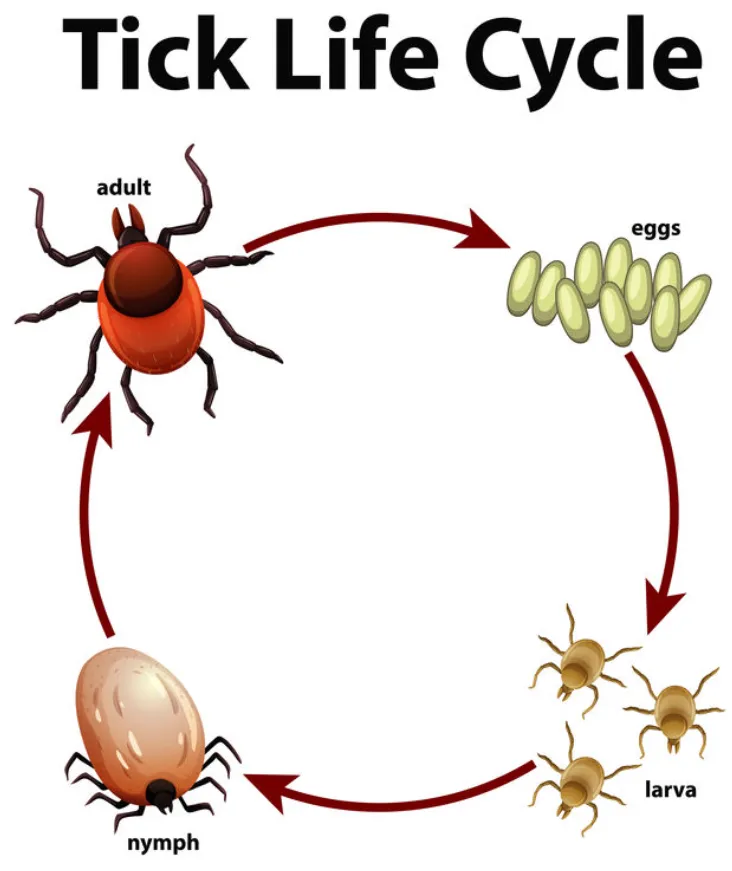
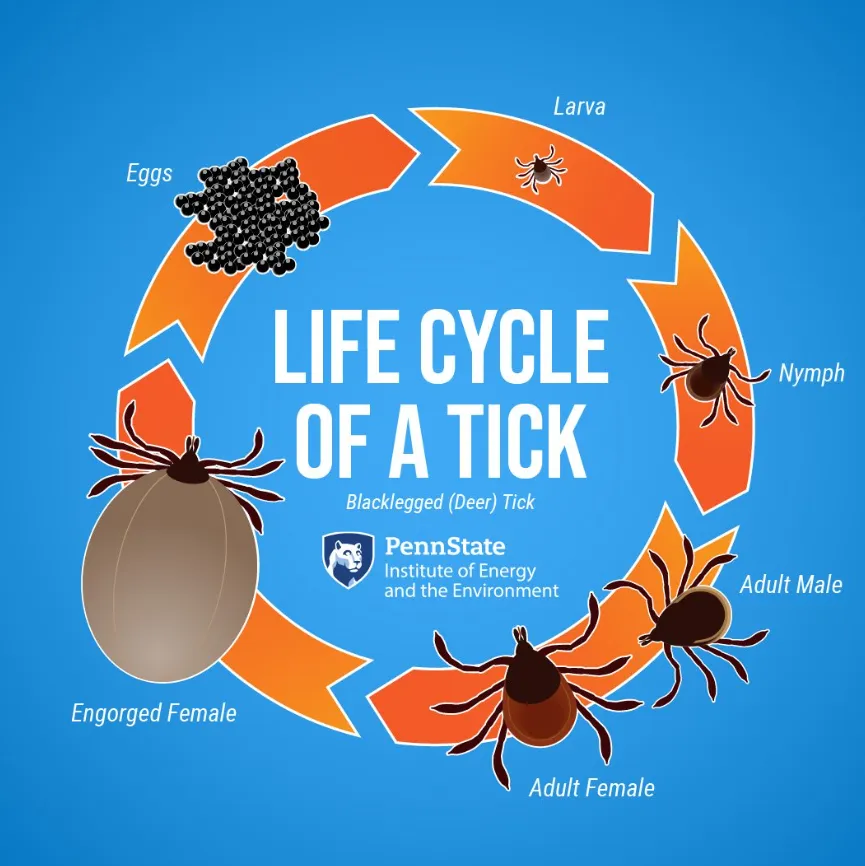
A tick usually passes through four stages: egg, larva, nymph, and adult.
2. What do ticks feed on?
Ticks mainly feed on the blood of animals and humans at different stages of their development.
3. How long can ticks live?
Depending on the species, environment, and food availability, ticks can survive for months or even years.
Understanding the tick life cycle helps people protect livestock, pets, wildlife, and themselves. It also helps explain why ticks remain so successful in nature despite their small size. Their growth, feeding behavior, and survival strategies make them both biologically fascinating and medically important.
Quick Life Cycle Table
| Life Cycle Stage | Main Characteristics | Food Source | Approximate Role |
| Egg | Laid by adult females in large numbers | No feeding | Beginning of the life cycle |
| Larva | Six-legged, very small, often called a seed tick | Blood from a small host | First active feeding stage |
| Nymph | Eight-legged, larger than a larva | Blood from a small or medium host | Important stage for disease transmission |
| Adult | Fully developed male or female tick | Blood from a larger host | Reproduction and egg production |
| Repeat Cycle | The female lays eggs after feeding | No feeding during egg phase | Starts the next generation |
The History of Their Scientific Naming
The scientific history of ticks is linked to the development of zoology, parasitology, and arthropod classification. Ticks were studied for centuries because of their strange body form, blood-feeding habit, and ability to attach firmly to hosts. Over time, scientists placed them within the class Arachnida, not among insects, because they are more closely related to spiders and mites.
Key points about their scientific naming:
- Ticks belong to the subclass Acari, which includes mites and ticks.
- They are mainly divided into three groups: Ixodidae (hard ticks), Argasidae (soft ticks), and the rare Nuttalliellidae.
- The word “tick” comes from Old Germanic roots meaning a small biting parasite.
- Early naturalists classified ticks based on body shape, mouthparts, and feeding behavior.
- Modern taxonomy uses both morphology and molecular genetics to identify tick species.
As scientific methods improved, researchers discovered that ticks are not just pests but also important disease vectors. Their naming history reflects a shift from simple observation to detailed biological understanding. Today, the scientific classification of ticks helps researchers study their ecology, behavior, medical importance, and evolutionary relationships more accurately.
Their Evolution and Their Origin
Ticks are ancient arthropods with a very long evolutionary history. Scientists believe their ancestors evolved hundreds of millions of years ago from early mite-like arachnids. Over time, they developed specialized body structures that made them highly effective external parasites. Their mouthparts became adapted for piercing skin and feeding on blood, while their flattened bodies helped them attach to hosts and remain hidden.
The origin of ticks is deeply connected to the rise of terrestrial vertebrates. As reptiles, birds, and mammals diversified, ticks found more opportunities to feed and expand into different environments. This long partnership between ticks and vertebrate hosts shaped the evolution of both groups. Some hosts developed grooming behavior, thicker skin, or immune responses, while ticks evolved stronger attachment mechanisms, saliva proteins, and the ability to carry disease.
Hard ticks and soft ticks likely diverged early in their history. Hard ticks developed a tough dorsal shield and a longer feeding period, while soft ticks became more adapted to nests, burrows, and sheltered environments, often feeding quickly and repeatedly. This split helped them occupy different ecological niches.
The success of ticks in evolution stems from several advantages: a broad host range, a slow metabolism, the ability to survive starvation, and flexible life-cycle timing. They can wait for long periods until a host passes nearby. This patience, combined with efficient feeding, allowed ticks to spread across forests, grasslands, farms, wetlands, and even urban edges. Their evolutionary story shows how a tiny arachnid became one of nature’s most persistent parasites.
Their Main Food and Its Collection Process
Ticks do not chew leaves, hunt prey in the usual way, or collect food like bees or ants. Their main food is blood, obtained from vertebrate hosts. This includes mammals, birds, reptiles, and, in some cases, amphibians. Different tick species prefer different hosts, but many can feed on a wide range of animals. That is why people often see ticks on dogs, livestock, deer, rodents, and sometimes humans.
Here is how ticks collect their food:
- Host detection: Ticks wait on grasses, shrubs, leaf litter, or low vegetation and sense heat, body odor, vibration, and carbon dioxide.
- Questing behavior: Many ticks climb onto a surface and stretch out their front legs, waiting for a host to brush past.
- Attachment: Once a host is found, the tick crawls to a suitable feeding site and uses its specialized mouthparts to pierce the skin.
- Saliva release: Tick saliva contains compounds that reduce pain, suppress immune reactions, and prevent blood clotting.
- Blood feeding: The tick slowly takes blood over hours or days, depending on the species and life stage.
- Detachment: After feeding, it drops off to molt or reproduce.
Larvae usually feed on small hosts, nymphs often feed on small to medium animals, and adults commonly feed on larger mammals. This feeding pattern is essential to the tick’s life cycle because each active stage typically requires a blood meal before progressing to the next.
Their Life Cycle and Ability to Survive in Nature
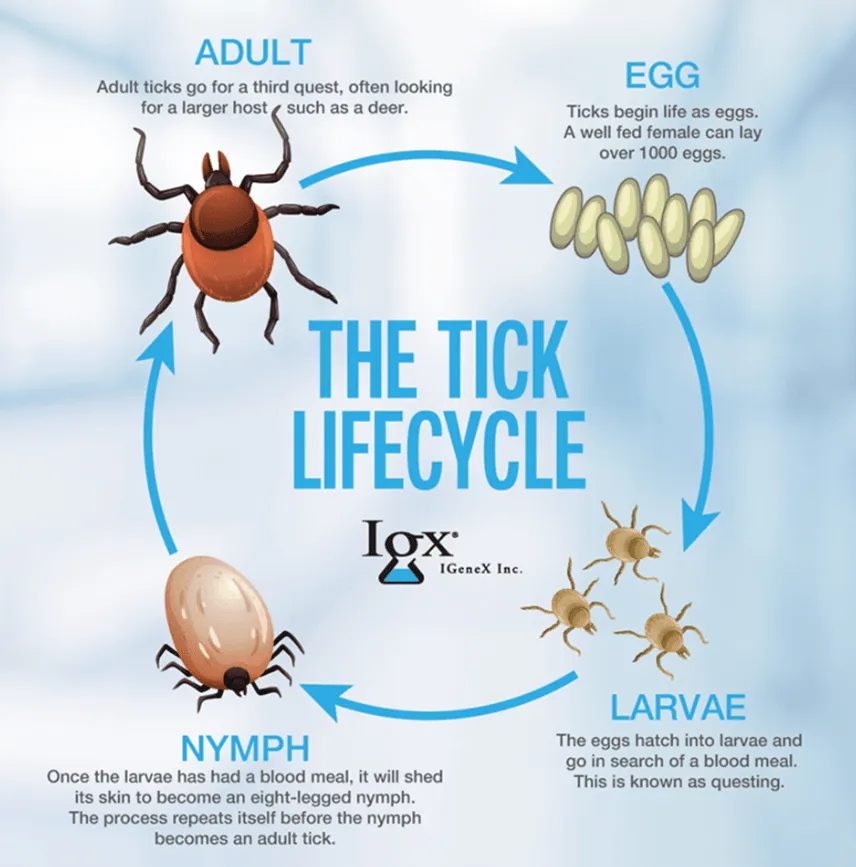
Egg Stage
The life cycle begins when a fertilized adult female lays a large mass of eggs in sheltered places such as soil, cracks, leaf litter, or animal nesting sites. After egg-laying, the female usually dies.
Larva Stage
The eggs hatch into tiny six-legged larvae, often called seed ticks. At this stage, they must find a host and take a blood meal to survive and develop further.
Nymph Stage
After feeding, the larva drops off the host, molts, and becomes an eight-legged nymph. The nymph then seeks another host and takes another blood meal. Many tick-borne diseases are transmitted during this stage.
Adult Stage
The nymph molts again into an adult tick. Adult females feed heavily, mate, and produce eggs, while males mainly focus on mating and may feed less.
Ticks survive in nature because they are extremely hardy. They can hide in humid microhabitats, slow down their metabolism, and remain inactive for long periods when hosts are unavailable. Many species survive cold winters, dry periods, or food shortages by staying in protected environments. Their small size, patience, and strong host-finding behavior make them successful in forests, grasslands, farms, and home surroundings.
Their Reproductive Process and Raising Their Children
Ticks reproduce through mating between adult males and females, usually on or near the host. In many species, the male finds the female while both are attached to the same animal. After mating, the female takes a large blood meal, which provides the energy needed for egg production. This feeding stage is extremely important because without enough blood, the female cannot produce a full egg batch.
Important points about tick reproduction:
- Adult male and female ticks meet on a host or in the surrounding habitat.
- The female enlarges greatly after feeding and becomes ready to lay eggs.
- A single female may lay hundreds to thousands of eggs, depending on the species.
- Eggs are usually placed in hidden, moist environments to reduce drying.
- Unlike mammals and birds, ticks do not raise their young immediately after laying eggs.
- The next generation survives through instinct, timing, and environmental adaptation rather than parental care.
So, when discussing “raising their children,” ticks are very different from social or caring animals. The female’s main investment is producing many eggs and placing them in a location where the young can hatch safely. After that, the larvae must survive on their own. This strategy works because large egg numbers increase the chance that at least some offspring will find hosts and continue the cycle. It is a classic survival pattern in many small invertebrates: little parental care, but high reproductive output.
Importance of Them in This Ecosystem
Part of Food Webs
Although ticks are parasites and disease vectors, they are still part of natural food webs. Some birds, reptiles, amphibians, insects, and other arthropods may eat ticks during different stages.
Influence on Wildlife Populations
Ticks can affect the health and behavior of wild animals. Heavy tick loads may weaken some animals, influence movement, and shape host population dynamics.
Ecological Indicators
Tick presence can reflect changes in habitat, wildlife abundance, climate, and land use. Their distribution sometimes helps scientists monitor environmental change.
Role in Disease Ecology
Ticks are important in disease cycles involving wildlife, domestic animals, and humans. This makes them significant in understanding ecosystem health, zoonotic disease, and biodiversity interactions.
Ticks are not “beneficial” in the everyday sense, especially because they can spread harmful pathogens. Still, they are part of ecological systems and cannot be understood only as isolated pests. They interact with hosts, predators, microbes, and habitat conditions. Studying them helps scientists understand how ecosystems function and how disease moves through the environment. Their ecological role is complex: harmful to individuals, yet still woven into the wider balance of nature.
What to Do to Protect Nature and Save the System for the Future
Because ticks can spread disease, this topic should be understood carefully. The goal is not to increase tick populations, but to protect ecosystem balance while reducing harmful tick-human and tick-animal contact.
- Protect natural habitats so ecosystems remain balanced and predators, prey, and host animals stay in healthier relationships.
- Avoid unnecessary destruction of forests, grasslands, and wetlands that support stable biodiversity.
- Manage wildlife and livestock responsibly to reduce the risk of extreme tick outbreaks.
- Keep pet animals clean and use safe tick-control measures recommended by veterinarians.
- Monitor ticks on dogs, livestock, and farm areas regularly to prevent large infestations.
- Wear protective clothing in tick-prone areas and check your body after outdoor activity.
- Support public awareness about ticks on humans, tick bites, and safe removal methods.
- Use pesticides carefully and only when necessary, because overuse can damage beneficial organisms and broader ecosystems.
- Encourage scientific research on tick ecology, climate effects, and disease prevention.
- Promote integrated pest management that protects public health without harming nature more than necessary.
Frequently Asked Questions (FAQs)
1. What is the full tick’s life cycle?
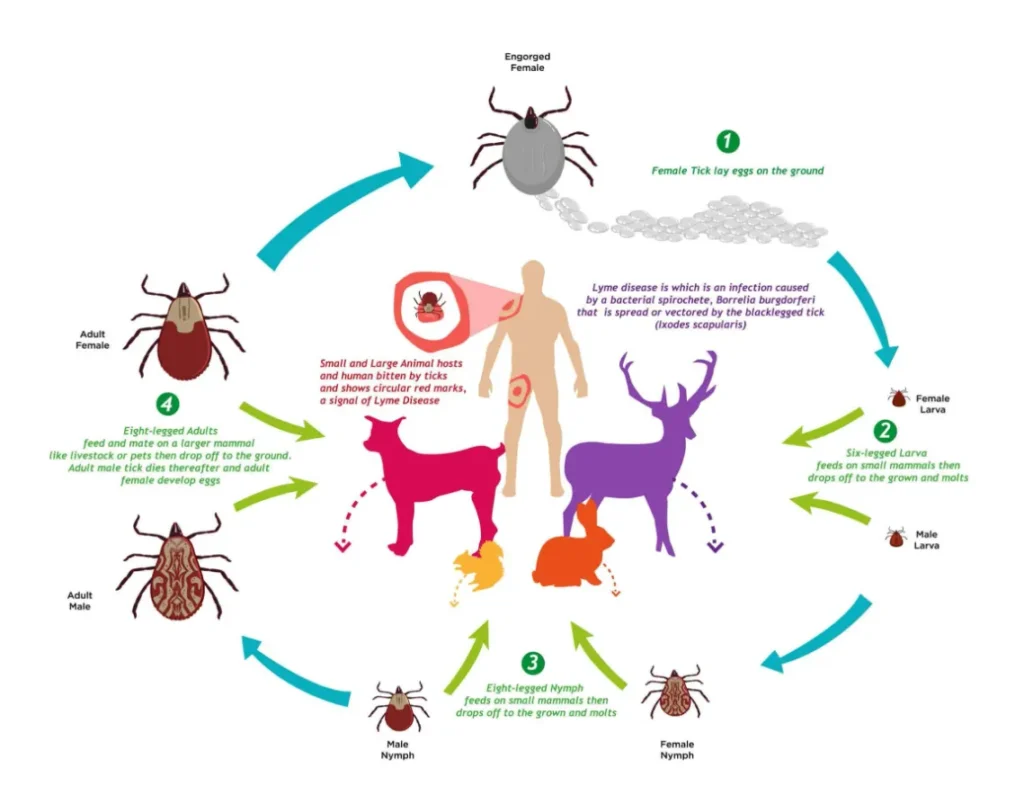
The full tick life cycle usually includes four stages: egg, larva, nymph, and adult.
2. What do ticks look like?
Ticks are small, flat, oval arachnids. Larvae have six legs, while nymphs and adults have eight legs.
3. How long does the tick’s life cycle take?
It depends on the species and environment, but the complete cycle may take several months to a few years.
4. Do all ticks feed on blood?
Yes, ticks feed mainly on the blood of vertebrate animals during their active stages.
5. Are ticks on dogs dangerous?
Yes, ticks on dogs can cause irritation, blood loss, and disease transmission. Veterinary care and tick prevention are important.
6. Can ticks bite humans?
Yes, many species can attach to humans and may transmit infections through their bite.
7. What kills ticks on dogs instantly?
Fast-acting veterinary tick treatments are commonly used, but the safest option is to use products recommended by a licensed veterinarian.
8. Why are ticks important if they are harmful?
Ticks are harmful parasites, but they are still part of ecosystems, food webs, and disease ecology, making them scientifically important.
Conclusion
The tick’s life cycle is a remarkable example of survival, adaptation, and ecological persistence. From egg to larva, nymph, and adult, each stage is carefully linked to blood feeding, host finding, and successful reproduction. Ticks may be tiny, but their biological impact is enormous. They affect wildlife, livestock, pets, and human health, which is why they are studied so closely around the world. At the same time, they are not just random pests; they are ancient arachnids with a real place in natural ecosystems.
Learning about how ticks feed, reproduce, evolve, and survive helps us better understand both nature and disease risk. It also shows why proper tick management is so important. By protecting biodiversity, carefully monitoring animals, and using safe prevention methods, we can reduce the harm caused by ticks while still respecting the balance of the natural world. Understanding ticks is not only useful for safety, but also for better ecological awareness.
Also Read: tomato moth life cycle