The mushroom life cycle is one of nature’s quietest but most powerful processes. A mushroom may look like a simple cap and stem that grows after rain, but most of its true body stays hidden underground, inside wood, soil, compost, or decaying leaves. That hidden body is called mycelium, a web of fine threads that feeds, grows, survives, and later produces the visible mushroom.
A mushroom is not a plant. It belongs to the Kingdom Fungi, which includes mushrooms, molds, yeasts, and many other fungi. Unlike plants, mushrooms do not make food from sunlight. Instead, they break down organic matter or live in close relationships with plants. This is why mushrooms are so important in forests, gardens, farms, and natural ecosystems.
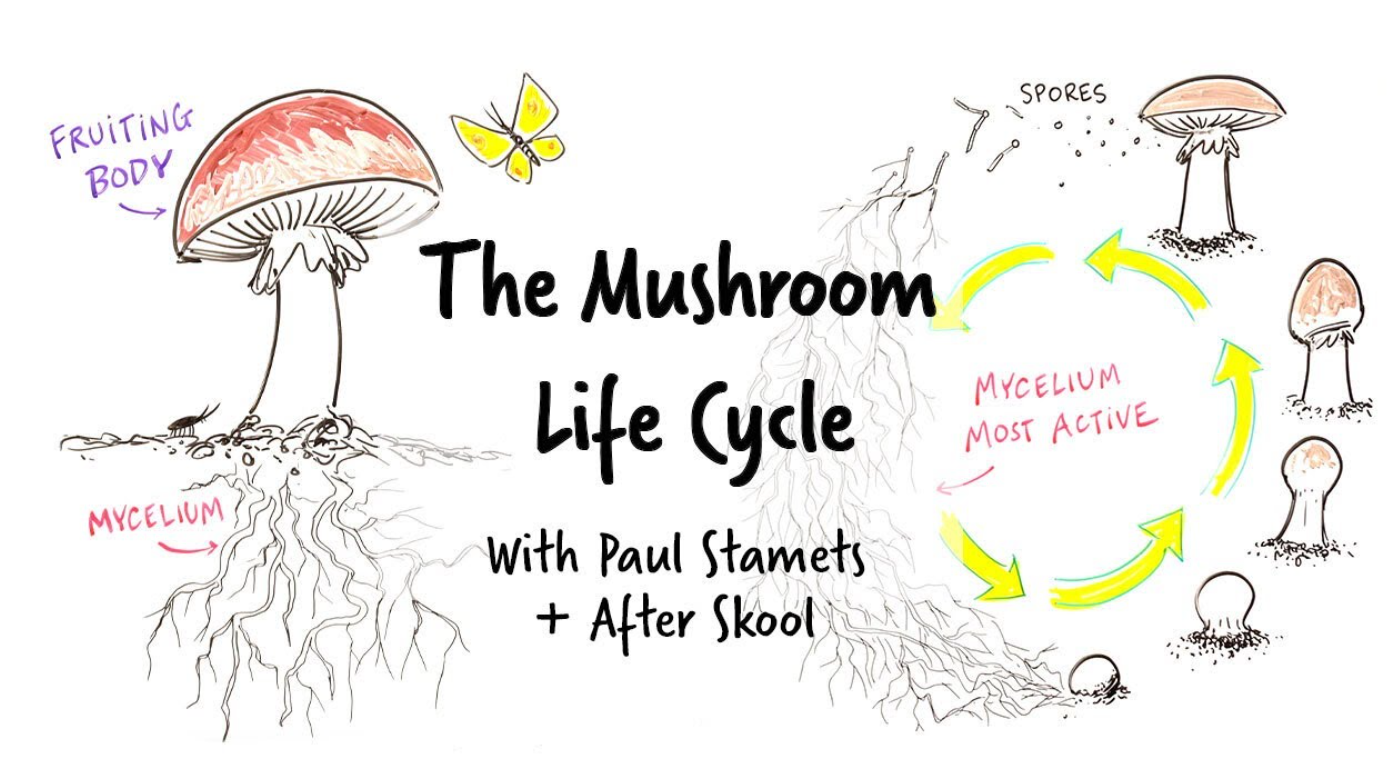
The life cycle usually begins with tiny spores. When the environment has enough moisture, food, and the right temperature, spores germinate and form thread-like hyphae. These hyphae grow into mycelium. When conditions become suitable, the mycelium creates a fruiting body—the mushroom—which releases more spores and continues the cycle. Cornell Small Farms explains the wild mushroom cycle as a repeated cycle between spores, mycelium, and mushrooms.
Q: What are the main stages of the mushroom life cycle?
A: The main stages are spore, hyphae, mycelium, primordia, fruiting body, and spore release.
Q: Is the mushroom the whole fungus?
A: No. The visible mushroom is only the fruiting body. The main living part is usually the hidden mycelium.
Q: How do mushrooms reproduce?
A: Mushrooms reproduce mainly by releasing microscopic spores, usually from gills, pores, or other spore-producing surfaces.
Quick Life Cycle Table
| Stage | What Happens | Simple Meaning |
| 1. Spore | Tiny reproductive cells spread by air, water, animals, or insects. | The “seed-like” start, though spores are not true seeds. |
| 2. Germination | A spore lands in a suitable place and begins to grow. | Growth starts when moisture and food are available. |
| 3. Hyphae | Thin fungal threads grow from the spore. | These threads search for food. |
| 4. Mycelium | Many hyphae join into a larger network. | This is the main body of the fungus. |
| 5. Primordia / Pinning | Small mushroom buds form. | The future mushroom begins to appear. |
| 6. Fruiting Body | The visible mushroom grows above the surface. | This is the part people usually recognize. |
| 7. Spore Release | Mature mushrooms release spores. | The cycle starts again. |
Purdue Extension describes pinning as the stage when favorable temperature and humidity help mycelium develop a fruiting body. The mature mushroom then forms spores in reproductive structures and releases them from gills or pores.
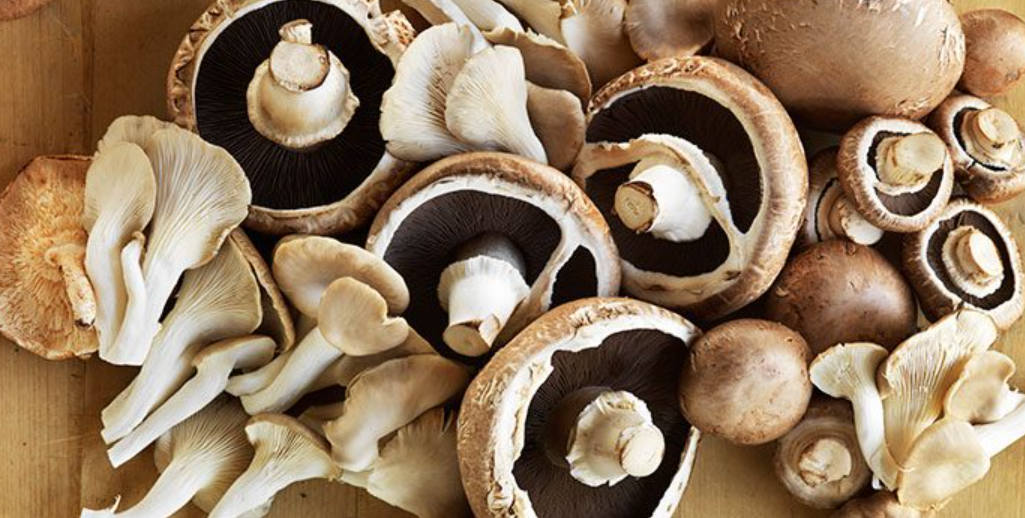
The History of Their Scientific Naming
The scientific naming of mushrooms comes from the wider study of fungi, known as mycology. For a long time, people grouped mushrooms with plants because they grew from the ground and did not move. Later, scientists learned that fungi are very different from plants.
Here are the key points:
- The word fungus comes from Latin and was used for mushrooms and similar organisms.
- Mushrooms are now placed in the Kingdom Fungi, not the plant kingdom.
- The scientific naming system uses binomial nomenclature, which gives each species a two-part Latin name.
- For example, the common button mushroom is named Agaricus bisporus.
- The first word indicates the genus, and the second indicates the species.
- Many mushrooms belong to the Basidiomycota, in which spores are often produced on specialized cells called basidia.
- Some fungi that people call mushrooms may belong to different groups, depending on their structure and genetics.
Today, scientists use shape, spore color, DNA, habitat, and microscopic features to classify mushrooms more accurately.
Their Evolution And Their Origin
The origin of mushrooms is tied to the deep history of fungi. Fungi are ancient organisms, much older than humans, forests, and flowering plants. Britannica notes that fungi likely appeared around one billion years ago, although their fossil record is limited because soft fungal tissues do not preserve easily.
Early fungi probably lived in water or moist environments. Over time, they adapted to land and became important partners in the rise of land plants. Some fungi formed relationships with early plants, helping them absorb minerals and water from rough, young soils. In return, plants provided fungi with sugars produced through photosynthesis.
This partnership helped shape life on land. Kew’s discussion of fungi through the ages explains that early land plants likely depended on fungal relationships to survive on barren land about 500 million years ago.
Mushrooms, as we know them, evolved later into reproductive structures. Their main purpose was not beauty or food for humans. Their job was to lift spores into the air, protect them until maturity, and spread them across new habitats.
Over millions of years, mushrooms developed many shapes. Some became umbrella-like. Some became shelf-like brackets on trees. Some became puffballs that burst spores into the air. Others became underground truffle-like fungi that rely on animals to spread their spores.
This long evolution made mushrooms flexible survivors. They can live in forests, grasslands, dead wood, leaf litter, dung, soil, and even harsh climates. Their success comes from their hidden mycelium, their powerful enzymes, and their ability to recycle life back into the Earth.
Their main food and its collection process
Mushrooms do not eat like animals, and they do not make food like plants. Their feeding method is different. They use external digestion.
This means the fungus releases enzymes into its surroundings. These enzymes break large organic materials into smaller nutrients. Then the hyphae absorb those nutrients.
The main food sources and collection process include:
- Dead leaves and plant matter
- Many mushrooms feed on fallen leaves, dead grass, bark, and forest litter. They break these materials down and return nutrients to the soil.
- Dead wood
- Wood-loving mushrooms digest cellulose and lignin. These are tough materials found in tree trunks, branches, and roots.
- Compost and manure
- Some mushrooms grow well in compost-rich areas because the material is already partly broken down.
- Living plant roots
- Some fungi form mycorrhizal relationships with plants. The fungus helps the roots absorb water and minerals, while the plant provides the fungus with sugars.
- Living hosts
- Some fungi are parasitic. They take nutrients from living plants, insects, or other organisms.
- Soil organic matter
- Hidden mycelium moves through soil and absorbs nutrients from decaying natural material.
The collection process happens through hyphae. These tiny threads spread like a web. The larger the mycelium grows, the more surface area it has to absorb food.
This feeding style makes mushrooms powerful recyclers. Without fungi, forests would be buried under dead leaves, fallen branches, and old organic waste.
Important Things That You Need To Know
When people search for mushrooms, they often find many related topics that are not directly about the mushroom life cycle. Still, these terms are useful because they show how mushrooms appear in food, wellness, restaurants, and daily life.
Mushroom coffee is usually a drink made by mixing coffee with powdered fungi such as chaga, lion’s mane, cordyceps, or reishi. It is popular in wellness markets, but it should not be confused with studying the mushroom’s natural life cycle.
Mellow Mushroom is known as a pizza restaurant brand. It is associated with the word ‘mushroom’ in search behavior, but it is not part of mushroom biology.
Enoki mushrooms aremushrooms are real edible mushrooms with long, thin stems and small caps. It is commonly used in soups, hot pots, and stir-fry dishes.
Lion’s mane mushroom is known for its shaggy white appearance. It grows on hardwood trees and is often discussed in food and supplement spaces.
Mushroom gummies are processed products that may contain mushroom extracts or flavors. Buyers should check labels carefully because quality can vary.
Turkey tail mushroom is a bracket fungus often found on dead wood. It has fan-shaped rings that look like a turkey’s tail.
These LSI keywords are useful for SEO, but the biological focus remains the same: mushrooms grow from spores, form mycelium, produce fruiting bodies, and release new spores into the environment.
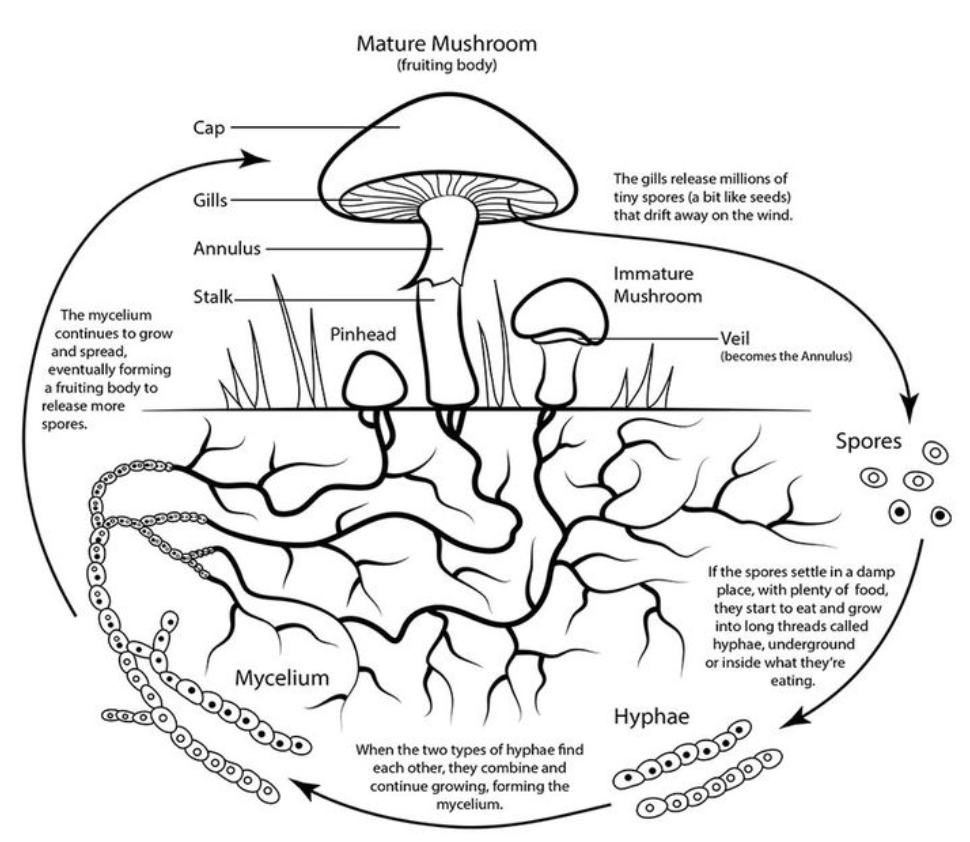
Their life cycle and ability to survive in nature
Spore Release and Germination
The mushroom life cycle begins when a mature mushroom releases spores. These spores are extremely small and light. Wind, rain, insects, animals, and water can carry them away from the parent mushroom.
If a spore lands on a suitable surface with moisture, oxygen, food, and the right temperature, it germinates. A small thread called a hypha begins to grow.
Hyphae and Mycelium Growth
As hyphae spread, they form a network called mycelium. This is the main living body of the fungus. It can stay hidden in soil, wood, compost, or leaf litter.
The mycelium feeds by releasing enzymes and absorbing dissolved nutrients. It may grow for days, months, or even years before producing mushrooms.
Fruiting Body Formation
When the environment becomes favorable, the mycelium forms tiny knots called primordia. These develop into small mushroom pins.
With enough humidity and the right temperature, these pins grow into mature mushrooms. The visible mushroom is built to produce and release spores.
Survival in Harsh Conditions
Mushrooms survive through their hidden mycelium and resistant spores. When conditions are dry, cold, or poor, growth may slow down.
Once moisture returns, the fungus can become active again. This is why mushrooms often appear suddenly after rain.
Their Reproductive Process and raising their children
Mushrooms do not raise children like animals. They do not protect babies, build nests, or feed young. Instead, they produce large numbers of spores and rely on the environment to spread them.
Their reproductive process works in several steps:
- Mature mushrooms form spores
- Spores usually develop on gills, pores, teeth, or other fertile surfaces.
- Spores are released
- When the mushroom matures, spores fall or shoot away from the spore-producing surface.
- Spores spread through nature.
- Air currents, raindrops, insects, mammals, birds, and flowing water can carry spores.
- Spores land in new places.
- Most spores never grow. They may land somewhere too dry, too hot, too cold, or without enough food.
- Successful spores germinate
- If conditions are right, the spore produces hyphae.
- Compatible hyphae may join.
- In many mushrooms, two compatible hyphal types must meet and fuse. This creates stronger reproductive mycelium.
- New mycelium grows
- The new mycelium feeds, spreads, and waits for the right moment to fruit.
- New mushrooms appear
- The cycle continues when the next fruiting body releases more spores.
Because mushrooms do not care for offspring, their survival strategy is quantity. They release many spores so that at least a few may survive and begin new fungal colonies.
The importance of them in this Ecosystem
Natural Decomposers
Mushrooms are among the most important decomposers on Earth. They break down dead plants, fallen trees, leaf litter, and organic waste.
This process returns nutrients to the soil. Without fungi, ecosystems would lose one of their strongest natural recycling systems.
Soil Health Builders
The hidden mycelium improves soil structure. It helps bind soil particles together and supports better water movement.
Healthy fungal networks can stabilize soil and make it better suited for plant growth.
Plant Partners
Many fungi form mycorrhizal partnerships with plant roots. These fungi help plants absorb minerals such as phosphorus and nitrogen.
In return, plants share sugars with the fungi. This relationship supports forests, grasslands, gardens, and farms.
Food for Wildlife
Insects, deer, squirrels, rodents, birds, turtles, and many small forest animals eat mushrooms.
Even when humans do not notice them, mushrooms are part of many food webs.
Support for Human Life
Humans use fungi for food, medicine, research, fermentation, agriculture, and biotechnology. Kew’s State of the World’s Plants and Fungi report notes that fungi are deeply important to land plants, ecosystem function, and human life.
This makes mushroom conservation more than a forest issue. It is also connected to food systems, soil health, biodiversity, and the future of natural ecosystems.
What to do to protect them in nature and save the system for the future
Protecting mushrooms means protecting the places where fungi live. Since most of the fungus stays hidden as mycelium, damage to soil, forests, and dead wood can harm fungal life before we even see it.
- Protect old forests
- Mature forests often hold rich fungal networks. Cutting them carelessly can destroy rare mushroom habitats.
- Leave some dead wood in nature
- Fallen logs, branches, and stumps are food and shelter for many fungi.
- Avoid overharvesting wild mushrooms.
- Pick only what you need, and leave some mature mushrooms to release spores.
- Do not disturb the soil unnecessarily
- Digging, heavy machinery, and soil compaction can damage mycelium.
- Reduce chemical pollution
- Excess pesticides, herbicides, and nitrogen pollution can harm fungal communities.
- Support fungal research and conservation.
- Fungi are still understudied compared with plants and animals. More research helps protect rare species.
- Learn proper identification
- Never eat wild mushrooms unless identified by an expert. Some poisonous mushrooms look similar to edible ones.
- Grow mushrooms responsibly
- Home and farm mushroom cultivation can reduce pressure on wild populations.
- Protect wetlands, grasslands, and woodlands.
- Mushrooms do not live only in forests. Many species depend on different natural habitats.
A 2025 Reuters report noted that many assessed fungi face extinction risks from threats such as deforestation, agriculture, and pollution, showing why fungal conservation deserves more attention.
Frequently Asked Questions (FAQs)
Q: What is the mushroom life cycle?
A: The mushroom life cycle is the process by which a mushroom begins as a spore, grows into hyphae and mycelium, forms a fruiting body, and releases new spores.
Q: What is the first stage of a mushroom’s life?
A: The first stage is the spore. Spores are tiny reproductive cells released by mature mushrooms.
Q: What is mycelium in mushrooms?
A: Mycelium is the hidden network of fungal threads. It is the main living body of the fungus.
Q: Is a mushroom a plant?
A: No. A mushroom is a fungus. It does not make food from sunlight as plants do.
Q: How long does the mushroom life cycle take?
A: It depends on the species and environment. Some mushrooms grow quickly after rain, while some mycelium networks may live for years.
Q: Why do mushrooms appear after rain?
A: Rain increases moisture, which helps mycelium produce fruiting bodies. That is why mushrooms often seem to appear suddenly.
Q: Do mushrooms have seeds?
A: No. Mushrooms produce spores, not seeds. Spores are much smaller and simpler than plant seeds.
Q: What part of the mushroom releases spores?
A: Spores are usually released from gills, pores, teeth, or other fertile surfaces under or inside the mushroom cap.
Conclusion
The mushroom life cycle is a hidden story of survival, recycling, and renewal. What we see above the ground is only a small part of the fungus. The real work is done by mycelium, which spreads through soil, wood, compost, or leaf litter and gathers nutrients from the environment.
From tiny spores to mature fruiting bodies, mushrooms follow a cycle that supports forests, farms, gardens, and wildlife. They break down dead matter, feed the soil, help plants grow, and provide food for many living things.
Understanding mushrooms also helps us respect them. They are not just strange growths after rain. They are ecosystem workers, soil builders, plant partners, and natural recyclers.
To protect mushrooms, we must protect their habitats, reduce pollution, preserve dead wood, and avoid careless harvesting. When fungi survive, the whole Ecosystem becomes stronger.
Also Read: life cycle of ticks