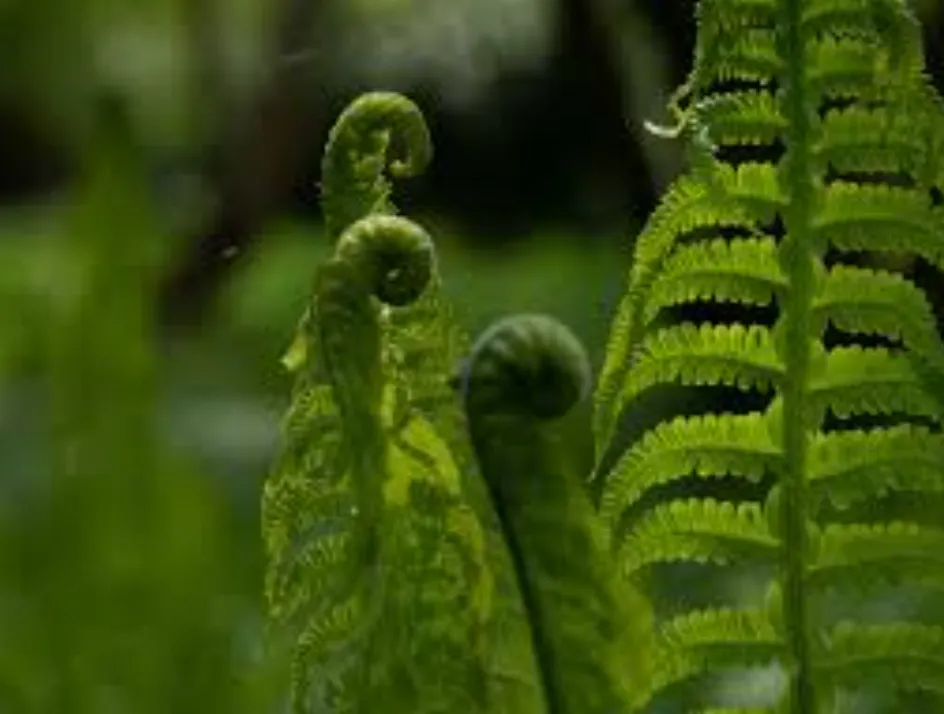
The life cycle in ferns is one of the most fascinating examples of plant survival because ferns do not produce flowers, fruits, or seeds. Instead, they reproduce through tiny dust-like spores, which grow into a small, heart-shaped plant called a gametophyte before developing into the familiar leafy fern plant, the sporophyte.
Ferns are ancient vascular plants with true roots, stems, and fronds. Modern botanical classification places true ferns mainly under Polypodiopsida, and thousands of fern species are found worldwide. They grow in forests, wetlands, cliffs, tropical regions, shaded gardens, and even rocky habitats.
Unlike flowering plants, the fern life cycle includes two separate generations: the spore-producing sporophyte and the gamete-producing gametophyte. This process is called alternation of generations. It helps ferns survive in different natural environments.
Quick Answers — Most Common Questions
Q: What is the life cycle in ferns?
A: The fern life cycle moves from spore to gametophyte, then to fertilization, young sporophyte, and finally to the mature fern plant.
Q: Do ferns produce seeds?
A: No. Ferns reproduce by spores, not by seeds, flowers, or fruits.
Q: Why do ferns need water for reproduction?
A: Fern sperm must swim through a thin film of water to reach the egg, so moisture is essential for successful fertilization.
Quick Life Cycle Table
| Life Cycle Stage | What Happens | Main Structure | Importance |
| Mature Sporophyte | Adult fern grows fronds and roots | Leafy fern plant | Produces spores |
| Sori Formation | Spore cases form under fronds | Sori and sporangia | Protects spore-producing structures |
| Spore Release | Spores are released into the air or soil | Haploid spores | Starts a new generation |
| Gametophyte Growth | Spore germinates into a tiny prothallus | Gametophyte | Produces eggs and sperm |
| Fertilization | Sperm swim to the egg in moist conditions | Antheridia and archegonia | Forms a zygote |
| Young Sporophyte | Baby fern grows from a gametophyte | Young fern | Becomes independent |
| Mature Fern | Fern develops roots, rhizomes, and fronds | Sporophyte | Repeats the cycle |
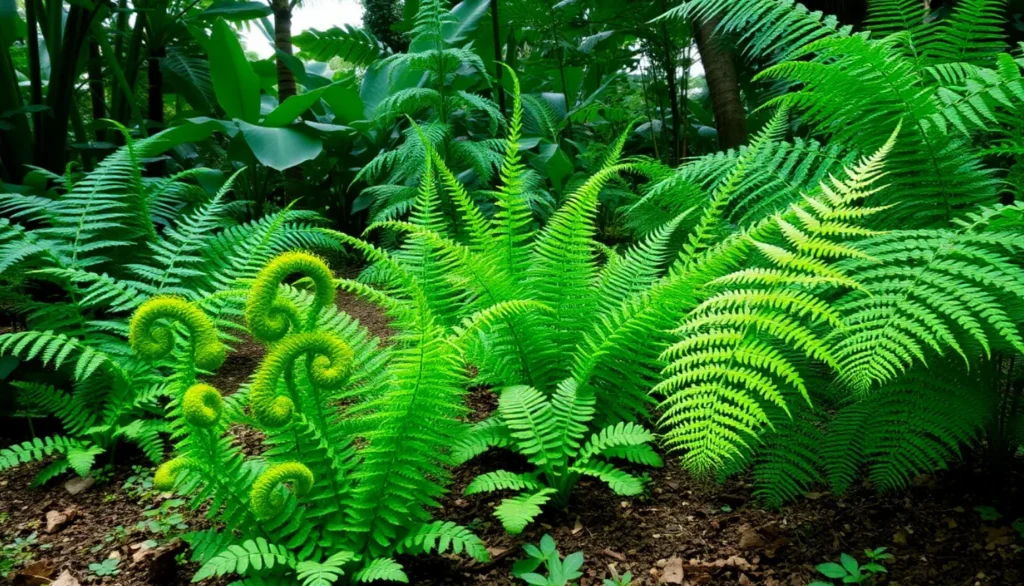
The History of Their Scientific Naming
The scientific naming of ferns has changed over time as botanists learned more about plant structure, reproduction, and genetics. Earlier, ferns were often grouped under the broad term Pteridophyta, which encompassed seedless vascular plants, including ferns and their relatives.
Today, many modern references classify true ferns mainly under Polypodiopsida. The word Polypodiopsida is connected with the large fern family Polypodiaceae, while the older word Pteridophyta comes from Greek roots linked with “fern” or wing-like leaf forms.
Important points about fern naming:
- Ferns are seedless vascular plants.
- Their scientific classification is based on spores, vascular tissues, frond structure, and evolutionary relationships.
- The common name “fern” covers thousands of species, but each species has its own scientific name.
- Examples include Nephrolepis exaltata for the Boston fern and Pteridium aquilinum for bracken fern.
- Fern names are updated as scientists discover new genetic and evolutionary relationships.
This naming history shows that ferns are not just garden plants. They are a major ancient plant group with a deep scientific identity.
Their Evolution And Their Origin
The origin of ferns goes back hundreds of millions of years. Fern-like plants appeared very early in plant evolution, and true ferns became highly important in ancient ecosystems. During the Carboniferous Period, large swamp forests covered much of Earth, and fern relatives played an important role in shaping ancient vegetation.
Ferns became especially successful because they had vascular tissues. These tissues allowed them to transport water and nutrients more efficiently than simpler non-vascular plants. This gave ferns an advantage in moist forests, shaded valleys, tropical mountains, wetlands, and rocky slopes.
During early plant evolution, ferns developed several important features:
- True roots for anchoring and absorbing water.
- Rhizomes for spreading and storing nutrients.
- Fronds for photosynthesis.
- Spores for reproduction without seeds.
- Alternation of generations for genetic diversity.
Unlike flowering plants, ferns do not depend on flowers, fruits, or pollinators. This made them highly adaptable in environments where insect populations or seed-dispersal systems were limited.
Modern ferns are found across tropical, temperate, and even some dry habitats. Their success comes from their ability to grow in shaded environments, produce many spores, and regenerate from underground stems. Some species grow as small ground plants, while others become tree ferns with tall trunks.
The evolution of ferns proves that a plant group does not need flowers to become successful. Their ancient design still works beautifully in modern ecosystems.
Their main food and its collection process
Ferns do not “eat” food like animals. Their main food is sugar, which they produce through photosynthesis. In this process, fern fronds use sunlight, carbon dioxide, and water to make energy-rich food for growth and survival.
The food-making process happens mainly in the green fronds. These fronds contain chlorophyll, a green pigment that captures sunlight. The plant then combines light energy with water from the roots and carbon dioxide from the air to produce glucose.
Important steps in fern food production:
- Roots absorb water from the soil.
- Rhizomes store nutrients and help the fern survive difficult seasons.
- Fronds capture sunlight through chlorophyll.
- Carbon dioxide enters through tiny pores called stomata.
- Photosynthesis produces glucose, which gives energy to the plant.
- Vascular tissues transport water and food throughout the fern.
Ferns also collect minerals from soil, decaying leaves, rocks, and organic matter. Forest ferns often grow in nutrient-rich leaf litter, where decomposed materials provide essential minerals.
Some ferns live as epiphytes, meaning they grow on tree branches without taking food from the tree. They collect moisture, dust, and organic particles from the air and surrounding surfaces.
This food-making ability helps ferns grow in low-light forests where many flowering plants struggle. Their wide fronds are well adapted for collecting filtered sunlight under tree canopies.
Their life cycle and ability to survive in nature
Spore Production
The life cycle in ferns begins on the mature fern plant. This adult plant is called the sporophyte. On the underside of many fern fronds, small brown or orange clusters called sori develop. These sori contain sporangia, which are tiny spore cases.
Inside the sporangia, cells divide by meiosis and produce haploid spores. These spores are released into the air, soil, or nearby moist surfaces.
Gametophyte Stage
When a spore lands in a suitable moist place, it germinates into a tiny green structure called the gametophyte or prothallus. This stage is usually small, flat, and heart-shaped. It is anchored by root-like structures called rhizoids.
Fertilization and Young Fern Growth
The gametophyte produces male and female reproductive organs. The male structure is called antheridium, and the female structure is called archegonium. In moist conditions, sperm swim to the egg, and fertilization occurs.
After fertilization, a young sporophyte grows from the gametophyte. As it develops roots and fronds, it becomes independent and continues the cycle.
Survival Ability in Nature
Ferns survive by producing many spores, growing from rhizomes, tolerating shade, and conserving moisture. Some species also recover after disturbance, making them strong survivors in forests and wetlands.
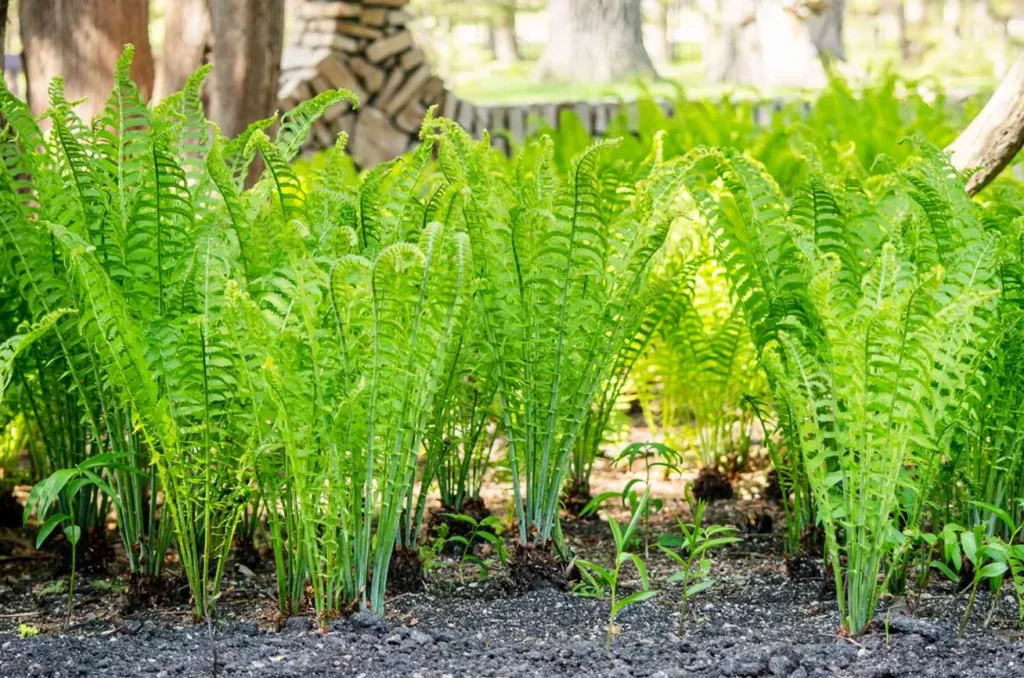
Their Reproductive Process and raising their children
Ferns reproduce in a way that is very different from flowering plants. They do not produce seeds, flowers, or fruits. Their reproduction depends on spores, moisture, and a two-stage life cycle.
Key points of fern reproduction:
- The adult fern is the sporophyte generation.
- Sporangia form under mature fronds.
- Sporangia produce haploid spores.
- Spores are released and spread by wind, water, or gravity.
- A spore grows into a small gametophyte.
- The gametophyte produces eggs and sperm.
- Sperm need water to swim toward the egg.
- Fertilization creates a zygote.
- The zygote develops into a young fern sporophyte.
Ferns do not “raise children” in the animal sense. They have no parental care, nests, feeding behavior, or protection of young after spore release. However, the young sporophyte may stay attached to the gametophyte for a short time and absorb nutrients from it before becoming independent.
This means the gametophyte acts like a temporary support system. Once the young fern develops its own root and fronds, it begins to make food through photosynthesis.
The reproductive success of ferns depends strongly on environmental conditions. Moisture, shade, suitable soil, and protection from drying are very important. In dry conditions, spores may fail to germinate, or sperm may not reach the egg.
Important Things That You Need To Know
Many people search for ferns because they are useful in gardens, homes, forests, and decorative landscapes. There are many types of ferns, including Boston ferns, maidenhair ferns, bird’s nest ferns, staghorn ferns, tree ferns, and bracken ferns. Each type has different leaf shapes, moisture needs, and growing habits.
The phrase “fern and petal” is often associated with plant decoration, gifting, and floral arrangements, but, scientifically, ferns are not flowering plants. They do not produce petals. Instead, their beauty comes from elegant fronds, green texture, and natural patterns.
Many people also ask, ” Are ferns toxic to cats? The answer depends on the species. True Boston ferns are generally considered pet-friendly, but some plants with “fern” in the common name are not true ferns and may be harmful. Pet owners should always identify the exact plant before keeping it indoors.
People searching for ferns for sale often choose them for shaded balconies, hanging baskets, bathrooms, offices, and indoor corners. Hanging ferns are popular because their long fronds create a soft, natural look. However, they need proper humidity, indirect light, and regular watering.
For home care, ferns usually prefer:
- Indirect sunlight
- Moist but not waterlogged soil
- Good drainage
- Humid air
- Protection from harsh afternoon sun
- Occasional removal of dry fronds
Understanding these points helps people grow ferns successfully while also appreciating their natural life cycle.
The importance of them in this Ecosystem
Ferns Support Forest Balance
Ferns play an important role in forest ecosystems. They cover soil, reduce erosion, hold moisture, and create microhabitats for insects, small animals, fungi, and microorganisms. In shaded forests, ferns help maintain ground-level biodiversity.
Their roots and rhizomes stabilize soil, especially on slopes, riverbanks, and moist forest floors. This reduces soil loss during rain and protects the natural structure of the land.
Ferns Help Nutrient Cycling
When fern fronds die, they decompose and return nutrients to the soil. This supports bacteria, fungi, worms, and other decomposers. Over time, fern litter improves soil texture and contributes to organic matter.
Ferns also interact with fungi and soil organisms, helping create a healthy underground ecosystem.
Ferns Provide Shelter
Many small insects, amphibians, and invertebrates use fern patches as shelter. Dense fern growth can provide shade, humidity, and protection from predators. In tropical forests, large ferns and tree ferns may support even more organisms.
Ferns as Pioneer Plants
Some ferns can grow in disturbed areas after landslides, fires, or forest gaps. Their spores can travel widely and establish quickly in suitable conditions. This makes them useful in ecological recovery.
Because of these roles, ferns are more than ornamental plants. They are part of the natural system that supports soil, water, wildlife, and forest regeneration.
What to do to protect them in nature and save the system for the future
Protecting ferns means protecting the moist, shaded, and biodiverse habitats where they grow. Many fern species are common, but some rare ferns are threatened by habitat destruction, over-collection, climate change, and pollution.
To protect ferns and their ecosystems, we should follow practical conservation steps:
- Protect natural forests where wild ferns grow under shaded canopies.
- Avoid over-harvesting wild ferns, especially rare species and slow-growing tree ferns.
- Buy nursery-grown ferns instead of plants collected illegally from forests.
- Keep wetlands and riverbanks clean, because many fern species need moist habitats.
- Reduce chemical pollution from pesticides, herbicides, and industrial waste.
- Support native fern planting in gardens, parks, and restoration projects.
- Avoid damaging forest floors by unnecessary trampling, digging, or clearing.
- Educate people about fern reproduction, so they understand why moisture and habitat protection matter.
- Control invasive plants that outcompete native fern species.
- Protect old trees and shaded areas, because many ferns grow in cool, humid environments.
- Use sustainable landscaping with native ferns instead of water-demanding ornamental plants.
- Encourage botanical research to identify rare and endangered fern species.
Conserving ferns helps protect soil stability, forest moisture, biodiversity, and the future health of natural ecosystems.
Frequently Asked Questions (FAQs)
Q1: What is the life cycle in ferns?
A: The life cycle in ferns includes spore production, gametophyte growth, fertilization, young sporophyte development, and mature fern growth. This is called alternation of generations.
Q2: Do ferns have seeds?
A: No. Ferns do not produce seeds. They reproduce through spores, which are usually formed in sporangia under the fronds.
Q3: What are sori in ferns?
A: Sori are clusters of spore-producing structures found on the underside of fern fronds. They often look like small brown, yellow, or orange dots.
Q4: Why do ferns need water to reproduce?
A: Fern sperm must swim through a thin layer of water to reach the egg. Without moisture, fertilization becomes difficult or impossible.
Q5: What is the main plant body of a fern?
A: The visible leafy fern is the sporophyte. It is the dominant stage in the fern life cycle and produces spores.
Q6: Are Boston ferns real ferns?
A: Yes. Boston ferns are true ferns and are popular as indoor and hanging plants because of their soft, arching fronds.
Q7: Are ferns toxic to cats?
A: Some true ferns, such as Boston ferns, are generally considered safe for cats. However, some plants with “fern” in their name are not true ferns and may be toxic, so exact identification is important.
Q8: Where do ferns grow best?
A: Most ferns grow best in moist, shaded, and humid places. They prefer indirect light, organic-rich soil, and protection from extreme dryness.
Conclusion
The life cycle in ferns is a powerful example of how ancient plants continue to survive without flowers, fruits, or seeds. Ferns use spores, gametophytes, fertilization, and sporophytes to complete a unique two-generation life cycle. This process allows them to grow in forests, wetlands, rocky slopes, shaded gardens, and tropical habitats.
Ferns are not only beautiful plants for homes and landscapes; they are also valuable for their ecological benefits. They are also important for soil protection, moisture balance, biodiversity, and ecosystem recovery. From Boston ferns in hanging baskets to wild ferns in forests, these plants connect ancient plant evolution with modern ecological value.
Protecting ferns means protecting the habitats that support them. When forests, wetlands, and shaded ecosystems are preserved, ferns continue to play their natural role in maintaining a balanced, green, and alive environment.
Also Read: bunny life cycle