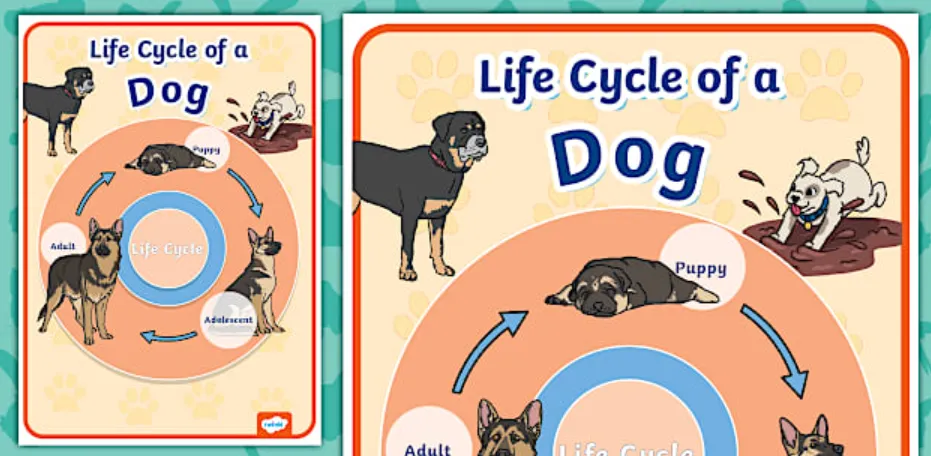
The dog’s life cycle explains how a dog grows from birth to old age. Dogs are domesticated mammals, scientifically known as Canis lupus familiaris. They belong to the Canidae family, which also includes wolves, foxes, coyotes, and jackals.
A dog’s life begins inside the mother’s womb, usually developing for about 63 days before birth. After birth, puppies depend completely on their mother for warmth, milk, cleaning, and protection. As they grow, they pass through important stages, including the newborn, puppy, adult, and senior stages.
Unlike many wild animals, most dogs live closely with humans. Their growth, health, behavior, diet, and lifespan are strongly influenced by human care. A well-fed, vaccinated, and loved dog can live much longer than a neglected or stray dog.
The life cycle of dogs also varies by breed size. Small dogs often mature faster and live longer, while large and giant breeds grow more slowly and usually have shorter lifespans. Understanding each stage helps owners provide better food, training, medical care, exercise, and emotional support.
Quick Answers: Most Common Questions
Q: How many stages are in a dog’s life cycle?
A: The dog life cycle is commonly divided into four main stages: newborn, puppy, adult, and senior.
Q: How long does a dog usually live?
A: Most dogs live around 10 to 13 years, but small breeds may live 14 to 18 years, while giant breeds may live only 7 to 10 years.
Q: How long is a dog pregnant?
A: A female dog’s pregnancy usually lasts about 63 days, although it can vary slightly depending on breed and individual health.
Important Things That You Need To Know
Before learning the full dog’s life cycle, it is important to understand that dogs are not all the same. Their growth speed, body size, behavior, maturity, and lifespan depend on breed, genetics, nutrition, lifestyle, and medical care.
One key fact is that puppies grow very quickly during the first year of life. A small-breed puppy may become physically mature in less than one year, while a giant-breed dog may continue growing for almost two years. This means food and exercise must match the dog’s age and body size.
Another important point is that domestic dogs rely heavily on humans. Their life cycle is shaped by feeding, vaccination, training, shelter, grooming, and regular vet care. A dog with responsible care usually has better immunity, stronger bones, healthier teeth, and a longer life.
The dog’s lifespan is also connected to weight control. Overfeeding can cause obesity, which increases the risk of diabetes, joint pain, heart problems, and a shorter life. Healthy food and daily movement are essential.
Finally, the canine life cycle includes emotional development. Dogs are social animals. They need love, bonding, play, training, and mental stimulation. Without these, they may develop fear, aggression, anxiety, or destructive behavior.
Key LSI terms to remember are dogs, puppies, dog lifespan, domestic dogs, and canine life cycle.
Quick Life Cycle Table
| Life Stage | Approx. Age | Key Changes | Care Needed |
| Newborn Stage | Birth to 2 weeks | Eyes closed, depends on mother, sleeps most of the time | Warmth, mother’s milk, clean bedding |
| Puppy Stage | 2 weeks to 6 months | Walking, teething, learning, and social behavior begin | Vaccines, soft food, training, socialization |
| Adolescent / Young Adult Stage | 6 months to 2 years | Sexual maturity, high energy, stronger body | Exercise, discipline, and a balanced diet |
| Adult Stage | 2 to 7 years | Fully grown, stable behavior, reproductive ability | Regular vet care, exercise, and nutrition |
| Senior Stage | 7+ years | Slower movement, weaker joints, and possible health issues | Senior diet, gentle exercise, and medical checkups |
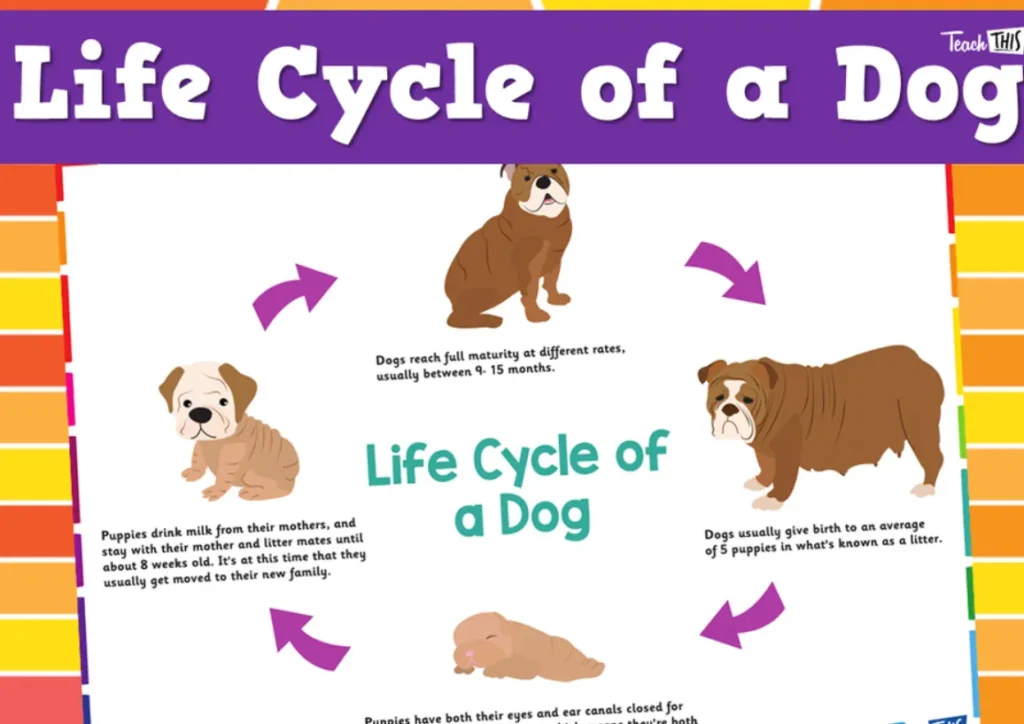
The History of Their Scientific Naming, Evolution, and Origin
Scientific Naming of Dogs
The scientific name of the domestic dog is Canis lupus familiaris. This name shows that dogs are closely related to the gray wolf, Canis lupus. The word Canis means dog-like animals, while familiaris refers to their close connection with humans.
Dogs belong to the Animalia kingdom, Mammalia class, Carnivora order, and Canidae family. Although they are scientifically called carnivores, modern dogs can digest both animal- and plant-based foods.
Evolution from Wolves
Dogs evolved from ancient wolf-like ancestors. Over thousands of years, some wolves became less fearful of humans and began living near human settlements. These animals may have survived by eating food scraps and helping humans by warning them about danger.
Over time, humans selected friendlier, calmer, and more useful dogs for breeding. This process slowly created the domestic dog.
Origin of Domestic Dogs
Dogs are among the earliest domesticated animals in human history. Their origin is connected to hunting, protection, companionship, and cooperation. Today, dogs exist in hundreds of breeds, from tiny companion dogs to large working dogs.
Their evolution shows one of the strongest relationships between humans and animals.
Their Reproductive Process, Giving Birth And Rising Their Children
Sexual Maturity in Dogs
Dogs usually reach sexual maturity between 6 and 12 months of age. However, this depends on breed size. Small dogs may mature earlier, while large and giant breeds may mature later.
Female dogs go through a reproductive cycle called the estrous cycle. This is often called being “in heat.” During this time, a female dog can mate and become pregnant.
Mating and Pregnancy
After mating, fertilization may occur inside the female dog’s body. The pregnancy period of a dog is usually around 63 days. During this time, the puppies grow inside the mother’s uterus.
Pregnant dogs need proper food, clean water, rest, and veterinary attention. Poor nutrition or stress can affect both the mother and the unborn puppies.
Giving Birth
The birth process is called whelping. Before giving birth, the mother may become restless, search for a quiet place, and prepare a nest-like area. A litter can contain one to twelve puppies, but many dogs give birth to about four to six puppies on average.
Newborn puppies are born blind, deaf, and helpless. They cannot control their body temperature well, so they stay close to their mother.
Raising Their Children
Mother dogs clean their puppies, feed them milk, and keep them warm. The first milk, called colostrum, is very important because it gives puppies early immune protection.
Puppies begin opening their eyes at around 10 to 14 days. They slowly learn to walk, play, bark, and interact. By about 6 to 8 weeks, many puppies begin eating solid food and become more independent.
Responsible human care is also important during this stage. Puppies need vaccination, deworming, safe handling, and early socialization.
Stages of a Dog’s Life Cycle
1. Newborn Stage
The newborn stage begins at birth and lasts about 2 weeks. At this stage, puppies are extremely weak and dependent. Their eyes and ears are closed, and they spend most of their time sleeping and drinking milk.
Newborn puppies cannot regulate body temperature properly. They need warmth from their mother and littermates. A cold environment can be dangerous for them.
During this stage, the mother plays the most important role. She feeds, cleans, protects, and stimulates the puppies so they can defecate.
2. Puppy Stage
The puppy stage is one of the most important parts of the dog’s life cycle. It usually begins after the newborn period and continues until around six months, though development can vary by breed.
Puppies start walking, playing, chewing, and exploring their surroundings. Their teeth begin to grow, and they learn important social behavior from their mother, siblings, and humans.
This is the best time for early training. Puppies can learn simple commands, toilet habits, and safe behavior. Positive training works better than punishment.
3. Adult Stage
A dog becomes an adult when its body is fully developed. Small dogs may reach adulthood earlier, while large dogs may take longer.
Adult dogs usually have stable energy levels, stronger muscles, and more mature behavior. They need balanced food, daily exercise, grooming, mental stimulation, and regular health checks.
This is also the main reproductive stage. Adult male and female dogs can produce puppies if they are not neutered or spayed.
4. Senior Stage
The senior stage begins when dogs start aging. For many dogs, this begins around 7 years, but small breeds may become seniors later, while giant breeds may age earlier.
Senior dogs may move more slowly, sleep more, gain weight easily, or develop joint pain. Their eyesight, hearing, teeth, and organs may become weaker.
Older dogs need gentle care. A senior-friendly diet, soft bedding, regular vet visits, and light exercise can improve their comfort and quality of life.
Their main diet, food sources, and collection process are explained
Dogs are scientifically classified in the order Carnivora, but modern domestic dogs are not strict meat-eaters. They are often described as omnivorous carnivores because they can eat both animal-based and plant-based foods when properly balanced.
Main Diet of Dogs
A healthy dog diet usually includes:
- Protein from meat, fish, eggs, or approved dog food ingredients
- Fats for energy, skin health, and coat quality
- Carbohydrates from grains, rice, oats, or vegetables
- Vitamins and minerals for bones, immunity, and body function
- Clean water for digestion, temperature control, and organ health
Dogs need different diets at different life stages. Puppies need more calories and protein for growth. Adult dogs need maintenance food. Senior dogs may need lower-calorie food with joint and digestive support.
Food Sources
Most pet dogs get food from humans. This may include commercial dog food, home-prepared meals, or veterinary-recommended diets. Working dogs, street dogs, and free-ranging dogs may also eat scraps, small animals, or leftover human food.
However, not all human food is safe. Chocolate, grapes, raisins, onions, garlic, alcohol, and some artificial sweeteners can be dangerous for dogs.
Collection Process
Domestic dogs do not usually “collect” food like wild animals. Pet dogs receive food from their owners. Stray or free-ranging dogs may search for garbage, hunt small prey, or depend on community feeding.
In a healthy home environment, the best feeding process is responsible human feeding. Proper feeding prevents Disease, aggression, malnutrition, and food-related poisoning.
How Long Does a Dog Live
The lifespan of dogs depends on breed, size, genetics, diet, medical care, activity level, and living conditions. There is no single exact lifespan for all dogs because a Chihuahua and a Great Dane age very differently.
- Average lifespan: Most dogs live around 10 to 13 years. This is a general range for many mixed-breed and medium-sized dogs.
- Small breeds live longer: Small dogs such as Chihuahuas, Dachshunds, Toy Poodles, and Shih Tzus often live 14 to 18 years. Some may live even longer with excellent care.
- Medium breeds: Medium-sized dogs such as Beagles, Cocker Spaniels, and Border Collies often live around 11 to 15 years.
- Large breeds: Large dogs such as Labradors, German Shepherds, Golden Retrievers, and Boxers often live around 10 to 13 years.
- Giant breeds: Giant dogs such as Great Danes, Saint Bernards, and Mastiffs often have shorter lifespans, usually around 7 to 10 years.
- Mixed-breed dogs: They may sometimes have fewer inherited health problems, but this is not guaranteed. Their lifespan depends on their genetic background and the care they receive.
- Healthy weight matters: Overweight dogs often have shorter lives because obesity increases pressure on joints, heart, liver, and lungs.
- Vet care increases lifespan: Vaccination, deworming, dental care, parasite prevention, and early disease treatment can help dogs live longer.
- Mental health is important: Dogs with stress, loneliness, fear, or poor socialization may develop behavior and health issues.
- Exercise supports a long life: Daily walking, play, and mental enrichment help maintain strong muscles, a healthy weight, and emotional balance.
- Senior care can enhance comfort: Older dogs need regular checkups, pain management, softer food if their teeth are weak, and a safe living space.
A dog may not live as long as humans, but each stage of its life can be healthy and meaningful when it receives proper love, food, safety, and medical care.
Dogs’ Lifespan in the Wild vs. in Captivity
Dogs in Human Care
Most domestic dogs live in human homes, shelters, farms, or working environments. In this controlled setting, they usually have better access to food, clean water, vaccines, parasite control, and medical treatment.
Because of this care, dogs in homes often live longer than street or free-ranging dogs. A well-cared-for dog may live beyond its average expected lifespan, especially if it has a healthy body weight and regular veterinary support.
Free-Ranging or Stray Dogs
It is more accurate to say “free-ranging dogs” or “stray dogs” rather than “wild dogs,” because domestic dogs are not naturally wild animals in the same way wolves or foxes are.
Stray dogs face many risks. These include hunger, road accidents, infections, parasites, extreme weather, fights, poisoning, and lack of medical care. As a result, their average lifespan is often shorter than that of pet dogs.
Captivity vs. Natural Survival
In this topic, “captivity” usually means human-managed care, not zoo captivity. Dogs are domesticated animals, so responsible human care is not unnatural for them. In fact, dogs evolved to live closely with humans.
The safest life for most dogs is a balanced human-care environment that allows them to move, play, socialize, and receive proper health care.
Importance of the Dog’s Life Cycle in this Ecosystem
Role of Dogs in Human Society
Dogs are not only pets. They play important roles in human communities. They help guard homes, herd livestock, assist people with disabilities, detect danger, support police work, and provide emotional companionship.
Understanding the dog’s life cycle helps humans care for them responsibly at every stage of life.
Ecological Influence
Dogs can affect ecosystems in both positive and negative ways. Well-managed dogs can protect farms, help guide livestock, and support human safety. However, unmanaged stray dogs may disturb wildlife, spread Disease, or compete with native animals.
This is why responsible ownership is important. Vaccinated, trained, and controlled dogs are safer for both humans and nature.
Emotional and Social Value
Dogs provide strong emotional benefits. They reduce loneliness, encourage exercise, and support mental well-being. Children can also learn responsibility, kindness, and empathy by caring for dogs.
Health and Disease Control
Dogs can carry diseases if they are not vaccinated or treated. Rabies prevention, parasite control, and population management are important for public health.
So, dogs are important in the human ecosystem, but their impact depends on how responsibly people care for them.
What to do to protect them in nature and save the system for the future
1. Support Responsible Dog Ownership
- Give dogs proper food, clean water, shelter, exercise, and medical care.
- Never abandon dogs when they grow old, become sick, or become difficult to manage.
- Train dogs with patience and positive methods.
2. Vaccinate and Prevent Disease
- Vaccination protects dogs from serious diseases like rabies and parvovirus.
- Regular deworming and parasite control reduce illness.
- Healthy dogs also protect human communities and wildlife.
3. Control Stray Dog Population Humanely
- Spaying and neutering help reduce the number of unwanted puppies.
- Community dog programs should focus on humane care, vaccination, and adoption.
- Killing or harming stray dogs does not solve the long-term problem.
4. Protect Wildlife from Uncontrolled Dogs
- Keep pet dogs on a leash in sensitive natural areas.
- Do not allow dogs to chase birds, deer, reptiles, or small mammals.
- Responsible control protects both dogs and wild animals.
5. Encourage Adoption and Education
- Adopt from shelters when possible.
- Teach children how to treat dogs safely and kindly.
- Public awareness helps reduce neglect, abuse, and abandonment.
Protecting dogs also helps maintain the balance among humans, animals, and the environment.
Fun & Interesting Facts About Dogs’ Life Cycle
- Dogs are descendants of wolf-like ancestors, but modern dogs have become highly adapted to human life.
- A puppy’s eyes usually open around 10 to 14 days after birth.
- Puppies are born without the ability to hear clearly. Their hearing develops after birth.
- Dogs have a much stronger sense of smell than humans do.
- Small dog breeds usually live longer than giant dog breeds.
- A dog’s nose print is unique, similar to a human fingerprint.
- Dogs can understand human tone, body language, and repeated words.
- Puppies learn important behavior through play with their littermates.
- Senior dogs may become calmer, more affectionate, and more dependent on routine.
- Dogs dream during sleep, especially after active play or training.
- A mother dog communicates with her puppies through smell, touch, sound, and body posture.
- Dogs can form deep emotional bonds with humans and other animals.
- Regular dental care can improve a dog’s overall health and comfort.
- A dog’s life cycle is strongly shaped by human care, unlike many wild animals.
Frequently Asked Questions (FAQs)
Q: What is the dog’s life cycle?
A: The dog’s life cycle is the complete growth journey of a dog from birth to old age. It includes the newborn, puppy, adult, and senior stages.
Q: At what age does a puppy become an adult dog?
A: Small dogs may become adults around 9 to 12 months, while large and giant breeds may take 18 to 24 months to mature fully.
Q: How many puppies can a dog give birth to?
A: A dog can give birth to one or many puppies. Many dogs have around four to six puppies, but litter size depends on breed, age, health, and genetics.
Q: Why do small dogs live longer than big dogs?
A: Small dogs often age more slowly than large and giant dogs. Large breeds grow faster and may experience more stress on joints, organs, and body systems.
Q: How can I help my dog live longer?
A: You can help your dog live longer by giving balanced food, regular exercise, vaccines, parasite control, dental care, safe shelter, emotional attention, and routine vet checkups.
Conclusion
The dog’s life cycle is a beautiful journey from a helpless newborn puppy to an active adult, and finally to a wise senior companion. Each stage has different needs, and understanding these stages helps humans give better care.
Dogs depend greatly on people for food, safety, training, health care, and emotional support. Their lifespan can change depending on breed size, genetics, diet, exercise, and medical attention. A dog that receives responsible care can live a healthier, happier, and longer life.
Dogs are more than animals in our homes. They are loyal companions, helpers, protectors, and emotional supporters. At the same time, humans must manage dogs responsibly to prevent harm to wildlife or public health.
By learning about the life cycle of dogs, we can respect them more deeply and protect their future with kindness, knowledge, and responsibility.
Also Read: bunny rabbit life cycle