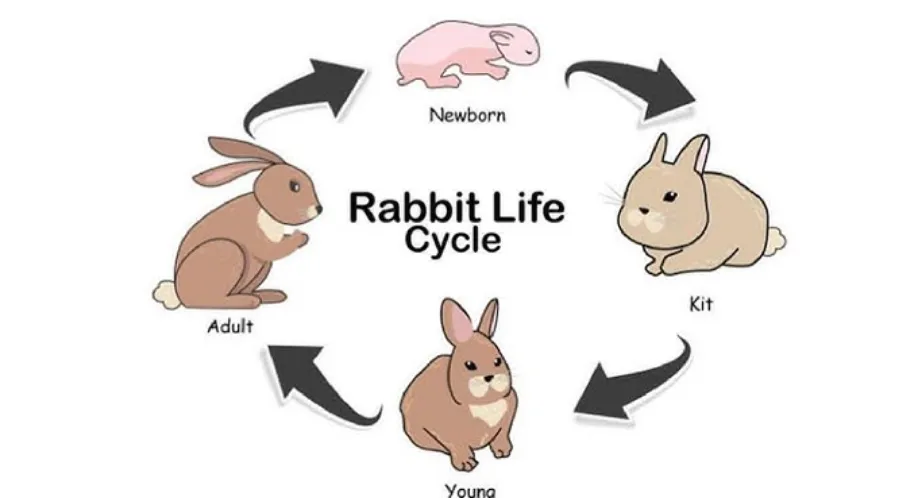
The bunny rabbit life cycle describes how a rabbit grows from a tiny newborn kit into a young rabbit and finally into a mature adult. In everyday language, people often say “bunny rabbit,” but scientifically, rabbits are mammals in the family Leporidae. The domestic bunny rabbit comes from the European rabbit, scientifically known as Oryctolagus cuniculus. Britannica notes that rabbits are long-eared mammals in the family Leporidae, and that domestic rabbit breeds originate from the European rabbit.
A newborn bunny rabbit is very delicate. It is usually born blind, deaf, hairless, and fully dependent on the mother. Within about 10 days, the eyes and ears open, and by 4–5 weeks, many kits are ready for weaning. Rabbit pregnancy is short, usually around 31–33 days, which explains why rabbits can reproduce quickly under suitable conditions.
Quick Answers: Most Common Questions
Q: What is a baby bunny rabbit called?
A: A baby bunny rabbit is called a kit or kitten. The adult female is called a doe, and the adult male is called a buck.
Q: How long is a bunny rabbit pregnant?
A: A rabbit’s pregnancy, or gestation period, usually lasts about 31 to 33 days.
Q: How long does a bunny rabbit live?
A: Many pet rabbits can live around 8–12 years with proper care, while wild rabbits often have much shorter lives because of predators, disease, food shortage, and weather stress.
Quick Life Cycle Table
| Stage | Age Range | What Happens | Care or Survival Need |
| Newborn Kit | Birth–10 days | Born blind, deaf, and hairless | Warm nest, mother’s milk, safety |
| Growing Kit | 10 days–4/5 weeks | Eyes open, fur grows, and it starts exploring | Milk, clean nest, protection |
| Juvenile Rabbit | 5 weeks–3/4 months | Weaned, eats more solid food, grows fast | Hay/grass, safe space, disease prevention |
| Young Adult | 3.5–9 months | Sexual maturity begins depending on the breed size | Responsible separation/spay-neuter planning |
| Adult Rabbit | 6 months onward | Fully active, social, reproductive | Balanced diet, shelter, enrichment |
The History of Their Scientific Naming, Evolution, and Origin
Scientific Name: Oryctolagus cuniculus
The domestic bunny rabbit belongs primarily to the species Oryctolagus cuniculus, commonly known as the European rabbit. Current taxonomy places it under Animalia, Chordata, Mammalia, Lagomorpha, Leporidae, Oryctolagus, O. cuniculus.
Meaning Behind the Name
The genus name Oryctolagus is linked with the idea of a burrowing hare, which fits the rabbit’s habit of digging underground warrens. The species name cuniculus is historically associated with burrows or tunnels. This naming reflects one of the most important features of rabbits: they are not just surface-dwelling animals; many species are skilled diggers.
Evolution and Origin
The European rabbit is native to parts of southwestern Europe, especially the Iberian region, and later spread widely through human movement, domestication, and introduction. Britannica states that the European rabbit has been introduced worldwide and that all domestic rabbit breeds descend from this species.
Domestication
Humans domesticated rabbits for food, fur, research, companionship, and show breeds. Today, the bunny rabbit is one of the most familiar small mammals in homes, farms, classrooms, and children’s books.
Their Reproductive Process, Giving Birth, And Rising Their Children
Mating and Sexual Maturity
Rabbits mature quickly. Small breeds may become sexually mature at around 3.5–4 months, medium-to-large breeds around 4–4.5 months, and giant breeds around 6–9 months. Female rabbits are induced ovulators, meaning egg release is triggered by mating rather than a human-like monthly cycle.
Pregnancy and Nest Building
A pregnant female rabbit, called a doe, usually carries her young for about 31–33 days. Near the end of pregnancy, she prepares a nest with bedding material and pulls soft fur from her chest and belly to keep the newborn kits warm.
Giving Birth to Kits
The birth process is often called kindling. Newborn kits are very fragile because they are born naked, blind, and deaf. They cannot regulate body temperature well during the first week, so a warm, dry, protected nest is essential.
Raising Their Young
Mother rabbits usually nurse only once or twice daily, and each feeding may last just a few minutes. This is normal rabbit behavior and helps prevent predators from being drawn to the nest in the Wild. Kits grow quickly, open their eyes and ears around day 10, and are commonly weaned around 4–5 weeks, though domestic kits may be weaned closer to 6 weeks depending on management.
Stages of Bunny Rabbit Life Cycle
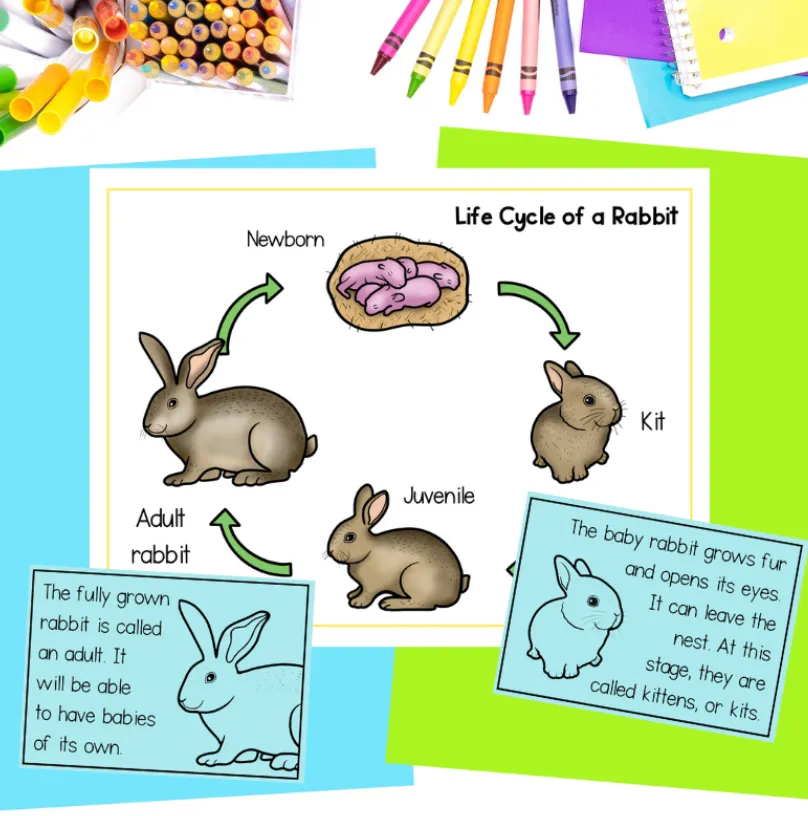
1. Newborn Kit Stage
The first stage of the bunny rabbit life cycle begins at birth. A newborn kit is small, hairless, blind, deaf, and completely dependent on its mother. It stays in the nest and relies on warmth, milk, and protection. At this stage, survival is closely linked to nest quality and the mother’s care.
2. Growing Kit Stage
Within a few days, the kit begins to grow fur. Around day 10, its eyes and ears open. This is an important turning point because the young rabbit becomes more aware of its surroundings. It still depends on milk, but it slowly becomes more active.
3. Juvenile Rabbit Stage
After weaning, the young rabbit begins eating more solid food such as grass, hay, and soft plant material. Juvenile rabbits grow rapidly and learn movement, grooming, social behavior, and foraging. In the Wild, this is a risky period because young rabbits are vulnerable to foxes, birds of prey, snakes, cats, and other predators.
4. Adult Rabbit Stage
The final stage is adulthood. Adult rabbits can reproduce, defend territory, forage, groom, dig, and communicate with other rabbits. In domestic settings, adult rabbits need hay, fresh water, safe housing, exercise, and companionship. In wild ecosystems, adult rabbits serve as grazers, prey, seed dispersers, and burrow builders.
Important Things That You Need To Know
When researching the bunny rabbit life cycle, you may see related searches such as bunny rabbit, bunny rabbit drawing, bunny rabbit cartoon, how to draw a bunny rabbit, stuffed bunny rabbit, and bunny rabbit for sale. These terms show that rabbits are not only biological animals but also popular in education, art, toys, and pet ownership.
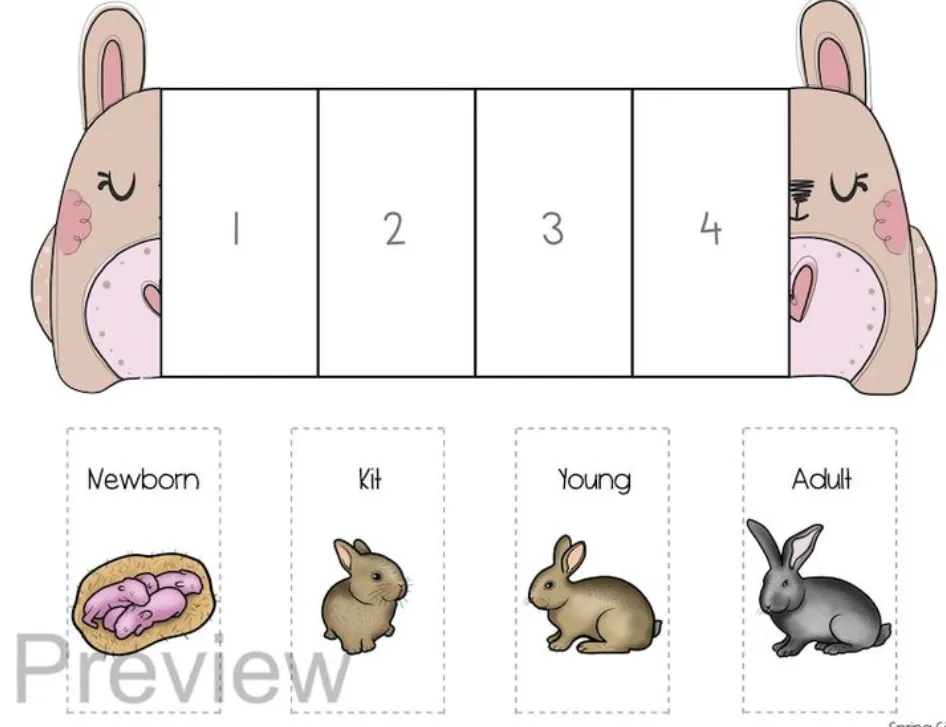
A bunny rabbit drawing or bunny rabbit cartoon is useful for children’s learning materials because it helps explain the life cycle visually. Many teachers use simple diagrams to show the stages: newborn kit, growing kit, juvenile rabbit, and adult rabbit. Searches like “how to draw a bunny rabbit” are usually related to school projects, worksheets, and science activities.
A stuffed bunny rabbit is a toy, not a real animal, but it often helps young children become interested in animal care and nature. However, it is important to teach children that a real bunny rabbit needs daily care, proper diet, safe housing, and gentle handling.
For searches like bunny rabbit for sale, readers should be careful. A rabbit should never be bought impulsively as a holiday gift or decoration. Responsible adoption, rescue centers, ethical breeders, veterinary checks, and long-term care planning are much safer choices. Also, unrelated adult-coded search terms should not be mixed with educational rabbit life cycle content, especially when the topic is for children, schools, or pet-care readers.
Their main diet, food sources, and collection process are explained
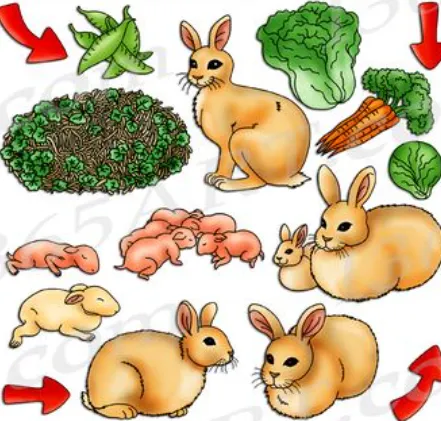
Rabbits are herbivores, meaning they eat plant-based foods. In the Wild, rabbits mainly feed on grasses, forbs, young shoots, leaves, herbs, bark, and sometimes crops. Britannica explains that rabbits eat plant material rich in cellulose and that their digestive systems are adapted to process this difficult plant fiber.
For pet rabbits, the healthiest diet is not based on carrots. Good rabbit care usually starts with unlimited hay or grass, clean water, leafy greens, and only a small amount of rabbit pellets. The RSPCA advises that most of a pet rabbit’s diet should be fresh hay and grass, with leafy greens and a few pellets; fruits and root vegetables should be occasional treats.
Main Food Sources
- Grass and hay: The most important food for digestion and tooth wear.
- Leafy greens: Safe greens and herbs provide variety and micronutrients.
- Fresh water: Needed constantly for digestion and hydration.
- Bark and shoots: Common in wild rabbits, especially when green food is limited.
- Pellets: Useful in small measured amounts for domestic rabbits.
Collection Process in Nature
Wild rabbits usually forage during safer times such as dawn, dusk, or night. They collect food by grazing close to cover, staying alert, and returning quickly to burrows or hiding areas when danger appears.
How Long Does A Bunny Rabbit Live
The lifespan of a bunny rabbit depends strongly on whether it lives in the Wild, in a home, in a farm setting, or in a rescue environment. Wild rabbits face predators, disease, parasites, harsh weather, food shortages, habitat loss, and human disturbance. Pet rabbits can live much longer when they receive a proper diet, housing, exercise, companionship, and veterinary care.
- Wild rabbits often live shorter lives. Many wild rabbits do not survive their first year because they are prey animals. Animal Diversity Web notes that first-year mortality in wild European rabbit populations can be very high.
- Domestic rabbits can live for many years. A well-cared-for pet rabbit typically lives 8–12 years, although the exact lifespan depends on breed, genetics, diet, dental health, exercise, stress, and veterinary care.
- Diet has a major effect on lifespan. Rabbits need high-fiber food. Too many sugary treats, too many pellets, or a low-hay diet can lead to obesity, dental disease, and digestive problems.
- Breed size can matter. Smaller breeds often mature earlier, while giant breeds mature later. Lifespan can vary by breed, but care quality is usually more important than breed alone.
- Dental health is critical. Rabbit teeth grow continuously, so chewing hay and grass helps wear them naturally.
- Stress affects survival. Loud environments, unsafe handling, predator exposure, isolation, and poor housing can reduce health and lifespan.
- Spaying or neutering may improve pet management. It can reduce unwanted breeding and certain behavior or reproductive health issues, but it should be discussed with a qualified veterinarian.
- Clean housing matters. Dry bedding, ventilation, parasite control, and protection from heat or cold help prevent disease.
- Companionship improves welfare. Rabbits are social animals, and many do best with a compatible rabbit companion when properly introduced.
- Regular vet care is essential. A rabbit-savvy veterinarian can help monitor teeth, weight, digestion, vaccination needs, and reproductive health.
Bunny Rabbit Lifespan in the Wild vs. in Captivity
Lifespan in the Wild
In the Wild, the bunny rabbit life cycle is shaped by survival pressure. Wild rabbits must find food, avoid predators, escape disease, survive weather, and protect their young. Many wild rabbits live only months to a few years. Young kits are especially vulnerable because they are small, slow, and dependent on safe nesting areas.
Rabbits are prey for many animals, including foxes, cats, stoats, polecats, birds of prey, and other predators. The Mammal Society describes rabbits as important prey animals and notes that several predators hunt young rabbits.
Lifespan in Captivity
In captivity, especially as pets, rabbits may live much longer because they have a steady supply of food, shelter, protection from predators, and medical care. However, captivity only improves lifespan when care is correct. A rabbit kept in a small cage, fed the wrong diet, or isolated without exercise may suffer poor health.
Main Difference
The biggest difference is risk control. Wild rabbits face natural danger daily. Pet rabbits depend on humans to provide safety, nutrition, exercise, and emotional welfare.
Importance of Bunny Rabbit in this Ecosystem
They Are Important Prey Animals
Rabbits support many predator populations. Foxes, birds of prey, wild cats, mustelids, snakes, and other carnivores may depend on rabbits as a food source. This makes rabbits an important link in the food chain.
They Help Shape Vegetation
Because rabbits graze grasses, herbs, shoots, and young plants, they influence plant growth patterns. In some ecosystems, moderate grazing can help keep grassland open and create space for different plant species.
They Support Soil Movement Through Burrowing
Burrowing rabbits help move soil, create underground spaces, and improve small-scale soil mixing. The Mammal Society describes rabbits as ecosystem engineers because of their burrowing and grazing behavior.
They Create Shelter Opportunities
Insects, reptiles, small mammals, and other animals can sometimes use old rabbit burrows. This means rabbit activity can indirectly support other forms of life.
They Can Become Problematic Outside Native Ranges
Rabbits are beneficial in many natural food webs, but introduced rabbits can damage crops, compete with native species, and overgraze vegetation. That is why rabbit management must be balanced with local ecology.
What to do to protect them in nature and save the system for the future
1. Protect Natural Habitat
- Preserve grasslands, hedgerows, woodland edges, and safe burrowing areas.
- Avoid destroying nesting sites during breeding seasons.
- Maintain natural vegetation corridors so rabbits and other wildlife can move safely.
2. Reduce Harmful Chemical Use
- Avoid unnecessary pesticides, herbicides, and toxic lawn treatments.
- Chemicals can poison plants rabbits eat and harm insects, soil organisms, and predators.
3. Control Domestic Pet Pressure
- Keep pet cats and dogs supervised in wildlife-rich areas.
- Domestic predators can disturb or kill young rabbits, especially near gardens and fields.
4. Avoid Releasing Pet Rabbits into the Wild
- Never release a pet bunny rabbit outdoors.
- Domestic rabbits often cannot survive well in the Wild and may spread disease or disrupt local ecosystems.
5. Support Responsible Conservation and Rescue
- Choose adoption from shelters when possible.
- Support local wildlife groups, rescue centers, and habitat restoration projects.
- Teach children that rabbits are living animals, not temporary toys or seasonal gifts.
Fun & Interesting Facts About Bunny Rabbit
- Baby rabbits are called kits, not puppies or cubs.
- A female rabbit is a doe, and a male rabbit is a buck.
- Newborn kits are born blind, deaf, and hairless, which makes them very different from young hares.
- Rabbits and hares are often confused, but hares are usually born more developed, with fur and open eyes.
- Rabbits communicate by scent, body language, touch, and sometimes thumping their back feet to warn others of danger.
- Rabbits have continuously growing teeth, so chewing fibrous food is essential.
- A rabbit’s digestive system uses a special process called coprophagy, in which soft, nutrient-rich droppings are re-eaten to absorb more nutrients.
- Rabbits are most active around dawn and dusk, which is called crepuscular behavior.
- A group of rabbit tunnels is called a warren.
- Carrots should be treats, not the main food. Hay and grass are far more important for daily rabbit health.
Frequently Asked Questions (FAQs)
Q: What are the main stages of the bunny rabbit life cycle?
A: The main stages are newborn kit, growing kit, juvenile rabbit, and adult rabbit. Some guides also include pregnancy and nesting as part of the full life cycle.
Q: How soon do baby bunny rabbits open their eyes?
A: Baby rabbits usually open their eyes and ears around day 10 after birth.
Q: What does a bunny rabbit eat every day?
A: A rabbit’s daily diet should be mainly hay or grass, plus clean water, leafy greens, and a small measured amount of rabbit pellets.
Q: Is a bunny rabbit a good pet for children?
A: A bunny rabbit can be a gentle and rewarding pet, but it is not a low-care animal. Rabbits need daily feeding, cleaning, exercise, safe handling, companionship, and veterinary care.
Q: How many babies can a rabbit have?
A: Litter size varies. Animal Diversity Web lists a range of 1 to 14 offspring, with an average of around 6 for European rabbits.
Conclusion
The bunny rabbit life cycle is a fast, delicate, and fascinating journey from a helpless newborn kit to an active adult rabbit. Understanding each stage helps readers appreciate how rabbits grow, reproduce, feed, survive, and contribute to ecosystems. A rabbit is more than a cute cartoon, drawing, toy, or pet-store image; it is a sensitive mammal with real biological needs.
In nature, rabbits support predators, shape vegetation, and influence soil through grazing and burrowing. In homes, they require responsible care, including high-fiber food, safe housing, clean water, companionship, and veterinary attention. Whether you are learning for school, writing a nature article, planning pet care, or teaching children, the key lesson is simple: bunny rabbits are living animals that deserve knowledge-based respect, protection, and responsible treatment.
Also Read: tadpole life cycle