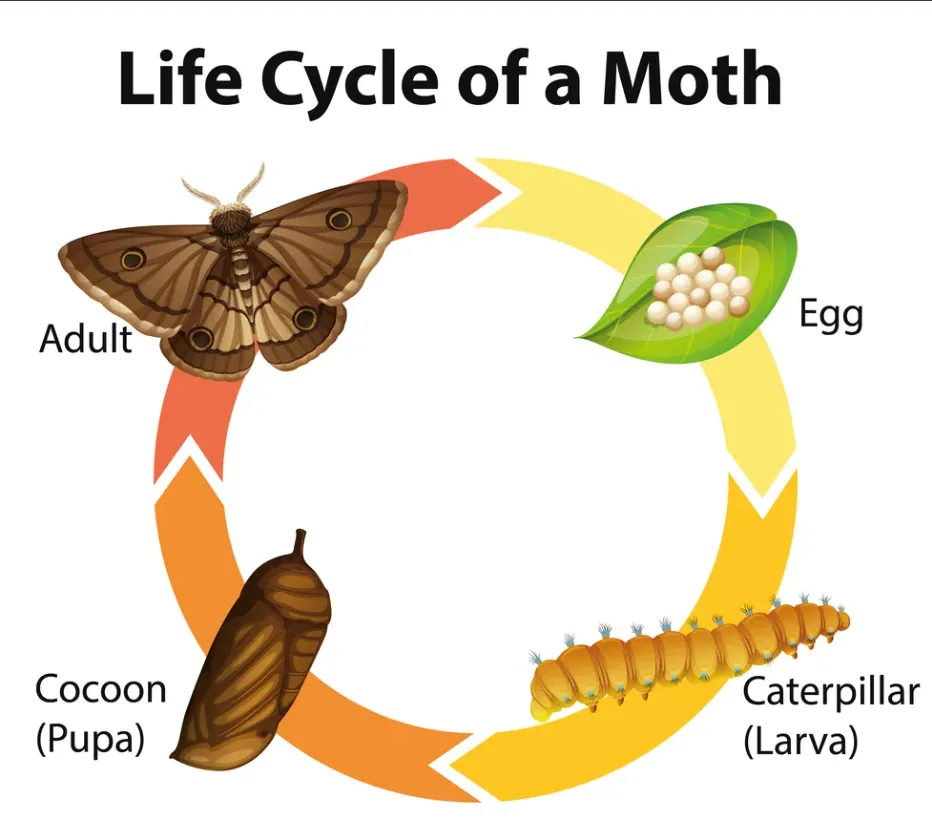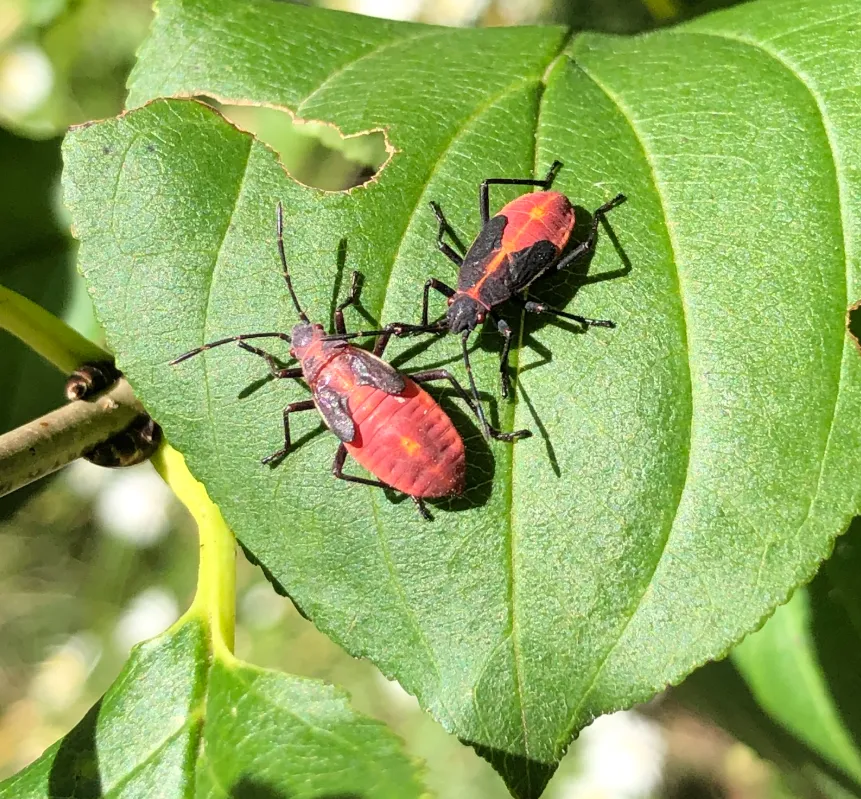
The boxelder bug life cycle is a seasonal process that usually moves through egg, nymph, and adult stages. Scientifically, boxelder bugs have incomplete metamorphosis, meaning they do not have a caterpillar-like larval stage or a pupal stage. Instead, the young insects hatch as small red nymphs and slowly become winged adults through several molts. Virginia Cooperative Extension describes their life cycle as egg, nymphal, and adult stages.
The common boxelder bug, also called the eastern boxelder bug, is closely associated with female seed-bearing boxelder trees. It may also feed on maple, ash, and occasionally some fruit plants. These insects are usually more of a household nuisance than a serious plant pest, as they rarely cause significant damage to trees or buildings.
Adult boxelder bugs often become noticeable in late summer and fall when they gather on sunny walls, tree trunks, rocks, and building exteriors to find warm overwintering sites. The University of Minnesota notes that it is attracted to buildings with strong southern or western exposure, especially in the fall.
Quick Answers: Most Common Questions
Q: What are the main stages of the boxelder bug life cycle?
A: The main stages are egg, nymph, and adult. For easier understanding, the nymph stage can be divided into early and late nymph phases.
Q: How long do boxelder bug eggs take to hatch?
A: Eggs usually hatch in about 10 to 14 days, depending on temperature and weather conditions.
Q: Do boxelder bugs reproduce inside homes?
A: No. Boxelder bugs may enter homes to overwinter, but they do not reproduce indoors. Indoor bugs are usually adults that entered the previous fall.
Quick Life Cycle Table
| Stage | What It Looks Like | Main Activity | Usual Time |
| Egg | Small reddish-brown, bean-shaped eggs | Laid on host trees, bark, leaves, or old seeds | Spring to early summer |
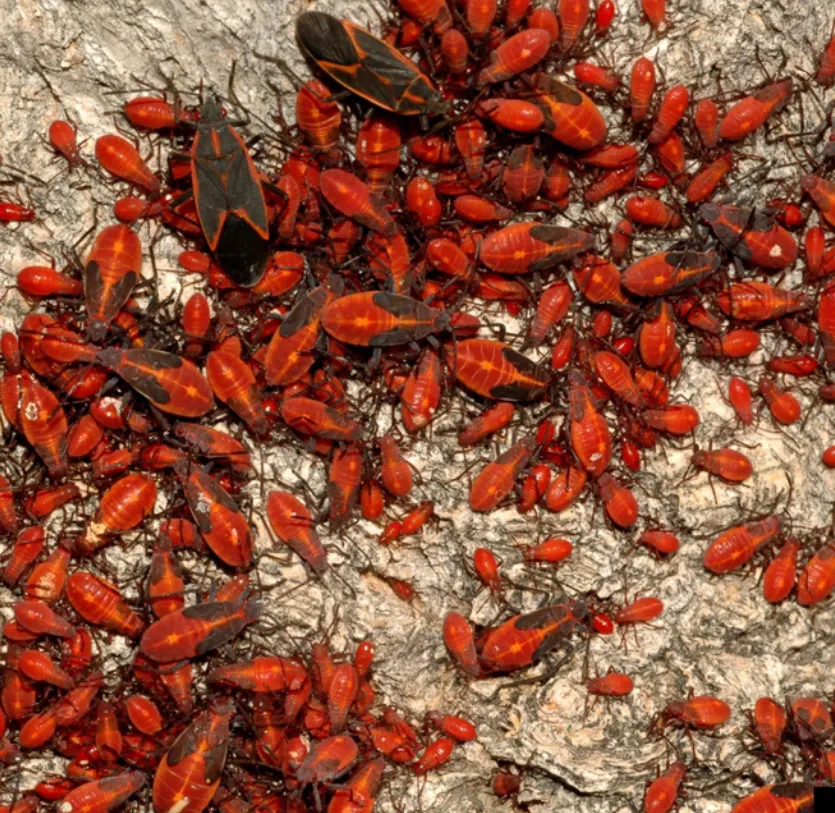
| Early Nymph | Tiny, bright red, wingless bug | Begins feeding on seeds, leaves, and soft plant tissue | Late spring to summer |
| Late Nymph | Red and black body, wing pads developing | Molts several times and grows toward adult size | Summer |
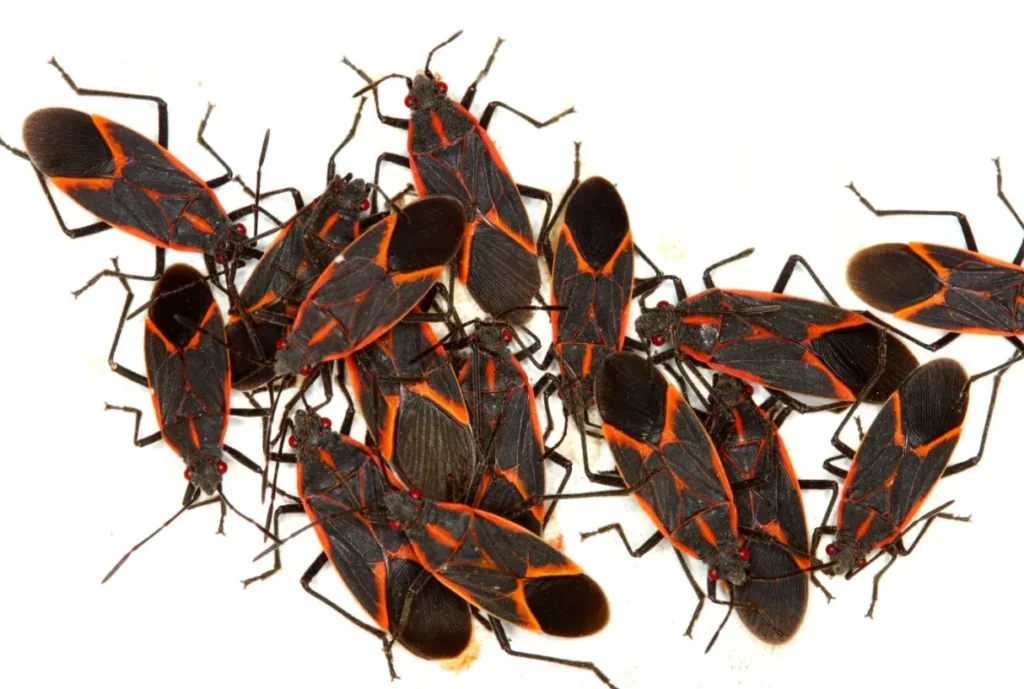
| Adult | Black body with red-orange markings and wings | Feeds, mates, flies, and seeks overwintering shelter | Mid-summer to fall/winter |
Boxelder bug nymphs molt several times before adulthood, and adults are the stage most often noticed around homes in the fall.
The History Of Their Scientific Naming, Evolution, and Their Origin
Scientific Name and Classification
The eastern boxelder bug is scientifically known as Boisea trivittata. It belongs to the order Hemiptera, the true bugs, and the family Rhopalidae, often called scentless plant bugs. NCBI lists the current name as Boisea trivittata (Say, 1825), with Leptocoris trivittatus as a synonym.
Meaning Behind the Name
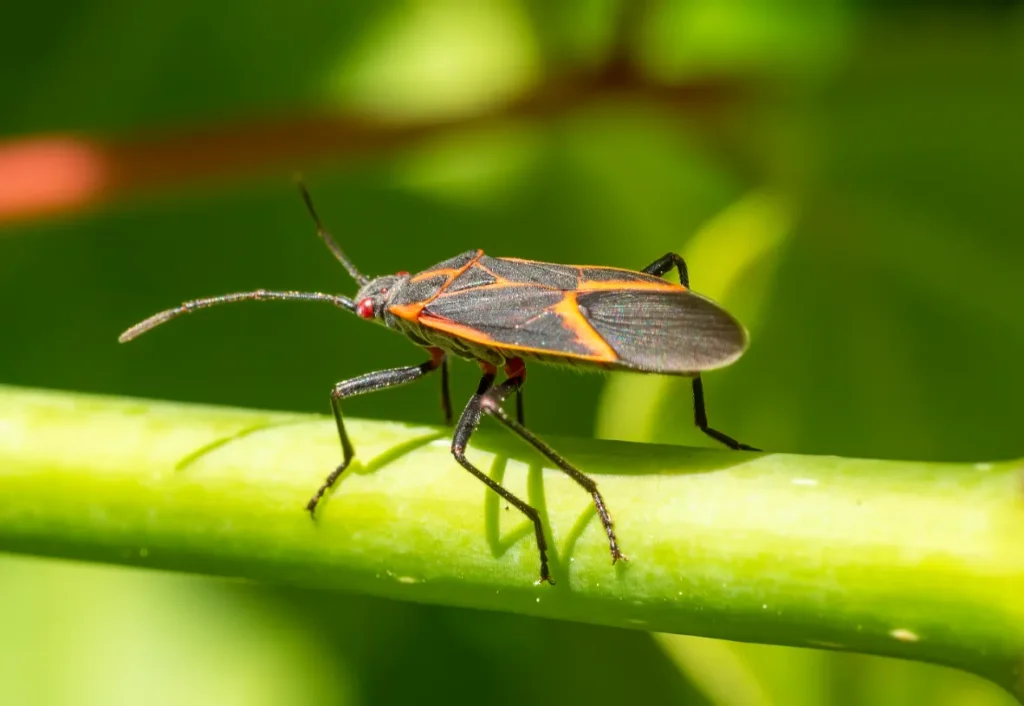
The species name trivittata refers to the “three-banded” or “three-striped” appearance, which matches the insect’s visible reddish stripes behind the head and along the wings. This naming reflects one of the most easily identifiable features of the adult insect.
Origin and Natural Range
The boxelder bug is native to much of North America and is commonly found wherever its main host, the boxelder tree (Acer negundo), grows. The USDA Forest Service notes that Boisea trivittata can be found across much of North America, with its principal host tree.
Evolutionary Adaptation
Its body design, piercing-sucking mouthparts, seasonal aggregation behavior, and close relationship with seed-bearing maples show how it adapted to feed on plant fluids and survive cold seasons by overwintering in protected places.
Their Reproductive Process, Giving Birth, and Raising Their Children
Boxelder Bugs Do Not Give Live Birth
A boxelder bug does not give birth to live young. Like most true bugs, the female lays eggs. These eggs are usually reddish-brown and may be placed on host trees, bark, leaves, branches, or on the ground among old seeds. Virginia Cooperative Extension describes the eggs as reddish-brown and bean-shaped.
Mating After Overwintering
Adult boxelder bugs overwinter in protected locations. When spring temperatures rise, they become active, feed for a period, and then begin mating. The University of Minnesota reports that adults begin mating a couple of weeks after they start spring feeding.
Egg Laying on Host Trees
Female boxelder bugs prefer female seed-bearing boxelder trees because these trees produce the seeds that young nymphs need. Eggs may also be found on maple or ash hosts, but development is closely linked to boxelder seed resources.
No Parental Care Like Birds or Mammals
Boxelder bugs do not raise their young in the human sense of the word. The female selects a suitable food-rich location, lays eggs, and the nymphs feed on nearby seeds, leaves, and soft tissues after hatching.
Nymph Development
The boxelder bug nymph hatches as a small, bright red insect. It has no wings at first. As it grows, it molts several times, develops darker markings, and eventually forms wing pads before becoming an adult. Animal Diversity Web notes that nymphs molt five times and spend about 50 to 78 days in the nymphal stage.
Stages of Boxelder Bug Life Cycle
Scientifically, the boxelder bug life cycle has three main stages: egg, nymph, and adult. For practical purposes, the nymph stage is divided here into early and late nymphs, yielding four easy life-cycle phases.
Stage 1: Egg
The life cycle begins when adult females lay eggs on or near host trees. Eggs are often reddish-brown and shaped like tiny beans. They may be laid on bark, leaves, branches, or old seeds.
Eggs normally hatch in 10 to 14 days under suitable conditions. This stage is short but important because the female chooses locations near food sources for her young nymphs.
Stage 2: Early Nymph
The newly hatched baby boxelder bug is called a nymph. It is usually bright red, small, soft-bodied, and wingless.
At this stage, the nymph uses piercing-sucking mouthparts to feed on plant fluids. It may feed on fallen seeds, tender leaves, and developing seeds from boxelder or maple trees.
Stage 3: Late Nymph
As the boxelder bug nymph grows, it molts repeatedly. Its body becomes larger and darker, and black markings begin to appear.
Wing pads develop in the later nymphal stages. The insect still cannot fly until it becomes a fully developed adult.
Stage 4: Adult
The adult boxelder bug is about ½ inch long, black or dark gray, with orange-red markings. Adults can fly, mate, and move from trees to buildings in late summer or fall.
Only adults usually survive winter successfully. In the fall, they search for protected overwintering sites, including tree bark, leaf piles, wall voids, attics, cracks, and building gaps.
Important Things That You Need To Know
Many people search for boxelder bug spray, baby boxelder bug, boxelder bug bite, eastern boxelder bug, and boxelder bug nymph because this insect is often misunderstood. The most important thing to know is that boxelder bugs are usually a nuisance pest, not a dangerous pest.
A boxelder bug bite is very uncommon. The National Pesticide Information Center explains that boxelder bugs do not sting, do not transmit disease, and are generally not known to bite, although rare defensive bites have been reported.
A baby boxelder bug is simply the nymph stage. It looks bright red at first, then develops black markings as it grows. The boxelder bug nymph often clusters on tree bark, leaves, or sunny surfaces during warm months.
The eastern boxelder bug is the species most commonly discussed in eastern North America. It is strongly linked with female boxelder trees, but it may also feed on maple, ash, and some fruit plants.
When people ask about boxelder bug spray, the best answer is prevention first. Seal cracks, fix screens, vacuum indoor bugs, and avoid crushing them because they can release odor and leave stains. Insecticide use should be limited, targeted, and always in accordance with the product label. Extension sources recommend exclusion and physical removal as key management steps.
Their Main Diet, Food Sources, And Collection Process Explained
The main diet of the boxelder bug is plant fluid, especially from seeds and soft tissues of host trees. They use piercing-sucking mouthparts to insert into plant parts and draw out sap-like fluids.
Their preferred food source is the female boxelder tree because it produces seed clusters. These seed-bearing trees provide the most suitable food for nymph development. Virginia Cooperative Extension states that boxelder bugs prefer female boxelder trees because they produce nutritious seeds.
Key food sources include:
- Boxelder seeds, especially from female trees
- Leaves and tender new foliage
- Soft twigs and developing plant tissues
- Maple trees, especially seed-bearing species
- Ash trees in some situations
- Occasionally, raspberry, strawberry, and other fruit plants are heavily infested.
Their food collection process is simple but efficient. They do not chew leaves like caterpillars. Instead, they pierce plant tissue and suck plant fluids.
Nymphs often feed in groups, especially where seeds are abundant. Adults may move more widely, flying between trees, sunny walls, and overwintering sites.
Although they feed on plants, boxelder bugs rarely cause serious damage. University and extension sources repeatedly describe them as mostly nuisance insects rather than major agricultural or structural pests.
How Long Does A Boxelder Bug Live
The lifespan of a boxelder bug depends on weather, food supply, life stage, and overwintering success. A single generation may develop from egg to adult during the warm season, while adults may survive through winter if they find a protected shelter.
- Egg stage: Eggs commonly hatch in about 10 to 14 days. Warm temperatures can support faster development, while cooler weather may slow activity.
- Nymph stage: The nymph stage may last around 50 to 78 days. During this period, the insect molts several times and gradually develops adult features.
- Adult stage: Adults can appear by midsummer. Some adults lay eggs for a second generation, where the climate allows. Utah State University notes that there may be two generations per year and overlapping life stages in some regions.
- Overwintering adults: Adults that develop in late summer or fall may survive into the next spring by sheltering under debris, bark, rocks, mulch, wall voids, attics, or other protected areas.
- Indoor living-area survival: When boxelder bugs enter heated living spaces, they often do poorly because warm, dry indoor conditions are not ideal for them. Virginia Cooperative Extension notes that bugs moving into living quarters may die because of warmer temperatures and low humidity.
- Adults inside homes: The University of Minnesota states that winter-active indoor individuals may live only a few days up to a week. However, many may continue appearing because they do not all become active at once.
- Best practical estimate: In natural conditions, the full visible life cycle may last several months, and overwintering adults may bridge from fall to spring. Indoors, exposed adults usually live much shorter lives.
Boxelder Bug Lifespan in the Wild vs. in Captivity
Lifespan in the Wild
In the wild, the boxelder bug life cycle is shaped by seasonal temperature, host-tree availability, and overwintering shelter. Eggs hatch in late spring or summer, nymphs develop on host plants, and adults move toward protected sites in fall.
Wild adults often survive longest when they remain in natural shelters such as leaf litter, bark crevices, wood piles, mulch, rock piles, or tree-related spaces. These locations protect them from harsh winter weather.
Lifespan in Captivity or Indoor Conditions
Boxelder bugs are not commonly raised in captivity, as are butterflies or laboratory insects. Most “captivity” situations are accidental, such as when adults enter homes.
Inside heated rooms, they usually do not thrive. Dry air, lack of food, and unsuitable temperature patterns shorten their survival. They also do not reproduce indoors, so indoor populations are not self-sustaining.
Key Difference
In the wild, protected adults may survive winter and become active again in spring. In indoor living spaces, many adults die within days or weeks unless they remain hidden in cooler protected wall voids or attic spaces.
Importance of Boxelder Bug Life Cycle in This Ecosystem
Part of Native Insect Biodiversity
The boxelder bug is part of North American insect biodiversity. It is not only a household nuisance; it is also a native insect associated with native and widely planted maple relatives. The USDA Forest Service identifies Boisea trivittata as native to much of North America.
Connection With Host Trees
The insect’s life cycle is closely connected to boxelder, maple, and ash trees. By feeding mainly on seeds and plant fluids, it participates in the natural flow of energy between plants and insects.
Low-Damage Herbivore Role
Unlike many destructive pests, boxelder bugs rarely cause serious harm to trees. Their feeding may affect some seeds or cause minor plant symptoms, but they are not usually considered a serious plant-damaging insect.
Food-Web Contribution
Boxelder bugs can be part of the diet of some predators, especially generalist insects and spiders. Their red-and-black coloration and odor defense may reduce predation, but they still exist within the wider food web.
Indicator of Seasonal Change
Their fall aggregation behavior signals seasonal transition. When they gather on sunny walls and tree trunks, it usually means adults are preparing for winter shelter.
What To Do To Protect Them In Nature And Save The System For The Future
1. Use Prevention Instead of Unnecessary Killing
- Seal house cracks, repair screens, and close gaps before fall.
- This keeps boxelder bugs outside without damaging local insect populations.
- Prevention is more ecosystem-friendly than repeated spraying.
2. Protect Native Trees When Possible
- Do not remove healthy boxelder, maple, or ash trees only because of occasional bugs.
- The University of Minnesota notes that the benefits of these trees can outweigh occasional infestations.
3. Manage Female Volunteer Trees Carefully
- If one unwanted female boxelder tree is causing repeated severe nuisance problems, remove only that specific volunteer tree.
- Avoid broad tree removal across the landscape.
4. Avoid Overuse of Chemical Spray
- Use boxelder bug spray only when necessary and only as directed on the label.
- Physical removal, vacuuming, and sealing entry points are safer first steps.
5. Keep Natural Shelter Away From Home Walls
- Move leaf piles, wood stacks, and rock piles away from building foundations.
- This protects the natural system while reducing the risk of indoor invasion.
Fun & Interesting Facts About Boxelder Bug Life Cycle
- Boxelder bugs are true bugs, not beetles. They belong to the order Hemiptera.
- Adult boxelder bugs have piercing-sucking mouthparts, so they drink plant fluids instead of chewing leaves.
- The baby boxelder bug is bright red when it first hatches.
- The boxelder bug nymph resembles a small red version of the adult, but it lacks fully developed wings.
- Adults often form large groups on sunny walls because warm surfaces help them stay active.
- They are attracted to buildings with strong sun exposure, especially south- and west-facing walls.
- They can release a bad odor when crushed, so vacuuming is better than smashing.
- They usually do not damage homes, furniture, or wood structures.
- They may stain light surfaces with fecal spots if large numbers gather indoors.
- They do not reproduce indoors, even though many appear indoors during winter.
- Adults can fly long distances to find shelter. NPIC reports that they may fly up to two miles to locate suitable overwintering sites.
Frequently Asked Questions FAQs
Q: What is the complete boxelder bug life cycle?
A: The complete boxelder bug life cycle includes egg, nymph, and adult stages. For practical purposes, the nymph stage can be split into early and late nymphal phases because the insect visibly changes during molting.
Q: What does a baby boxelder bug look like?
A: A baby boxelder bug is a bright red nymph. It is small, wingless, and becomes darker with black markings as it grows.
Q: Is a boxelder bug bite dangerous?
A: A boxelder bug bite is rare and usually defensive. Boxelder bugs do not sting, do not spread disease, and are not considered dangerous to humans.
Q: Should I use boxelder bug spray inside my house?
A: Indoor spraying is usually not the best first choice. Vacuuming, sweeping, sealing entry points, and removing bugs physically are safer and more practical. Use any pesticide only as directed on the label.
Q: Why do boxelder bugs come into homes?
A: They enter homes in the fall to find warm, protected places for winter. They do not come indoors to feed on people, pets, furniture, or wood.
Conclusion
The boxelder bug life cycle is simple but highly seasonal. It begins with reddish eggs, continues through bright red boxelder bug nymph stages, and ends with black-and-red adults that feed, mate, fly, and overwinter. Although the boxelder bug can be annoying when large groups gather on homes, it is not a dangerous insect and usually causes little to no serious damage.
Understanding its life cycle helps homeowners choose smarter control methods. Instead of unnecessary spraying, the best approach is prevention: seal cracks, repair screens, vacuum indoor bugs, and reduce shelter near walls. At the same time, it is important to recognize that the eastern boxelder bug is part of the natural ecosystem and closely linked to seed-bearing boxelder and maple trees.
With balanced management, people can reduce indoor nuisance problems while still protecting biodiversity and the surrounding environment.
Also Read: blowfly life cycle