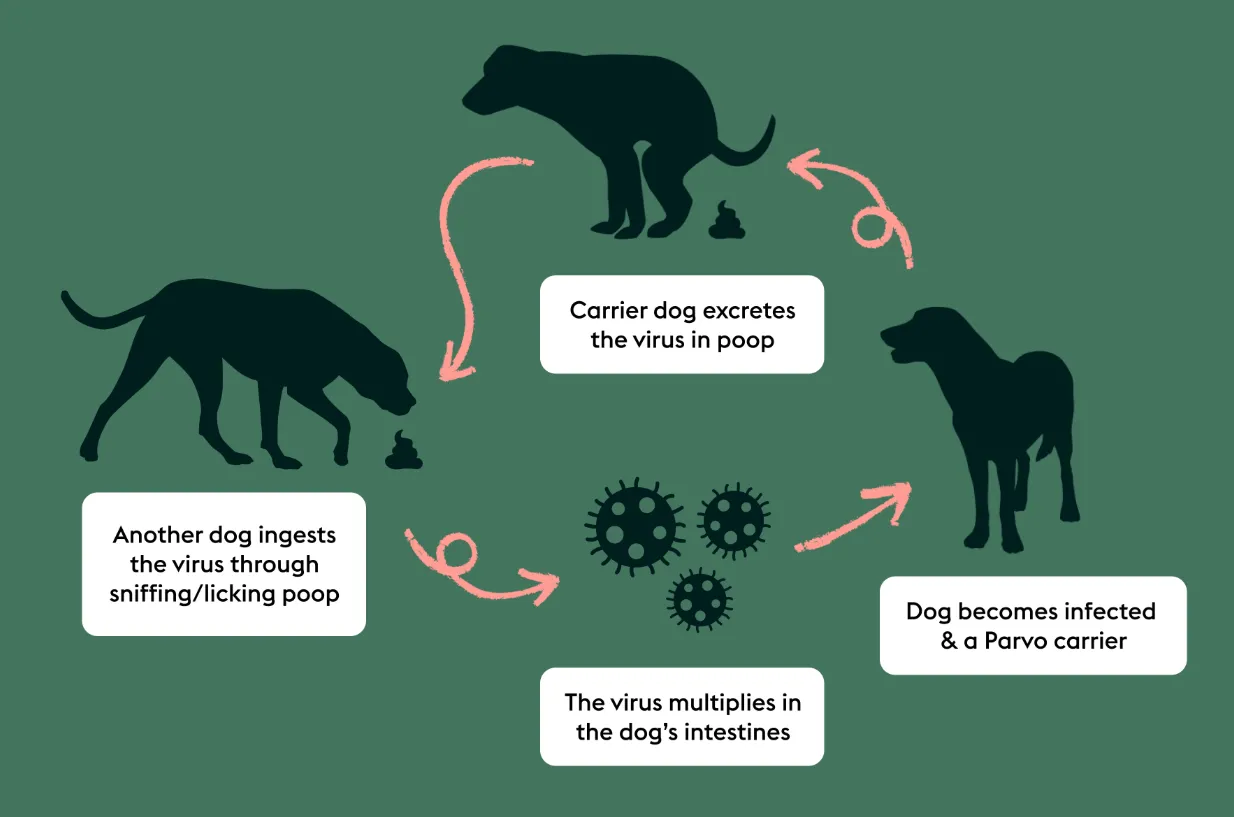
The canine parvovirus life cycle describes how canine parvovirus, commonly called parvo, enters a dog’s body, attaches to rapidly dividing cells, replicates within those cells, spreads throughout the body, and exits primarily through feces to infect another susceptible dog. Unlike animals or insects, a virus does not grow, eat, give birth, or raise offspring. Instead, canine parvovirus uses a host dog’s living cells to make new viral particles.
Canine parvovirus type 2, often abbreviated CPV-2, is a small, non-enveloped DNA virus that primarily affects puppies, unvaccinated dogs, and dogs with weakened immune systems. It is best known for causing severe vomiting, bloody diarrhea, dehydration, intestinal damage, and low white blood cell counts. Cornell describes CPV as a highly contagious disease of dogs that commonly causes acute gastrointestinal illness, especially in puppies between about six and twenty weeks old.
The life cycle of canine parvovirus is important because it explains why the disease spreads so fast. An infected dog can shed the virus before obvious signs appear, during illness, and for days after recovery. MSD Veterinary Manual notes that infected dogs may shed virus in feces within 4–5 days after exposure, throughout illness, and for about 10 days after clinical recovery.
Quick Answers: Most Common Questions
Q: What is the life cycle of canine parvovirus?
A: The canine parvovirus life cycle includes exposure, oral or nasal entry, attachment to rapidly dividing cells, viral replication, intestinal and immune-system damage, shedding through feces, and survival in the environment.
Q: How long does canine parvovirus live outside the body?
A: Canine parvovirus is very tough. It can survive for long periods in contaminated soil, kennels, bedding, bowls, shoes, and surfaces because it resists heat, cold, humidity, and drying.
Q: Can canine parvovirus be prevented?
A: Yes. The most effective prevention is proper puppy vaccination, avoiding high-risk contaminated areas until the vaccine series is complete, isolating sick dogs, and disinfecting surfaces with products proven to kill parvovirus.
Quick Life Cycle Table
| Life Cycle Point | What Happens | Main Risk |
| 1. Exposure | The dog contacts contaminated feces, soil, shoes, bowls, bedding, or surfaces | Unvaccinated puppies are at the highest risk |
| 2. Entry | The virus enters through the mouth or nose | A dog may look normal at first |
| 3. Cell Attack | Virus targets rapidly dividing cells in the intestine, bone marrow, and lymph tissue | Vomiting, diarrhea, and immune suppression |
| 4. Replication | A virus uses host cells to produce more virus particles | Fast increase in viral load |
| 5. Shedding | Virus leaves the body mainly through feces | The environment becomes contaminated |
| 6. Environmental Survival | Virus remains infectious outside the body for a long time | New dogs can become infected later |
Important Things That You Need To Know
Understanding canine parvovirus is essential for dog owners, breeders, shelters, rescue centers, and veterinary students. The virus is not just a normal stomach infection; it is a serious viral disease that can become life-threatening very quickly.
The key LSI terms related to this topic include canine parvovirus, CPV-2, parvo in dogs, canine parvoviral enteritis, and puppy parvo. These terms all refer to the same major disease pattern: a highly contagious viral infection that mainly affects the digestive tract and immune system of dogs.
CPV-2 is dangerous because it attacks rapidly dividing cells. In puppies, the intestinal lining and immune tissues are actively growing, so the virus can multiply quickly. This is why young puppies may develop severe diarrhea, dehydration, weakness, fever, or even shock within a short time.
Another important point is that parvo in dogs spreads mostly through fecal contamination. A dog does not always need to lick another dog’s feces directly. The virus can travel on shoes, hands, clothing, cages, grooming tools, food bowls, floors, soil, and bedding.
The best protection against puppy parvo is not guesswork or home remedies. It is timely vaccination, clean housing, controlled exposure, and rapid veterinary care when symptoms appear. Because the virus can remain in the environment, proper disinfection is as important as treating the sick dog.
The History of Their Scientific Naming, Evolution, and Origin
Scientific Naming of Canine Parvovirus
The disease is commonly called canine parvovirus, while the major virus affecting dogs is known as canine parvovirus type 2 (CPV-2). In modern virus taxonomy, canine parvovirus belongs to the family Parvoviridae, and the ICTV places carnivore-infecting viruses such as CPV within the Protoparvovirus genus.
The word parvo comes from the Latin idea of “small,” because parvoviruses are among the smallest animal viruses. They contain single-stranded DNA and lack an outer envelope. This non-enveloped structure helps explain why the virus is so resistant in the environment.
Evolution and Origin
Canine parvovirus became widely recognized in dogs in the late 1970s. Cornell notes that CPV was first recognized in 1978, when it spread worldwide and caused serious disease in dogs.
Scientists generally consider CPV-2 to be closely related to parvoviruses of carnivores, including those affecting cats and wild carnivores. Over time, the virus developed variants such as CPV-2a, CPV-2b, and CPV-2c. These variants show how viruses can evolve through mutation and host adaptation.
Why Its Origin Matters
The origin of canine parvovirus matters because it shows how quickly a new viral disease can spread through susceptible animal populations. It also explains why vaccination programs, surveillance, and outbreak control remain essential even decades after the virus first appeared.
Their Reproductive Process, Giving Birth, And Rising Their Children
Viruses Do Not Give Birth
Canine parvovirus does not reproduce like mammals, birds, insects, or reptiles. It does not mate, become pregnant, lay eggs, give birth, or raise young. The term “reproductive process” in a virus refers to viral replication.
In simple words, the virus makes copies of itself inside the living cells of a host dog.
Entry into the Host
The process begins when a susceptible dog swallows or inhales viral particles from contaminated feces, soil, objects, or surfaces. After entering through the mouth or nose, the virus travels to tissues where cells are actively dividing.
Puppies are especially vulnerable because their intestinal and immune cells divide rapidly. This gives the virus more opportunities to replicate.
Attachment and Cell Invasion
The virus attaches to specific receptors on host cells. After attachment, it enters the cell and delivers its genetic material. Because CPV-2 is a DNA virus, it depends heavily on the host cell’s replication machinery.
The virus cannot multiply on its own outside a living host cell.
Replication and Assembly
Once inside the cell, canine parvovirus uses the dog’s cellular machinery to replicate its DNA and produce viral proteins. These parts are assembled into new virus particles.
When infected cells are damaged or destroyed, newly produced virus particles spread to nearby cells and eventually exit the body in feces.
No Parental Care
There is no “raising children” stage. New viral particles are not cared for by the original virus. They continue the infection cycle if they reach another susceptible host or survive in the environment.
Stages of Canine Parvovirus Life Cycle
Stage 1: Exposure and Transmission
The first stage of the canine parvovirus life cycle is exposure. A dog becomes exposed when it contacts virus-contaminated feces, ground, kennel floors, dog parks, bedding, shoes, bowls, leashes, or human hands.
The virus spreads mainly by the fecal-oral route. This means viral particles from infected feces enter another dog’s mouth or nose.
Stage 2: Incubation and Early Spread
After exposure, an incubation period ensues. During this time, the dog may appear healthy even as the virus begins to multiply within the body. MSD and other veterinary sources commonly describe early shedding before or around the time clinical signs develop, which makes silent spread a major problem.
This stage is dangerous because owners may not realize that the dog is infected.
Stage 3: Intestinal and Immune-System Attack
The virus strongly targets rapidly dividing cells. In dogs, this includes cells in the intestinal lining, bone marrow, and lymphoid tissue.
Damage to the intestinal lining can cause vomiting, diarrhea, poor nutrient absorption, dehydration, and, sometimes, bloody stool. Damage to immune tissues may reduce white blood cell numbers, making the dog less able to fight infection.
Stage 4: Shedding and Environmental Survival
In the final stage, infected dogs shed large amounts of virus in feces. The virus can contaminate the environment and remain infectious for a long time.
Because canine parvovirus is non-enveloped, it is harder to destroy than many other viruses. AVMA notes that it resists heat, cold, humidity, and drying, which explains why contaminated areas can remain risky.
Their main diet, food sources, and collection process are explained
Canine Parvovirus Does Not Eat Food
A virus has no mouth, stomach, digestive system, or metabolism like an animal. So, canine parvovirus does not have a diet. It does not eat meat, plants, blood, or nutrients from the environment.
Instead, it depends completely on living host cells.
What the Virus “Uses” to Survive
Although it does not eat, CPV-2 uses the host dog’s cellular machinery. The most important “resource” for the virus is a rapidly dividing cell. This is why the virus prefers tissues such as:
- Intestinal crypt cells
- Bone marrow cells
- Lymphoid tissue cells
- Developing heart cells in rare neonatal cases
These cells provide the materials and enzymes the virus needs to copy its DNA and build new viral particles.
Food Sources vs. Infection Sources
For SEO clarity, when people ask about the “food sources” of canine parvovirus, they usually mean sources of infection. The main sources are:
- Feces from infected dogs
- Contaminated soil
- Kennel floors
- Dog park surfaces
- Shared food and water bowls
- Shoes, clothing, and hands
- Bedding, crates, and grooming tools
Collection Process
The virus is “collected” by a new host when a susceptible dog licks, sniffs, or ingests contaminated material. Even tiny amounts of infected fecal matter can spread the virus.
This is why cleaning visible dirt is not enough. Organic matter must be removed first, and then a parvovirus-effective disinfectant should be used.
How Long Does A Canine Parvovirus Live
The word “live” is tricky for viruses because viruses are not alive in the same way as animals, plants, or bacteria are. Canine parvovirus is better described as remaining infectious or viable.
Here is how long it may persist in different conditions:
- Inside an infected dog:
- The virus can replicate rapidly after infection. Clinical signs often appear after the incubation period, and infected dogs may shed virus before obvious symptoms.
- During active illness:
- Dogs can shed large amounts of virus through feces. This is one of the most contagious periods.
- After recovery:
- A recovered dog may continue shedding the virus for a period of time. MSD Veterinary Manual reports shedding for about 10 days after clinical recovery.
- On indoor surfaces:
- The virus can remain infectious if surfaces are not properly cleaned and disinfected. Smooth indoor surfaces may be easier to disinfect than soil, grass, or porous materials.
- In outdoor environments:
- Outdoor survival depends on sunlight, temperature, moisture, organic matter, and surface type. Shaded, cool, contaminated soil may remain risky longer than sunny, dry, cleaned surfaces.
- In kennels and shelters:
- The virus may persist if cleaning is incomplete. High-density dog areas need strict isolation, cleaning, and disinfection protocols.
- In fecal material:
- Feces can protect viral particles from environmental damage and disinfectants. This is why feces, vomit, and organic debris must be removed before disinfecting.
- In laboratory conditions:
- Viral material can be preserved for research under controlled storage conditions, but this is different from natural environmental survival.
- Against common cleaners:
- Many everyday cleaners are not reliable against parvovirus. MSD notes that effective options include properly diluted sodium hypochlorite, potassium peroxymonosulfate, and accelerated hydrogen peroxide, while quaternary ammonium disinfectants are not reliable for parvovirus.
In practical terms, owners should assume a contaminated area is dangerous until it has been properly cleaned, disinfected, and cleared by veterinary guidance.
Canine Parvovirus Lifespan in the Wild vs. in Captivity
In the Wild or Natural Environment
There is no true “wild lifespan” for canine parvovirus, but the virus can remain infectious in outdoor environments. It may survive in soil, grass, shaded areas, contaminated yards, streets, parks, or places where infected dogs have defecated.
Wild canids such as foxes, coyotes, and wolves may also be exposed to related parvoviruses. This matters because domestic dogs and wild carnivores can share contaminated environments.
In Captivity or Controlled Environments
In “captivity,” such as kennels, shelters, clinics, breeding facilities, and rescue centers, the virus can spread quickly because many dogs share the same space. The risk increases when puppies, unvaccinated dogs, stressed animals, or recently transported dogs are housed together.
However, controlled facilities also have an advantage: they can use isolation, vaccination checks, quarantine, proper cleaning, and proven disinfectants.
Key Difference
In the wild, control is difficult because contaminated soil and feces may remain unnoticed. In shelters or clinics, control is possible, but only when strict biosecurity is followed.

Importance of Canine Parvovirus in this Ecosystem
A Disease Agent, Not a Beneficial Species
Canine parvovirus is not beneficial in the way pollinators, decomposers, predators, or plants are. It is a pathogen. Its “importance” in the ecosystem comes from its impact on animal health, population dynamics, veterinary medicine, and disease ecology.
Impact on Domestic Dogs
The most obvious impact is on dogs, especially puppies. Severe parvovirus outbreaks can cause high treatment costs, emotional stress for owners, and death in untreated cases. ICTV notes that mortality can be very high if untreated in susceptible dogs.
Impact on Shelters and Rescue Systems
Shelters and rescue centers can suffer major outbreaks if CPV-2 enters the facility. One infected puppy may contaminate cages, floors, bedding, transport crates, and handling equipment.
This can result in isolation, temporary intake closure, costly disinfection, and emergency veterinary care.
Impact on Wildlife and Disease Ecology
Because parvoviruses affect carnivores, they are important in studying host range, viral mutation, and cross-species transmission. Understanding CPV helps scientists monitor how viruses adapt to new hosts.
Importance of Public Awareness
The virus teaches an important lesson: vaccination and hygiene protect not only individual pets but also the wider dog community.
What to do to protect them in nature and save the system for the future
For this topic, the accurate goal is not to protect the virus. The goal is to protect dogs, puppies, shelters, and the surrounding environment from canine parvovirus.
1. Vaccinate Puppies on Time
- Start puppy vaccination according to veterinary advice.
- Follow the full vaccine series.
- Do not stop after one dose.
- WSAVA’s 2024 guidance supports multiple core vaccine doses in puppies, with the final puppy dose at 16 weeks of age or older.
2. Avoid High-Risk Areas Until Fully Protected
- Keep young puppies away from dog parks, unknown dogs, contaminated yards, and shelter floors.
- Avoid public areas where many unvaccinated dogs may pass.
- Carry puppies when visiting veterinary clinics if advised.
3. Isolate Sick Dogs Quickly
- Separate dogs with vomiting, diarrhea, fever, or weakness.
- Do not allow sick dogs to share bowls, bedding, or play areas with healthy dogs.
- Contact a veterinarian immediately.
4. Clean and Disinfect Correctly
- Remove feces, vomit, and dirt first.
- Use a disinfectant proven to work against parvovirus.
- Allow proper contact time before rinsing or reuse.
5. Improve Community Awareness
- Educate dog owners about parvo symptoms.
- Encourage responsible vaccination.
- Support shelter quarantine and intake screening.
- Report outbreaks to veterinary professionals when needed.
Fun & Interesting Facts About Canine Parvovirus
- Canine parvovirus is extremely small, but it can cause very severe disease.
- The name parvo is linked to the idea of “small,” referring to the small size of parvoviruses.
- CPV-2 became globally recognized only in the late 1970s, yet it spread rapidly worldwide.
- The virus is non-enveloped, which helps make it more resistant to environmental stress.
- Puppies are not only at risk because they are young; they are at risk because their cells divide quickly, giving the virus more places to replicate.
- A dog can spread the virus before the owner realizes it is sick.
- The virus can travel on shoes, clothing, hands, crates, and grooming equipment.
- Parvo is preventable, but once severe signs appear, it can become a medical emergency.
- Vaccination not only protects one puppy; it also helps reduce virus circulation in the wider dog population.
- Ordinary cleaning is not the same as parvovirus disinfection. The right disinfectant and proper contact time matter.
Frequently Asked Questions (FAQs)
Q: What is the canine parvovirus life cycle?
A: The canine parvovirus life cycle is the process by which the virus enters a dog, infects rapidly dividing cells, replicates, damages the intestine and immune system, sheds through feces, survives in the environment, and infects another dog.
Q: What are the first signs of canine parvovirus?
A: Common early signs include tiredness, loss of appetite, fever, vomiting, and diarrhea. Diarrhea may become bloody and foul-smelling. Any puppy with vomiting and diarrhea should be checked by a veterinarian quickly.
Q: Can vaccinated dogs get canine parvovirus?
A: Vaccinated dogs are much better protected, but no vaccine gives perfect protection in every situation. Puppies are especially vulnerable until they complete the full vaccine series, as maternal antibodies can interfere with the early vaccine response.
Q: How does canine parvovirus spread?
A: It spreads mainly through fecal contamination. Dogs may become infected by licking or sniffing contaminated feces, soil, shoes, bedding, crates, bowls, floors, or human hands.
Q: What kills canine parvovirus on surfaces?
A: Properly used parvovirus-effective disinfectants can kill it. MSD lists options such as diluted sodium hypochlorite, potassium peroxymonosulfate, and accelerated hydrogen peroxide. Organic material must be removed first for disinfection to work effectively.
Conclusion
The canine parvovirus life cycle is a powerful example of how a small virus can create a serious disease problem in dogs. Canine parvovirus, especially CPV-2, spreads through contaminated feces and environments, enters the body through the mouth or nose, attacks rapidly dividing cells, replicates within the body, and sheds back into the environment to infect more dogs.
Because the virus is highly resistant to environmental conditions outside the body, prevention must combine vaccination, hygiene, isolation, and proper disinfection. Puppies, unvaccinated dogs, shelters, breeders, and rescue facilities need special protection because outbreaks can spread quickly.
The most important message is simple: parvo is dangerous, but it is preventable. With timely vaccination, careful puppy management, clean environments, and fast veterinary care, dog owners can break the life cycle of canine parvovirus and protect both individual pets and the wider dog community.
Also Read: polar bear life cycle