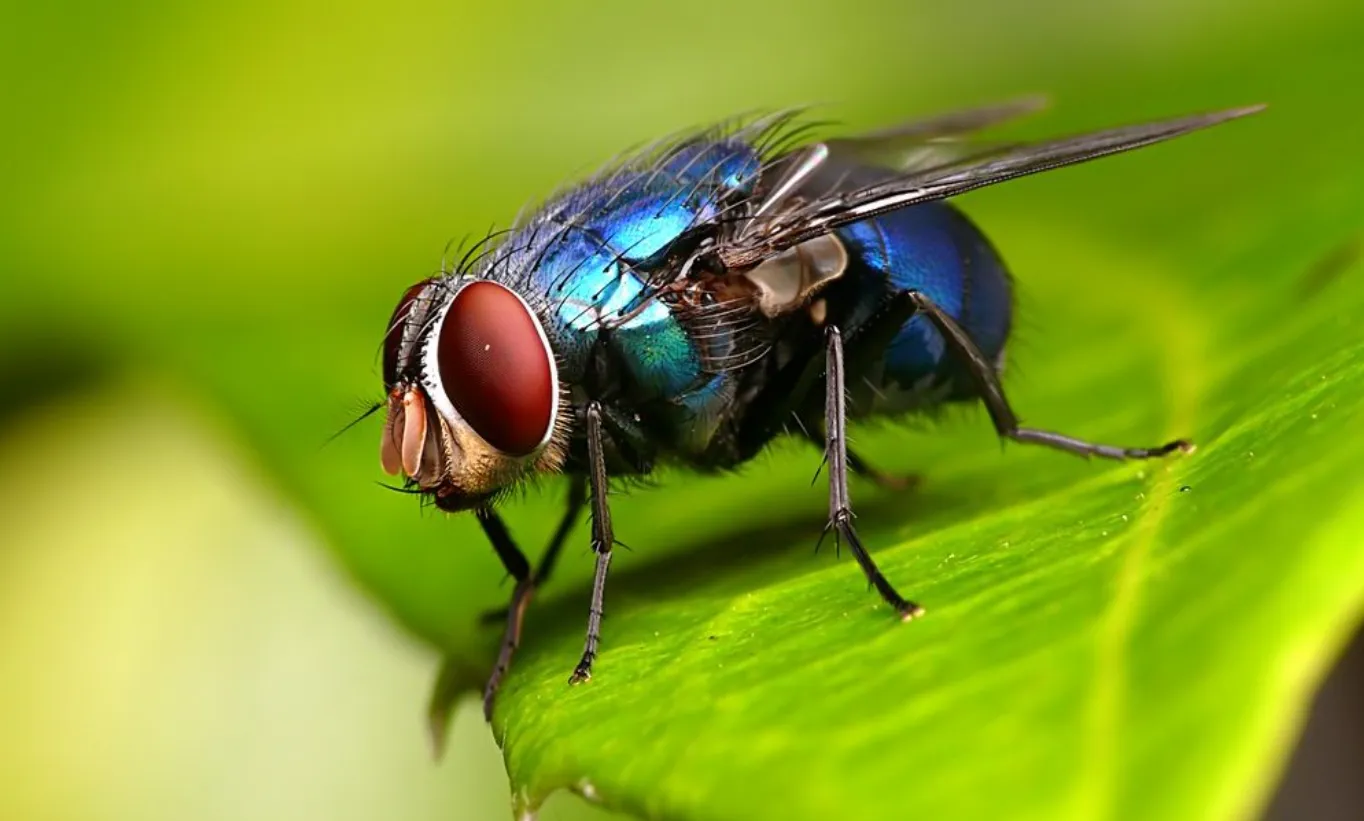
The blowfly life cycle is one of the fastest and most important insect development processes in nature. Blowflies belong to the family Calliphoridae, a group of metallic blue, green, or black flies commonly linked with carrion, garbage, wounds, and decomposing organic matter. They are often called bluebottle flies, greenbottle flies, or bottle flies.
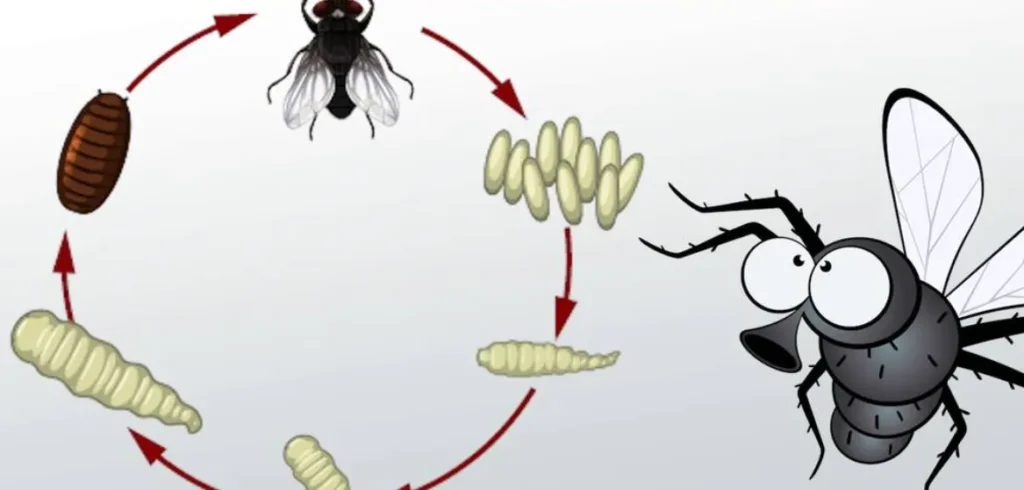
A blowfly passes through complete metamorphosis, meaning its body changes fully through four main stages: egg, larva, pupa, and adult. This cycle can be very fast in warm weather. In many species, eggs hatch within a day, larvae feed heavily for several days, pupae develop in soil or dry shelter, and adults emerge ready to mate and repeat the cycle. Temperature, humidity, food quality, and species all affect the timing.
Blowflies are not just pests. They are also powerful natural recyclers. They help break down dead animals, return nutrients to soil, support food webs, and even help forensic experts estimate time since death.
Q: How many stages are in the blowfly life cycle?
A: The blowfly life cycle has four main stages: egg, larva, pupa, and adult.
Q: How fast do blowfly eggs hatch?
A: Many blowfly eggs hatch within 8 to 24 hours, depending on temperature and species.
Q: Why are blowflies important in forensic science?
A: Blowflies often arrive quickly on carrion, and their predictable growth stages help forensic experts estimate the minimum time since death.
Quick Life Cycle Table
| Stage | What Happens | Common Time Range |
| Egg | Females lay small white/yellow eggs on carrion, waste, wounds, or rich organic matter | 8–24 hours to hatch |
| Larva | Blowfly larvae or maggots feed heavily and molt through three instars | Around 3–7 days |
| Pupa | Mature larva leaves food, hides in soil or a dry place, and transforms into a puparium. | Around 7–12 days |
| Adult | Adult flies emerge, feed, mate, and lay eggs | Often days to weeks, species-dependent |
The full blowfly life cycle typically takes 2–4 weeks, but can be shorter in warm conditions and longer in cold or poor conditions.
The History of Their Scientific Naming, Evolution, and Origin
Scientific Naming
The scientific family name of blowflies is Calliphoridae. Blowflies are insects in the order Diptera, meaning “two-winged flies.” Common genera include Lucilia, Calliphora, Chrysomya, Phormia, and Cochliomyia.
For example, Lucilia sericata, the green bottle fly, is classified under Animalia, Insecta, Diptera, Calliphoridae, Lucilia, and the species Lucilia sericata. Another species, Lucilia caesar, was linked to Linnaeus’s 1758 taxonomic work.
Origin of the Common Name
The name blowfly comes from older English usage, referring to meat being “blown,” meaning it was infested with eggs or maggots. This name fits their strong relationship with carrion and decomposing animal tissue.
Evolution and Natural Origin
Blowflies are highly adapted scavenger insects. Their strong smell detection, fast flight, and rapid larval growth help them find and use temporary food sources before other animals consume them.
Modern research shows that the evolutionary history of Calliphoridae is complex. Some studies describe the family as diverse and taxonomically debated, with carrion-feeding habits playing a major role in their success. Recent phylogeny research also suggests carrion-breeding behavior may have evolved more than once in major blowfly lineages.
Their Reproductive Process, Giving Birth, And Rising Their Children
Mating Process
Adult blowflies usually mate soon after they become mature. Males search for females near food sources, carrion, garbage areas, or resting spots. Females need enough nutrition, especially protein, to produce healthy eggs.
Blowflies reproduce sexually. After mating, the female searches for a suitable place where her young can feed immediately after hatching.
Egg Laying Process
Blowflies do not give birth like mammals. They are mostly oviparous, meaning they lay eggs. A female may lay clusters of eggs on carrion, animal remains, wounds, feces, garbage, or other moist decaying material.
A female can lay 50 to 250 eggs in a batch, depending on the species and conditions. Some sources report about 200 eggs in a cluster for Lucilia sericata, while black blowflies may deposit around 250 eggs in natural openings or wounds on a body.
Raising Their Children
Blowflies do not care for their young after laying eggs. There is no parental care. The female’s main investment is choosing the right egg-laying site.
This site must be moist, protein-rich, and safe enough for larvae to feed. Once the blowfly larvae hatch, they begin eating immediately. Their survival depends on food, temperature, competition, dryness, and predators.
Why Egg Placement Matters
Good egg placement is everything. If eggs are laid on a dry surface, larvae may die. If eggs are placed on rich carrion or suitable organic matter, the larvae grow quickly and progress through the life cycle rapidly.
Stages of the Blowfly Life Cycle
Stage 1: Egg
The first stage of the blowfly life cycle begins when the female lays eggs. Blowfly eggs are usually small, pale, and oval. They are often laid in clusters, especially in moist cracks, wounds, mouth, nose, eyes, or soft areas of carrion.
Eggs can hatch very quickly. In warm conditions, some species hatch in as little as 8 hours, while many hatch within 24 hours. This speed gives blowflies a significant advantage, as carrion is a temporary food source.
Stage 2: Larva
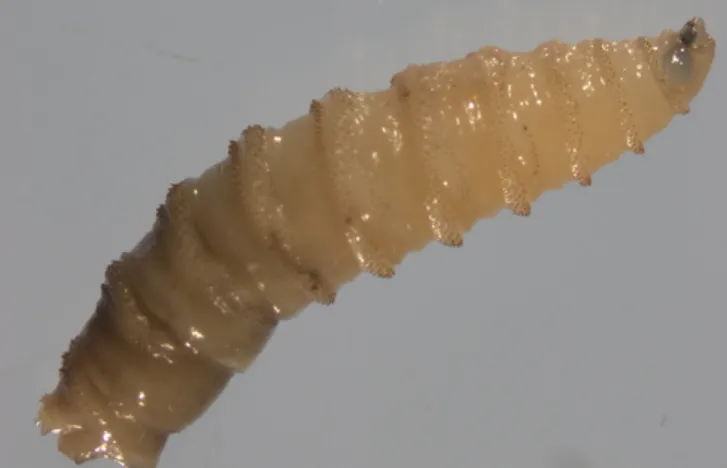
The larval stage is the most active feeding stage. Blowfly larvae, also called maggots, pass through three growth phases called instars. They feed on soft, wet, decomposing tissue or other rich organic material.
Larvae grow quickly and molt as they grow. In some species, larvae mature in 3–4 days, whereas under broader field conditions, it may take around a week. Food quality, humidity, and temperature strongly affect growth speed.
Stage 3: Pupa
When the third-instar larva finishes feeding, it leaves the food source and searches for a dry, protected place. It may move into soil, leaf litter, cracks, or sheltered edges.
Inside the hardened outer skin, called a puparium, the larva transforms into an adult fly. This stage commonly lasts 7–12 days, depending on species and temperature.
Stage 4: Adult
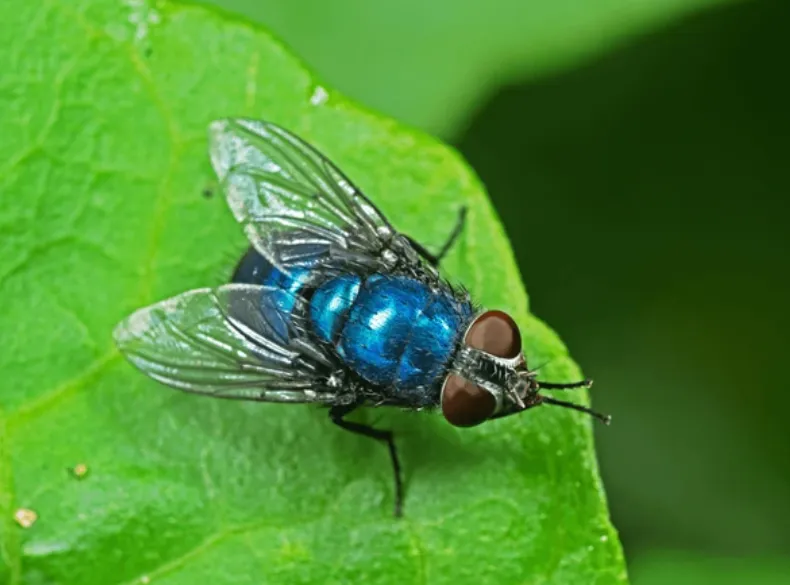
The adult blowfly emerges with wings, legs, antennae, and a metallic body. Adult blowflies feed, mate, and search for egg-laying sites.
Adults are often shiny blue, green, copper, or black and may look similar to houseflies, but they are usually more metallic and sometimes larger.
Important Things That You Need To Know
Many people search for blowfly, blowfly eggs, blowfly larvae, blowfly infestation, blowfly vs housefly, and even the odd phrase blowfly girl. These terms are not all the same, so it is important to understand them clearly.
A blowfly is a real insect from the family Calliphoridae. It is usually linked with carrion, garbage, wounds, and decomposition. Blowfly eggs are the first visible sign of reproduction. They look like tiny pale grains and are usually found in clusters on moist organic material.
Blowfly larvae are maggots. They are the main feeding stage and can appear in large numbers when a food source is available. A blowfly infestation usually indicates an unseen source nearby, such as dead rodents, spoiled meat, animal waste, dirty bins, or untreated animal wounds.
The phrase “blowfly girl” is not a scientific entomological term. It is better not to use it for educational animal content unless the article is explaining search terms. For safe and useful SEO, focus on biological terms like blowfly life cycle, blowfly larvae, and blowfly eggs.
The main difference between blowflies and houseflies is appearance and breeding behavior. Blowflies are often shiny, metallic blue or green, and strongly associated with carrion. Houseflies are usually dull gray and more common around food waste, manure, and human environments.
Their main diet, food sources, and collection process are explained
Main Diet of Blowflies
Adult blowflies feed on many liquid or semi-liquid materials. They may visit nectar, plant juices, animal fluids, decaying matter, feces, and garbage. Their mouthparts are made for sponging liquids, not chewing solid food.
The larvae have a much more specific diet. Most blowfly larvae are scavengers that feed on carrion, dung, decomposing tissue, or moist organic matter. Some species can infest wounds and cause myiasis, especially in livestock or vulnerable animals.
Food Sources
Common food sources include:
- Dead animals
- Rotting meat
- Garbage bins
- Animal feces
- Wounds on livestock
- Slaughterhouse waste
- Decomposing organic matter
Blowflies are strongly attracted to smell. They can detect decomposing matter quickly and often arrive early when a suitable food source appears.
Collection Process
Blowflies collect food by landing on suitable material and using liquid-feeding mouthparts. Larvae feed directly on soft tissue or decaying organic matter.
In nature, this process helps remove dead material quickly. In homes, farms, and food areas, the same feeding behavior can become a hygiene problem because adult flies may move between waste and human spaces.
How Long Does A Blowfly Live
- The lifespan of a blowfly depends on species, temperature, humidity, food supply, and whether it is living in the wild or controlled conditions.
- The full blowfly life cycle typically takes about 2–4 weeks, but warm weather can speed it up, while cold weather can slow it down. Texas A&M livestock veterinary entomology notes that the blowfly life cycle typically takes 3–4 weeks, depending on species.
- The egg stage is very short. Many eggs hatch within 8–24 hours when conditions are warm and moist.
- The larval stage is the main feeding stage. It may last a few days to about a week. During this time, larvae grow quickly and pass through three instars.
- The pupal stage typically lasts 7–12 days, though this can vary with temperature. In colder weather, pupal development can slow down.
- The adult stage may last from several days to several weeks. Some species can live longer under favorable conditions. For example, the hairy maggot blow fly, Chrysomya rufifacies, can live up to 6 weeks as an adult.
- In the wild, many adults die early because of predators, weather, dehydration, lack of food, or human control measures.
- In laboratory or protected settings, blowflies may survive longer because they receive a steady supply of food, a controlled temperature, proper humidity, and protection from predators.
- A female does not need a long life to reproduce successfully. Because she can lay many eggs in a short time, even a brief adult life can create a large next generation.
- Temperature is one of the biggest factors. Warm conditions usually accelerate development, while cold weather slows growth, delays pupation, or triggers diapause in some generations.
Blowfly Lifespan in the Wild vs. in Captivity
Lifespan in the Wild
In the wild, a blowfly faces many dangers. Birds, spiders, beetles, ants, parasitoid wasps, rain, heat, cold, and lack of food can reduce survival. Carrion also disappears quickly because other insects, scavengers, and microbes compete for the same resource.
Wild blowflies may complete their life cycle quickly when conditions are warm and food is fresh. But if the weather is too hot, too cold, or too dry, eggs and larvae may fail to survive.
Lifespan in Captivity
In captivity or laboratory conditions, blowflies can live longer and develop more predictably. Scientists can control temperature, humidity, light, food, and breeding material.
This is why blowflies are useful in research. Their development can be measured under controlled conditions, helping forensic entomologists compare larval age with real-case evidence.
Main Difference
The biggest difference is control. In nature, survival is uncertain. In captivity, food and shelter are stable. As a result, captive blowflies may live longer and produce more consistent data.
Importance of Blowfly in this Ecosystem
Natural Decomposers
Blowflies are among nature’s fastest decomposers. Their larvae break down carrion and help remove dead animal matter from the environment. Without insects like blowflies, dead organic material would remain longer and create stronger bacterial hotspots.
Nutrient Recycling
When larvae feed on carrion, they help break down dead tissue into simpler substances. These nutrients return to the soil and support plants, microbes, and other organisms.
Food for Other Animals
Blowflies and their larvae are food for birds, reptiles, amphibians, spiders, beetles, ants, and other insects. This makes them an important part of many food webs.
Forensic Importance
Because the blowfly life cycle follows predictable stages, forensic experts use eggs, larvae, pupae, and adults as biological clues. This can help estimate how long a body has been decomposing, especially when other signs are unclear.
Medical and Veterinary Importance
Some blowfly larvae can cause harm by infesting wounds. However, sterile larvae of certain species have also been used in maggot debridement therapy to clean dead tissue from wounds.
What to do to protect them in nature and save the system for the future
Protect Natural Habitats
- Keep forests, grasslands, wetlands, and natural open spaces healthy.
- Blowflies need balanced habitats where decomposers, predators, and scavengers can work together.
Avoid Overuse of Chemicals
- Do not use pesticides without reason.
- Heavy pesticide use can kill useful insects along with pests and disturb the food web.
Manage Waste Properly
- Clean garbage, meat waste, and animal remains in human areas.
- This protects people while allowing blowflies to perform their role safely in natural places.
Support Scientific Research
- Blowflies are important for forensic science, ecology, veterinary science, and medicine.
- Supporting insect research helps us understand how ecosystems work.
Respect Their Role in Nature
- Blowflies may look unpleasant, but they are not useless.
- They help clean the environment, recycle nutrients, and support many other species.
Fun & Interesting Facts About Blowfly
- Blowflies are often among the first insects to arrive on carrion.
- Their shiny metallic body can be blue, green, copper, or black.
- Blowfly larvae, called maggots, are powerful natural recyclers.
- Some blowfly larvae can produce heat when many gather together in a maggot mass. The temperature around the mass can rise noticeably.
- Blowflies are used in forensic entomology to help estimate time since death.
- Some sterile blowfly maggots are used in medicine to clean dead tissue from wounds.
- A female can lay many eggs at once, sometimes hundreds in one cluster.
- Blowfly eggs can hatch very quickly in warm conditions.
- Blowflies differ from houseflies because many are metallic and strongly associated with carrion.
- Some blowflies are harmful to livestock because their larvae can infest wounds or dirty wool.
- Not all blowflies are pests. Many are simply decomposers doing an important ecological job.
- Their life cycle is fast because carrion does not last long in nature.
Frequently Asked Questions (FAQs)
Q: What is the blowfly life cycle?
A: The blowfly life cycle is the complete development process of a blowfly. It includes egg, larva, pupa, and adult stages.
Q: Where do blowflies lay eggs?
A: Blowflies usually lay eggs on carrion, rotting meat, garbage, feces, wounds, or moist decomposing organic matter.
Q: Are blowfly larvae dangerous?
A: Blowfly larvae are not always dangerous. In nature, they help decompose dead matter. But some species can infest animal wounds and cause myiasis.
Q: What causes a blowfly infestation?
A: A blowfly infestation usually happens when there is a hidden food or breeding source, such as a dead animal, spoiled meat, dirty trash, pet waste, or an untreated animal wound.
Q: What is the difference between a blowfly and a housefly?
A: Blowflies are usually shiny metallic blue or green and are strongly attracted to carrion. Houseflies are usually dull gray and more common around human food waste, manure, and indoor garbage.
Conclusion
The blowfly life cycle is fast, fascinating, and highly important for nature. From tiny blowfly eggs to hungry blowfly larvae, from hidden pupae to metallic adult flies, each stage has a clear role. Blowflies may seem unpleasant because they are linked with dead animals, garbage, and infestation, but they are also essential decomposers.
They clean the environment, recycle nutrients, feed other animals, support forensic investigations, and even have medical value in controlled wound treatment. At the same time, they must be managed carefully around homes, farms, food areas, and livestock.
Understanding the blowfly, its diet, lifespan, reproduction, and ecological role helps us see the bigger picture. This insect is not just a pest. It is a small but powerful worker in the natural recycling system.
Also Read: red panda life cycle