Eels are long, snake-like, ray-finned fish known for their smooth bodies, secretive behavior, and mysterious migrations. True eels belong to the order Anguilliformes, while freshwater eels belong mainly to the genus Anguilla. This is important because not every animal called an “eel” is a true eel. For example, the electric eel is not a true eel; it is more closely related to knifefish.
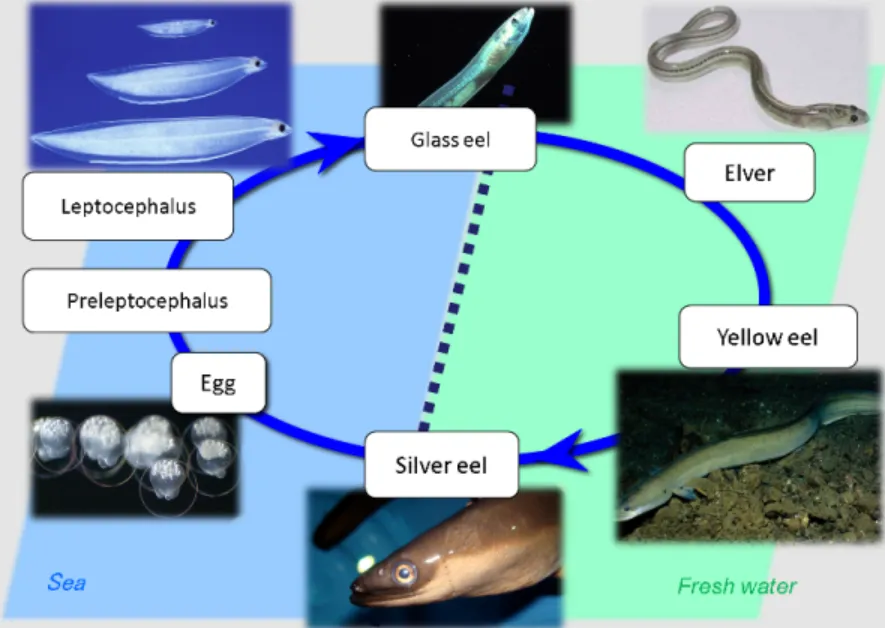
The eel life cycle is among the most fascinating in the aquatic world. Many freshwater eels are catadromous, meaning they spend most of their growing life in rivers, lakes, wetlands, or estuaries but migrate to the ocean to reproduce. The American eel and European eel are famous examples. American eels hatch in the Sargasso Sea, drift toward coastlines as larvae, enter rivers as young eels, grow for years, and later return to the ocean to spawn.
Eels are important predators and scavengers. They eat worms, insects, crustaceans, mollusks, small fish, frogs, and dead animal matter, especially during the yellow eel stage.
Quick Answers: Most Common Questions
Q: What are the main stages of the eel life cycle?
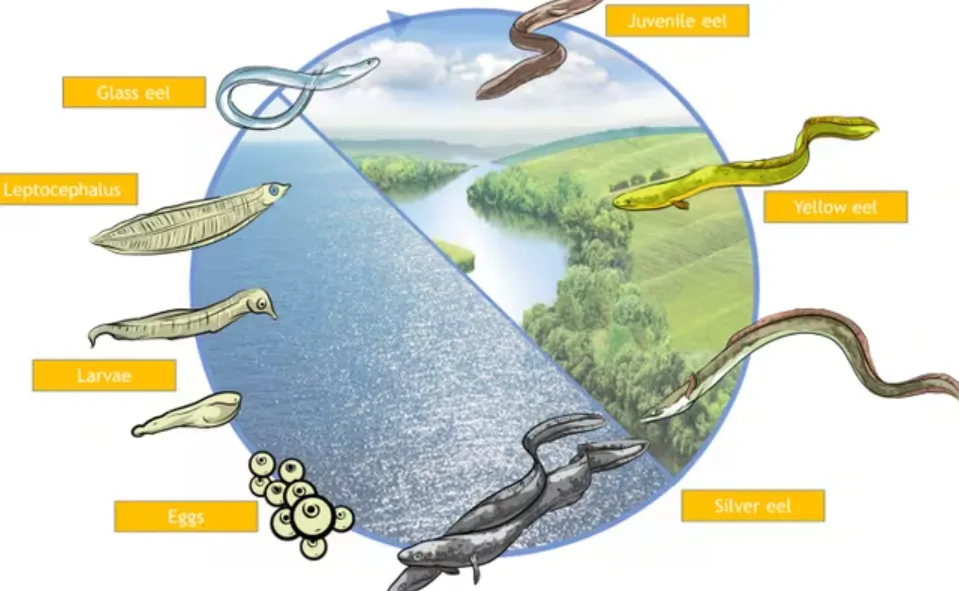
A: The main stages are egg, leptocephalus larva, glass eel/elver, yellow eel, and silver eel.
Q: Where do freshwater eels reproduce?
A: Many freshwater eels reproduce in the ocean. The American eel and European eel are linked to the Sargasso Sea.
Q: Do eels give birth to babies?
A: No. Eels lay eggs. They do not give live birth, and they do not raise their young.
Quick Life Cycle Table
| Life Stage | Where It Happens | Main Feature | Simple Meaning |
| Egg | Ocean spawning area | Tiny eggs hatch into larvae | Beginning of life |
| Leptocephalus | Open ocean | Flat, transparent larva | Drifts with currents |
| Glass Eel / Elver | Coast, estuary, river mouth | Small, clear young eel | Starts entering inland water |
| Yellow Eel | Rivers, lakes, wetlands, estuaries | Main feeding and growing stage | Lives for many years |
| Silver Eel | River to ocean migration | Mature migrating adult | Returns to sea to spawn |
Important Things That You Need To Know
The word eel is broad, so readers should understand a few key ideas before studying the eel life cycle. First, true eels are fish from the order Anguilliformes, a large group that includes freshwater eels, moray eels, conger eels, and many deep-sea eels. The order is highly diverse, with many species adapted to marine, reef, estuarine, riverine, and deep-sea habitats.
Second, the most commonly discussed eel life cycle usually refers to freshwater eels of the genus Anguilla. These eels are not fully freshwater animals. They are better described as migratory fish that connect rivers and oceans. Their lives depend on both the quality of inland water and the migration routes of the ocean.
Third, the eel has a very unusual body. It has a long, flexible body, small or hidden scales, and strong swimming ability. This shape helps it hide under stones, move through muddy bottoms, enter small spaces, and travel long distances.
Fourth, glass eel, yellow eel, silver eel, leptocephalus, and catadromous fish are essential terms. These words explain the stages, movement, and survival strategy of eels.
Finally, eel conservation is now a serious issue. The European eel is listed as Critically Endangered, and scientific advice for 2026 recommends zero catches across all habitats and life stages.
The History of Their Scientific Naming, Evolution, and Origin
Scientific Naming of Eels
The scientific naming of eels helps separate true eels from eel-like animals. Freshwater eels are placed in the genus Anguilla, first formally described by Schrank in 1798. The European eel is known as Anguilla anguilla, and the American eel is known as Anguilla rostrata.
Evolutionary Background
Eels belong to a very old and specialized group of fish. Their long bodies, reduced fins, and flexible movement show strong adaptation to hidden, narrow, and bottom-based habitats. Many true eels live in the ocean, while freshwater eels evolved a special lifestyle that connects the ocean with rivers and estuaries.
Origin and Migration Mystery
The origin of freshwater eel life is strongly connected to ocean spawning. For species such as the American and European eels, the Sargasso Sea is central to their life history. Their larvae drift for long distances before reaching continental waters. This makes the eel one of the most mysterious migratory fish in the world.
Their Reproductive Process, Giving Birth And Rising Their Children
Eels Do Not Give Live Birth
A common mistake is thinking that eels give birth like mammals. They do not. Eels reproduce by laying eggs. Mature eels migrate from freshwater or coastal habitats back to the ocean. After spawning, many freshwater eels die, making them semelparous, which means they reproduce once in life.
Ocean Spawning
For American eels, young hatch in the Sargasso Sea and are carried by ocean currents toward the coasts of North America, Greenland, Canada, the United States, and even farther south. European eels also have a complex ocean-linked life cycle, with larvae moving toward European coasts. FAO describes European eel eggs as pelagic and the larvae as leaf-like leptocephali that drift across the Atlantic.
No Parental Care
Eels do not build nests, guard eggs, or raise their young. After eggs hatch, the larvae survive independently in the ocean. This means survival depends heavily on ocean currents, food availability, temperature, water quality, and safe migration routes.
Reproductive Challenge
Eel reproduction is still difficult to study because much of it happens far offshore and deep in the ocean. This is why eel farming still depends heavily on wild-caught glass eels, especially for commercial production.
Stages of the Eel Life Cycle
Stage 1: Egg and Ocean Beginning
The eel life cycle begins in the ocean. Mature silver eels migrate from rivers, wetlands, lakes, or coastal waters toward offshore spawning areas. For the best-known Atlantic species, the Sargasso Sea plays a major role.
After spawning, fertilized eggs float in the ocean. These eggs hatch into larvae instead of miniature adult eels. This is one reason eels are so unusual. Their young do not look like adult eels at all.
Stage 2: Leptocephalus Larva
The next stage is the leptocephalus stage. A leptocephalus is a flat, transparent, leaf-like larva. It drifts with ocean currents and slowly grows as it moves toward continental waters.
This stage is very important because it connects the deep ocean with rivers and estuaries. For European eels, FAO notes that the larval drifting period may last years as larvae move across the Atlantic.
Stage 3: Glass Eel and Elver
When the larva reaches coastal water, it changes into a glass eel. At this point, the young eel is small, transparent, and shaped more like an adult eel.
As it matures and moves into estuaries, streams, and rivers, it is often called an elver. This is a vulnerable stage because young eels face predators, fishing pressure, pollution, dams, and habitat barriers.
Stage 4: Yellow Eel
The yellow eel is the long feeding and growth stage. During this stage, eels live in rivers, lakes, wetlands, ponds, coastal lagoons, or estuaries. They become stronger predators and mostly feed at night.
This stage may last many years. American eels can remain as yellow eels for 2 to more than 30 years before maturing and returning to the sea.
Stage 5: Silver Eel and Final Migration
The last major stage is the silver eel stage. The eel’s body changes for ocean travel. Its eyes grow larger, its body color darkens above and silver below, and its energy storage increases.
The silver eel stops focusing on feeding and begins its long migration back to the spawning area. After reproduction, many freshwater eels die, completing the cycle.
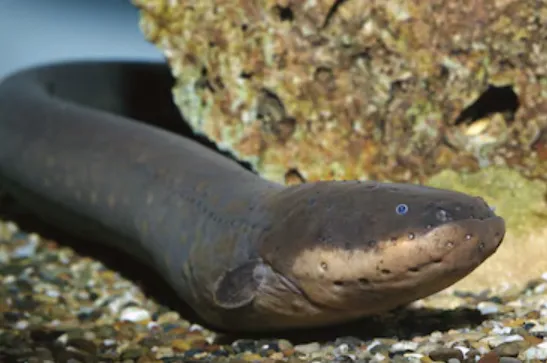
Their main diet, food sources, and collection process are explained
Main Diet of Eels
Eels are mostly carnivorous and opportunistic feeders. Their diet changes depending on life stage, habitat, and size. Small young eels eat tiny aquatic organisms, while larger yellow eels eat bigger prey.
Common eel foods include:
- Aquatic insects
- Worms
- Small fish
- Crustaceans
- Mollusks
- Clams
- Frogs
- Dead animal matter
Animal Diversity Web describes yellow and silver American eels as mainly nocturnal carnivorous feeders that eat insects, crustaceans, clams, worms, fish, frogs, and dead animal matter.
How Eels Find Food
Eels usually feed at night. Their strong sense of smell helps them detect prey in muddy water, under rocks, inside vegetation, and along the river bottom. Their flexible bodies let them enter small hiding places where other fish cannot easily go.
Food Collection Process
Eels do not chase prey like fast open-water fish. Instead, they use a slow, searching method. They explore the bottom, smell out prey, hide in cover, and strike when food is close.
This feeding style makes them both predators and scavengers. By eating dead animals, eels also help clean aquatic habitats.
Diet Changes by Stage
Leptocephalus larvae live in the ocean and feed differently from adult eels. Glass eels and elvers begin feeding in coastal and freshwater systems. Yellow eels are the strongest feeding stage, while silver eels may reduce or stop feeding during migration.
How Long Does A Eel Live
The lifespan of an eel depends strongly on species, sex, habitat, temperature, migration timing, and whether the eel lives in the wild or captivity. A single fixed number can be misleading because “eel” includes many species.
- American eels often live for several years to decades. USFWS notes that yellow eels may grow for many years before returning to the Sargasso Sea. A biological report states that American yellow eels may grow for 2 to more than 30 years before maturing.
- European eels commonly live around 5–20 years in freshwater or brackish habitats before returning to the sea to spawn, according to the European Commission.
- Some eels live longer when they delay maturity. Because freshwater eels usually die after spawning, their lifespan is closely connected to when they become ready to migrate.
- Female eels often grow larger and may live longer than males, especially when they move far upstream into freshwater systems.
- Eels in colder regions may grow more slowly. Slow growth can delay maturity, thereby increasing lifespan.
- Eels in estuaries may mature earlier than those far upstream. This means not all eels need the same number of years before migration.
- In captivity, eels can sometimes live longer because they may not complete their normal spawning migration. One database reports a maximum captivity longevity of 50 years for the American eel, although data quality and sample size are limited.
- Lifespan is also affected by human threats. Pollution, dams, turbines, overfishing, disease, parasites, and illegal trade can reduce survival before eels reach spawning age.
- The most important point is this: an eel’s life is not only about age. It is about completing a long journey from ocean birth to inland growth and back to the ocean for reproduction.
Eel Lifespan in the Wild vs. in Captivity
Lifespan in the Wild
In the wild, eels live under natural pressure. They face predators, seasonal changes, poor water quality, barriers, fishing, and long-distance migration. Wild freshwater eels usually die after spawning, so their final age depends on when they become mature.
A European eel may spend around 5–20 years in freshwater or brackish habitats before returning to the sea. In contrast, American eels may remain in the yellow eel stage for many years before becoming silver eels.
Lifespan in Captivity
In captivity, eels may live longer because they are protected from predators and may not complete their natural spawning migration. However, captivity is not automatically better. Eels need clean water, proper temperature, high-quality food, oxygen, hiding spaces, and low stress.
The Big Difference
Wild eels follow a complete natural cycle: ocean birth, inland growth, ocean migration, spawning, and death. Captive eels may live longer, but they often do not complete the full natural reproductive cycle. That is why commercial eel farming still depends heavily on wild-caught young eels in many systems.
Importance of Eel in this Ecosystem
Eels as Predators
Eels help control populations of insects, small fish, crustaceans, worms, mollusks, and frogs. By feeding at night, they fill an ecological role that many daytime fish do not.
This helps balance food webs in rivers, wetlands, estuaries, and coastal systems. Without eels, some prey populations could increase unnaturally.
Eels as Scavengers
Eels also eat dead animal matter. This makes them useful cleaners in aquatic habitats. By consuming carrion, they help recycle nutrients and reduce waste in the ecosystem.
Eels as Prey
Eels are food for larger fish, birds, mammals, and humans. Young eels are especially vulnerable and become part of the food chain as they move from the ocean to freshwater.
Eels Connect Ocean and Freshwater
Freshwater eels are special because they connect distant ecosystems. Their life cycle links the ocean, estuaries, rivers, wetlands, and lakes. This makes them a strong indicator of environmental health.
If eel populations decline, it often signals deeper problems such as blocked rivers, polluted water, damaged wetlands, overfishing, and climate-related ocean changes.
What to do to protect them in nature and save the system for the future
Protect River Migration Routes
- Remove unnecessary dams and barriers where possible.
- Build safe eel passes near dams and water-control structures.
- Reduce turbine deaths during silver eel migration.
- Keep river mouths open so glass eels can enter inland waters.
Improve Water Quality
- Reduce industrial pollution, plastic waste, and agricultural runoff.
- Protect wetlands that filter water naturally.
- Control chemical discharge into rivers and estuaries.
- Monitor oxygen levels in eel habitats.
Reduce Overfishing and Illegal Trade
- Follow science-based fishing limits.
- Stop illegal glass eel trafficking.
- Avoid buying eel from sources that are unclear or untraceable.
- Support stronger monitoring of eel supply chains.
Restore Wetlands and Estuaries
- Rebuild marshes, floodplains, and riverbank vegetation.
- Protect coastal lagoons and estuarine nurseries.
- Create safe hiding areas for young eels.
- Maintain natural flow patterns where possible.
Support Research and Public Awareness
- Fund eel migration tracking and habitat studies.
- Teach people that eel farming often depends on wild glass eels.
- Encourage schools and communities to protect local streams.
- Support conservation programs based on real population data.
Fun & Interesting Facts About Eel
- Eels have one of the most mysterious life cycles among fish.
- Freshwater eels are catadromous, meaning they grow inland but reproduce in the sea.
- Baby eels do not look like adult eels. The leptocephalus larva is flat and transparent.
- Glass eels are almost see-through, which helps them hide from predators.
- Yellow eels are mostly nocturnal, so they feed mainly at night.
- Silver eels transform migration, developing larger eyes and a body suited for ocean travel.
- Eels can move through narrow spaces because of their flexible bodies.
- Some eels can survive short periods out of water if conditions are moist, although they still need water to live properly.
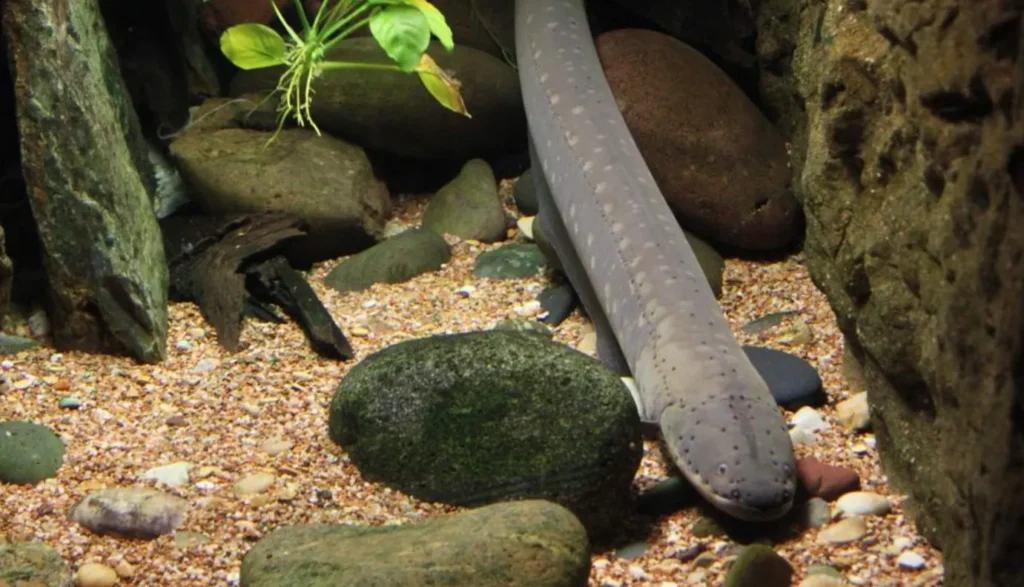
- Eels are not snakes. They are fish, even though their bodies look snake-like.
- Electric eels are not true eels. This is a common confusion.
- Eel reproduction is still difficult to observe, especially in the open ocean.
- Eels are both predators and scavengers, helping clean and balance aquatic ecosystems.
Frequently Asked Questions (FAQs)
Q: What is the life cycle of an eel?
A: The eel life cycle usually includes egg, leptocephalus larva, glass eel, elver, yellow eel, and silver eel. The eel begins life in the ocean, grows in coastal or freshwater habitats, and later returns to the sea to reproduce.
Q: Where are eels born?
A: Many freshwater eels are born in the ocean. The American eel and European eel are strongly connected to the Sargasso Sea, where spawning is believed to occur.
Q: How long do eels live?
A: It depends on the species and habitat. Some eels live only several years, while others may live for decades. European eels often spend around 5–20 years in freshwater or brackish habitats before returning to sea.
Q: What do eels eat?
A: Eels eat worms, insects, small fish, crustaceans, mollusks, frogs, and dead animal matter. Their diet changes as they grow.
Q: Are eels endangered?
A: Some eel species are in serious trouble. The European eel is listed as Critically Endangered, and current scientific advice recommends zero catch for European eel in 2026 across all habitats and life stages.
Conclusion
The eel life cycle is a remarkable journey from ocean birth to inland growth and back to the sea. Eels begin as tiny eggs, become transparent leptocephalus larvae, transform into glass eels, grow as yellow eels, and finally migrate as silver eels to reproduce. This cycle connects oceans, rivers, lakes, wetlands, and estuaries into a single continuous natural system.
Eels are not just strange-looking fish; they are important predators, scavengers, and ecological connectors. Their decline shows that many aquatic habitats are under pressure from pollution, dams, overfishing, illegal trade, and climate change.
Protecting eels means protecting entire water systems. Clean rivers, open migration routes, restored wetlands, responsible fishing, and stronger public awareness can help secure their future. The more we understand the life of the eel, the better we can protect one of nature’s most mysterious and valuable aquatic species.
Also Read: boxelder bug life cycle