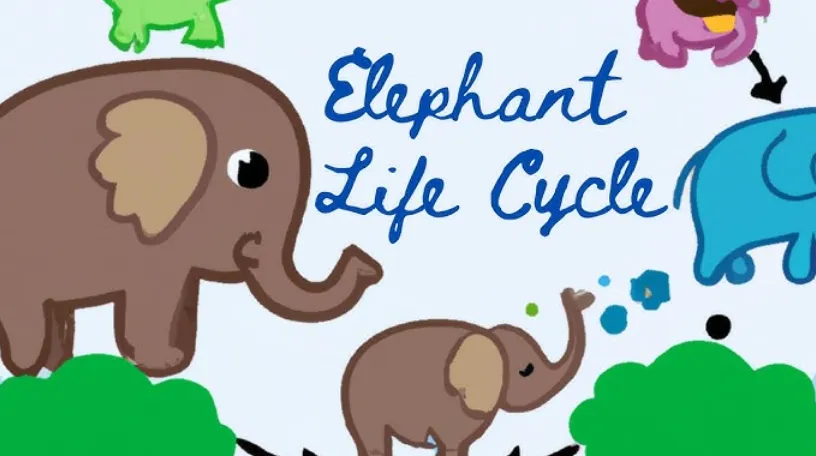
The elephant life cycle is among the longest and most complex among land mammals. Elephants grow slowly, depend heavily on family care, and may live for several decades. Their life begins after a very long pregnancy, usually around 18–22 months, which is the longest gestation period of any mammal. A newborn elephant calf is normally around 1 metre tall and weighs about 100 kg, although weights can vary by species and individual condition.
There are three living elephant species: the Asian elephant, the African savanna elephant, and the African forest elephant. The Asian elephant and African savanna elephant are currently listed as Endangered, while the African forest elephant is listed as Critically Endangered by the IUCN Red List.
Elephants are not only large animals; they are also intelligent, social, and ecologically important. Their life cycle includes birth, calfhood, juvenile growth, adulthood, reproduction, and old age. Each stage is shaped by family learning, food availability, water access, migration routes, and human pressure.
Q: How many stages are in the elephant life cycle?
A: The elephant life cycle can be explained in four main stages: newborn calf, growing calf/juvenile, adolescent elephant, and adult/elder elephant.
Q: How long is an elephant pregnant?
A: An elephant is pregnant for about 18–22 months, depending on the species and individual condition.
Q: How long can elephants live?
A: Elephants may live around 60 years in the wild, and some can live longer in human care, although lifespan depends on health, habitat, food, safety, and management.
Important Things That You Need To Know
Many people search for elephant-related terms, but not all of them are about the real elephant life cycle. Some terms are associated with animals, while others are associated with plants, gifts, brands, history, or internet culture.
The word elephant refers to real living animals from the family Elephantidae. These include the Asian elephant, African savanna elephant, and African forest elephant. These animals have real biological life cycles involving pregnancy, calf development, social learning, reproduction, and ageing.
The phrase “white elephant” can refer to a pale or rare elephant in cultural contexts, but it is also widely used for a party gift exchange. White elephant gift ideas usually refer to funny, unusual, or light-hearted gifts exchanged in social events, not to elephant biology.
The elephant ear plant is completely different from an elephant. It is a common name for tropical plants such as Colocasia, Alocasia, and Xanthosoma, which are known for their large, heart-shaped leaves.
The term Drunk Elephant refers to a skincare brand, not an animal. Likewise, the strawberry elephant is not recognized as a biological species of elephant. The term elephant bird refers to extinct large flightless birds, while Elephant Man is a historical human-related term and should not be confused with elephant biology.
So, while these LSI keywords help address related search intent, the main topic here is the real, scientific elephant life cycle.
Quick Life Cycle Table
| Stage | Approx. Age | What Happens |
| Pregnancy | 18–22 months | The calf develops inside the mother before birth. |
| Newborn Calf | Birth–1 year | Learns to stand, walk, nurse, and follow the herd. |
| Juvenile | 1–8 years | Starts eating plants, learns social behaviour, and stays close to family. |
| Adolescent | 8–18 years | Males begin leaving the herd; females usually remain with their families. |
| Adult | 18+ years | Reproduction, migration, leadership, and full social roles develop. |
| Elder | 50+ years | Older elephants guide herds but may face tooth wear and health decline. |
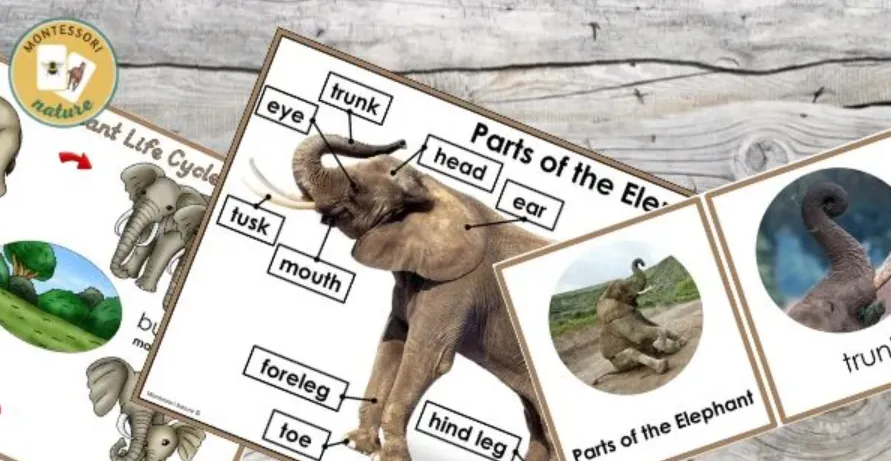
The History Of Their Scientific Naming, Evolution, and Their Origin
Scientific Naming of Elephants
Modern elephants belong to the family Elephantidae. The three living species are Elephas maximus (Asian elephant), Loxodonta africana (African savanna elephant), and Loxodonta cyclotis (African forest elephant). These scientific names help researchers separate species based on anatomy, genetics, geography, and evolutionary history.
Evolutionary Background
Elephants belong to the order Proboscidea, a group that once included many extinct relatives, such as mammoths and mastodons. Modern elephant lineages are believed to have deep African origins. Evidence indicates that Loxodonta, Elephas, and Mammuthus originated in Africa during the Pliocene, about 3–4 million years ago.
Origin and Spread
The African elephant lineage largely remained in Africa, while the ancestors of Asian elephants spread into Asia. Over time, climate change, habitat shifts, food availability, and migration shaped the differences between African and Asian elephants. Today, their reduced and fragmented habitats make conservation more important than ever.
Their Reproductive Process, Giving Birth, and Raising Their Children
Mating and Reproductive Maturity
Elephants mature slowly. Females usually reach sexual maturity in their early teenage years. At the same time, males may mature sexually earlier but often do not successfully compete for mating until they are older and stronger. In Asian elephants, wild males and females may reach sexual maturity between 8 and 13 years, but males often father calves later in life.
Pregnancy and Birth
The elephant pregnancy period is extremely long, usually 18–22 months. This long development allows the calf’s brain, body, legs, and trunk to develop enough for survival after birth. Usually, one calf is born at a time, though twins are rare.
Newborn Care
A newborn elephant can usually stand and nurse soon after birth. The mother closely protects the calf, and other female elephants may help. This group care is important because calves are vulnerable to predators, injury, dehydration, and separation from the herd.
Raising the Calf
Calves drink milk for years, but they begin tasting vegetation within the first months of life. Asian elephant calves may begin feeding on vegetation by around six months and may also eat their mother’s dung, which helps transfer useful gut bacteria for digesting plant material.
Stages of Elephant Life Cycle
Stage 1: Newborn Calf
The first stage of the elephant’s life cycle begins at birth. A calf is large compared with most mammal babies, but it is still dependent on its mother and herd. It learns to stand, walk, nurse, and recognize family members.
During this stage, the calf’s trunk is still difficult to control. It may swing the trunk awkwardly before learning how to use it for smelling, touching, drinking, and gathering food. Protection from the mother and herd is essential.
Stage 2: Growing Calf and Juvenile
As the calf grows, it begins to eat grasses, leaves, bark, fruit, and other vegetation. Milk remains important, but plant food becomes a larger part of the diet. The juvenile stage is also a period of learning.
Young elephants learn migration routes, water locations, social rules, danger signals, and feeding behaviour from older elephants. Female calves usually stay close to the family group, while young males slowly become more independent.
Stage 3: Adolescent Elephant
Adolescence is a transition stage. Male elephants often leave their birth herd between puberty and early adulthood. They may live alone or join loose bachelor groups. Female elephants usually remain in their family herd and learn future mothering and social roles.
This stage is important because elephants develop strength, confidence, and social behaviour. Males also begin experiencing stronger reproductive behaviour as they mature.
Stage 4: Adult and Elder Elephant
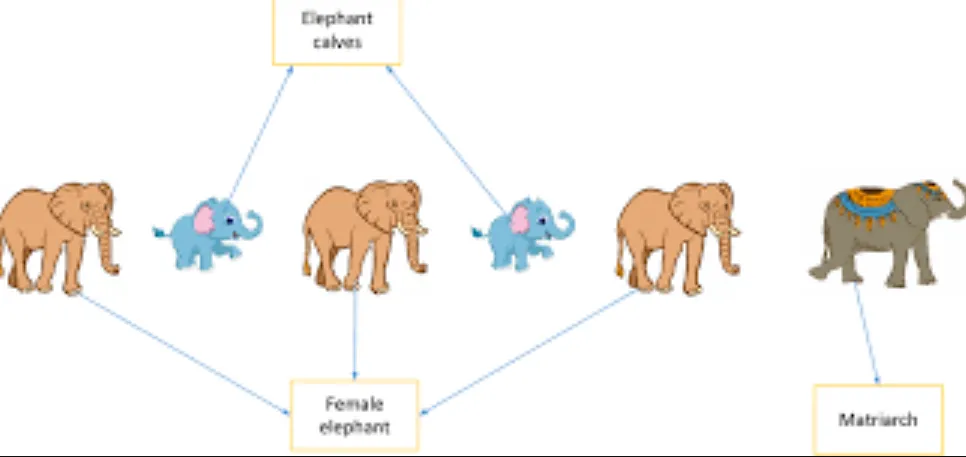
Adult elephants take on full roles in reproduction, migration, protection, and ecosystem shaping. Older females may become matriarchs, guiding the herd to food and water.
In old age, elephants may suffer from tooth wear, reduced feeding ability, injury, or disease. Since elephants depend heavily on chewing tough plant material, worn molars can strongly affect survival.
Their Main Diet, Food Sources, and Collection Process Explained
Elephants are herbivores, meaning they eat plant-based food. Their diet changes depending on habitat, season, rainfall, and species. African savanna elephants may eat grasses, leaves, bark, shrubs, roots, and fruit, while forest elephants consume more fruit and forest vegetation.
Main Food Sources
Elephants commonly eat:
- Grass, especially during rainy seasons
- Leaves from trees and shrubs
- Bark, which provides minerals and fibre
- Roots and tubers, especially during dry periods
- Fruits and seeds, especially in forest habitats
- Aquatic plants, when available near wetlands
How Elephants Collect Food
The trunk is the main tool for collecting food. Elephants use it like a hand, nose, and drinking tool combined. They can pluck grass, pull branches, strip bark, pick fruits, smell food, and bring water to the mouth.
Tusks may also help in digging, debarking trees, moving branches, and accessing minerals. Because elephants eat large amounts of vegetation, they strongly influence plant growth and habitat structure.
An adult elephant may consume around 100 kg of food and about 100 litres of water per day, and these amounts can increase when the animal is hungry or thirsty.
How Long Does an Elephant Live
The lifespan of an elephant depends on the species, habitat quality, food supply, disease, injury, poaching risk, human conflict, and veterinary care. Elephants are long-lived animals, but a long life is not guaranteed.
- Wild elephants often live around 60 years, although some individuals may live longer in good conditions.
- Captive elephants may live longer in some cases because they can receive food, medical care, and protection from predators or poaching. However, captivity can also create problems if space, social life, foot care, diet, and exercise are not properly managed.
- Asian elephants in human care require strong welfare standards because they are intelligent, social, and physically active animals. Poor living conditions can reduce the quality of life.
- African elephants in the wild face threats such as illegal ivory poaching, drought, habitat loss, and conflict with farming communities.
- Tooth wear is a major natural factor in elephant ageing. Elephants replace molars several times, but when the final molars wear out, feeding becomes difficult.
- Female elephants can remain socially important even in old age. Older females often carry valuable memories about water sources, safe routes, and seasonal movement.
- Male elephants may live alone or in loose male groups as adults. Their survival depends on access to large areas, water, food, and safe movement corridors.
- Human-elephant conflict can shorten elephant lifespan when farms, roads, settlements, and elephant migration routes overlap.
A healthy elephant’s life is not only about age. It is also about movement, social bonding, natural feeding, reproduction, safety, and freedom from unnecessary stress.
Elephant Lifespan in the Wild vs. in Captivity
Lifespan in the Wild
In the wild, elephants live in natural family systems and can move across large landscapes. They choose food, water, shade, mud, and social partners. Wild living supports natural behaviour, but it also includes risks such as drought, disease, injury, predation on calves, poaching, and habitat loss.
A wild elephant may live for about 60 years, but many do not reach old age due to environmental and human-related pressures.
Lifespan in Captivity
In captivity or human care, elephants may receive regular food, water, veterinary treatment, and protection. Some individuals can live longer, but good welfare is essential.
Captive elephants need sufficient space, social contact, foot care, mental stimulation, a proper diet, and skilled management. Without these, they may suffer from obesity, stress, foot disease, joint problems, or abnormal behaviour.
Which Is Better?
The best condition is not simply “wild” or “captivity.” The best condition is one in which elephants have safety, social life, proper food, freedom of movement, and dignity. For conservation, protecting natural habitats remains the most important long-term solution.
Importance of Elephant Life Cycle in this Ecosystem
Elephants as Ecosystem Engineers
Elephants are often called ecosystem engineers because their feeding, walking, digging, and seed dispersal change the environment around them. They create pathways through forests, open clearings, and help other animals move through dense vegetation.
Seed Dispersal and Forest Growth
Many plants depend on elephants for seed dispersal. Elephants eat fruits and later deposit seeds through dung across long distances. In some central African forests, many tree species rely on elephants to help spread seeds and support regeneration.
Water and Microhabitats
Elephant footprints can collect rainwater and become small habitats for insects, tadpoles, and other tiny organisms. Their digging can also expose water sources that other animals may use during dry seasons.
Balancing Vegetation
In savannas, elephants reduce bush cover and help maintain a mix of grassland and woodland. This benefits grazing animals, browsing animals, birds, insects, and predators. When elephant populations disappear, ecosystems can become less diverse and less balanced.
What to Do to Protect Them in Nature and Save the System for the Future
Protect Natural Habitat
- Save forests, grasslands, wetlands, and migration routes.
- Stop unnecessary land conversion in elephant areas.
- Keep protected areas connected through wildlife corridors.
Reduce Human-Elephant Conflict
- Use safe fencing, early-warning systems, crop protection, and community-based planning.
- Support farmers who lose crops so they do not feel forced to harm elephants.
Stop Poaching and Illegal Ivory Trade
- Strengthen anti-poaching patrols.
- Reduce demand for ivory products.
- Support laws that stop illegal wildlife trade.
Support Science-Based Conservation
- Use GPS tracking, population surveys, genetic research, and local monitoring.
- Conservation plans should be based on real elephant movement and community needs.
Educate Local Communities and Tourists
- Teach people why elephants matter for ecosystems.
- Promote responsible tourism that does not exploit elephants.
- Encourage respect for wild animals and their space.
WWF identifies poaching, habitat loss, fragmentation, and human-elephant conflict as major threats to elephant survival, especially as human settlements and infrastructure expand into elephant ranges.
Fun & Interesting Facts About Elephant Life Cycle
- Elephants have the longest pregnancy of any mammal, lasting about 18–22 months.
- A newborn elephant calf can weigh around 100 kg, making it one of the largest babies in the animal kingdom.
- Elephant calves do not drink milk with their trunks. They suckle using their mouths.
- Young elephants must learn how to control their trunks. At first, the trunk may seem clumsy.
- Female elephants usually stay with their birth herd for life.
- Male elephants often leave the family herd as they mature.
- Older female elephants can become matriarchs, leading the herd with memory and experience.
- Elephants use low-frequency sounds that can travel long distances.
- Elephant dung helps spread seeds and supports insects and soil life.
- Elephants can show strong social behaviour, including care, protection, play, grief-like responses, and cooperation.
- An elephant’s large ears help with cooling, especially in hot climates.
- Elephants may bathe in water and cover themselves with mud or dust to protect their skin.
Frequently Asked Questions (FAQs)
Q: What is the elephant life cycle?
A: The elephant life cycle is the full journey from pregnancy and birth to calfhood, juvenile growth, adolescence, adulthood, reproduction, and old age.
Q: What are the four main stages of an elephant’s life cycle?
A: The four main stages are newborn calf, juvenile, adolescent, and adult/elder elephant.
Q: How long does a baby elephant stay with its mother?
A: A calf stays close to its mother for many years. It may start eating plants within months, but milk, protection, and social learning continue for a long time.
Q: How often do elephants give birth?
A: Elephants usually give birth to one calf after a long pregnancy. Birth intervals can vary, but Asian elephants may have an average birth interval of three to eight years, depending on environmental conditions.
Q: Why is the elephant’s life cycle important for nature?
A: The life cycle matters because elephants shape habitats, spread seeds, create paths, open forest gaps, support biodiversity, and help maintain healthy ecosystems.
Conclusion
The elephant life cycle is a powerful example of slow growth, strong family bonds, long-term learning, and ecological importance. From a nearly two-year pregnancy to decades of social life, elephants depend on their mothers, herds, habitats, and migration routes for survival.
Understanding this life cycle helps people see why elephants cannot be protected only by stopping poaching. They also need connected forests, safe grasslands, clean water, peaceful movement routes, and reduced human conflict.
Elephants are more than just large animals. They are seed dispersers, habitat shapers, family learners, and keystone species. Protecting elephants means protecting entire ecosystems for future generations. A healthy future for elephants depends on science, conservation, local communities, responsible policy, and respect for nature.
Also Read: eel life cycle