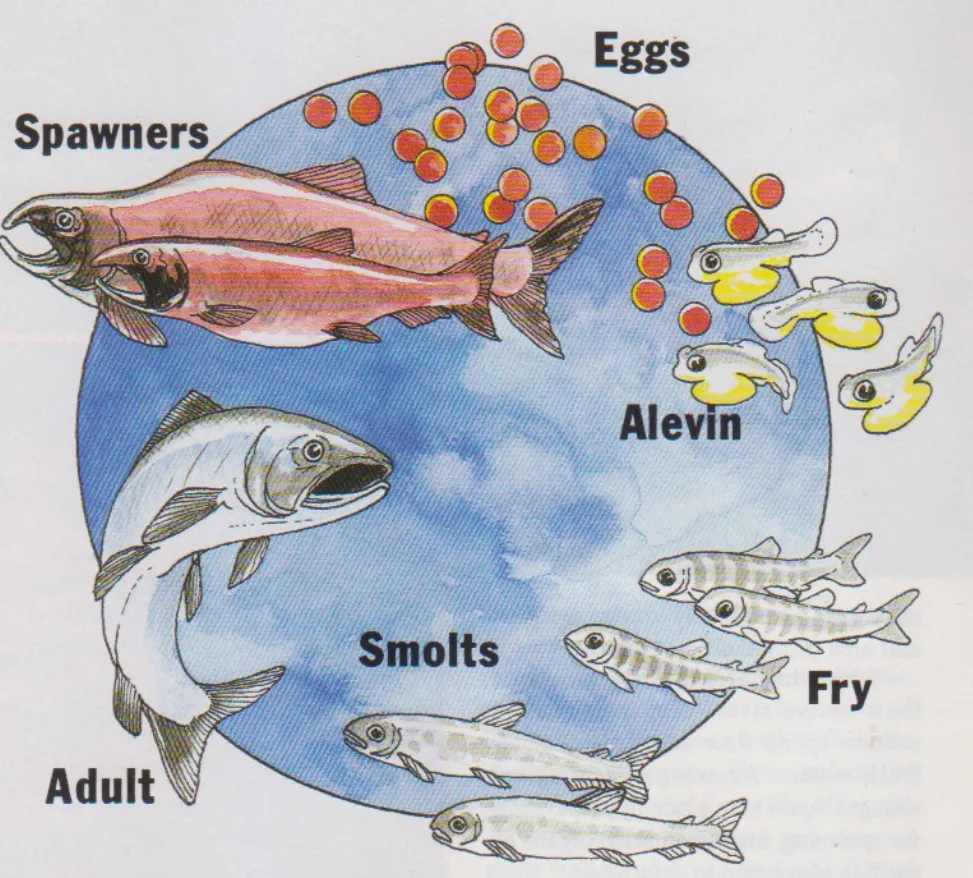
The life cycle of salmon is one of nature’s most fascinating and intricate processes. These remarkable fish undergo several stages, from hatching in freshwater streams to migrating across vast oceanic expanses and eventually returning to their birthplace to spawn. Understanding this life cycle is crucial for appreciating Salmon’s resilience and adaptability, as well as the importance of conserving their habitats.
Quick Answers to Common Questions:
- How long does a salmon live? Salmon typically live between 3 and 7 years, depending on the species. Their journey through the freshwater and ocean environments can vary based on environmental conditions.
- Where do salmon lay their eggs? Salmon lay their eggs in freshwater streams, often in gravel nests called redds. They return to these areas after migrating across oceans.
- How do salmon find their way back home? Salmon are known for their impressive homing ability. They use environmental cues, such as Earth’s magnetic field and olfactory signals, to navigate back to their birth streams.
Quick Life Cycle Table
| Life Cycle Stage | Duration | Description |
| Egg | 1-4 months | Eggs are fertilized in gravel beds in freshwater streams. |
| Alevin | 2-3 months | Newly hatched salmon rely on their yolk sac for nourishment. |
| Fry | 6 months to 1 year | Salmon begin feeding on small insects and become more active. |
| Smolt | 1-2 years | Salmon undergo physiological changes to adapt to saltwater. |
| Adult | 2-5 years | Fully mature salmon migrate to the ocean and grow. |
| Spawning | Brief (1-2 weeks) | Returning to freshwater, salmon spawn and complete their life cycle. |
The History of Their Scientific Naming
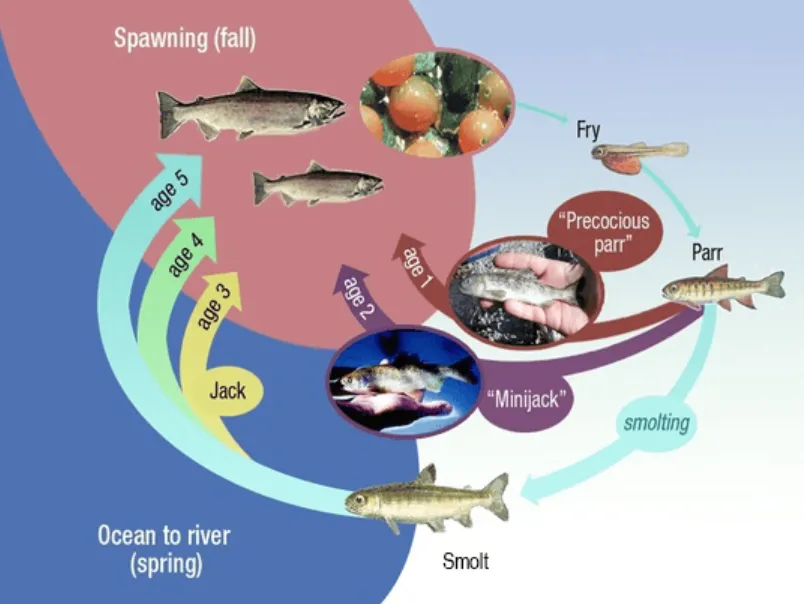
The scientific name of the salmon genus, Salmo, is derived from Latin and means “to leap,” reflecting the fish’s behavior when they swim upstream during migration. The species Salmo salar, commonly known as Atlantic salmon, is the most well-known. Historically, the scientific classification of salmon has evolved as more species have been discovered, including Pacific salmon such as Oncorhynchus (chinook, sockeye, coho, pink, and chum).
Each of these species has been given distinct scientific names based on unique traits, including their migratory patterns, appearance, and genetic differences. The historical naming of salmon has been influenced by ancient knowledge from indigenous cultures and modern scientific exploration.
Their Evolution and Their Origin
Salmon, part of the family Salmonidae, evolved over millions of years to thrive in both freshwater and marine environments. The genus Salmo and its relatives, such as Oncorhynchus, diverged from a common ancestor that lived over 40 million years ago. These species adapted to various environments, with some salmon migrating extensively across oceans while others remain in freshwater rivers for most of their lives.
Historically, salmon originated in the cold waters of the Northern Hemisphere, particularly in North America, Europe, and Asia. The need for both freshwater habitats for spawning and saltwater environments for feeding and growth has shaped salmon’s evolutionary path. Over time, salmon developed specialized traits to survive the rigorous conditions of these ecosystems, including a unique ability to switch between freshwater and saltwater—a feat known as “smoltification.”
The origin of salmon can be traced to ancient freshwater lakes and rivers. Fossils suggest that early salmon were freshwater species that gradually adapted to life in the ocean. The complex behavior of salmon, including their homing instincts and migration patterns, highlights the evolutionary pressure to optimize survival and reproduction across two vastly different environments.
Their Main Food and Its Collection Process
Salmon are opportunistic feeders, and their diet depends on their life stage and environment. In their early stages (from egg to fry), they primarily consume the yolk. Once they transition into the fry and smolt stages, their diet becomes more diverse. Salmon feed on a range of small aquatic organisms, including insects, crustaceans, plankton, and smaller fish.
When salmon enter the ocean as adults, their diet shifts to include larger prey such as krill, small fish, and squid. The process of food collection is largely dependent on the environment. In freshwater, young salmon feed on insects and larvae that inhabit the streambed. In the ocean, salmon actively hunt for food, often traveling great distances to find rich feeding grounds. Their streamlined bodies and strong swimming abilities enable them to catch fast-moving prey.
Salmon also engage in opportunistic feeding, taking advantage of abundant food sources when available. Their ability to adapt their diet according to the environment ensures their survival in both freshwater and saltwater ecosystems.
Their Life Cycle and Ability to Survive in Nature
The Salmon Life Cycle
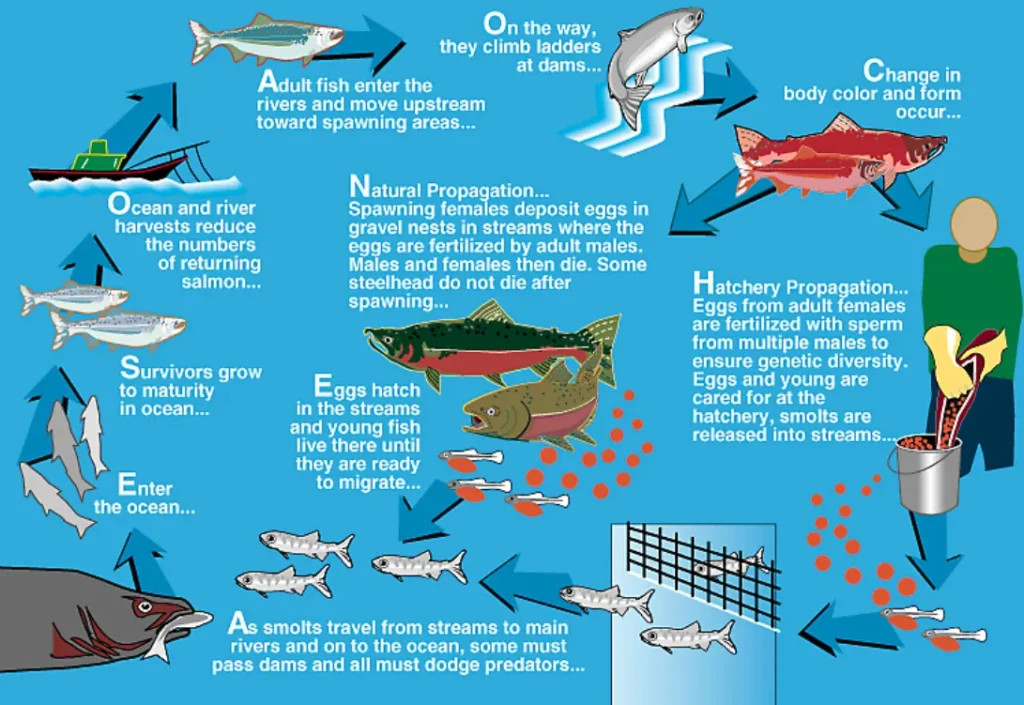
Salmon undergo an extraordinary life cycle that spans both freshwater and oceanic environments. Their ability to survive in nature is a testament to their adaptability and evolutionary success.
- Hatching and Early Life: Salmon hatch from eggs in freshwater streams and develop into alevins. As they grow, they transition into fry and smolts, preparing for their migration to the ocean.
- Migration: As smolts, salmon make a dramatic journey to the ocean, where they will live and grow for the majority of their adult life. The ability to transition from freshwater to saltwater is a key survival strategy that salmon have perfected over millennia.
- Return to Birthstream: Once they reach maturity, adult salmon swim back upstream to their birthplace to spawn. This remarkable feat involves overcoming numerous natural obstacles, including waterfalls and predators.
Salmon are highly resilient due to their complex life cycle. Their ability to thrive in diverse environments and navigate long distances to return home ensures the continuation of their species. The ecological balance of the salmon life cycle is delicate, and any disruption in one stage can affect the entire population.
Their Reproductive Process and Raising Their Children
Salmon have a fascinating reproductive strategy that begins with their return to freshwater to spawn. Here are the key steps in the reproductive process:
- Spawning Migration: Salmon return to the freshwater streams where they were born, navigating complex routes and overcoming numerous natural barriers. This homing instinct is incredibly accurate, ensuring they spawn in the same areas as their ancestors.
- Nesting: Female salmon create nests called redds in gravel riverbeds, where they lay thousands of eggs. Male salmon fertilize the eggs by releasing sperm over the eggs, initiating the reproductive cycle.
- Egg Development: Eggs develop over the winter months, and after hatching, the salmon enter the early life stages as alevins.
- Parenting: Interestingly, salmon do not care for their young after spawning. Once the eggs hatch, the young are left to fend for themselves, relying on the surrounding environment for nourishment and survival.
Importance of Them in This Ecosystem
Salmon play a critical role in maintaining the balance of both aquatic and terrestrial ecosystems. Here’s why they are so important:
1. Nutrient Cycling:
Salmon contribute to nutrient cycling by bringing nutrients from the ocean to freshwater ecosystems. When salmon die after spawning, their decomposing bodies provide essential nutrients to both aquatic plants and terrestrial wildlife.
2. Biodiversity Support:
Salmon are a key food source for numerous predators, including bears, eagles, and other fish species. Their presence helps sustain biodiversity across a wide range of species in the food chain.
3. Habitat Maintenance:
Salmon influence freshwater ecosystems by contributing to the growth of aquatic plants and other species. Their migration patterns also create opportunities for different species to thrive in both freshwater and oceanic environments.
What to Do to Protect Them in Nature and Save the System for the Future
To protect salmon populations and ensure their survival for future generations, the following actions are essential:
- Protecting Habitats: Safeguard freshwater streams and rivers from pollution, dam construction, and habitat destruction. These habitats are vital for salmon spawning and early development.
- Sustainable Fisheries: Promote sustainable fishing practices to avoid overfishing and ensure salmon populations remain healthy.
- Restore Damaged Ecosystems: Work to restore ecosystems damaged by human activity, such as removing barriers to migration and cleaning up polluted waterways.
- Climate Change Mitigation: Address climate change by reducing emissions that affect water temperature and salmon migration patterns.
Frequently Asked Questions (FAQs)
1. What is the life cycle of salmon?
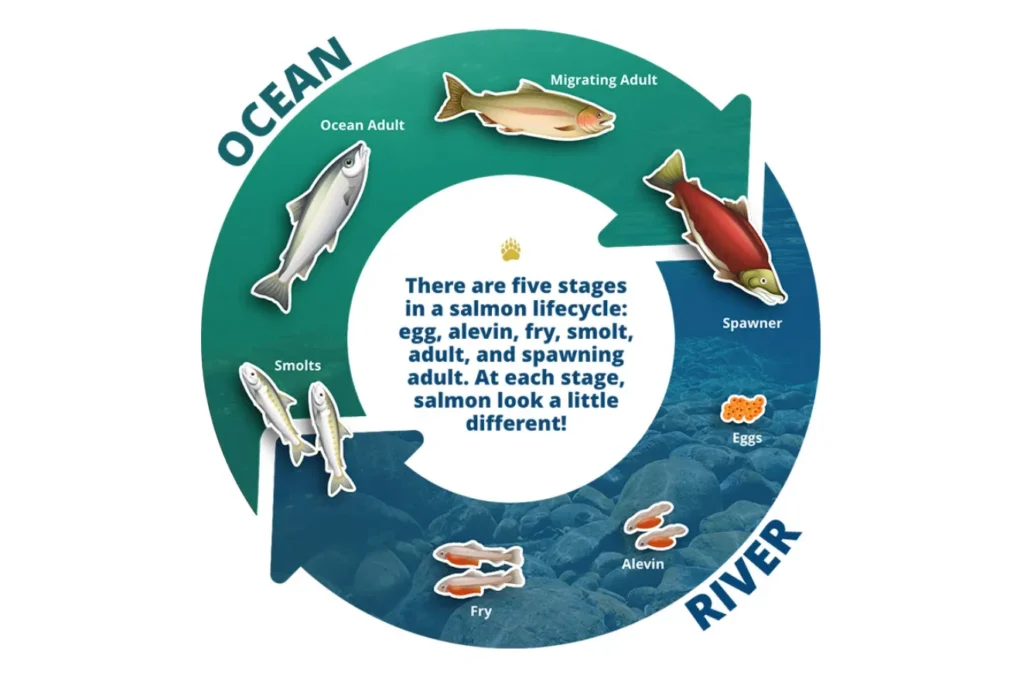
The life cycle of salmon consists of several stages:
- Egg: Fertilized in freshwater streams.
- Alevin: Hatches from the egg and survives on the yolk sac.
- Fry: Begin swimming and feeding on small insects.
- Smolt: Transition to saltwater, preparing for ocean migration.
- Adult: Live in the ocean, growing into mature salmon.
- Spawning: Return to freshwater to lay eggs, completing their cycle.
2. How long do salmon live?
The lifespan of salmon varies by species, but they generally live between 3 and 7 years. Pacific salmon, such as chinook and sockeye, typically live around 3 to 5 years, while Atlantic salmon can live up to 7 years. The life cycle includes several stages from birth in freshwater to migration in the ocean and eventual return to freshwater to spawn.
3. Why do salmon return to their birthplace to spawn?
Salmon return to their birthplace to spawn due to an instinctual homing ability. They use a combination of environmental cues, such as the Earth’s magnetic field, water chemistry, and olfaction, to navigate back to the same freshwater streams where they were born. This process is essential for the continuation of their species.
4. What do salmon eat?
Salmon are carnivorous fish, and their diet changes as they progress through their life cycle:
- Young salmon (fry and smolts) feed on insects, small crustaceans, and plankton found in freshwater.
- Adult salmon primarily feed on smaller fish, squid, and krill while in the ocean, which helps them grow and develop before returning to freshwater to spawn.
5. How do salmon survive the transition from freshwater to saltwater?
Salmon survive the transition from freshwater to saltwater through a process known as “smoltification.” During this stage, their bodies undergo physiological changes, such as adjustments in their kidneys and gills, allowing them to tolerate the ocean’s higher salt content. This ability to adapt is essential for their survival in saltwater.
6. What are the biggest threats to salmon populations?
Salmon face several threats, including:
- Overfishing: Unsustainable fishing practices that deplete salmon numbers.
- Habitat destruction: Pollution, dam construction, and deforestation impact freshwater streams.
- Climate change: Rising water temperatures and altered river flows can disrupt salmon migration and spawning patterns.
- Predation: Salmon are preyed upon by bears, eagles, and other fish species.
7. How can we protect salmon habitats?
To protect salmon habitats, we can:
- Reduce pollution: Prevent industrial runoff, agricultural waste, and urban development from contaminating freshwater streams.
- Restore habitats: Support efforts to remove dams, create fish passageways, and restore river ecosystems.
- Conserve forests: Protect forested areas near freshwater systems to maintain clean water and reduce soil erosion.
- Enforce sustainable fishing practices: Ensure that fisheries are well-regulated to avoid overfishing.
8. Why are salmon important for ecosystems?
Salmon play a vital role in ecosystems in several ways:
- Nutrient cycling: When salmon die after spawning, their bodies provide nutrients to the surrounding environment, enriching both aquatic and terrestrial ecosystems.
- Food source: They serve as a critical food source for a variety of predators, including bears, birds, and other fish species.
- Biodiversity: Salmon contribute to the diversity of species within freshwater and marine ecosystems, supporting the balance of these environments.
Conclusion
The life cycle of salmon is a captivating journey through both freshwater and saltwater environments, highlighting the fish’s incredible adaptability and resilience. Understanding their evolution, migration patterns, and role in the ecosystem emphasizes the importance of preserving these remarkable creatures.
By protecting their habitats, supporting sustainable practices, and addressing environmental threats, we can ensure that future generations continue to benefit from salmon’s presence.
Also Read: ticks life cycle