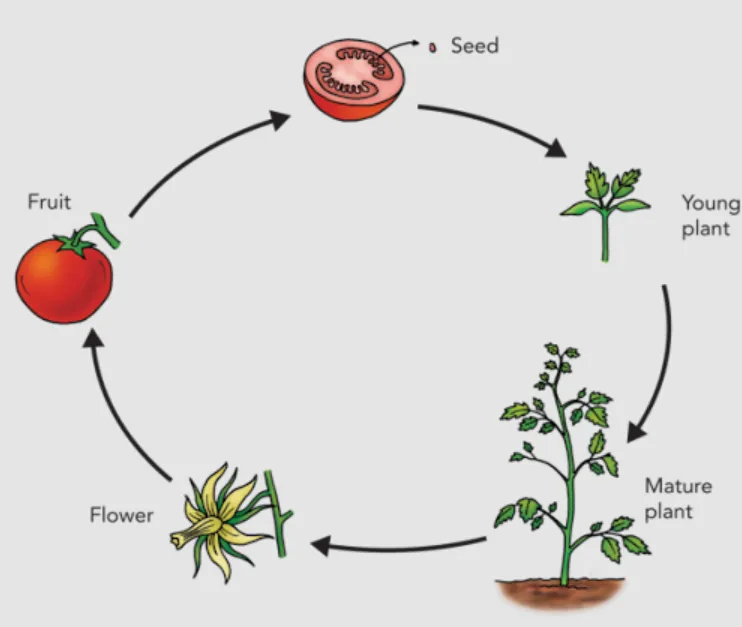
The life cycle of a flower is one of the most important natural processes on Earth. A flower is not only beautiful; it is the reproductive structure of a flowering plant, also called an angiosperm. Through this cycle, a plant grows from a tiny seed, develops roots and leaves, produces a bud, opens into a flower, forms fruit or seeds, and begins the same process again.
In simple words, the life cycle of a flower explains how flowering plants survive, reproduce, and continue their species. This cycle supports food production, biodiversity, oxygen balance, soil protection, and the survival of many insects, birds, animals, and humans. Modern botanical references describe angiosperms as the largest and most diverse group of plants, with estimates ranging from over 328,000 known flowering plant species to around 352,000 species, depending on the checklist and classification system used.
Q: What is the life cycle of a flower?
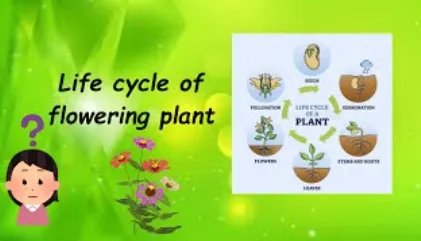
A: The life cycle of a flower is the complete journey from seed germination to plant growth, flowering, pollination, fertilisation, fruit formation, seed dispersal, and the growth of a new plant.
Q: Why is a flower important in a plant’s life cycle?
A: A flower is important because it produces pollen, receives pollen, supports fertilisation, and helps form seeds or fruits that create the next generation of plants.
Q: How long does the life cycle of a flower take?
A: It depends on the plant species. Some flowers complete their cycle in a few weeks, while others may take months or even years before producing flowers and seeds.
Quick Life Cycle Table
| Stage | What Happens | Main Purpose |
| Seed | A mature seed rests until conditions are suitable | Protects the baby plant |
| Germination | The seed absorbs water and starts growing | Begins new plant life |
| Seedling | Roots, stem, and first leaves appear | Starts photosynthesis and growth |
| Vegetative Growth | The plant grows stronger leaves, roots, and stems | Stores energy for flowering |
| Bud Formation | A small flower bud develops | Prepares reproductive organs |
| Flowering | The bud opens into a flower | Attracts pollinators and enables reproduction |
| Pollination | Pollen moves from the male part to the female part | Starts the reproductive process |
| Fertilisation | Male and female cells join | Forms embryo and seed |
| Fruit and Seed Formation | The ovary develops into a fruit; the ovules become seeds | Protects and spreads seeds |
| Seed Dispersal | Seeds move by wind, water, animals, or gravity | Starts life in a new place |
Important Things That You Need To Know
To understand the life cycle of a flower, you need to know that a flower is not just a colourful part of a plant. It is the main reproductive structure of flowering plants. The bright petals, sweet scent, nectar, and shape of many flowers are designed to attract pollinators such as bees, butterflies, birds, bats, and other insects.
Important LSI-related terms include flower structure, flower pollination, flower reproduction, flower seed formation, and flower growth. These ideas are connected because each one explains a different part of the same natural process.
A complete flower usually has sepals, petals, stamens, and carpels. The stamen is the male reproductive part and produces pollen. The carpel or pistil is the female reproductive part and contains the ovary, where seeds develop after fertilisation.
Another important point is that flowers do not “eat” like animals. They make their own food through photosynthesis, using sunlight, water, and carbon dioxide to produce sugar and oxygen. Photosynthesis provides the energy that supports root growth, leaf development, bud formation, flowering, and seed production.
The flower’s life cycle also depends on its environment. Soil quality, sunlight, water, temperature, pollinator activity, and seed dispersal all influence whether a flower can complete its cycle successfully.
The History of Their Scientific Naming
The scientific identity of a flower is closely linked with the term angiosperm, which means a plant that produces flowers and develops seeds inside an enclosed ovary or fruit. The word comes from Greek roots: angeion, meaning vessel or container, and sperma, meaning seed. This name reflects the most important feature of flowering plants: their seeds are protected within a structure that develops into a fruit.
Key points about the naming history:
- Angiosperms are the scientific group name for flowering plants.
- Older botanical systems also used names such as Anthophyta and Magnoliophyta.
- The term became important because it separated flowering plants from gymnosperms, such as pine trees, whose seeds are not enclosed in fruits.
- Modern classification uses DNA evidence, fossil records, and plant structure to understand how flowering plants are related.
- The Angiosperm Phylogeny Group system is widely used today for classifying flowering plants based on evolutionary relationships.
This naming history matters because it shows that flowers are not only garden plants. They belong to a large group of plants that includes grasses, fruit trees, vegetables, herbs, shrubs, forest trees, and many aquatic plants.
Their Evolution And Their Origin
The origin of flowering plants is one of the most fascinating topics in plant science. Flowering plants became highly successful because their reproductive system is efficient, protected, and attractive to pollinators. Unlike many older plant groups, angiosperms developed enclosed seeds, flowers, and fruits. These features helped them spread across forests, grasslands, wetlands, deserts, mountains, and human-managed landscapes.
Recent genome-based research has improved scientific understanding of flowering plant evolution. A major 2024 study used DNA data from more than 9,500 flowering plant species and fossil evidence to build a large evolutionary tree of flowering plants. This work helped explain how angiosperms diversified and became dominant across many environments.
The early success of flowers was strongly connected to reproduction. Their colours, scents, nectar, and shapes encouraged insects and animals to carry pollen. This created a powerful partnership between flowers and pollinators. Over millions of years, many flowers evolved special shapes that matched specific pollinators.
For example, tubular flowers often attract hummingbirds or butterflies, while open, flat flowers may attract bees or beetles. Some flowers bloom at night and release strong scents to attract moths or bats.
Another reason flowers became successful is fruit formation. Fruits protect seeds and help them spread. A bird may eat a berry and later drop the seed in a new place. Wind may carry light seeds far away. Water may move floating seeds to new habitats.
This combination of flowers, pollination, fruits, and seeds made flowering plants one of the most important life forms on Earth.
Their main food and its collection process
A flower does not collect food the way animals collect food. Instead, flowering plants produce their own food through photosynthesis. This process occurs primarily in green leaves, although some green stems can also contribute.
During photosynthesis, plants use sunlight, water, and carbon dioxide to make glucose, a type of sugar. This sugar gives the plant energy for growth, flowering, fruiting, and seed formation. Oxygen is released as a by-product, which supports life on Earth.
Main food-making and collection process:
- Sunlight collection: Leaves contain chlorophyll, a green pigment that captures sunlight.
- Water absorption: Roots absorb water from the soil and move it upward through the stem.
- Carbon dioxide intake: Leaves take in carbon dioxide from the air through tiny openings called stomata.
- Sugar production: The plant uses sunlight, water, and carbon dioxide to produce glucose.
- Food transport: Sugar moves through the plant via the phloem tissue.
- Mineral collection: Roots also absorb minerals such as nitrogen, phosphorus, and potassium from the soil.
- Energy storage: Extra food may be stored in roots, stems, fruits, seeds, or bulbs.
- Flower support: Stored food helps the plant produce buds, petals, nectar, pollen, and seeds.
So, when we say “food of a flower,” we are really talking about the plant’s energy system. The flower depends on the whole plant, especially the leaves and roots, to receive the energy and nutrients needed for reproduction.
Their life cycle and ability to survive in nature
Seed Stage
The seed is the beginning of the flower’s life cycle. Inside the seed, there is a tiny young plant called an embryo. The seed coat protects it from dryness, damage, and unsuitable conditions.
Some seeds can remain inactive for months or years. This resting stage is called dormancy. Dormancy helps seeds survive until the environment has enough water, warmth, oxygen, and light.
Germination Stage
When conditions are suitable, the seed absorbs water and swells. The seed coat ruptures, and the first root begins to grow downward. This root anchors the plant and starts absorbing water.
Soon after, a small shoot grows upward toward the light. This is the beginning of the seedling stage.
Seedling and Growth Stage
The seedling grows its first leaves. These leaves begin photosynthesis and produce food for the young plant. Roots grow deeper, and the stem becomes stronger.
This stage is risky because seedlings are delicate. They may die from drought, flooding, poor soil, insects, disease, or lack of sunlight.
Flowering and Reproductive Stage
Once the plant becomes mature, it produces buds. These buds open into flowers. The flower attracts pollinators and begins the reproductive part of the life cycle.
Survival Ability in Nature
Flowers survive through adaptation. Some have deep roots to find water. Some bloom only in certain seasons. Some produce strong scents, bright colours, or nectar to attract pollinators. Others produce many seeds to increase the chance that at least some will survive.
Their Reproductive Process and raising their children
Flowering plants do not invest in their offspring as animals do. They do not feed, protect, or teach young plants after seeds are released. Instead, they invest energy into producing strong seeds, protective fruits, and effective dispersal methods.
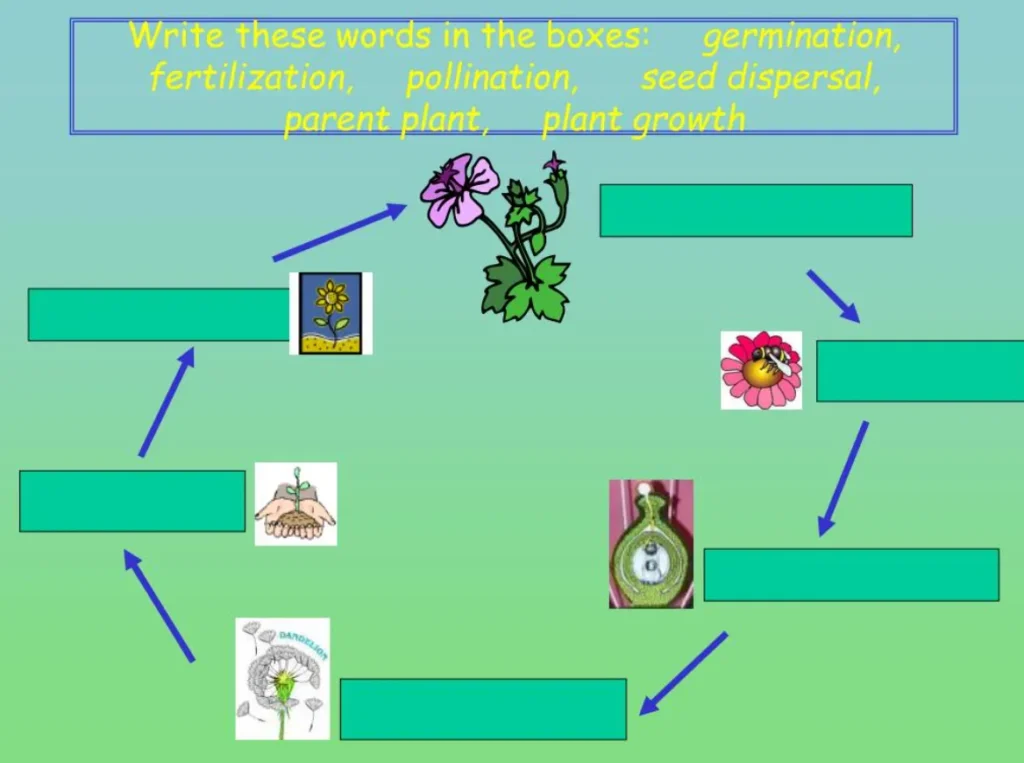
The reproductive process usually happens in these steps:
- Flower development: The plant forms a flower with reproductive parts.
- Pollen production: The stamen produces pollen grains, which contain male reproductive cells.
- Pollination: Pollen moves from the anther to the stigma of the same flower or another flower.
- Pollen tube growth: After pollen lands on a suitable stigma, a pollen tube grows down toward the ovary.
- Fertilisation: Male cells travel through the pollen tube and join with the egg cell inside the ovule.
- Seed formation: The fertilised ovule develops into a seed.
- Fruit formation: The ovary often develops into a fruit that protects the seed.
- Seed dispersal: Seeds are spread through wind, water, animals, birds, gravity, or human activity.
- New plant growth: If the seed lands in a suitable place, it germinates and starts a new life cycle.
Pollination is extremely important because it allows flowers to produce seeds and maintain genetic diversity. According to the U.S. Forest Service, pollination helps wildflowers reproduce, produce seeds, maintain genetic diversity, and develop fruits for seed dispersers.
In this way, flowers “raise their children” by giving seeds stored food, a protective covering, and a chance to travel to a better place.
The importance of them in this Ecosystem
Support for Pollinators
Flowers provide nectar and pollen for bees, butterflies, moths, birds, bats, beetles, and many other pollinators. These animals depend on flowers for food, while flowers depend on them for reproduction.
This relationship supports both plant life and animal life. Without pollinators, many flowering plants would struggle to produce seeds and fruits.
Food for Humans and Animals
Many human foods come from flowering plants. Fruits, vegetables, grains, beans, nuts, spices, and many oils are produced by angiosperms. Britannica notes that angiosperms include the majority of plant foods humans eat, such as grains, beans, fruits, vegetables, and many nuts.
Animals also depend on flowering plants for leaves, fruits, seeds, nectar, shelter, and nesting materials.
Soil and Water Protection
Flowering plants help protect soil from erosion. Their roots hold soil in place, while leaves reduce the impact of rain. This helps maintain healthy land and cleaner water systems.
Oxygen and Carbon Balance
Through photosynthesis, flowering plants produce oxygen and absorb carbon dioxide. This supports the survival of breathing organisms and helps maintain the balance of gases in the atmosphere.
Biodiversity and Habitat
A single flowering plant can support many forms of life. Insects may feed on it, birds may nest near it, fungi may interact with its roots, and animals may eat its fruits.
So, the life cycle of a flower is not only about one plant. It is part of a larger ecological system.
What to do to protect them in nature and save the system for the future
Protecting flowers means protecting pollinators, soil, water, food systems, and biodiversity. Current conservation research shows that many flowering plant species face extinction risks, with Kew-led work estimating that a large share of known flowering plants may be threatened and providing risk predictions for 328,565 flowering plant species.
Important ways to protect flowers in nature:
- Plant native flowers because they support local insects, birds, and wildlife better than many non-native ornamental plants.
- Avoid cutting wildflowers from natural habitats because they may produce seeds needed for the next generation.
- Reduce the use of chemical pesticides, especially during flowering periods, because they can harm bees and other pollinators.
- Grow a variety of flowers that bloom in different seasons to provide food for pollinators throughout the year.
- Protect natural habitats, including meadows, forests, wetlands, grasslands, and riverbanks.
- Keep soil healthy by using compost, leaf litter, and other organic matter rather than overusing synthetic chemicals.
- Save seeds from healthy plants and grow them again in suitable places.
- Support local conservation projects that protect endangered flowering plants.
- Create pollinator-friendly gardens with nectar-rich flowers.
- Avoid invasive plants because they can push out native flowering species.
- Teach children and communities about the life cycle of a flower so they understand why flowers are essential.
- Use water carefully, especially in dry areas, so flowering plants can survive long-term climate stress.
- Support seed banks and botanical gardens that conserve rare plant species.
- Leave some wild areas unmown so native flowers can bloom and produce seeds.
These small actions can help protect flowers, pollinators, food chains, and future ecosystems.
Frequently Asked Questions (FAQs)
Q: What are the main stages in the life cycle of a flower?
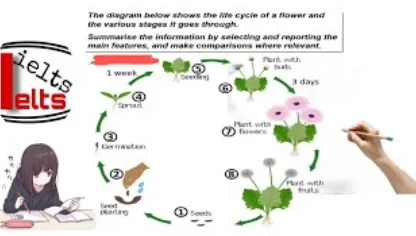
A: The main stages are seed, germination, seedling, vegetative growth, bud formation, flowering, pollination, fertilisation, fruit formation, seed dispersal, and new plant growth.
Q: Why is pollination important in the life cycle of a flower?
A: Pollination moves pollen from the male part of a flower to the female part. This allows fertilisation, which leads to seed and fruit formation.
Q: What part of the flower becomes the fruit?
A: In many flowering plants, the ovary becomes the fruit after fertilisation. The ovules inside the ovary become seeds.
Q: Do all flowers need insects for pollination?
A: No. Insects pollinate many flowers, but some are pollinated by wind, water, birds, bats, or even self-pollination.
Q: What is the difference between a flower and a plant?
A: A plant is the whole living organism, including roots, stem, leaves, flowers, fruits, and seeds. A flower is the reproductive part of a flowering plant.
Q: Do flowers make their own food?
A: The flower itself does not usually make most of the food. The plant’s green leaves make food through photosynthesis, and that energy supports the flower.
Q: What happens after a flower dies?
A: After flowering, the petals may fall. If fertilisation occurs, the ovary may develop into a fruit, and seeds may mature within it.
Q: Why do flowers have bright colours and sweet smells?
A: Many flowers use colours, scents, nectar, and shapes to attract pollinators. This increases the chance of successful pollination and seed production.
Conclusion
The life cycle of a flower is a complete natural journey from seed to new seed. It begins with germination, continues through seedling growth, develops into a mature plant, produces buds and flowers, completes pollination and fertilisation, and finally forms fruits and seeds.
This cycle is essential for plant survival, food production, biodiversity, and ecosystem balance. Every flower plays a role in nature, whether it feeds pollinators, produces seeds, protects soil, supports wildlife, or adds oxygen to the environment.
Understanding the life cycle of a flower helps us see flowers as more than decoration. They are living reproductive systems that connect plants, animals, insects, soil, air, water, and humans. By protecting flowers and their habitats, we protect the future of natural ecosystems and the many forms of life that depend on them.
Also Read: life cycle moss