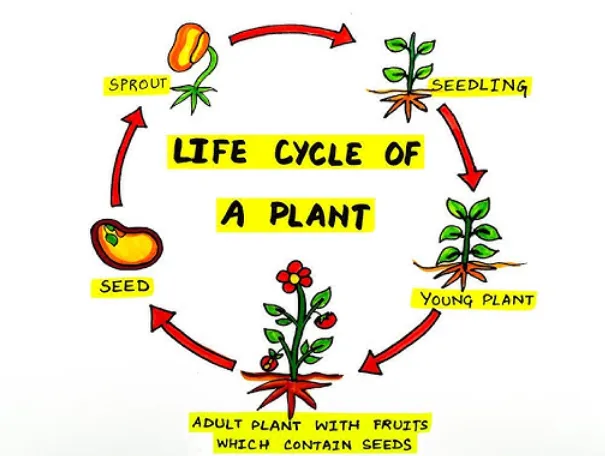
The plant life cycle is the complete journey a plant follows from a tiny seed or spore to a mature plant capable of reproducing and creating the next generation. This cycle is one of the most important natural processes on Earth because plants produce oxygen, provide food, support wildlife, protect Soil, and help balance the climate.
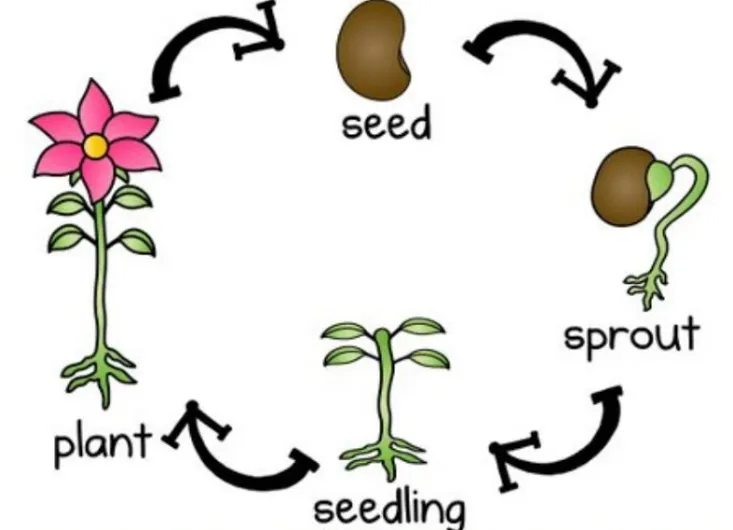
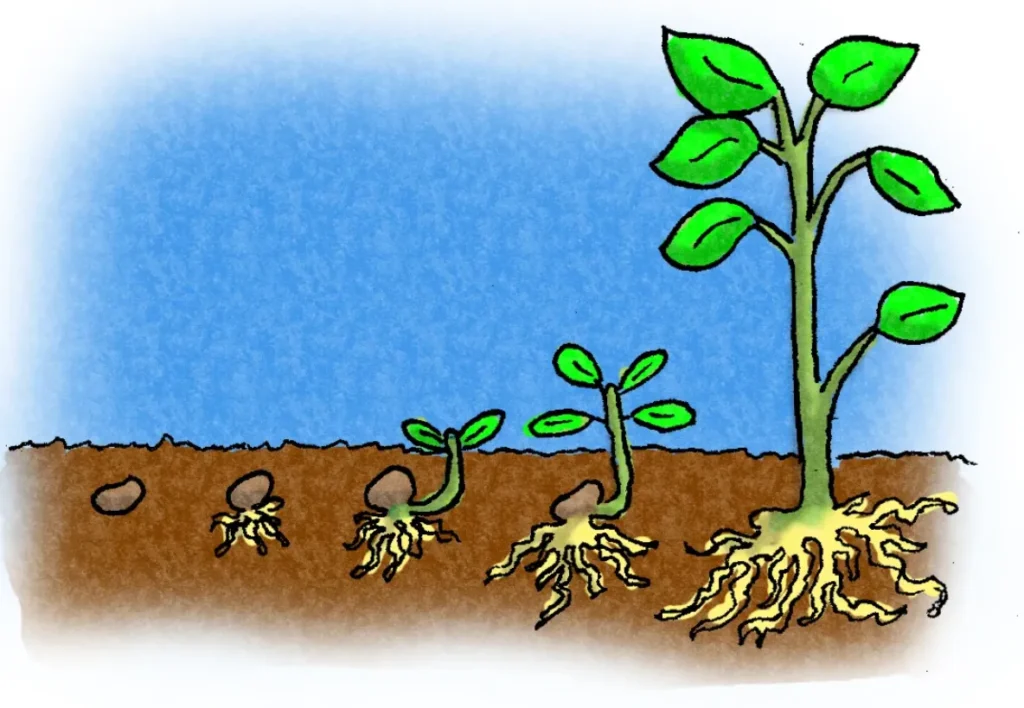
Most plants begin life as a seed. When the seed gets the right amount of water, oxygen, and warmth, it starts to grow. This first stage is called germination. After that, the plant becomes a seedling, grows roots, stems, and leaves, and eventually matures. Many plants then produce flowers, cones, or spores to reproduce.
The life cycle of a plant can be short or very long. Some plants, such as beans and sunflowers, complete their life cycle in only a few months. Others, such as trees, can live for decades, centuries, or even thousands of years. Understanding the plant life cycle helps gardeners, students, farmers, and nature lovers know how plants grow, survive, reproduce, and support ecosystems.
Quick Answers: Most Common Questions
Q: What is the plant life cycle?
A: The plant life cycle is the series of stages a plant goes through from seed or spore to mature plant, reproduction, and the formation of new seeds or spores.
Q: What are the main stages of a plant’s life cycle?
A: The main stages are seed, germination, growth, and reproduction. Some plants also have special stages, such as spore formation or dormancy.
Q: Why is the plant life cycle important?
A: It is important because it explains how plants reproduce, provide food, release oxygen, protect the Soil, and maintain balance in the ecosystem.
Quick Life Cycle Table
| Stage | What Happens | Key Needs |
| Seed or Spore | The plant begins life in a protected form. | Dry storage, protection, the right season |
| Germination | The seed absorbs water and begins to grow roots and shoots. | Water, oxygen, warmth |
| Seedling Growth | Small roots, stems, and leaves develop. | Sunlight, soil nutrients, water |
| Mature Plant | The plant becomes strong and fully developed. | Light, carbon dioxide, minerals |
| Reproduction | Flowers, cones, fruits, seeds, or spores are produced. | Pollination, fertilization, dispersal |
| New Generation | Seeds or spores spread and begin the cycle again. | Suitable soil, moisture, environment |
Important Things That You Need To Know
The word plant refers to a large group of living organisms that mostly make their own food through photosynthesis. In simple terms, a plant uses sunlight, carbon dioxide, and water to produce glucose, which works as its energy source. This process also releases oxygen, making plants essential for humans, animals, and nearly all living systems.
A plant can be as small as moss growing on a wall or as large as a giant tree in a rainforest. Plants are found in forests, deserts, wetlands, grasslands, farms, gardens, mountains, and even aquatic environments. They are adapted to survive in different climates and soil conditions.
The plant life cycle varies among plants. Flowering plants usually reproduce through flowers, pollination, and the production of fruits and seeds. Ferns and mosses often reproduce via spores rather than seeds. Conifers, such as pine trees, produce seeds inside cones rather than fruits.
To understand plants deeply, you should know these important terms: plant, plant life cycle, plant reproduction, plant growth, and plant ecosystem. These words help explain how plants begin life, grow, reproduce, and interact with the environment.
Plants do not move from place to place like animals, but they are highly active living organisms. Their roots search for water, their leaves capture sunlight, and their flowers attract pollinators. Every stage of the plant life cycle is connected to survival, reproduction, and ecosystem balance.
The History Of Their Scientific Naming, Evolution, and Their Origin
Scientific Naming of Plants
The scientific naming of plants is part of taxonomy, the system scientists use to classify living organisms. Carl Linnaeus developed the modern naming system in the 18th century. It uses binomial nomenclature, meaning each plant has a two-part Latin-based name.
For example, the scientific name of the common sunflower is Helianthus annuus. The first part, Helianthus, is the genus, and the second part, annuus, identifies the species. This system helps scientists avoid confusion because common plant names can vary from country to country.
Evolution of Plants
Plants evolved from ancient green algae that lived in water hundreds of millions of years ago. Over time, some algae developed features that helped them survive on land. These features included roots, stems, leaves, protective tissues, and later seeds and flowers.
The earliest land plants were simple and depended heavily on water for reproduction. Later, plants evolved vascular tissues, allowing them to grow taller and transport water more efficiently. Seed-producing plants became highly successful because seeds protected the young plant embryo.
Origin of Modern Plants
Modern plants have evolved over millions of years of adaptation. Mosses, ferns, conifers, and flowering plants represent different evolutionary groups. Flowering plants, also called angiosperms, became especially successful because their flowers and fruits helped improve pollination and seed dispersal.
Their Reproductive Process, Giving Birth And Rising Their Children
Plants Do Not Give Birth Like Animals
Plants do not give birth in the same way animals do. Instead, they reproduce by forming seeds, spores, bulbs, runners, cuttings, or other plant parts. In flowering plants, reproduction usually begins when a flower produces male and female reproductive cells.
The male part of a flower is called the stamen, which produces pollen. The female part is called the pistil or carpel, which contains the ovary and ovules. When pollen reaches the female part of the flower, fertilization can happen.
Pollination and Fertilization
Pollination is the transfer of pollen from the male part of a flower to the female part. This can happen through wind, water, insects, birds, bats, or other animals. Bees, butterflies, and flies are common pollinators.
After pollination, the male reproductive cell joins with the female cell inside the ovule. This process is called fertilization. Once fertilization occurs, the ovule develops into a seed, and the ovary often develops into a fruit.
How Plants “Raise” Their Young
Plants do not care for their young like mammals do, but they still protect and support them in smart ways. A seed contains a tiny baby plant called an embryo. It also contains stored food and a protective seed coat.
This stored food helps the young plant survive until it can make its own food through photosynthesis. Fruits also help protect seeds and attract animals that spread them to new locations.
Seed Dispersal
Seeds are spread by wind, water, animals, gravity, and sometimes explosive seed pods. This helps young plants grow away from the parent plant, reducing competition for sunlight, water, and nutrients.
Stages of Plant Life Cycle
1. Seed Stage
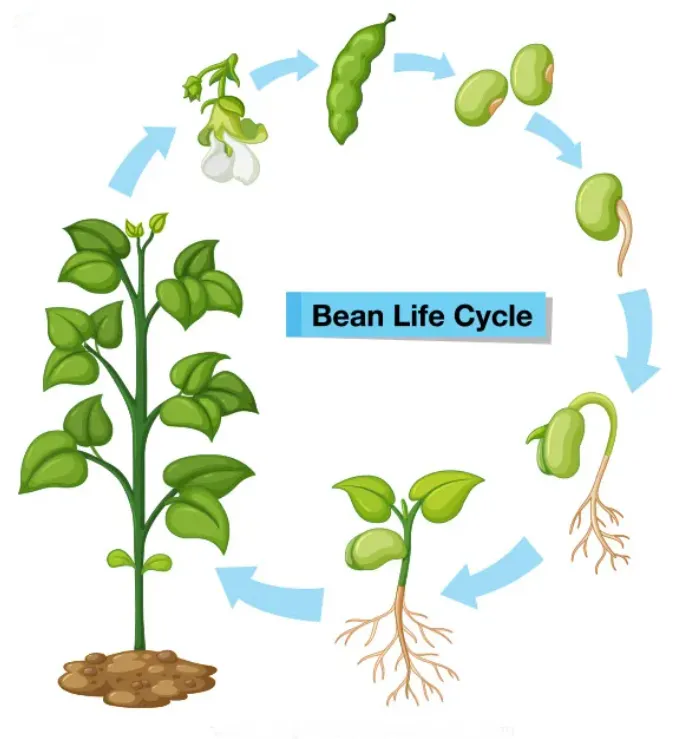
The seed stage is the beginning of life for most plants. A seed contains three main parts: the embryo, stored food, and a protective seed coat. The embryo is the young plant waiting to grow.
Some seeds stay inactive for weeks, months, or even years. This resting period is called dormancy. Dormancy helps seeds survive harsh conditions such as drought, cold, or lack of sunlight.
When the environment becomes suitable, the seed starts preparing for growth.
2. Germination Stage
Germination begins when a seed absorbs water. This softens the seed coat and activates the embryo inside. The first root, called the radicle, grows downward into the Soil.
After the root appears, the shoot grows upward toward sunlight. This shoot later becomes the stem and leaves. Germination requires water, oxygen, suitable temperature, and sometimes light.
Without these conditions, many seeds cannot grow successfully.
3. Growth Stage
During the growth stage, the young plant develops roots, stems, and leaves. The roots absorb water and minerals from the Soil. The stem supports the plant and transports water and nutrients. The leaves produce food through photosynthesis.
At this stage, the plant needs enough sunlight, water, carbon dioxide, and nutrients. If the plant gets good conditions, it grows stronger and becomes mature.
This stage can last a few weeks in small plants or many years in trees.
4. Reproductive Stage
The reproductive stage begins when the plant becomes mature enough to produce flowers, cones, spores, or seeds. Flowering plants create flowers to attract pollinators.
After pollination and fertilization, seeds form. These seeds may be protected inside fruits. When seeds spread and find the right environment, the life cycle begins again.
Their Main Diet, Food Sources, And Collection Process Explained
Plants are different from animals because they do not search for food in the same way. Most plants are autotrophs, which means they make their own food. Their main food-making process is photosynthesis.
Main Food Source of Plants
A plant’s main food source is glucose, a type of sugar produced in its leaves. Plants create glucose using sunlight, carbon dioxide, and water. This glucose gives the plant energy for growth, repair, flowering, fruiting, and seed production.
Plants also store extra food as starch in roots, stems, seeds, and fruits.
How Plants Collect Sunlight
Leaves contain a green pigment called chlorophyll. Chlorophyll captures sunlight and uses it as a source of energy for photosynthesis. This is why leaves are usually green.
The broader and healthier the leaves are, the more sunlight the plant can collect. However, plants in deserts or dry places may have smaller leaves to reduce water loss.
How Plants Collect Water
Plants collect water through their roots. Tiny root hairs increase the surface area and help absorb water from the Soil. Water then moves upward through special tissues called xylem.
Water is important not only for photosynthesis but also for maintaining the firmness and health of plant cells.
How Plants Collect Nutrients
Plants absorb minerals from the Soil, including nitrogen, phosphorus, potassium, calcium, magnesium, and iron. These nutrients help with leaf growth, root strength, flower development, and disease resistance.
Healthy Soil, compost, microorganisms, and organic matter all support better plant nutrition.
How Plants Collect Carbon Dioxide
Plants take in carbon dioxide through small openings on leaves called stomata. These openings also release oxygen and water vapor. Stomata open and close in response to light, water availability, and temperature.
How Long Does A Plant’s Life Cycle Last
The lifespan of a plant depends on its species, environment, climate, soil quality, water availability, and protection from disease or damage. Some plants live only a few weeks, while others can live for thousands of years.
A plant’s life cycle is usually grouped into three main lifespan categories: annual, biennial, and perennial.
- Annual plants complete their entire life cycle in one growing season.
- They germinate, grow, flower, produce seeds, and die within a year. Examples include wheat, rice, beans, peas, marigolds, and sunflowers.
- Biennial plants complete their life cycle in two years.
- In the first year, they usually grow roots, stems, and leaves. In the second year, they flower, produce seeds, and die. Examples include carrot, beetroot, parsley, and foxglove.
- Perennial plants live for more than two years.
- They may flower and produce seeds many times during their life. Examples include mango trees, roses, bamboo, grasses, and many forest trees.
- Some short-lived plants survive only a few weeks or months.
- These plants grow quickly, reproduce fast, and die after seed production. Many desert plants follow this pattern because rainfall is limited.
- Some long-lived trees can survive for hundreds or even thousands of years.
- Their slow growth, strong wood, protective bark, and deep roots help them live longer.
- Environmental stress can shorten a plant’s life.
- Drought, flooding, poor Soil, pests, disease, fire, pollution, and human disturbance can damage plants and reduce survival.
- Good growing conditions can extend plant life.
- Enough sunlight, clean water, fertile Soil, proper spacing, and protection from pests help plants complete their life cycle successfully.
- The reproductive stage may happen once or many times.
- Some plants reproduce once and die, while others reproduce repeatedly for many years.
- A plant’s genetic makeup also affects its lifespan.
- Some plants are naturally designed for quick life cycles, while others are built for long-term survival.
- In farming and gardening, lifespan may be controlled by humans.
- Crops are often harvested before their natural death, while ornamental plants may be pruned, watered, and protected to live longer.
Plant Life Cycle Lifespan in the Wild vs. in Captivity
Lifespan in the Wild
In the wild, plants grow under natural conditions. They face competition for sunlight, water, space, and soil nutrients. They also face threats from insects, animals, diseases, storms, droughts, fires, and human activity.
Wild plants may live shorter or longer depending on their environment. A seedling in a dense forest may die quickly if it cannot get enough light. However, a tree in a stable forest ecosystem may live for hundreds of years.
Wild plants also support natural selection. The strongest and best-adapted plants usually survive and reproduce.
Lifespan in Captivity or Cultivation
Plants are not usually described as living in “captivity,” but they can live under cultivated, garden, greenhouse, or controlled conditions. In these environments, humans provide water, fertilizer, pruning, pest control, and protection from extreme weather.
This can help many plants live longer and grow better. For example, a fruit tree in a managed orchard may produce fruit more reliably than a wild tree.
However, controlled conditions can also reduce natural resistance if plants depend too much on human care. Poor pot size, overwatering, weak light, and chemical misuse can shorten lifespan.
Importance of Plant Life Cycle In This Ecosystem
Plants Produce Oxygen
One of the biggest benefits of the plant life cycle is the production of oxygen. Through photosynthesis, plants absorb carbon dioxide and release oxygen. This oxygen supports humans, animals, and many microorganisms.
Without plants, life on Earth would be extremely difficult.
Plants Are Food Producers
Plants are the base of many food chains. Herbivores eat plants, and carnivores eat herbivores. Humans also depend on plants for fruits, vegetables, grains, oils, spices, medicines, and fibers.
Every stage of plant growth supports food availability in some way.
Plants Protect Soil
Roots hold Soil together and prevent erosion. Leaves and dead plant material add organic matter to the Soil. This improves soil structure, water retention, and fertility.
A healthy plant ecosystem keeps land productive and stable.
Plants Support Wildlife
Flowers provide nectar and pollen for insects. Fruits and seeds provide food for birds and mammals. Trees and shrubs provide shelter, nesting places, and shade.
Many animals depend on specific plants for survival.
Plants Help Balance Climate
Plants absorb carbon dioxide, a major greenhouse gas. Forests, grasslands, wetlands, and agricultural lands all help store carbon in plant tissues and Soil.
Protecting plant life cycles helps protect the future climate.
What To Do To Protect Them In Nature And Save The System For The Future
1. Protect Natural Habitats
- Stop unnecessary deforestation and land clearing.
- Protect forests, wetlands, grasslands, and riverbanks.
- Create safe zones where native plants can grow naturally.
- Avoid destroying wild areas for short-term development.
2. Plant Native Species
- Grow native plants because they are adapted to the local Soil and climate.
- Native plants support local insects, birds, and animals.
- Avoid planting invasive species that damage natural ecosystems.
- Use native trees and shrubs in gardens, parks, and roadsides.
3. Reduce Chemical Pollution
- Use fewer harmful pesticides and herbicides.
- Choose organic compost and natural pest-control methods where possible.
- Prevent chemical waste from entering Soil and waterways.
- Support farming methods that protect soil microorganisms.
4. Save Water and Protect Soil
- Use water wisely in gardens and farms.
- Add mulch to reduce water loss from the Soil.
- Prevent soil erosion by planting ground cover.
- Avoid overgrazing and poor land management.
5. Support Pollinators
- Protect bees, butterflies, moths, birds, and bats.
- Grow flowering plants that provide nectar and pollen.
- Avoid spraying chemicals during flowering periods.
- Create pollinator-friendly gardens in homes, schools, and communities.
Fun & Interesting Facts About Plant Life Cycle
- Some seeds can stay dormant for many years before germinating.
- A tiny seed already contains the basic structure of a future plant.
- Bamboo is one of the fastest-growing plants in the world under suitable conditions.
- Some desert plants complete their life cycle quickly after rainfall.
- Not all plants grow from seeds. Ferns and mosses reproduce through spores.
- Flowers are not only beautiful; they are reproductive organs of many plants.
- Fruits are developed from the flower’s ovary and often protect the seeds.
- Some plants depend on animals to spread their seeds.
- Coconut seeds can float on water and travel long distances.
- Plants can sense light, gravity, moisture, and touch.
- Roots usually grow downward because they respond to gravity.
- Shoots grow upward because they search for light.
- Some plants reproduce without seeds through runners, bulbs, tubers, and cuttings.
- A potato is not a root; it is a modified underground stem called a tuber.
- Many medicines originally come from plant compounds.
- Forest trees can communicate indirectly through underground fungal networks.
- Some plants close their leaves when touched, such as the sensitive plant.
- The plant life cycle sustains ecosystems by replenishing food, oxygen, and habitat.
Frequently Asked Questions About Plant Life Cycle
Q: What are the 4 main stages of the plant life cycle?
A: The four main stages are seed, germination, growth, and reproduction. In these stages, the plant begins life, grows, matures, and produces new seeds or spores.
Q: Do all plants have the same life cycle?
A: No. Flowering plants usually produce seeds through flowers and fruits. Ferns and mosses reproduce through spores. Conifers produce seeds in cones. However, all plants follow a basic pattern of growth, maturity, and reproduction.
Q: What does a plant need to complete its life cycle?
A: A plant needs water, sunlight, air, suitable temperature, soil nutrients, and enough space. Reproductive plants may also need pollinators, wind, or water to help spread pollen or seeds.
Q: Why do some seeds not grow immediately?
A: Some seeds enter a resting stage called dormancy. Dormancy helps seeds survive unfavorable conditions such as cold, drought, or lack of light. They germinate only when conditions become suitable.
Q: How do plants reproduce without seeds?
A: Some plants reproduce through spores, bulbs, runners, tubers, rhizomes, or stem cuttings. This type of reproduction can create new plants without flower pollination or seed formation.
Final Word
The plant life cycle is a powerful natural process that keeps life moving on Earth. From a small seed to a mature plant, every stage has a clear purpose. Seeds protect the next generation, roots collect water, leaves make food, flowers support reproduction, and fruits help spread seeds.
Understanding the plant life cycle helps us appreciate how plants grow, survive, and support the environment. Plants are not only food producers; they are oxygen makers, soil protectors, climate helpers, and wildlife supporters.
Whether we are studying science, growing a garden, managing a farm, or protecting nature, learning about the plant life cycle gives us practical knowledge. If we protect plants, Soil, water, and pollinators, we protect the entire living system for the future. A healthy plant cycle means a healthier planet.
Also Read: food moths life cycle