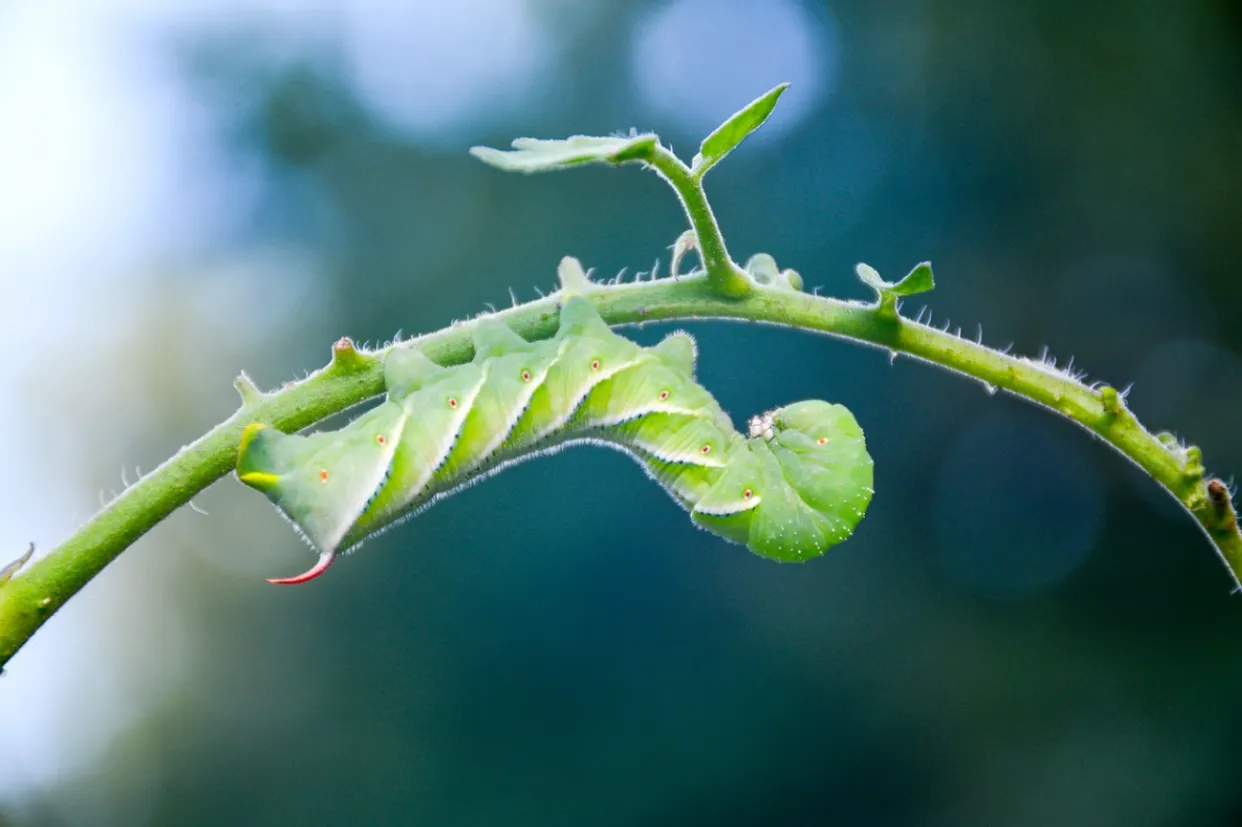
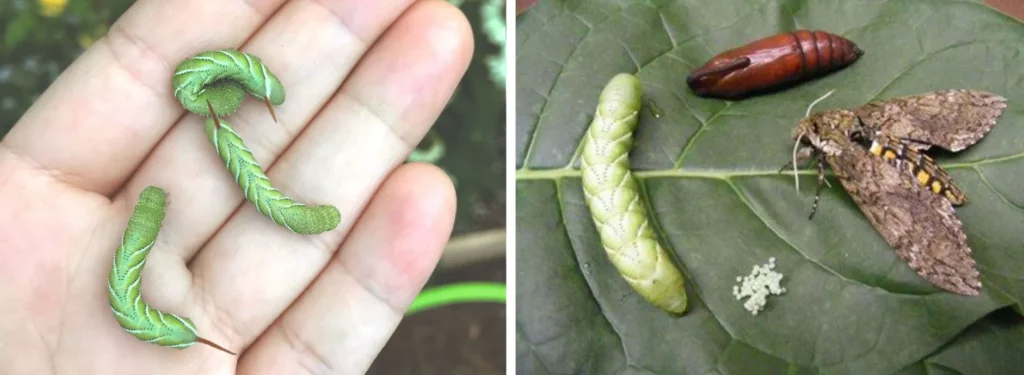
The tomato caterpillar life cycle describes the complete development of caterpillars that feed on tomato plants, especially the tomato hornworm and the tomato fruit borer. These insects pass through four main stages: egg, larva, pupa, and adult moth.
In gardens, the most familiar type is the large green tomato caterpillar, often called the horned tomato caterpillar because of its horn-like tail. It is the larval stage of a moth, not a worm. Another common tomato caterpillar pest is Helicoverpa armigera, which is known for boring into tomato fruits.
These caterpillars are important to understand because they can damage tomato leaves, flowers, stems, and fruits. A single tomato fruit borer larva may damage several fruits during its feeding stage. Hornworms can also remove large amounts of foliage quickly because they grow fast and eat heavily.
Quick Answers: Most Common Questions
Q: What are the four stages of the tomato caterpillar life cycle?
A: The four stages are egg, caterpillar larva, pupa, and adult moth.
Q: What does a tomato caterpillar turn into?
A: A tomato caterpillar turns into a tomato caterpillar moth, such as a hawk moth or fruit borer moth, depending on the species.
Q: How long does a tomato caterpillar live?
A: The caterpillar stage usually lasts around 2–4 weeks, while the full life cycle may take about 30 days or longer, depending on species, temperature, and food availability.
Quick Life Cycle Table
| Stage | What Happens | Approximate Duration | Main Activity |
| Egg | Female moth lays eggs on tomato leaves, stems, or nearby host plants | 2–7 days | Embryo develops |
| Larva / Caterpillar | Young caterpillar feeds on leaves, flowers, and fruits | 2–4 weeks | Heavy feeding and growth |
| Pupa | Mature larva moves into the soil and transforms | 10–21 days or longer | Metamorphosis |
| Adult Moth | Moth emerges, mates, and lays eggs | 2–3 weeks in many hornworm species | Reproduction |
The History Of Their Scientific Naming, Evolution, and Origin
Scientific Naming Of Tomato Caterpillars
The name tomato caterpillar is a common name, not a single scientific species name. In many gardens, it refers to the tomato hornworm, scientifically known as Manduca quinquemaculata. Another important tomato caterpillar is Helicoverpa armigera, commonly called the tomato fruit borer.
The word Manduca is linked with chewing or eating behavior, which fits the caterpillar’s heavy feeding habit. Quinquemaculata refers to the five-spotted adult moth form. These scientific names help farmers, gardeners, and researchers correctly identify pests and avoid confusion.
Evolution And Origin
Tomato caterpillars belong to the order Lepidoptera, the insect group that includes moths and butterflies. Their life cycle evolved through complete metamorphosis, allowing each stage to perform a different job.
The caterpillar stage focuses on feeding and growth, while the adult moth stage focuses on mating, movement, and egg laying. This separation makes them highly adaptable in fields, gardens, and wild habitats.
Their Reproductive Process, Giving Birth, and Raising Their Children
Mating Process Of The Adult Moth
The reproductive process begins when the adult tomato caterpillar moth emerges from the pupa. After emergence, male and female moths mate, usually during the evening or night.
Female moths search for suitable host plants, especially tomato and other nightshade plants such as pepper, potato, eggplant, and related weeds.
Egg Laying On Tomato Plants
Female moths do not give birth to live young. Instead, they lay eggs. In tomato hornworms, eggs are often laid singly on leaf surfaces. Some species lay eggs on leaves, flowers, buds, or tender plant parts.
The eggs are usually small, smooth, and pale green or yellow-green. Because they blend with the plant surface, gardeners often miss them.
No Parental Care After Egg Laying
Tomato caterpillar moths do not raise their young like birds or mammals. After laying eggs, the female leaves them.
Once the eggs hatch, the tiny caterpillars immediately begin feeding. Their survival depends on temperature, plant quality, predators, and whether the host plant has enough fresh leaves or fruits.
Stages of the Tomato Caterpillar Life Cycle
1. Egg Stage
The egg stage is the beginning of the tomato caterpillar life cycle. Adult female moths lay eggs on tomato leaves or nearby host plants. Eggs may hatch within a few days in warm weather.
This stage is small and easy to overlook. Regularly checking the underside of leaves helps gardeners detect early infestations before caterpillars grow larger.
2. Larva Stage
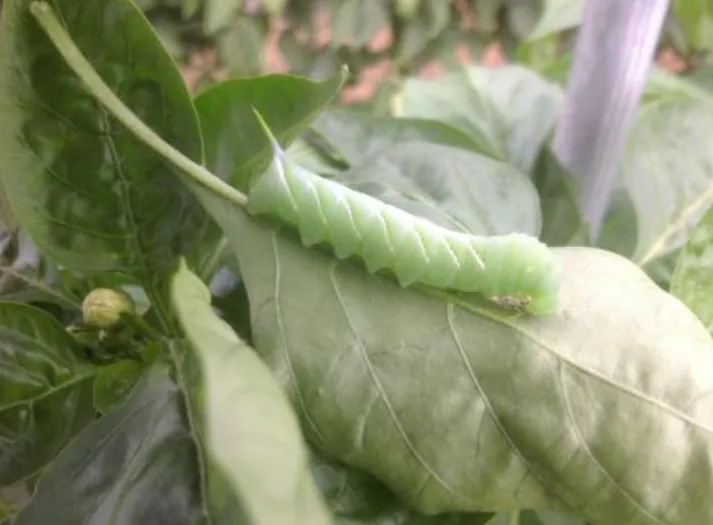
The larva stage is the most damaging. This is when the insect is known as a tomato caterpillar. Young larvae may start by eating tender leaves, while older larvae consume more plant tissue.
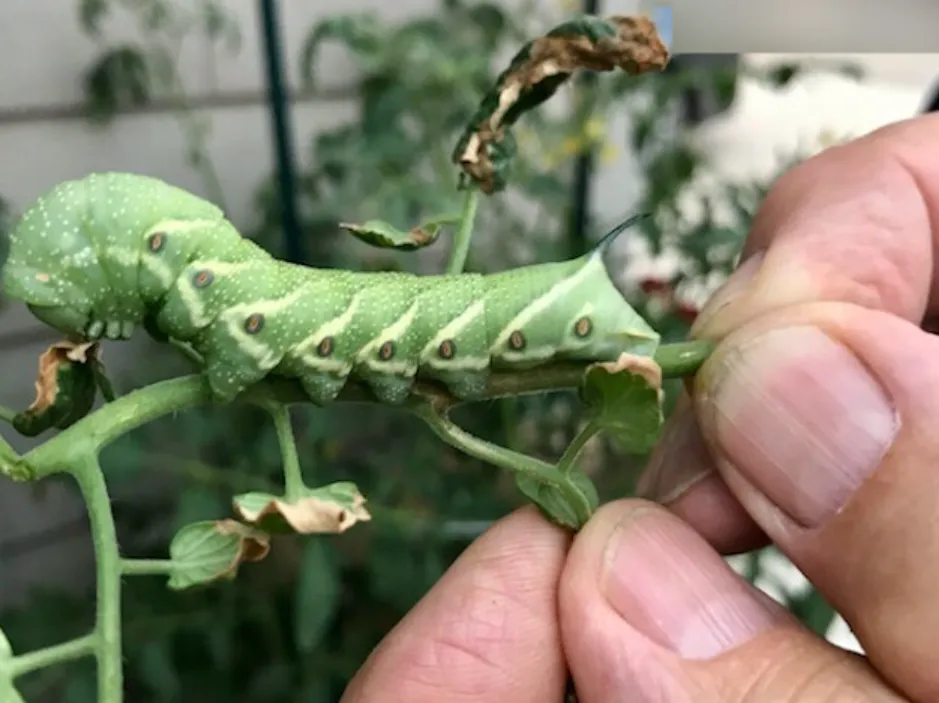
A green tomato caterpillar can blend almost perfectly with tomato leaves. The hornworm form may grow large and show diagonal white stripes with a horn-like tail.
3. Pupa Stage
After feeding heavily, the mature caterpillar drops from the plant and moves into the soil. There, it forms a pupa.
Inside the pupa, the insect undergoes complete metamorphosis. This stage is quiet on the outside but very active on the inside because the caterpillar’s body transforms into an adult moth.
4. Adult Moth Stage
The adult moth emerges from the soil after pupation. The moth then mates and lays eggs, beginning the cycle again.
In warm regions, there may be more than one generation in a growing season. In colder regions, some species overwinter as pupae in the soil and emerge when conditions become favorable.
Important Things That You Need To Know
The phrase “tomato caterpillar” can refer to several caterpillar pests that attack tomato plants. The most searched types include tomato caterpillar, tomato caterpillar moth, horned tomato caterpillar, green tomato caterpillar, and tomato caterpillar green.
A horned tomato caterpillar is usually linked with hornworms. These caterpillars are large, soft-bodied, and green, with a horn-like projection at the rear. They mainly feed on tomato foliage but may also damage fruits.
The tomato caterpillar moth is the adult stage. In hornworms, the adult is a hawk moth or sphinx moth. In fruit borers, the adult is a smaller moth that lays eggs on crop plants.
The term green tomato caterpillar usually refers to the larval form because many tomato-feeding caterpillars are green for camouflage. This green color helps them hide from birds, wasps, and gardeners.
Not every tomato caterpillar should be handled the same way. Some are heavy crop pests, while others may later become pollinating moths. If a caterpillar has small white cocoons on its body, it has likely been parasitized by beneficial wasps and should usually be left alone to support natural pest control.
Their Main Diet, Food Sources, And Collection Process Explained
Main Diet
The main diet of tomato caterpillars includes:
- Tomato leaves
- Tender stems
- Flower buds
- Green tomatoes
- Ripening fruits
- Nightshade weeds
- Pepper, potato, and eggplant leaves
Hornworms mostly feed on leaves and may defoliate tomato plants. Fruit borers often enter the fruit and feed inside, making tomatoes unmarketable.
Food Source Selection
Adult moths choose host plants carefully. They prefer plants where young caterpillars can immediately find food after hatching.
Tomato plants with soft new growth, flowers, and young fruits are attractive to egg-laying moths.
Collection Process
Caterpillars do not “collect” food like ants or bees. They feed directly on the plant surface.
Hornworms chew leaves from the edges or the middle. Fruit borers may bore into fruits and feed from within, making detection harder.
Gardeners can identify feeding by looking for missing leaves, holes in fruit, dark droppings, and sudden plant damage.
How Long Does A Tomato Caterpillar Live
The lifespan of a tomato caterpillar depends on species, climate, food, and predators. The full life cycle may be short in warm weather and longer in cooler conditions.
- Egg stage: Usually lasts a few days. Warm temperatures speed up hatching.
- Caterpillar stage: Often lasts about 2–4 weeks. This is the fastest-growing and most destructive period.
- Pupa stage: May last around 10–21 days in warm conditions. In colder regions, the pupa can remain in the soil through winter.
- Adult moth stage: Many adult hornworm moths live around 2–3 weeks, mainly for mating and egg laying.
- Full life cycle: Some tomato fruit borer life cycles may complete in about 30 days under favorable conditions. Hornworm cycles may vary depending on season and region.
- Seasonal generations: In warm climates, several generations can occur in one year. In cooler regions, there may be only one or two generations.
- Survival factors: Predators, parasitic wasps, disease, pesticides, weather, and food quality all affect how long they survive.
- Garden impact: Even though the caterpillar stage is short, it can cause serious damage because feeding is intense.
Tomato Caterpillar Lifespan in the Wild vs. in Captivity
Lifespan In The Wild
In the wild, tomato caterpillars face many risks. Birds, parasitic wasps, spiders, predatory bugs, weather, and disease can reduce survival.
Many eggs and young larvae never reach adulthood. However, those that survive can complete the cycle quickly when food and temperature are suitable.
Lifespan In Captivity
In captivity, tomato caterpillars may live longer because they are protected from predators and harsh weather. If they receive fresh host plant material and proper temperature, they can complete development successfully.
However, captivity also creates risks. Poor ventilation, old leaves, crowding, and incorrect moisture levels can cause disease or prevent pupation.
Key Difference
The wild environment is more dangerous but ecologically balanced. Captivity is safer but depends heavily on correct care.
Importance of the Tomato Caterpillar In This Ecosystem
Food For Natural Predators
Tomato caterpillars are food for birds, wasps, spiders, and beneficial insects. They help transfer plant energy into the wider food web.
Host For Beneficial Wasps
Braconid wasps attack some tomato caterpillars. These wasps help naturally control caterpillar populations without harming the garden ecosystem.
Adult Moths As Pollinators
The adult moth stage can help with pollination. Hawk moths may visit flowers at night and transfer pollen while feeding on nectar.
Natural Balance In Gardens
Although tomato caterpillars can damage crops, they also play a role in the natural balance. A healthy garden should control them without destroying every beneficial insect.
What To Do To Protect Them In Nature And Save The System For The Future
1. Avoid Unnecessary Chemical Sprays
- Use strong pesticides only when needed.
- Avoid spraying when natural predators are active.
- Choose targeted pest control methods when possible.
2. Support Beneficial Insects
- Grow nectar plants near the garden.
- Protect parasitic wasps, lady beetles, and lacewings.
- Leave parasitized caterpillars with white cocoons on the plant.
3. Use Hand-Picking In Small Gardens
- Check tomato plants regularly.
- Remove heavy-feeding caterpillars by hand.
- This reduces damage without harming the whole ecosystem.
4. Keep Soil And Plant Areas Clean
- Remove heavily damaged plant debris after harvest.
- Turn the soil carefully where pupae may hide.
- Manage weeds that can host caterpillars.
5. Grow A Balanced Garden
- Plant herbs and flowering plants nearby.
- Encourage birds and beneficial insects.
- Keep tomato plants healthy so they can recover from minor damage.
Fun & Interesting Facts About Tomato Caterpillar
- Tomato caterpillars are not worms. They are moth larvae.
- A green tomato caterpillar can hide extremely well among tomato leaves.
- The horn on a horned tomato caterpillar looks scary but is not dangerous to humans.
- Tomato hornworms can grow very large compared with many garden caterpillars.
- Adult hornworm moths are strong fliers and are often active at dusk or night.
- Some tomato caterpillars glow under blacklight, making them easier to find at night.
- Caterpillar droppings, called frass, are often easier to spot than the caterpillar itself.
- Parasitized hornworms with white cocoons should usually be left alone because they help produce more beneficial wasps.
Frequently Asked Questions (FAQs)
Q: What is a tomato caterpillar?
A: A tomato caterpillar is the larval stage of a moth that feeds on tomato plants. Common examples include tomato hornworms and tomato fruit borers.
Q: What does a tomato caterpillar moth look like?
A: It depends on the species. Hornworms become large hawk or sphinx moths, while fruit borers become smaller moths.
Q: Is a horned tomato caterpillar harmful?
A: It is not harmful to humans, but it can damage tomato plants by eating leaves and sometimes fruits.
Q: Why is the tomato caterpillar green?
A: The tomato caterpillar’s green color helps it blend with tomato leaves and avoid predators.
Q: How can I control tomato caterpillars naturally?
A: Hand-picking, encouraging beneficial wasps, checking plants regularly, removing weeds, and using targeted organic controls can help manage them.
Final Word
The tomato caterpillar life cycle is a fascinating example of complete metamorphosis. From tiny eggs to hungry green larvae, hidden pupae, and finally adult moths, each stage has a clear role in nature.
For gardeners, the caterpillar stage matters most because it causes the most damage to tomato plants. However, tomato caterpillars are not only pests. They also feed predators, support beneficial wasps, and may become pollinating moths.
The best approach is balance. Protect tomato crops through regular monitoring, hand-picking, the use of natural enemies, and careful garden management. By understanding the life cycle deeply, gardeners can reduce crop loss while keeping the ecosystem healthy for the future.
Also Read: grain moth life cycle