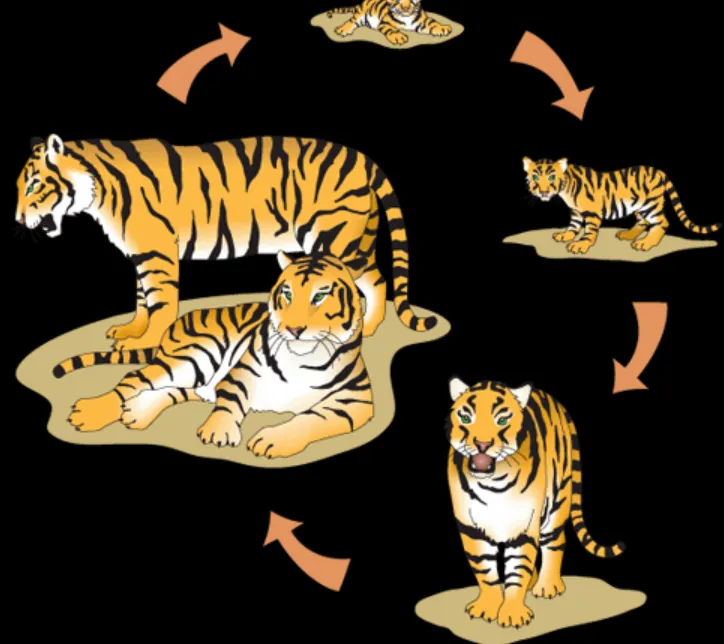
The tiger’s life cycle is one of the most fascinating wildlife development processes in nature. The tiger (Panthera tigris) is the largest member of the cat family and serves as a top predator in many ecosystems across Asia. Tigers are known for their powerful bodies, distinctive orange coats with black stripes, excellent hunting skills, and solitary lifestyles.
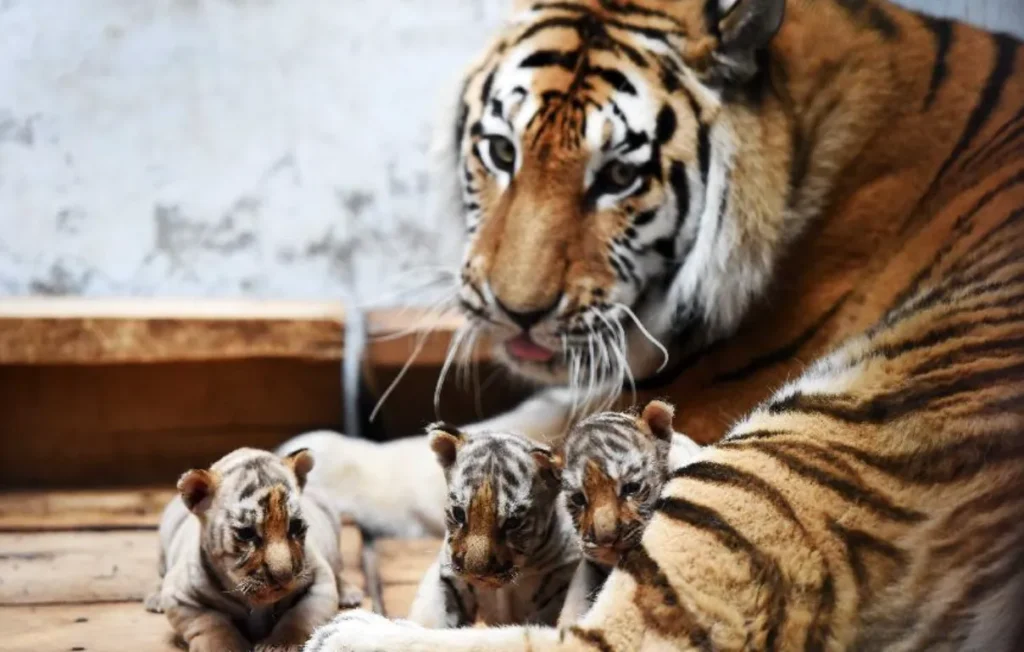
A tiger’s life cycle begins when a cub is born after a gestation period of approximately 100–105 days. The cub remains dependent on its mother for food, protection, and survival training during its early years. As it matures, it learns hunting techniques and eventually establishes its own territory. Adult tigers become skilled predators capable of hunting large prey such as deer, wild boar, and buffalo.
Today, wild tiger populations are much lower than they were a century ago due to habitat destruction, Poaching, and human-wildlife conflicts. Conservation efforts worldwide aim to protect these magnificent animals and preserve their habitats.
Quick Answers
Q: What is the life cycle of a tiger?
A: The tiger life cycle includes four main stages: cub, juvenile, subadult, and adult.
Q: How long does a tiger live?
A: Tigers typically live 10–15 years in the wild and up to 20–26 years in captivity.
Q: How many cubs does a tiger usually have?
A: A female tiger commonly gives birth to 2–4 cubs per litter.
Quick Life Cycle Table
| Life Stage | Age Range | Key Characteristics |
| Cub | Birth to 2 years | Dependent on mother, learns survival skills |
| Juvenile | 2–3 years | Begins hunting practice and exploration |
| Subadult | 3–4 years | Establishes territory and gains independence |
| Adult | 4+ years | Breeding, hunting, and territory defense |
The History Of Their Scientific Naming, Evolution, and Origin
Scientific Naming
The scientific name of the tiger is Panthera tigris. The genus Panthera includes lions, leopards, jaguars, and snow leopards. The species name tigris derives from ancient Persian and Greek words meaning ‘speed’ and ‘strength’.
Evolution of Tigers
Scientific evidence suggests that tiger ancestors evolved approximately 2 million years ago. Fossil records indicate that early members of the Panthera lineage emerged in Asia before spreading to other regions.
Origin of Modern Tigers
Modern tigers are believed to have originated in eastern Asia. Over thousands of years, different populations adapted to varying climates and environments, resulting in several subspecies.
Tiger Subspecies Development
Historically, nine tiger subspecies existed. Today, six recognized subspecies survive, including:
- Bengal Tiger
- Siberian Tiger
- Indochinese Tiger
- Malayan Tiger
- South China Tiger
- Sumatran Tiger
Each evolved unique characteristics suited to its environment.
Important Things That You Need To Know
Many people searching for information about tigers also encounter other terms containing the word “tiger.” Understanding these terms helps avoid confusion.
Tiger vs Other Popular “Tiger” Terms
The word tiger appears in many unrelated products, companies, and species.
Onitsuka Tiger is a famous Japanese footwear and fashion brand known worldwide for stylish sneakers and sportswear. Despite its name, it has no connection to actual tigers.
Tiger sharks are large ocean predators belonging to the shark family. Unlike tigers, tiger sharks live entirely in marine environments and are among the ocean’s top predators.
Tiger Balm is a widely used herbal ointment designed to relieve muscle pain, headaches, and minor aches. It contains ingredients such as menthol and camphor rather than anything derived from tigers.
Financial professionals may also discuss Tiger Global AUM 2026 Long Short, referring to investment strategies managed by the hedge fund firm Tiger Global Management.
Meanwhile, Derpy Tiger is generally an internet nickname, a meme reference, or an online character name.
Although these terms share the word “tiger,” they are not the same as the biological species Panthera tigris. When discussing the tiger life cycle, we focus exclusively on the magnificent wild cat that plays a critical ecological role throughout Asia.
Their Reproductive Process, Giving Birth, and Raising Their Children
Finding a Mate
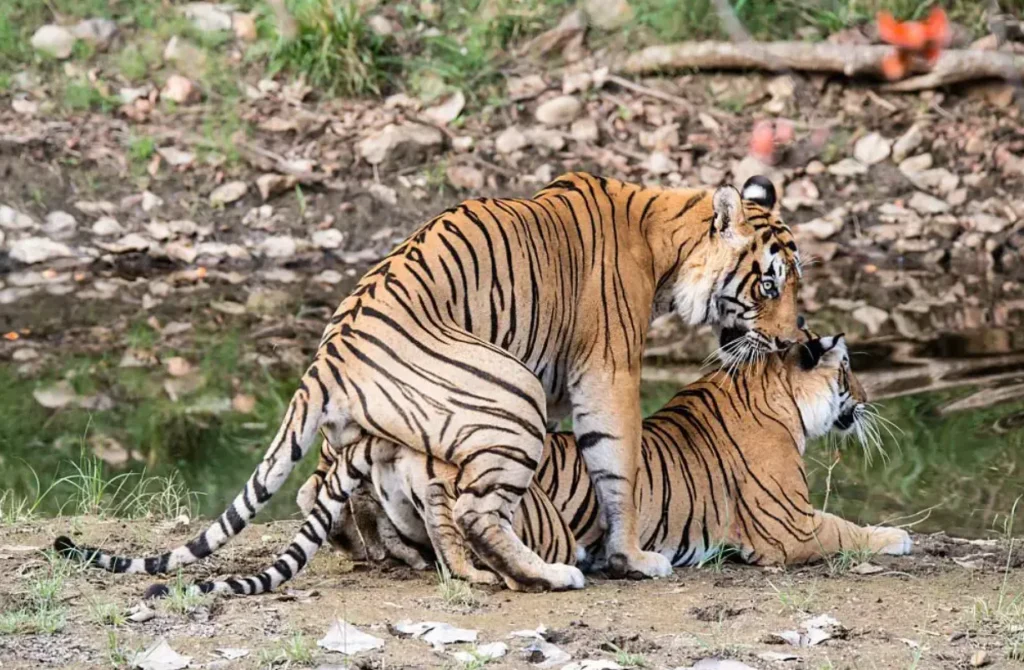
Adult female tigers become receptive to mating every few weeks. Males locate females through scent markings and vocalizations.
Mating Process
During the breeding period, male and female tigers may stay together for several days. Multiple mating events increase the likelihood of successful fertilization.
Pregnancy and Birth
Key facts:
- Gestation lasts approximately 100–105 days
- Mothers select hidden dens for safety
- Typical litter size ranges from 2 to 4 cubs
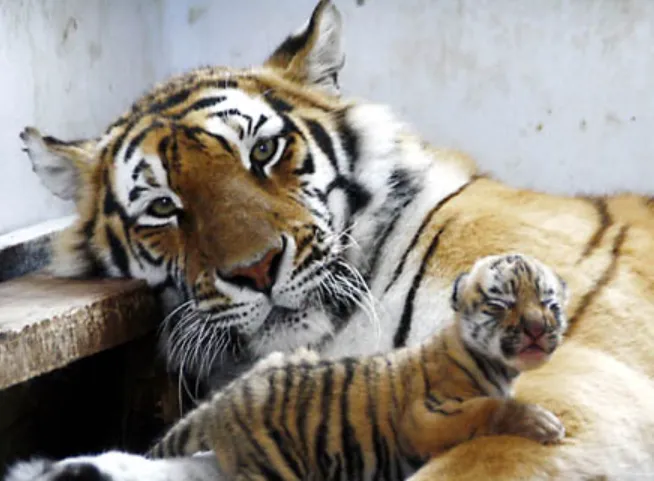
- Cubs are born blind and helpless
Raising Tiger Cubs
The mother alone raises the cubs.
She:
- Protects them from predators
- Provides milk for several months
- Teaches hunting techniques
- Demonstrates territory awareness
- Helps develop survival instincts
Learning Survival Skills
By six months, cubs begin accompanying their mother on hunting trips. Around 18–24 months, they can participate in hunts and gradually become independent.
The survival rate of tiger cubs is often low due to disease, predation, accidents, and territorial conflicts.
Stages of the Tiger Life Cycle
1. Cub Stage
The cub stage begins at birth.
Important characteristics:
- Weight at birth: 0.8–1.6 kg
- Eyes open after approximately one week
- Completely dependent on mother
- Develop basic movement and coordination
The first few months are crucial because cub mortality rates are relatively high.
2. Juvenile Stage
The juvenile stage occurs between roughly 1 and 3 years of age.
During this period:
- Cubs stop nursing
- Learn hunting behavior
- Explore surroundings
- Improve strength and coordination
Juveniles spend considerable time observing their mother’s hunting techniques.
3. Subadult Stage
Subadult tigers are nearly full-grown.
Key developments include:
- Independent hunting
- Territory exploration
- Increased competition
- Establishment of home ranges
Males typically disperse farther than females when leaving their mother’s territory.
4. Adult Stage
Adult tigers reach full maturity around 4–5 years.
Adult responsibilities include:
- Territory defense
- Hunting large prey
- Reproduction
- Maintaining population stability
Healthy adults can dominate extensive territories and serve as apex predators within their ecosystems.
Their Main Diet, Food Sources, And Collection Process Explained
Primary Food Sources
Tigers are obligate carnivores, meaning they depend entirely on meat.
Common prey species include:
- Deer
- Wild boar
- Buffalo
- Antelope
- Monkeys
- Smaller mammals
Hunting Strategy
Unlike animals that chase prey over long distances, tigers rely on stealth.
They:
- Move quietly through vegetation
- Use the camouflage provided by the stripes
- Approach prey closely
- Launch a powerful ambush attack
Food Collection Process
The process typically includes:
- Locating prey
- Stalking carefully
- Attacking at close range
- Delivering a fatal bite
- Dragging prey to a secure location
Feeding Behavior
Large kills may provide food for several days.
A single adult tiger can consume:
- 18–40 kg of meat in one feeding session
Ecological Importance of Their Diet
By controlling herbivore populations, tigers help maintain ecological balance and healthy vegetation growth.
How Long Does A Tiger Live
The lifespan of a tiger depends on habitat quality, prey availability, genetics, disease exposure, and human activity.
Tiger Lifespan Facts
- Average wild lifespan: 10–15 years
- Maximum wild lifespan: Around 18 years
- Average captive lifespan: 16–20 years
- Longest captive lifespan: Over 25 years
Factors Affecting Longevity
- Habitat loss
- Poaching pressure
- Disease
- Injuries from hunting
- Territorial conflicts
- Food availability
Why Wild Tigers Live Shorter Lives
Wild tigers face many challenges:
- Competition with other tigers
- Dangerous hunting situations
- Human encroachment
- Reduced prey populations
These factors increase mortality risk.
Why Captive Tigers Often Live Longer
Captive tigers benefit from:
- Veterinary care
- Reliable nutrition
- Protection from poachers
- Controlled environments
As a result, many captive tigers survive significantly longer than their wild counterparts.
Life Expectancy by Stage
- Cub: Highest mortality risk
- Juvenile: Growing independence
- Subadult: Territory establishment challenges
- Adult: Peak health and reproductive years
- Senior Tiger: Reduced hunting efficiency and increased vulnerability
Understanding tiger longevity helps conservationists develop effective management strategies to support healthy populations.
Tiger Lifespan in the Wild vs. in Captivity
Wild Tigers
Wild tigers live demanding lives.
Challenges include:
- Hunting difficulties
- Territorial disputes
- Habitat fragmentation
- Human conflict
- Disease exposure
Most wild tigers live approximately 10–15 years.
Captive Tigers
Zoos and conservation facilities provide:
- Balanced diets
- Veterinary treatment
- Safe environments
- Controlled breeding programs
Consequently, captive tigers often live to 20 years or more.
Major Difference
The primary difference is environmental stress. Wild tigers must constantly hunt for food and defend their territory, while captive tigers receive continuous care.
Importance of the Tiger In This Ecosystem
Top Predator Role
Tigers occupy the highest level of the food chain.
They regulate herbivore populations and prevent overgrazing.
Maintaining Biodiversity
Healthy tiger populations support balanced ecosystems.
When prey populations remain controlled, forests can regenerate naturally.
Indicator Species
Tigers indicate ecosystem health.
A thriving tiger population often signals a healthy forest ecosystem.
Umbrella Species
Protecting tiger habitat indirectly protects:
- Birds
- Reptiles
- Insects
- Plants
- Other mammals
Economic Importance
Tiger conservation supports:
- Ecotourism
- Scientific research
- Local employment
- Environmental education
What To Do To Protect Them In Nature And Save The System For The Future
1. Stop Poaching
- Strengthen anti-poaching patrols
- Increase law enforcement efforts
- Reduce illegal wildlife trade
2. Protect Forest Habitats
- Prevent deforestation
- Establish protected reserves
- Restore degraded forests
3. Improve Human-Wildlife Coexistence
- Create buffer zones
- Reduce livestock conflicts
- Promote community participation
4. Support Scientific Conservation
- Monitor tiger populations
- Conduct ecological research
- Implement evidence-based management
5. Raise Public Awareness
- Educate communities
- Promote conservation campaigns
- Encourage sustainable practices
Protecting tigers ultimately protects entire ecosystems and countless other species.
Fun & Interesting Facts About the Tiger
- Every tiger has a unique stripe pattern, similar to human fingerprints.
- Tigers are excellent swimmers and often enjoy spending time in water.
- A tiger’s roar can be heard from nearly 3 kilometers away.
- Siberian Tigers are the largest tiger subspecies.
- Tiger whiskers help detect objects in darkness.
- Tigers can leap over 10 meters in a single jump.
- Unlike many cats, tigers frequently enter rivers and lakes.
- Their night vision is approximately six times better than that of humans.
- Tigers can drag prey weighing several times their own body weight.
- Fewer wild tigers exist today than a century ago, making conservation all the more important.
- The skin beneath the tiger’s fur is striped as well.
- Tigers communicate through scent marking, vocalizations, and body language.
Frequently Asked Questions (FAQs)
Q: How many stages are in the tiger’s life cycle?
A: The tiger life cycle is generally divided into four stages: cub, juvenile, subadult, and adult.
Q: What is the scientific name of the tiger?
A: The scientific name of the tiger is Panthera tigris.
Q: How long is a tiger pregnant?
A: Female tigers are pregnant for approximately 100–105 days before giving birth.
Q: At what age do tiger cubs become independent?
A: Most tiger cubs become independent between 18 months and 3 years of age.
Q: Why are tigers important to ecosystems?
A: Tigers regulate prey populations, maintain biodiversity, and help preserve healthy forest ecosystems.
Final Word
The tiger’s life cycle represents a remarkable journey from a vulnerable newborn cub to one of the world’s most powerful apex predators. Every stage of development—from birth and maternal care to hunting mastery and reproduction—plays a critical role in the survival of both individual tigers and their populations.
As Panthera tigris continues to face threats such as habitat destruction, Poaching, and human encroachment, understanding its life cycle becomes increasingly important. Tigers are not merely iconic animals; they are ecological guardians that help maintain the balance of entire forest ecosystems.
Protecting tigers means protecting biodiversity, forests, water systems, and countless other species that share their habitats. Through conservation efforts, scientific research, habitat protection, and public awareness, future generations can continue to witness the beauty and ecological importance of these extraordinary big cats. The survival of the tiger is closely linked to the health of nature itself.
Also Read: pantry moth life cycle