The tomato moth life cycle is one of the most fascinating transformations in the insect world. Known for its dramatic metamorphosis, the tomato moth—also called the horned tomato moth—plays a complex role in both agriculture and ecosystems. While gardeners may recognize the destructive tomato moth caterpillar, scientists admire its adaptability and evolutionary success.
These moths belong to the Sphingidae family, often called hawk moths. Their life cycle includes four major stages: egg, larva (caterpillar), pupa, and adult moth. Each stage has unique characteristics and survival strategies that make it highly resilient.
Understanding their life cycle not only helps in pest control but also highlights their ecological importance. Surprisingly, adult moths act as pollinators, contributing positively to biodiversity.
Quick Answers (Most Common Questions)
- What does a tomato moth look like?
- The adult is a large, fast-flying moth with narrow wings, while the caterpillar is green with a distinctive horn.
- How long is the tomato moth life cycle?
- Typically, 30–50 days depending on temperature and environmental conditions.
- Are tomato moths harmful?
- The caterpillars can damage crops, but adult moths are beneficial pollinators.
Quick Life Cycle Table
| Stage | Duration | Key Features | Behavior |
| Egg | 3–7 days | Small, round, pale green | Laid under leaves |
| Larva (Caterpillar) | 2–3 weeks | Green with horn (horned tomato moth) | Heavy feeding stage |
| Pupa | 1–2 weeks (or longer in winter) | Brown, buried in soil | Transformation stage |
| Adult Moth | 1–2 weeks | Large wingspan, fast flyer | Pollination and reproduction |
The History Of Their Scientific Naming
The scientific naming of tomato moths reflects centuries of biological classification and discovery.
- Tomato moths are commonly classified in the genus Manduca, including species such as Manduca sexta (tobacco hornworm) and Manduca quinquemaculata (tomato hornworm).
- Early 18th-century naturalists first described these species based on their larval forms, particularly the distinctive horn.
- The family name Sphingidae comes from the Greek word “sphinx,” inspired by the caterpillar’s posture when threatened.
- Linnaean taxonomy played a crucial role in organizing these insects into a systematic classification.
- Over time, genetic studies refined their classification, confirming their relation to other hawk moths.
- The term brown tomato moth caterpillar is often used informally to describe later-stage larvae that darken in color before pupation.
- Modern taxonomy continues to evolve with DNA sequencing, improving our understanding of species diversity.
This scientific history highlights how observation, morphology, and modern genetics shaped our knowledge of tomato moths.
Their Evolution And Their Origin
The tomato moth has a long evolutionary history tied to flowering plants and ecological adaptation.
These moths likely originated millions of years ago during the rise of angiosperms (flowering plants). Their evolution is closely linked to plants in the nightshade family, including tomatoes, tobacco, and potatoes. This co-evolution allowed them to specialize in feeding and pollination.
Over time, the larvae developed the iconic horn structure. While it looks dangerous, it serves as a defense mechanism, deterring predators. Their green coloration also evolved as camouflage, helping them blend into foliage.
Adult tomato moths evolved strong flight muscles, allowing them to hover like hummingbirds. This adaptation enables them to feed on nectar from deep flowers, making them efficient pollinators.
Geographically, tomato moths are native to the Americas but have spread to many parts of the world due to agriculture. Their adaptability to different climates has contributed to their success.
Natural selection favored individuals that could reproduce quickly and survive environmental pressures. As a result, the tomato moth life cycle became highly efficient, allowing multiple generations per year in warm climates.
Today, they represent a perfect example of evolutionary balance—both as plant consumers and pollinators.
Their Main Food and Its Collection Process
Tomato moths have different feeding habits at different life stages.
Larval Stage (Caterpillar Feeding)
- The tomato moth caterpillar feeds primarily on tomato plants.
- It also consumes leaves of potatoes, eggplants, and peppers.
- They use strong mandibles to chew leaves rapidly.
- Feeding mostly occurs at night to avoid predators.
Adult Stage (Nectar Feeding)
- Adult moths feed on nectar from flowers.
- They use a long proboscis to reach deep into blossoms.
- Hovering flight helps them access hard-to-reach nectar sources.
Food Collection Process
- Caterpillars rely on proximity—they hatch directly on host plants.
- Adults locate flowers using scent and vision.
- Chemical cues guide females to lay eggs on suitable plants.
Efficiency and Adaptation
- Caterpillars grow rapidly due to high nutrient intake.
- Adults contribute to pollination while feeding.
This dual feeding strategy ensures survival across life stages and supports ecosystem balance.
Important Things That You Need To Know
The world of tomato moths includes several fascinating variations and stages. Understanding these helps identify and manage them effectively.
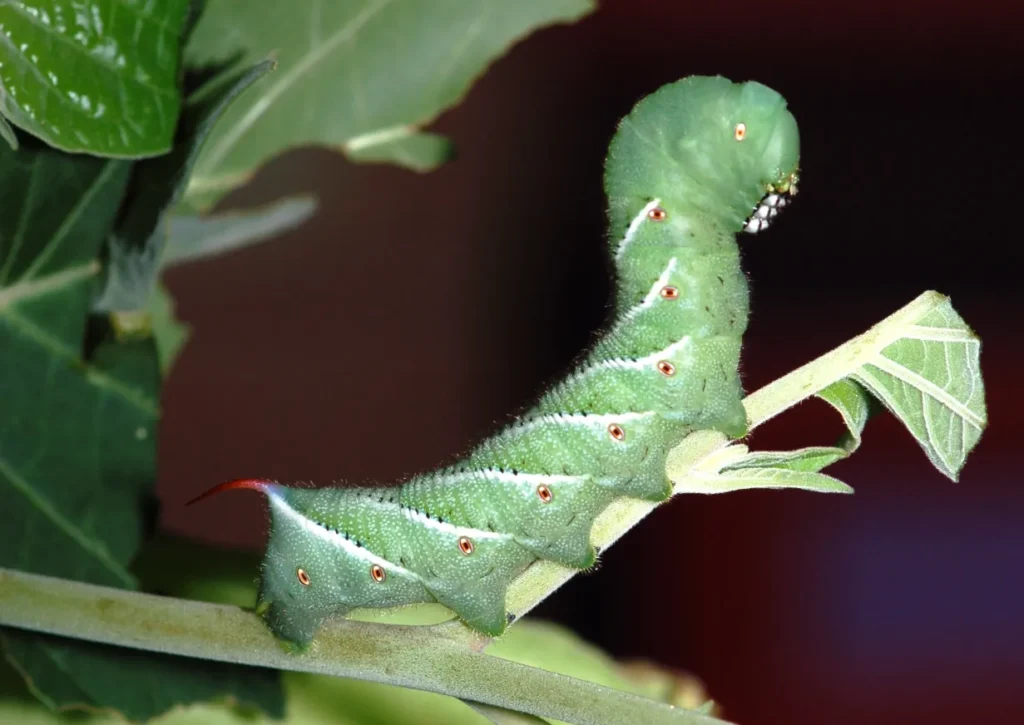
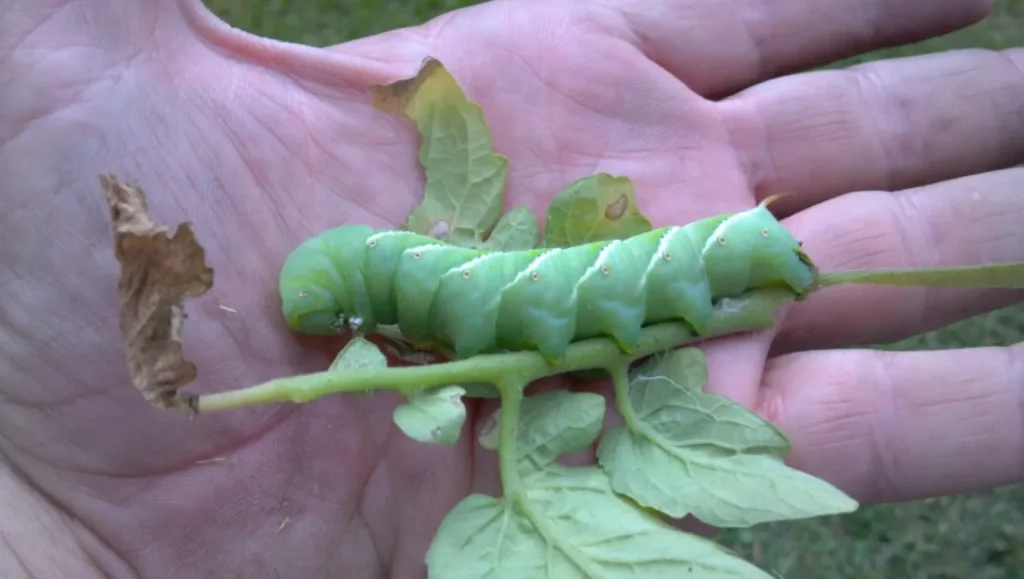
The tomato moth, especially its larval stage, is often mistaken for other pests. The tomato moth caterpillar is typically bright green with white stripes and a horn-like projection. This horn gives rise to the name ‘horned tomato moth‘.
Another variation is the brown tomato moth caterpillar, which becomes darker as it matures or prepares to pupate. This stage is often overlooked but is critical in the life cycle.
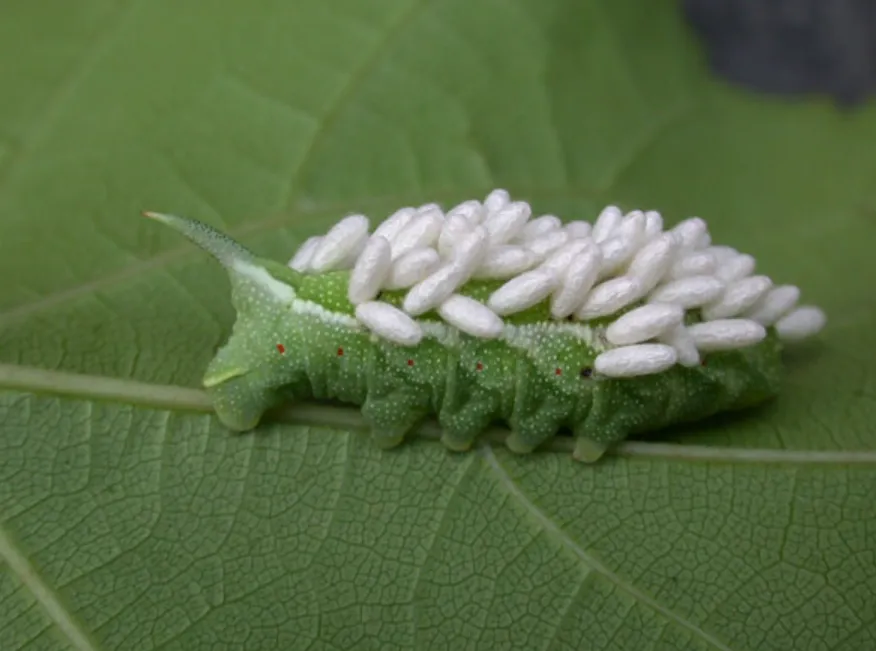
The earliest stage, the tomato moth egg, is tiny and laid under leaves. They are usually pale green and difficult to spot, making early detection challenging for gardeners.
Understanding these stages helps in both conservation and pest control. While the caterpillars can damage crops, they are also part of a larger ecological system.
Their Life Cycle and Ability to Survive in Nature
Egg Stage
Females lay eggs on the underside of leaves. This placement protects them from predators and harsh weather.
Larval Stage
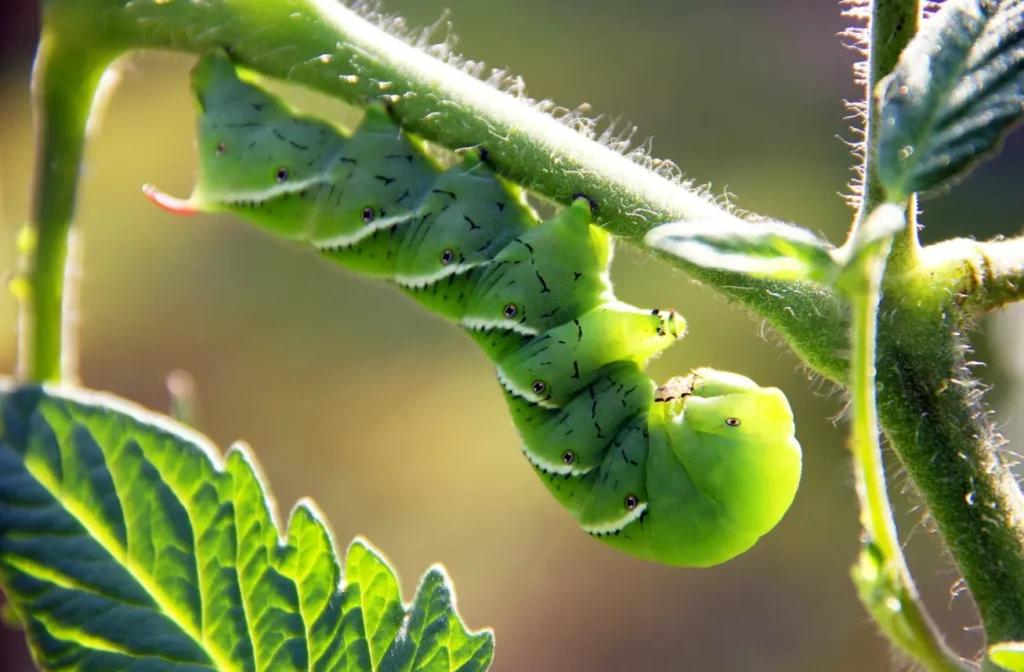
The caterpillar emerges and begins feeding immediately. Rapid growth ensures it reaches maturity quickly.
Pupal Stage
The caterpillar burrows into the soil to pupate. This underground phase protects it from predators.
Adult Stage
The adult moth emerges, ready to mate and continue the cycle.
Survival Strategies
- Camouflage helps avoid predators.
- Rapid reproduction increases population survival.
- The ability to adapt to various climates ensures widespread distribution.
This life cycle demonstrates a balance between vulnerability and resilience.
Their Reproductive Process and Raising Their Children
- Female moths release pheromones to attract males.
- Mating typically occurs at night.
- After mating, females lay hundreds of eggs.
Egg Protection
- Eggs are placed strategically on host plants.
- This ensures immediate access to food upon hatching.
Parental Strategy
- No direct parental care is provided.
- Survival depends on quantity and strategic placement.
Growth and Development
- Caterpillars grow rapidly through multiple molts.
- Each stage increases their chances of survival.
Environmental Influence
- Temperature and food availability affect reproduction rates.
- Warmer climates allow multiple generations per year.
This reproductive strategy maximizes survival despite high predation rates.
Importance of Them in this Ecosystem
Pollination Role
Adult tomato moths pollinate night-blooming flowers, supporting plant reproduction.
Food Chain Contribution
They serve as food for birds, bats, and other predators.
Plant Population Control
Caterpillars regulate plant growth, preventing overpopulation.
Biodiversity Support
Their presence indicates a healthy ecosystem.
Scientific Research
They are widely used in biological and genetic studies.
Despite being pests in agriculture, they have significant ecological value.
What to Do to Protect Them in Nature and Save the System for the Future
- Avoid excessive pesticide use to protect beneficial insects.
- Encourage natural predators, such as birds and wasps.
- Plant diverse crops to support biodiversity.
- Use organic farming methods.
- Preserve natural habitats around farms.
- Educate communities about ecological balance.
- Monitor populations instead of eliminating them.
- Promote integrated pest management (IPM).
These steps help maintain ecological harmony while managing crop damage.
Frequently Asked Questions (FAQs)
- What is a tomato moth?
- A moth species whose larvae feed on tomato plants.
- What are tomato moth eggs like?
- Small, pale green, and laid under leaves.
- How do I identify a tomato moth caterpillar?
- Look for a green body with a horn on the tail.
- Are horned tomato moths dangerous?
- No, the horn is harmless and used for defense.
- Why do caterpillars turn brown?
- The brown tomato moth caterpillar stage occurs before pupation.
- How long do they live?
- About 30–50 days, depending on conditions.
- Do tomato moths help the environment?
- Yes, adult moths are pollinators.
- How can I control them naturally?
- Use handpicking and encourage natural predators.
Conclusion
The tomato moth life cycle is a remarkable journey of transformation and survival. From tiny eggs to destructive caterpillars and finally to graceful pollinating moths, each stage plays a vital role in nature.
While farmers often see them as pests, their ecological importance cannot be ignored. They contribute to pollination, support food chains, and reflect environmental health.
Understanding their life cycle helps strike a balance between crop protection and ecosystem preservation. By adopting sustainable practices, we can manage their impact without harming biodiversity.
Also Read: life cycle of abee