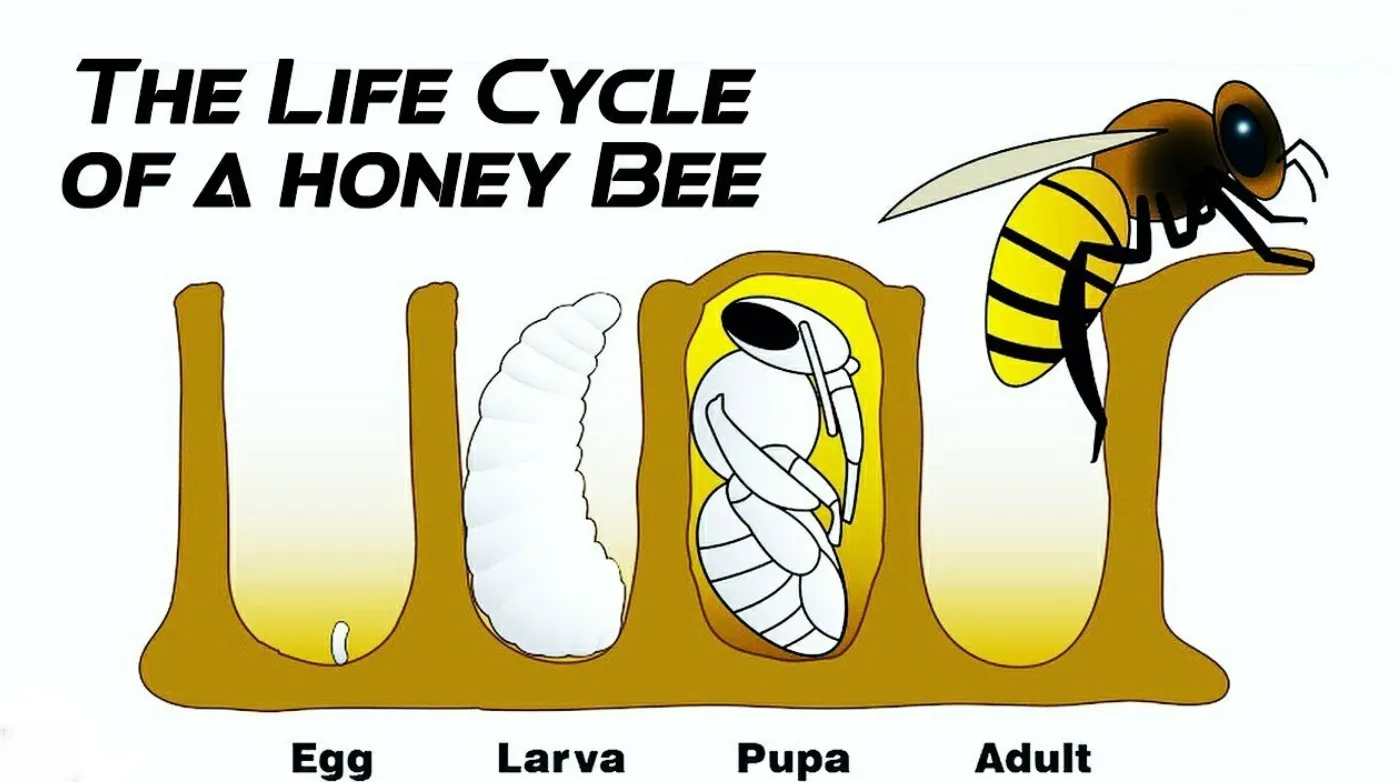
The life cycle of a honey bee is one of nature’s most organised and fascinating biological systems. A honey bee does not simply hatch, fly, and make honey. It undergoes a complete transformation from egg to larva, then to pupa, and finally becomes an adult bee, taking on a special role in the colony.
This process supports the survival of the honey bee hive, the production of honey, and the pollination of many plants that humans and wildlife depend on. The most familiar species is the western honey bee, Apis mellifera. It is highly valued because it produces honey and beeswax and provides important pollination services across farms, gardens, orchards, and natural ecosystems.
Q: What are the main stages in the life cycle of a honey bee?
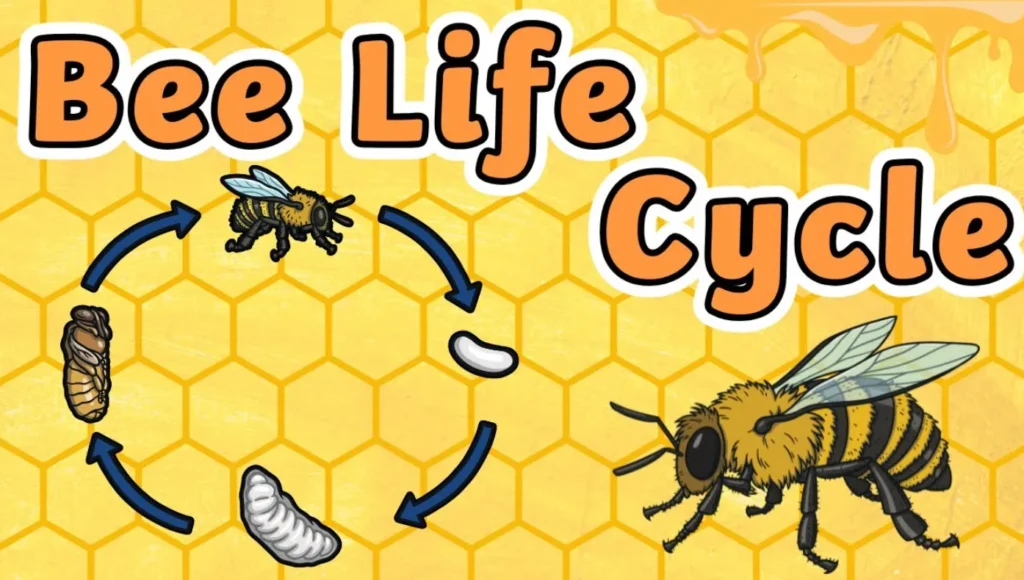
A: The main stages are egg, larva, pupa, and adult. This is called complete metamorphosis.
Q: How long does it take for a honey bee to become an adult?
A: A queen honey bee usually develops in about 16 days, a worker in about 21 days, and a drone in about 24 days.
Q: Why are honey bees important?
A: Honey bees help pollinate crops, wildflowers, fruits, vegetables, nuts, and seed-producing plants.
Quick Life Cycle Table
| Life Cycle Stage | Approximate Time | What Happens | Main Importance |
| Egg | About 3 days | The queen lays a tiny egg inside a wax cell. Fertilised eggs become workers or queens, while unfertilised eggs become drones. | Starts colony growth |
| Larva | About 5–6 days | Nurse bees feed the larvae. Diet affects whether a female larva becomes a worker or queen. | Rapid body growth |
| Pupa | About 7–14 days | The cell is capped. The bee develops wings, legs, eyes, antennae, and adult body parts. | Transformation stage |
| Adult Queen | About 16 days total | A queen emerges quickly because of special feeding and care. | Egg laying and colony reproduction |
| Adult Worker | About 21 days total | A female worker emerges and performs hive duties, nursing, cleaning, guarding, and foraging. | Colony labour and survival |
| Adult Drone | About 24 days total | A male drone develops for mating with virgin queens. | Genetic contribution |
Important Things That You Need To Know
Understanding the life cycle of a honey bee becomes easier when you also know the related terms people often search for. The phrase honey bee usually refers to social bees that live in colonies and store honey. The most widely recognised species is the western honey bee, or Apis mellifera, which is commonly used in managed beekeeping.
A honey bee hive is not just a shelter. It is a living system made of wax comb, stored honey, pollen, brood cells, worker bees, drones, and one active queen in most normal colonies. Every part of the hive supports survival, reproduction, and food storage.
The comparison between bumble bees and honey bees is also important. Bumble bees are usually larger, fuzzier, and live in smaller seasonal colonies. Honey bees live in larger, highly organised colonies and store enough honey to survive difficult seasons.
The phrase queen honey bee refers to the main egg-laying female in a colony. She is not a ruler in a human sense, but her pheromones, fertility, and egg production help keep the colony organised.
Searches for honey bee supply companies in the United States usually relate to beekeeping tools, hive boxes, protective suits, feeders, and bee-care equipment. Meanwhile, honey bee stamps may refer to postage stamp designs featuring bees, as honey bees are strong symbols of nature, agriculture, teamwork, and environmental care.
Together, these LSI keywords help search engines understand that the article covers the full biological, ecological, and practical topic of honey bees.
The History of Their Scientific Naming
The scientific name of the western honey bee is Apis mellifera. This name was formally given by Carl Linnaeus in 1758, the same scientist who developed the modern system of biological classification.
Important points about the name:
- Apis means “bee” in Latin.
- Mellifera means “honey-bearing” or “honey-carrying”.
- The full scientific form is often written as Apis mellifera Linnaeus, 1758.
- It belongs to the family Apidae, which includes honey bees, bumble bees, carpenter bees, and several other bee groups.
- The western honey bee belongs to the insect order Hymenoptera, the same order that includes bees, wasps, and ants.
The name is meaningful because it directly reflects the honey bee’s most famous behaviour: collecting nectar and turning it into honey. However, scientifically, bees do not collect ready-made honey from flowers. They collect nectar, process it inside the hive, and gradually convert it into honey.
Their Evolution And Their Origin
The evolutionary story of the honey bee is closely linked to flowering plants. As flowering plants spread across the Earth, insects that could collect nectar and pollen became more successful. Bees evolved from wasp-like ancestors, but unlike predatory wasps, they became strongly associated with flowers.
The western honey bee has a native range covering Europe, Africa, and the Middle East. Researchers have debated its exact origin, with studies discussing possible origins in Africa, Asia, the Middle East, or north-eastern Africa. What is clear is that Apis mellifera spread widely and adapted to different climates, flowers, and seasonal patterns.
This adaptation created different subspecies. Some became better suited to cold climates, while others adapted to warmer regions. Honey bees developed behaviours such as storing honey, clustering together for warmth, communicating through dance, and dividing colony labour among queens, workers, and drones.
Humans later helped spread Western honey bees across many parts of the world. Beekeeping, crop pollination, honey production, and agricultural trade made the honey bee one of the most recognised insects on Earth.
The evolution of honey bees is also a story of social intelligence. A single bee is small and vulnerable, but a colony works like a superorganism. Thousands of bees cooperate as one living system. This collective behaviour allows them to defend the hive, raise young, find flowers, store food, regulate temperature, and survive seasonal changes.
Their main food and its collection process
The main foods of honey bees are nectar, pollen, water, and small amounts of plant resins used to make propolis. Each food has a different purpose inside the honey bee hive.
- Nectar
- Honey bees collect nectar from flowers using their long, tongue-like mouthparts. Nectar is rich in natural sugars and gives bees energy. Forager bees store nectar in a special honey stomach and carry it back to the hive.
- Pollen
- Pollen is the main protein source for honey bees. It contains amino acids, fats, vitamins, and minerals. Worker bees collect pollen on their back legs in structures called pollen baskets.
- Water
- Honey bees collect water to cool the hive, dilute stored honey, and support brood care. On hot days, water helps the colony regulate temperature.
- Propolis
- Worker bees collect sticky plant resins and mix them with enzymes and wax. This creates propolis, which helps seal cracks and protect the hive from microbes.
Worker bees handle the collection process. Older worker bees become foragers and fly from flower to flower. When they return, they may use the famous waggle dance to show other bees the direction and distance of rich food sources.
Inside the hive, nectar is passed between bees and exposed to airflow. Water gradually evaporates, and enzymes help change nectar into honey. Once the honey is ready, bees seal the cell with wax for future use.
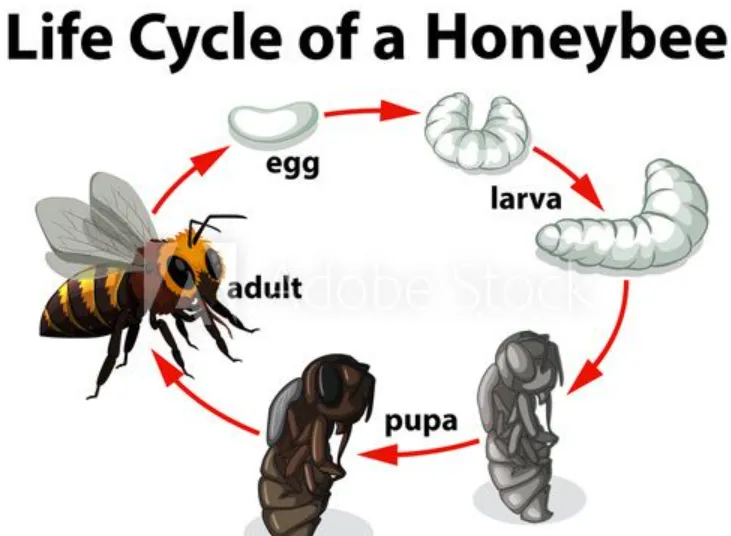
Their life cycle and ability to survive in nature
Egg Stage
The queen honey bee lays eggs in wax cells. Each egg is small, white, and shaped like a tiny grain of rice. Fertilised eggs develop into female bees, which may become workers or queens. Unfertilised eggs become male drones.
The egg stage usually lasts about three days. After that, the egg hatches into a soft, larval form.
Larva Stage
The larva looks like a small white grub. It does not have wings, legs, or adult body features. Nurse bees feed it frequently so it can grow quickly.
All young larvae receive rich food at first. Female larvae chosen to become queens continue receiving special queen-focused nutrition, while worker larvae receive a different feeding pattern.
Pupa Stage
Once the larva has grown enough, worker bees cap the cell with wax. Inside the sealed cell, the larva transforms into a pupa.
During this stage, the bee develops adult body parts, including wings, eyes, legs, antennae, and a hardened exoskeleton. This hidden transformation is one of the most important stages in a honey bee’s life cycle.
Adult Stage and Survival
Adult honey bees survive through teamwork. Workers clean cells, feed larvae, build wax comb, guard the entrance, collect food, and regulate hive temperature.
Honey bees survive in nature by storing honey, defending the hive, communicating food locations, and replacing old bees with new generations. Their survival depends on flowers, clean water, suitable nesting spaces, healthy queens, and protection from disease, pesticides, and habitat loss.
Their Reproductive Process and raising their children
Honey bee reproduction happens at both the individual and colony levels. The queen honey bee produces eggs, while the whole colony raises the young.
Key points of the reproductive process:
- Queen mating flight
- A young virgin queen leaves the hive and mates with several drones during mating flights. After mating, she stores sperm in a special organ called the spermatheca.
- Egg laying
- Once mated, the queen returns to the hive and begins laying eggs. A healthy queen may lay many eggs during the active season when food is available.
- Fertilised and unfertilised eggs
- Fertilised eggs become female bees: workers or queens. Unfertilised eggs become drones. This system is called haplodiploidy.
- Worker care
- Worker bees raise the young. They clean brood cells, feed larvae, warm the brood area, and protect the hive entrance.
- Queen development
- A queen develops faster than workers and drones. Queen development takes about 16 days, compared with about 21 days for workers and 24 days for drones.
- Swarming
- When a colony becomes crowded or conditions are favourable, it may reproduce at the colony level through swarming. The old queen leaves with many workers to start a new colony, while a new queen emerges in the original hive.
Honey bees do not raise children like mammals do, but they provide constant care to developing brood. In a strong colony, thousands of worker bees cooperate to keep the next generation alive.
The importance of them in this Ecosystem
Pollination of Food Crops
Honey bees are among the best-known agricultural pollinators. When they visit flowers, pollen sticks to their bodies and moves from one flower to another. This helps plants form fruits, seeds, and nuts.
In many agricultural systems, honey bees support the production of fruits, vegetables, nuts, seeds, and oil crops. Their pollination service helps improve crop yield, food quality, and farm productivity.
Support for Wild Plants
Honey bees also visit wildflowers, shrubs, and trees. While they are not the only pollinators, they help maintain plant reproduction in many landscapes.
Pollination supports seed production, which feeds birds, insects, and mammals. In this way, honey bees are connected to wider food webs.
Biodiversity and Ecosystem Balance
Pollinators are important for biodiversity, food security, nutrition, and ecosystem restoration. Many wild flowering plants and a large share of food crops depend at least partly on animal pollination.
Honey bees are one part of this larger pollinator system. They work alongside bumble bees, solitary bees, butterflies, flies, beetles, moths, and birds.
Human Culture and Economy
Honey bees provide honey, beeswax, propolis, royal jelly, and pollination services. They also appear in art, education, agriculture, environmental campaigns, and collectible items such as honey bee stamps.
Their importance goes beyond honey. They remind people that small insects can shape food systems, ecosystems, and human culture.
What to do to protect them in nature and save the system for the future
Protecting honey bees means protecting flowers, clean habitats, safe nesting conditions, and balanced ecosystems. It also means supporting other pollinators, because a healthy environment should not depend on only one species.
- Plant more nectar-rich and pollen-rich flowers in gardens, farms, schools, and public spaces.
- Choose native flowering plants that bloom in different seasons, so bees have food year-round.
- Avoid unnecessary pesticide use, especially during flowering periods when bees are actively visiting plants.
- If pesticides must be used, apply them carefully, follow label instructions, and avoid spraying when bees are foraging.
- Provide clean water sources with stones or floating materials so bees can land safely.
- Protect natural habitats, including meadows, hedgerows, forests, wetlands, and wildflower strips.
- Support responsible beekeeping that manages disease, avoids overcrowding, and protects local pollinator balance.
- Do not destroy a bee colony without expert help. Contact a local beekeeper or pest professional if a colony is in a risky location.
- Educate children and communities about the difference between honey bees, bumble bees, wasps, and other insects.
- Support farms and food systems that use pollinator-friendly practices.
- Reduce the use of garden chemicals and allow some wild plants to bloom where possible.
- Protect old trees, natural cavities, and undisturbed spaces that support wild pollinators.
The future of honey bees depends on practical action. Small changes in gardens, farms, and cities can create safer spaces for bees and other pollinators.
Frequently Asked Questions (FAQs)
Q: What is the life cycle of a honey bee?
A: The life cycle of a honey bee includes four main stages: egg, larva, pupa, and adult. This process is called complete metamorphosis because the bee undergoes complete changes before becoming an adult.
Q: How long does a honey bee live?
A: Lifespan depends on the caste and season. A summer worker may live only a few weeks, while winter workers can live for months. A healthy queen may live much longer, especially when well cared for by the colony.
Q: How long does it take for a honey bee egg to hatch?
A: A honey bee egg usually hatches after about three days. After hatching, it enters the larva stage and is fed by nurse bees.
Q: What is the role of the queen honey bee?
A: The queen honey bee is the main egg-laying female in the colony. Her job is to produce eggs and release pheromones that help organise colony behaviour.
Q: What is the difference between a worker bee and a drone?
A: A worker bee is a female bee that performs hive duties such as cleaning, nursing, guarding, building comb, and foraging. A drone is a male bee whose main role is to mate with a virgin queen.
Q: What is the difference between a bumblebee and a honeybee?
A: In the bumble bee vs honey bee comparison, bumble bees are usually larger, rounder, and live in smaller colonies. Honey bees live in larger colonies, store honey, and are widely used in managed pollination.
Q: Why do honey bees make honey?
A: Honey bees make honey as stored food. They use it when fresh nectar is not available, especially during cold, dry, or flower-poor seasons.
Q: Why are honey bees important to humans?
A: Honey bees support food production through pollination. They also produce honey and beeswax and help people understand the importance of pollinator conservation.
Conclusion
The life cycle of a honey bee is a powerful example of transformation, teamwork, and survival. From a tiny egg to an active adult, every honey bee develops through a carefully organised process that supports the whole colony.
The queen honey bee lays the eggs, workers raise the young, drones support reproduction, and foragers collect nectar, pollen, water, and resin. Together, they keep the colony alive and productive.
Honey bees are more than honey producers. They are essential pollinators, ecosystem helpers, and symbols of cooperation. Their role in agriculture, wild plant reproduction, and biodiversity makes them valuable to both nature and human life.
Protecting honey bees means planting flowers, reducing the use of harmful chemicals, supporting responsible beekeeping, and preserving natural habitats. When we protect honey bees, we also protect food systems, ecosystems, and the future balance of nature.
Also Read: ladybeetle life cycle