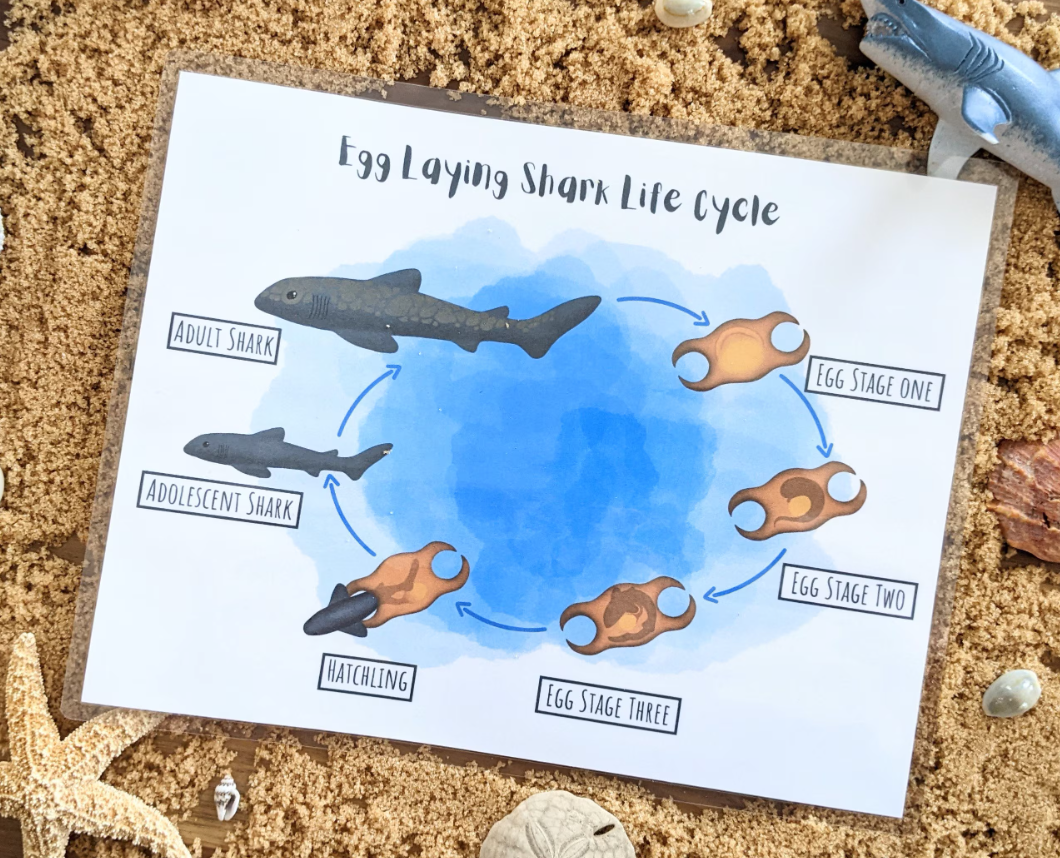
The shark life cycle is one of the most interesting stories in the ocean. A shark begins life as an egg or developing embryo, grows into a young baby shark, learns to hunt or filter-feed, reaches maturity, reproduces, and continues the cycle. But this process is not the same for every species. A great white shark, a whale shark, a hammerhead shark, and a Greenland shark all follow different paths in growth rate, diet, habitat, and lifespan.
Sharks are not just “dangerous fish,” as movies often suggest. They are ancient ocean animals with cartilage rather than true bone, keen senses, and many survival skills. Scientists recognize more than 500 shark species, from the huge whale shark to very small deep-sea sharks.
Understanding the life cycle of a shark also helps us understand why many shark species need protection. Sharks usually grow slowly, mature late, and produce fewer young than many bony fish. That means their populations can fall quickly when overfishing, bycatch, habitat loss, and illegal trade remove too many adults from the ocean. Recent IUCN reporting shows that more than one-third of sharks, rays, and chimaeras are threatened with extinction.
Q: What are the main stages of the shark’s life cycle?
A: The main stages are embryo, birth or hatching, juvenile, adult, and reproduction.
Q: Are all sharks born alive?
A: No. Some sharks lay eggs, while many give birth to live young. Different species use different reproductive methods.
Q: How long do sharks live?
A: Lifespan depends on the species. Some sharks live around 20–30 years, while the Greenland shark can live for centuries.
Quick Life Cycle Table
| Stage | What Happens | Simple Example |
| Embryo | The shark develops either in an egg case or in the mother’s body. | Egg-laying sharks develop in “mermaid’s purse” egg cases. |
| Birth / Hatching | Young sharks hatch from eggs or are born alive. | Many hammerhead shark species give birth to live pups. |
| Baby Shark / Pup | The young shark is usually independent from birth. | A baby shark must swim, hide, and feed on its own. |
| Juvenile | The shark grows, learns feeding patterns, and avoids predators. | Young sharks often stay in shallow nursery areas. |
| Adult | The shark reaches sexual maturity and can reproduce. | A mature great white shark may migrate long distances. |
| Reproduction | Adults mate and produce the next generation. | Some species lay eggs; others give birth to live pups. |
The History of Their Scientific Naming
The word shark is a common name, not the scientific name of one animal. Sharks belong to the class Chondrichthyes, which means cartilaginous fishes. This group also includes rays, skates, and chimaeras. Unlike bony fish, sharks have skeletons made mostly of cartilage, the same flexible material found in the human nose and ears.
Scientific naming helps avoid confusion because common names change from place to place. For example, the great white shark is scientifically named Carcharodon carcharias. The whale shark is Rhincodon typus. The Greenland shark is Somniosus microcephalus, and many hammerhead sharks belong to the genus Sphyrna.
Key points about shark naming:
- Kingdom: Animalia
- Phylum: Chordata
- Class: Chondrichthyes
- Subclass: Elasmobranchii
- Common group: Sharks
- Body type: Cartilaginous fish
The scientific naming system gives each shark species a clear two-part name. This is important for research, conservation law, fishing rules, and education. Without scientific names, people may confuse similar-looking sharks that have very different life cycles, habitats, and protection needs.
Their Evolution And Their Origin
Sharks are among the oldest surviving vertebrate groups on Earth. Fossil evidence shows that shark-like animals appeared hundreds of millions of years ago, long before dinosaurs. Smithsonian Ocean notes that confirmed shark scales date back about 420 million years. At the same time, the Natural History Museum explains that some earlier shark-like scales may be around 450 million years old, though scientists still debate whether those earliest forms were true sharks.
This deep history helps explain why sharks are so well-adapted to life in the ocean. Over time, they developed flexible cartilage skeletons, replaceable teeth, strong senses, and different feeding styles. Some became fast hunters. Some became bottom-dwellers. Others, like the whale shark, became gentle filter feeders.
Sharks also survived several major extinction events. Their success did not come from being unchanged. It came from adjusting to different oceans, climates, prey types, and habitats. Ancient sharks were not the same as modern sharks. Many fossil sharks disappeared, while new groups evolved.
The great white shark is a much newer species compared with the ancient shark line. The Greenland shark evolved for cold, deep northern waters. Hammerhead sharks developed a wide head shape that improves vision, movement, and prey detection. The whale shark, the largest living fish, took a very different path by feeding on tiny plankton and small sea animals.
This long evolutionary history makes sharks important living links to Earth’s past. At the same time, their slow growth and slow reproduction make many modern species vulnerable today.
Their main food and its collection process
Not all sharks eat the same food. The food of a shark depends on its species, size, age, teeth, hunting style, and habitat. Some sharks are top predators, while others eat small animals from the water column or the sea floor.
Here are the main feeding types:
- Large predatory sharks:
- Sharks such as the great white shark eat fish, seals, sea lions, rays, and sometimes dead whales. They use strong jaws, sharp teeth, smell, and movement detection to find food.
- Filter-feeding sharks:
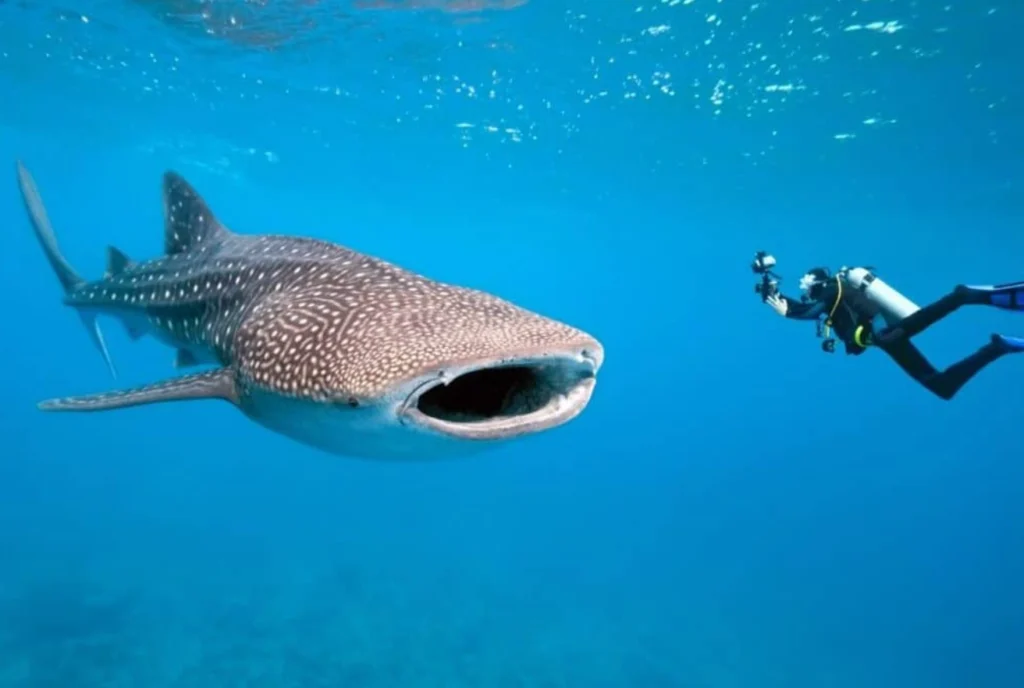
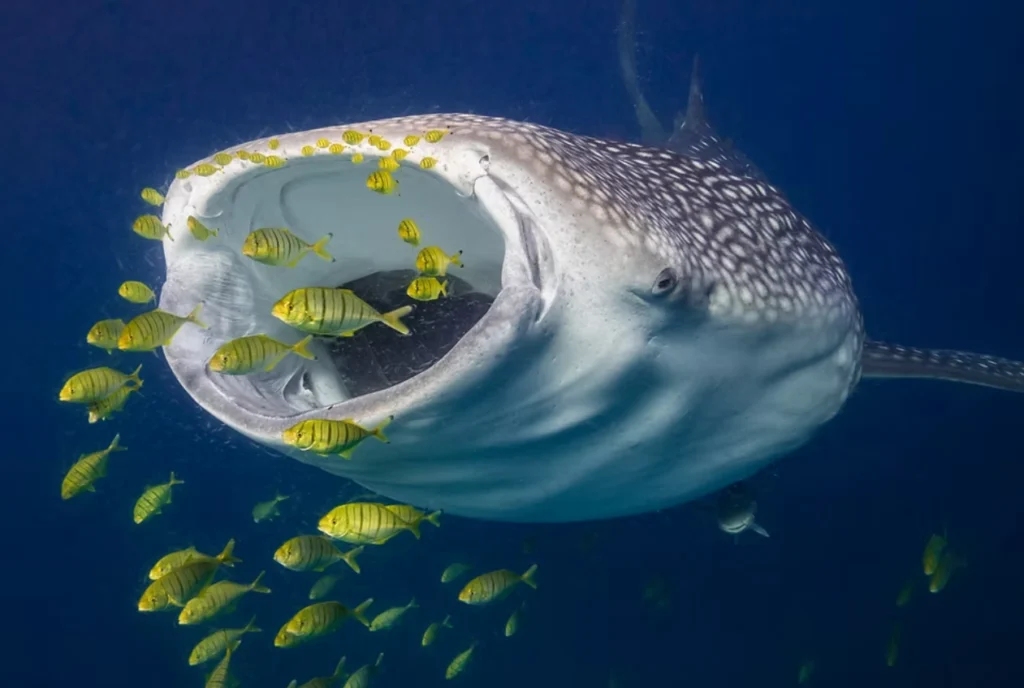
- The whale shark is the largest fish in the world, but it feeds mostly by filtering plankton, fish eggs, small fish, and crustaceans from seawater. It swims with its mouth open, straining food from the water.
- Bottom-feeding sharks:
- Some sharks search the sea floor for crabs, shrimp, shellfish, small fish, and worms. Their mouths are often placed lower on the head, helping them pick food from sand or rocks.
- Small and medium sharks:
- Many smaller sharks eat squid, small fish, octopus, shrimp, and other invertebrates. Bigger sharks or marine mammals may also eat them.
- Deep-sea sharks:
- Deep-water species may eat slow-moving fish, carrion, squid, and animals that live in low-light zones.
Sharks collect food through several senses. They can smell tiny chemical traces in water, feel vibrations through the lateral line, and detect weak electric signals from prey using special pores called ampullae of Lorenzini. This makes them powerful hunters even in dark or cloudy water.
Their food collection process is not wasteful by nature. Sharks often remove weak, sick, or injured animals from the Ecosystem, helping keep prey populations healthier.
Their life cycle and ability to survive in nature
Embryo Development
The shark’s life cycle starts before birth. Depending on the species, the embryo may develop inside an egg case outside the mother’s body or inside the mother. Some embryos feed from a yolk sac, while others receive extra nutrition inside the mother.
Birth or Hatching
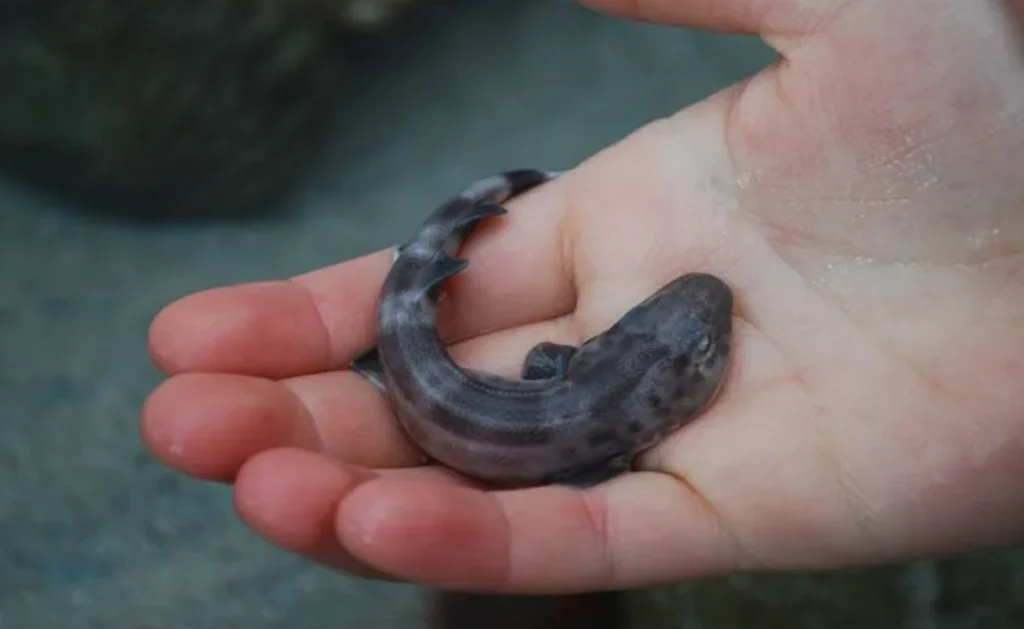
Some sharks hatch from egg cases. These egg cases are sometimes called mermaid’s purses. Other sharks are born alive. A newborn baby shark, called a pup, usually receives no care from its parents. It must swim, hide, and feed on its own from the beginning.
Juvenile Stage
Young sharks often live in safer nursery habitats such as shallow bays, mangroves, reefs, seagrass beds, or coastal waters. These places offer food and reduce the risk of being eaten by larger predators.
Adult Stage
As sharks grow, they may move into deeper water, the open ocean, coral reefs, or long migration routes. Adult sharks search for food, mates, and safe places to reproduce.
Natural Survival Skills
Sharks survive through strong senses, flexible bodies, replaceable teeth, and powerful swimming. Their cartilage skeleton is lighter than bone, and their large oil-rich liver helps with buoyancy.
Still, survival is not easy. Larger sharks, seals, or other predators may eat young sharks. Adults face fishing pressure, habitat loss, pollution, and climate stress.
Their Reproductive Process and raising their children
Shark reproduction is unusual because different species use different methods. Unlike many fish that release thousands or millions of eggs, sharks often invest more energy into fewer, better-developed young. That helps pups survive, but it also means shark populations recover slowly after heavy fishing.
Main reproductive methods include:
- Oviparity — egg laying:
- Some sharks lay tough egg cases in safe areas such as reefs, seaweed, or rocky habitats. The embryo grows inside the egg until it hatches.
- Viviparity — live birth with support from the mother:
- Some sharks carry young inside the body and provide nutrition through a placenta-like connection. NOAA notes that many sharks give birth to live young.
- Ovoviviparity / aplacental live birth:
- In many species, eggs develop inside the mother, but the embryos mainly feed from the yolk rather than a placenta.
- Long pregnancy:
- Some shark pregnancies are very long. NOAA reports that the spiny dogfish shark can be pregnant for up to 24 months, one of the longest known gestation periods among vertebrates.
- Independent pups:
- Shark parents usually do not raise their young after birth. A baby shark is born ready to swim, hunt, and avoid danger.
- Nursery habitats:
- Although parents do not care for pups, many species give birth in areas where young sharks have a better chance of survival.
This reproductive strategy works well in a balanced ocean. But when humans remove too many adult sharks, the slow birth rate becomes a major problem.
Important Things That You Need To Know
When people search for the shark life cycle, they may also see many related terms. Some are about real animals, while others are not. It is important to understand the difference.
A whale shark is a real shark and the largest living fish. It is not a whale. It feeds mostly by filtering small food from water and is usually gentle around humans. A great white shark is also real and is one of the best-known ocean predators. It plays an important role in marine food webs.
A hammerhead shark has a wide, hammer-shaped head that helps with vision, movement, and sensing prey. A Greenland shark is a cold-water species known for extremely slow growth and a very long life. The phrase “baby shark” can refer to a real shark pup, but it is also widely known from children’s music and popular culture.
Other terms are different. Shark Tale is an animated movie, not a biology topic. Shark vacuum and Shark FlexStyle are product-related searches from the Shark brand, not marine animals. These terms may appear as LSI keywords because search engines connect words based on user behavior, but they should not be conflated with scientific facts.
The importance of them in this Ecosystem
Sharks Help Balance Food Chains
Sharks often control populations of fish, rays, seals, squid, and other marine animals. Not every shark is an apex predator, but many sharks help shape how prey animals move, feed, and reproduce.
When top predators disappear, the food chain can become unbalanced. Some prey species may increase too much, while others may decline due to pressure from lower levels of the food web.
Sharks Remove Weak and Sick Animals
Many sharks target injured, old, or sick animals because those are easier to catch. This natural process helps keep prey populations stronger over time.
It also reduces the spread of disease in some marine communities. In this way, sharks act like ocean health managers.
Sharks Support Biodiversity
Healthy shark populations are linked with healthy reefs, seagrass beds, open-ocean systems, and deep-sea habitats. Their presence can affect where other animals feed and hide.
Sharks Help Local Economies
In many coastal areas, responsible shark tourism generates income through diving, photography, and wildlife tours. A living shark can be worth more to local communities than a dead one sold once for meat or fins.
Sharks Show Ocean Health
Because sharks often sit high in the food chain, their decline can warn us that the ocean is under pressure. Protecting sharks also means protecting fish stocks, coral reefs, coastal habitats, and the people who depend on them.
What to do to protect them in nature and save the system for the future
Protecting sharks is not only about saving one animal group. It is about preserving the balance of the ocean. Since many sharks grow and reproduce slowly, small changes can make a big difference over time.
- Support sustainable fishing rules:
- Governments and fishing groups should set science-based catch limits and protect threatened species.
- Reduce bycatch:
- Many sharks die when they are accidentally caught in fishing gear meant for other species. Better hooks, nets, tracking, and fishing methods can reduce this harm.
- Protect nursery habitats:
- Mangroves, reefs, bays, and seagrass beds often give young sharks safer places to grow.
- Stop the illegal shark fin trade:
- Shark finning removes sharks from the ocean in huge numbers. Strong trade rules and enforcement are needed.
- Create marine protected areas:
- Protected zones can help sharks feed, reproduce, and migrate with less pressure.
- Choose responsible seafood:
- Consumers can avoid seafood linked to destructive fishing and support certified sustainable options.
- Reduce plastic and chemical pollution:
- Pollution damages marine habitats and may harm shark prey.
- Support shark research:
- Tagging, population surveys, and genetic studies help scientists understand shark movement and survival.
- Educate people correctly:
- Fear-based stories hurt shark conservation. Teaching real facts can replace fear with respect.
- Protect migratory routes:
- Many sharks travel across national borders, so countries need to work together.
Frequently Asked Questions (FAQs)
Q: What is the shark life cycle?
A: The shark life cycle includes embryo development, birth or hatching, the baby shark or pup stage, juvenile growth, adulthood, and reproduction.
Q: Do sharks lay eggs or give birth?
A: Sharks can do both. Some species lay eggs, while others give birth to live young. The method depends on the species.
Q: What is a baby shark called?
A: A baby shark is called a pup. Most pups are independent as soon as they are born or hatch.
Q: How long does it take for sharks to grow up?
A: It depends on the species. Some sharks mature in a few years, while others take decades. Slow maturity makes many sharks vulnerable to overfishing.
Q: What do sharks eat during their life cycle?
A: Young sharks may eat small fish, shrimp, crabs, and squid. Adult sharks may eat fish, rays, seals, plankton, crustaceans, or carrion, depending on the species.
Q: Is a whale shark dangerous?
A: The whale shark is generally harmless to humans. It is a filter feeder and mainly eats plankton, small fish, and tiny sea animals.
Q: Why are sharks important to the ocean?
A: Sharks help balance food chains, remove weak animals, support biodiversity, and show the health of marine ecosystems.
Q: Are sharks endangered?
A: Some shark species are stable, but many are threatened. IUCN reports show that more than one-third of sharks, rays, and chimaeras are threatened with extinction, mainly because of overfishing and bycatch.
Conclusion
The shark life cycle shows how strong, ancient, and sensitive these animals are. A shark may begin as an egg or embryo inside the mother, enter the ocean as a small pup, grow through a risky juvenile stage, and later become an adult that helps maintain balance in marine life.
But sharks are not all the same. A great white shark hunts large prey. A whale shark filters tiny food from the sea. A hammerhead shark uses its unique head shape to sense the world. A Greenland shark grows slowly and may live for centuries.
Their life cycle is powerful but slow. Many sharks cannot replace lost adults quickly. That is why overfishing, bycatch, habitat damage, and illegal trade are serious threats.
Protecting sharks means protecting the ocean itself. When sharks survive, marine ecosystems stay stronger, cleaner, and more balanced for the future.
Also Read: life cycle of the panda