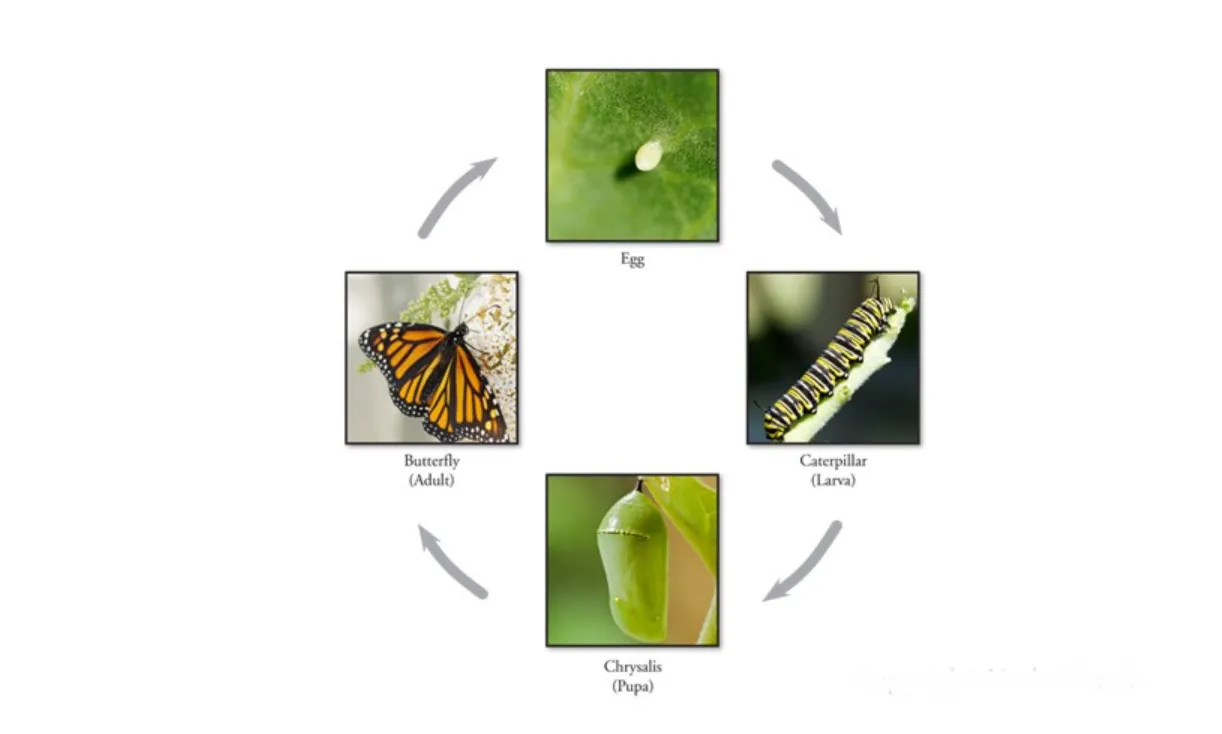
The butterfly’s life cycle is one of the most fascinating examples of complete metamorphosis in nature. A butterfly does not simply grow bigger like many animals. Instead, it passes through four very different stages: egg, larva (caterpillar), pupa (chrysalis), and adult butterfly. Each stage has a different body form, purpose, and survival challenge. Scientists classify butterflies under the insect order Lepidoptera, a group that also includes moths and skippers. Butterflies are found almost worldwide and are strongly connected with flowering plants, sunlight, seasonal changes, and healthy habitats.
In the first stage, the female lays eggs on or near a suitable host plant. When the egg hatches, the caterpillar begins feeding rapidly, usually on leaves. After growing through several molts, it becomes a pupa inside a chrysalis, where its body reorganizes into an adult butterfly. Finally, the adult emerges, expands its wings, feeds on nectar, mates, and continues the cycle.
Butterflies are not only beautiful insects; they are also important pollinators, a source of food for birds and other wildlife, and indicators of environmental health. Their survival depends on clean habitats, native plants, and reduced pesticide use.
Q: What are the four stages of the butterfly’s life cycle?
A: The four stages are egg, caterpillar/larva, chrysalis/pupa, and adult butterfly.
Q: How long does it take for a butterfly to complete its life cycle?
A: It depends on the species, weather, and food supply. Some butterflies complete the cycle in a few weeks, while others take months.
Q: Do butterflies give birth to babies?
A: No. Butterflies lay eggs—the young hatch as caterpillars, not as tiny flying butterflies.
Important Things That You Need To Know
Understanding the butterfly’s life cycle also means understanding the common questions people search for, such as: what types of butterflies are there, how long butterflies live, what butterflies eat, what butterflies symbolize, and monarch butterflies. These topics are closely connected because lifespan, diet, symbolism, and species type all influence how people understand butterflies in real life.
There are many types of butterflies, including swallowtails, monarchs, whites, sulphurs, blues, skippers, brush-footed butterflies, and many regional species. Their colors, wing shapes, and host plants may differ, but their basic life cycle remains the same. They all undergo complete metamorphosis, meaning the caterpillar and the adult look completely different.
People often ask, what do butterflies eat? Adult butterflies mostly drink flower nectar using a tube-like mouthpart called a proboscis. Some also feed on tree sap, rotting fruit, mineral-rich mud, or moisture from damp soil. Caterpillars, however, usually eat leaves from specific host plants chosen by the female butterfly.
Another popular question is what do butterflies symbolize? In many cultures, butterflies symbolize transformation, hope, freedom, rebirth, and the beauty of change. The novel In the Time of the Butterflies also uses “butterflies” as a powerful symbol of courage and resistance throughout the story of the Mirabal sisters.
Among all species, monarch butterflies are especially famous for their long-distance migration and dependence on milkweed plants for reproduction.
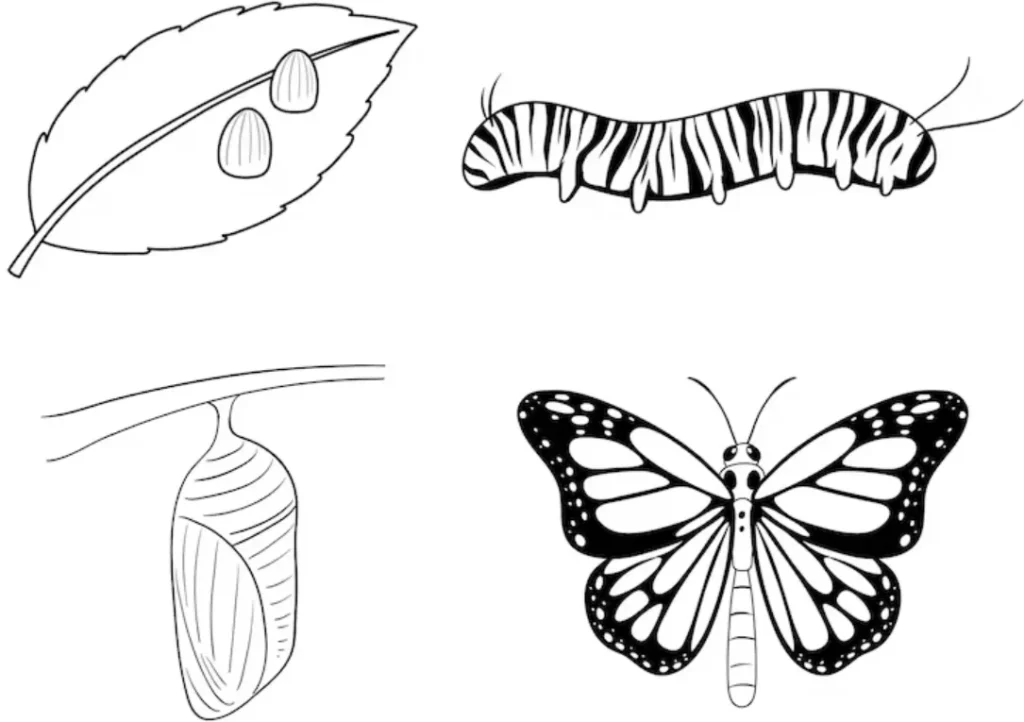
Quick Life Cycle Table
| Stage | Simple Name | Main Activity | Food Source | Approximate Duration |
| 1 | Egg | Females lay eggs on host plants | No feeding | A few days to weeks |
| 2 | Larva | A caterpillar eats and grows quickly | Leaves, flowers, or host plant parts | 1–3 weeks or more |
| 3 | Pupa | Body transforms inside chrysalis | No active feeding | Several days to weeks |
| 4 | Adult | Flies feed, mate, and lay eggs | Nectar, fruit juice, sap, minerals | 1 week to several months |
The timing above is general. Temperature, species, season, predators, and food quality can shorte
n or lengthen the cycle.
The History of Their Scientific Naming, Evolution, and Origin
Scientific Naming: Lepidoptera
Butterflies belong to the order Lepidoptera, a scientific name derived from Greek words meaning “scaly winged.” This name describes the tiny colored scales that cover butterfly wings and create their patterns. Butterflies are usually grouped under the superfamily Papilionoidea, while moths and skippers are close relatives.
Evolutionary Background
The evolutionary history of butterflies is linked with the wider history of Lepidoptera. Fossil evidence shows that early lepidopterans appeared long before modern butterflies became common. Their development is closely connected with the rise of flowering plants, because both caterpillars and adult butterflies depend heavily on plant resources.
Origin and Global Spread
Butterflies are now found across most parts of the world except the harshest polar regions. Their success comes from their ability to adapt to different host plants, climates, seasonal patterns, and defensive strategies. Their origin story is not only about beauty; it is also about survival, adaptation, and plant-insect coevolution.
Their Reproductive Process, Giving Birth, And Rising Their Children
Butterflies Do Not Give Birth
Butterflies do not give birth like mammals. A female butterfly reproduces by laying eggs. These eggs are usually placed on the leaves, stems, or nearby surfaces of the correct host plant. This is one of the most important decisions in the butterfly’s life because the caterpillar must find food immediately after hatching.
Mating and Egg-Laying
Adult males and females find each other through visual signals, flight patterns, chemical cues, and sometimes territorial behavior. After mating, the female searches carefully for suitable plants. Many caterpillars can eat only one plant species or a small group of related plants, so the female’s plant choice directly affects survival.
Raising Their Young Without Parental Care
Butterflies do not raise their young in the way birds or mammals do. There is usually no feeding, guarding, or teaching after eggs are laid. The female’s main parental investment is choosing a safe and nutritious host plant.
High Egg Numbers and Low Survival
Some butterflies lay many eggs because only a small number survive to adulthood. Eggs, caterpillars, and pupae face threats from ants, wasps, birds, spiders, disease, weather, and habitat loss. This is why the butterfly life cycle depends on both reproduction and environmental balance.
Stages of the Butterfly’s Life Cycle
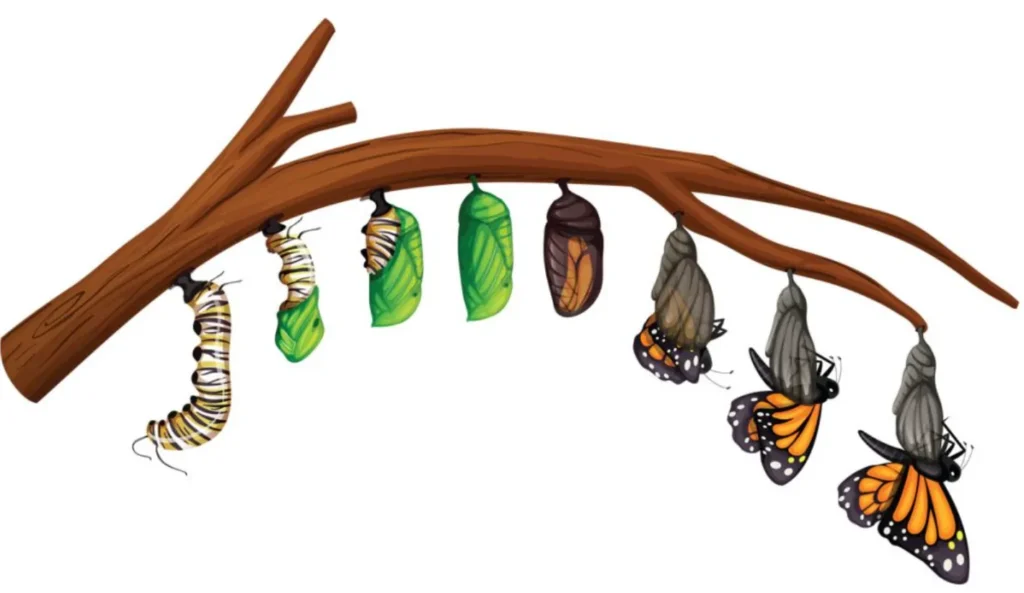
Stage 1: Egg
The life cycle begins when a female butterfly lays eggs on or near a suitable host plant. Eggs may be round, oval, ribbed, smooth, pale, greenish, yellowish, or patterned, depending on the species. They are usually very small and often hidden under leaves or on young plant growth.
Inside the egg, the embryo develops until it is ready to hatch. In many species, this stage lasts only a few days, but cooler weather can slow development.
Stage 2: Larva or Caterpillar
After hatching, the young butterfly appears as a caterpillar. This is the main feeding stage. The caterpillar’s job is simple but intense: eat, grow, and store energy. Caterpillars have chewing mouthparts and may feed on leaves, flowers, seed pods, or other plant parts.
As the caterpillar grows, it sheds its outer skin several times. These growth phases are called instars. Monarch caterpillars, for example, pass through five instars before pupation.
Stage 3: Pupa or Chrysalis
When the caterpillar is fully grown, it enters the pupal stage. In butterflies, the pupa is usually called a chrysalis. It may look inactive from the outside, but inside, the body undergoes dramatic reorganization.
During this stage, the caterpillar’s tissues transform into adult butterfly structures, including wings, legs, antennae, eyes, and reproductive organs. This is the most dramatic part of the complete metamorphosis.
Stage 4: Adult Butterfly
When the transformation is complete, the adult butterfly emerges from the chrysalis. At first, its wings are soft and folded. The butterfly pumps fluid into the wings, waits for them to expand and dry, and then prepares to fly.
The adult stage focuses on feeding, mating, migration in some species, and laying eggs for the next generation. Adult butterflies often drink nectar and help transfer pollen between flowers.
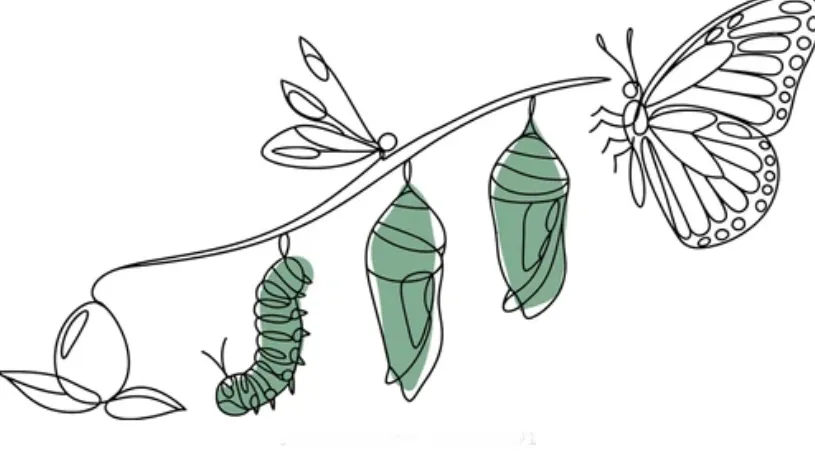
Their main diet, food sources, and collection process are explained
Butterflies have different diets depending on their life stage. The caterpillar and the adult butterfly do not usually eat the same food. This separation reduces competition between early and adult stages.
Caterpillar Diet
Caterpillars mainly eat plant material. Most feed on specific host plants, especially leaves. Some may eat flowers, fruits, seed pods, or tender shoots. For example, monarch butterfly caterpillars feed on milkweed, which is essential for their development.
Adult Butterfly Diet
Adult butterflies mostly drink nectar from flowers using a long, coiled mouthpart called the proboscis. This works like a flexible drinking tube. When not feeding, it curls under the head.
Some butterflies also feed on:
- Overripe fruit
- Tree sap
- Wet soil minerals
- Animal droppings
- Sweat or salty moisture
- Rotting plant juices
Food Collection Process
Butterflies locate food using vision, smell, and taste receptors. Many can taste with their feet, helping them identify suitable plants. When a butterfly lands on a flower, it uncoils its proboscis and draws up liquid food.
This feeding behavior also supports pollination, because pollen can stick to the butterfly’s body and move from flower to flower.
How Long Does a Butterfly’s Life Cycle Last
The lifespan of a butterfly depends strongly on species, season, temperature, and the presence of predators, as well as whether we are talking about the full life cycle or only the adult stage. Many people ask, how long do butterflies live, but the answer is not the same for every butterfly.
- Egg stage: Usually lasts a few days to a couple of weeks. Warm temperatures often speed up hatching, while cool weather slows it down.
- Caterpillar stage: This stage may last one to several weeks. Caterpillars grow quickly when food is abundant and the weather is suitable.
- Pupa/chrysalis stage: The pupal stage may last several days to several weeks. Some species can remain in this stage longer during unfavorable seasons.
- Adult stage: Many adult butterflies live from about one week to several weeks, but some species live longer. Smithsonian Gardens notes that the lifespan of adult butterflies varies by species from one week to several months.
- Monarch butterflies: Regular adult monarchs often live only a few weeks, but the migratory generation can live much longer. Some sources report that migratory monarchs live for 6–9 months, allowing them to travel and overwinter before reproducing.
- Small butterflies: Tiny species often have shorter adult lives because they face higher predation risk and may dry out faster in hot conditions.
- Large butterflies: Larger species may live longer if they avoid predators and have steady nectar sources.
- Captive butterflies: In butterfly houses or controlled environments, some individuals may live longer because they are protected from predators and extreme weather. However, captivity does not always mean a healthier life, especially if temperature, humidity, food, and disease control are poor.
- Seasonal effects: Butterflies emerging in warm breeding seasons often live shorter lives focused on mating and egg-laying. Butterflies that overwinter or migrate may live much longer.
So, the best answer is: a butterfly’s total life cycle may last from several weeks to many months, while the adult stage often lasts from one week to a few months, depending on species and conditions.
Butterflies Life Cycle Lifespan in the Wild vs. in Captivity
Lifespan in the Wild
In the wild, butterflies face constant survival pressure. Ants or parasitic wasps may eat eggs. Caterpillars may be attacked by birds, spiders, and beetles, as well as by disease. Pupae may be damaged by weather or predators. Adult butterflies face predators, such as birds and reptiles, storms, heat, cold, and a lack of nectar.
Because of these threats, many butterflies never reach adulthood. However, wild butterflies also have access to natural sunlight, diverse flowers, mating opportunities, and seasonal migration routes. Their behavior remains natural and ecologically valuable.
Lifespan in Captivity
In captivity, butterflies may be protected from many predators. They may receive nectar, fruit, controlled humidity, and stable temperature. This can help some adults survive longer.
However, captivity has risks. Poor ventilation, overcrowding, disease, unsuitable host plants, and lack of natural navigation cues can reduce survival. For monarchs, conservation groups warn that captive rearing and movement are not always recommended, as captive-reared monarchs may have reduced migratory ability and a higher disease risk.
Which Is Better?
For conservation, the best approach is usually not mass captivity. The better solution is to protect natural habitats, plant native host plants, reduce pesticide use, and allow butterflies to complete their life cycles in the wild.
Importance of the Butterfly Life Cycle in this Ecosystem
Pollination Support
Adult butterflies visit flowers to drink nectar. While feeding, they can move pollen from one flower to another. They are not the only pollinators, but they contribute to the reproduction of many flowering plants. Their long legs and bodies can carry pollen, especially when they visit flat or clustered flowers.
Food Chain Role
Butterflies are food for many animals. Birds, spiders, lizards, ants, wasps, beetles, and small mammals eat eggs, caterpillars, pupae, and adults. Without butterflies and caterpillars, many insect-eating animals would lose an important food source.
Plant Population Balance
Caterpillars feed on plants, and this may seem harmful. However, in balanced ecosystems, herbivory is natural. It supports food webs and helps cycle nutrients through the environment.
Environmental Indicators
Butterflies are sensitive to temperature, habitat change, pesticides, and plant availability. A sudden drop in butterfly numbers can signal deeper environmental problems. This is why scientists often monitor butterflies to understand ecosystem health.
Human and Cultural Value
Butterflies inspire education, gardening, art, literature, and conservation awareness. Their life cycle teaches people about growth, patience, transformation, and ecological connection.
What to do to protect them in nature and save the system for the future
Plant Native Host Plants
- Grow native plants that caterpillars need for food.
- For monarch butterflies, plant milkweed suited to your region.
- Avoid ornamental plants that do not support local caterpillars.
Grow Nectar-Rich Flowers
- Plant flowers that bloom in different seasons.
- Choose pesticide-free nectar plants.
- Mix colors, shapes, and heights to attract different types of butterflies.
Reduce Pesticide Use
- Avoid broad-spectrum insecticides.
- Do not spray flowering plants when butterflies are active.
- Use natural pest control methods whenever possible.
Protect Wild Spaces
- Keep meadows, hedgerows, roadside plants, and garden edges.
- Leave some leaf litter, stems, and safe resting places.
- Avoid over-cleaning every part of the garden.
Support Monitoring and Conservation
- Join butterfly counts or local nature surveys.
- Teach children about the butterfly’s life cycle.
- Support habitat restoration projects.
Recent studies and conservation reports raise serious concerns about butterfly declines linked to habitat loss, pesticides, climate change, and reduced host plants. Protecting butterflies means protecting wider biodiversity.
Fun & Interesting Facts About Butterflies’ Life Cycle
- Butterflies taste with their feet. This helps females identify the right host plant before laying eggs.
- Caterpillars are eating machines. Their main job is to consume food and store energy for metamorphosis.
- A chrysalis is not a sleeping bag. It is a living transformation chamber where the body reorganizes.
- Butterfly wings are covered with tiny scales. These scales create colors and patterns.
- Monarch butterflies need milkweed. Their caterpillars depend on milkweed plants for survival.
- Some butterflies migrate long distances. Monarch migration is one of the best-known examples.
- Adult butterflies cannot chew leaves. They drink liquids through the proboscis.
- Not all butterflies live for the same length of time. Some live only days as adults, while others survive for months.
- Butterflies symbolize transformation. Their life cycle is one reason people connect them with hope, rebirth, and change.
- Bright colors can be protective. Some wing patterns warn predators, confuse attackers, or help with camouflage.
Frequently Asked Questions (FAQs)
Q: What is the butterfly’s life cycle?
A: The butterfly’s life cycle is the process of development from egg to caterpillar, then chrysalis, and finally adult butterfly. This is called complete metamorphosis.
Q: How many stages are in the butterfly life cycle?
A: There are four stages: egg, larva/caterpillar, pupa/chrysalis, and adult butterfly.
Q: What do butterflies eat?
A: Adult butterflies mostly drink flower nectar, but some also feed on fruit juice, tree sap, wet soil minerals, or salty moisture. Caterpillars usually eat leaves from specific host plants.
Q: How long do butterflies live?
A: Many adult butterflies live from about one week to several weeks. Some species live for months, and migratory monarch butterflies can live around 6–9 months in special seasonal generations.
Q: Why are monarch butterflies important?
A: Monarch butterflies are important pollinators, cultural icons, and indicators of habitat health. Their life cycle depends on milkweed, making milkweed conservation essential for their survival.
Conclusion
The butterfly’s life cycle is a remarkable natural journey that shows how life can transform through different stages. From a tiny egg to a hungry caterpillar, from a quiet chrysalis to a flying adult butterfly, every stage has a clear purpose. This cycle supports pollination, feeds wildlife, balances plant communities, and teaches humans about adaptation and change.
Butterflies are delicate, but their role in nature is powerful. Their survival depends on healthy habitats, native host plants, nectar-rich flowers, and reduced chemical pressure. Whether you are learning about butterfly types, asking what butterflies eat, exploring what butterflies symbolize, or protecting monarch butterflies, the message is the same: butterflies need safe ecosystems to complete their life cycles.
By planting native flowers, protecting wild spaces, and avoiding harmful pesticides, we can help butterflies continue their beautiful journey for future generations.
Also Read: red panda life cycle