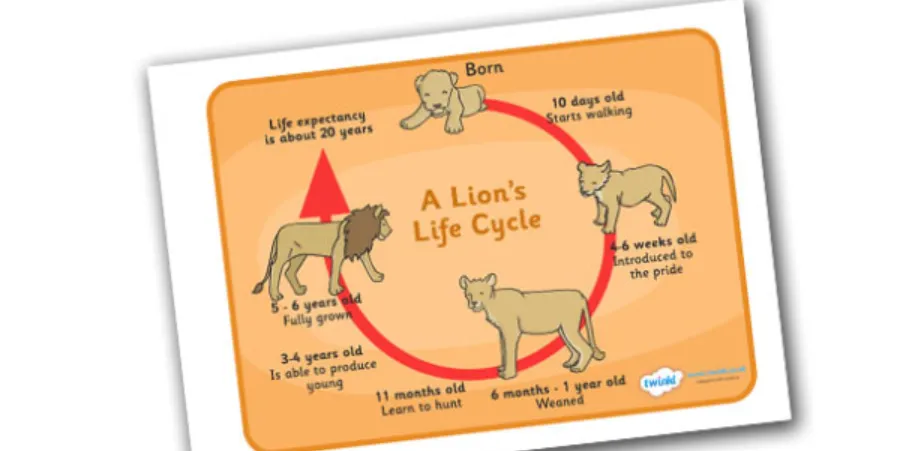
The life cycle of the African lion is one of the most fascinating journeys in the animal kingdom. From vulnerable cubs to dominant pride leaders, African lions go through distinct stages that define their survival and dominance in the wild. Known scientifically as Panthera leo, these apex predators play a crucial role in maintaining ecological balance across the African savanna.
Lions are social animals, unlike most big cats. They live in prides, which significantly influences their life cycle, hunting patterns, and reproductive behaviour. Understanding their life cycle helps us appreciate their importance and the challenges they face due to habitat loss and human interference.
Quick Answers (Most Common Questions)
1. What is the lifespan of an African lion?
African lions typically live 10–14 years in the wild and up to 20 years in captivity.
2. How long does it take for a lion cub to become an adult?
Lion cubs reach adulthood at around 3–4 years, though males may take longer to establish dominance.
3. What are the main stages in a lion’s life cycle?
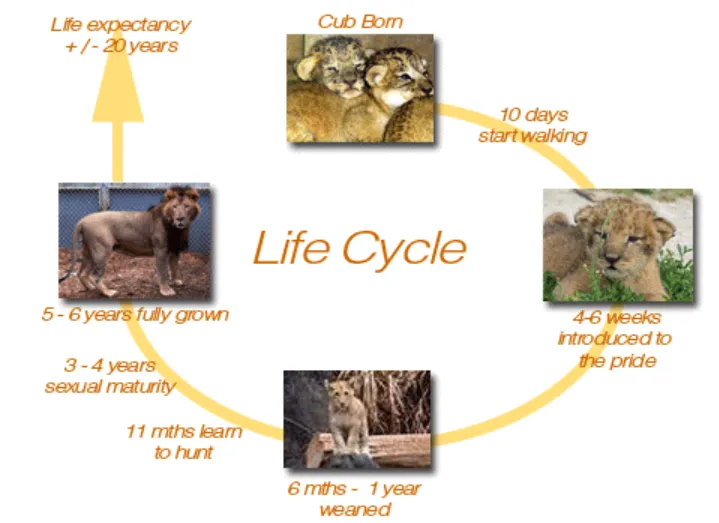
The life cycle includes birth (cub), juvenile stage, sub-adult phase, adulthood, and old age.
Quick Life Cycle Table
| Stage | Age Range | Key Characteristics |
| Cub | 0–1 year | Dependent on mother, learns basic survival |
| Juvenile | 1–2 years | Starts hunting practice, social bonding |
| Sub-Adult | 2–4 years | Gains independence, males leave pride |
| Adult | 4–10 years | Peak strength, reproduction, and leadership |
| Old Age | 10+ years | Reduced hunting ability, risk of displacement |
The History Of Their Scientific Naming
- The African lion is scientifically known as Panthera leo, a name derived from Latin and Greek origins.
- “Panthera” refers to large roaring cats, while “leo” means lion in Latin.
- Carl Linnaeus first formalised the classification in 1758, a pioneer of modern taxonomy.
- Historically, lions were once divided into multiple subspecies based on geography.
- Today, scientists generally recognise two main subspecies:
- Panthera leo leo (Africa & India)
- Panthera leo melanochaita (Southern & Eastern Africa)
- Fossil records suggest lions once roamed across Europe, Asia, and Africa.
- Genetic studies have helped refine classification, distinguishing West African lion populations as critically endangered.
- Scientific naming has evolved with advancements in DNA research, providing deeper insight into lion diversity.
Their Evolution And Their Origin
The evolution of the African lion dates back millions of years. Fossil evidence indicates that lions evolved from early big cats around 2 million years ago during the Pleistocene epoch.
Ancient lions were once widespread across Africa, Europe, Asia, and even North America. These prehistoric lions were larger and adapted to a range of climates. Over time, environmental changes and human expansion reduced their habitat to mainly sub-Saharan Africa.
Genetic studies show that modern African lions share a common ancestor with the Asiatic lion, though they diverged due to geographical separation. This divergence explains differences in size, mane development, and social behaviour.
The West African lion is considered one of the oldest surviving lineages. However, it is now critically endangered due to habitat fragmentation and human conflict.
Evolution also shaped lions into highly social predators. Unlike solitary cats, lions developed pride structures to improve hunting success and protect offspring. This social adaptation became a key survival advantage.
Today, lions are apex predators, but their evolution continues to be influenced by environmental pressures. Conservation efforts are crucial to ensure that these magnificent animals remain part of our EcosystemEcosystem.
Their main food and its collection process
African lions are carnivores and rely on a variety of prey for survival. Their diet and hunting strategy are closely tied to their life cycle.
Main Food Sources
- Large herbivores such as zebras, wildebeests, and buffalo
- Medium-sized animals like antelopes and warthogs
- Occasionally scavenged meat from other predators
Food Collection Process
- Group Hunting: Female lions work together in coordinated attacks
- Stealth Approach: They stalk prey quietly before launching an ambush
- Short Burst Chase: Lions rely on speed rather than endurance
- Strategic Positioning: Some lions drive prey while others attack
Feeding Behavior
- Dominant males eat first, followed by females and cubs
- A single hunt can feed a pride for several days
- Lions may eat up to 40 kg of meat in one sitting
This efficient hunting system ensures survival but also depends heavily on teamwork. Young lions learn these skills gradually, making hunting a key part of their life cycle development.
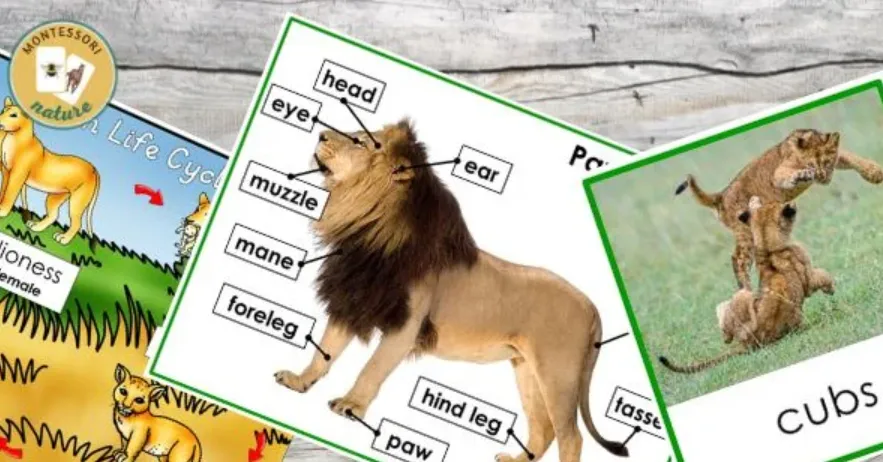
Their life cycle and ability to survive in nature
Birth and Early Life
Lion cubs are born blind and helpless. They depend entirely on their mother for food and protection.
Learning Stage
Between 6 months to 2 years, cubs begin learning hunting and social behaviors. Survival skills are taught through observation and play.
Independence Phase
Male lions leave the pride around 2–3 years of age. This stage is critical as they must survive alone or form coalitions.
Adulthood and Dominance
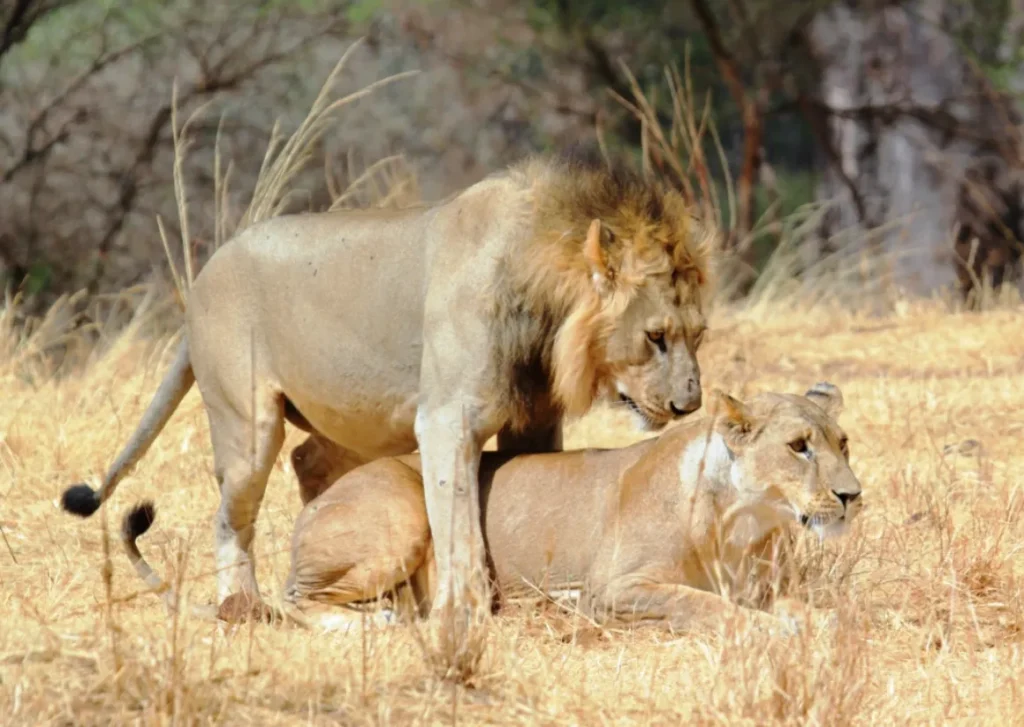
Adult lions establish territories and reproduce. Males compete fiercely for control of prides.
Survival Abilities
- Strong social bonds
- Cooperative hunting
- Adaptability to harsh environments
Despite these abilities, lions face threats from humans, habitat loss, and climate change. Survival in nature is becoming increasingly challenging.
Their Reproductive Process and raising their children
- Female lions reach maturity at 3–4 years, while males mature slightly later
- Gestation lasts about 110 days
- A litter usually contains 2–4 cubs
Raising Cubs
- Mothers hide cubs for the first few weeks
- Cubs are introduced to the pride gradually
- Communal nursing is common among lionesses
Challenges
- High cub mortality rate (up to 80%)
- Threats from predators and rival males
Parental Roles
- Lionesses handle most caregiving
- Males protect the pride from external threats
This reproductive strategy ensures population continuity, though survival rates remain low in the wild.
The importance of them in this Ecosystem
Maintaining Balance
Lions regulate herbivore populations, preventing overgrazing.
Supporting Biodiversity
By controlling prey numbers, they help maintain plant diversity and ecosystem stability.
Scavenger Support
Leftover prey benefits scavengers like hyenas and vultures.
Indicator Species
Lions indicate the health of an ecosystem. Their decline signals environmental imbalance.
Important Things That You Need To Know
Understanding related aspects deepens understanding of the African lion‘s life cycle and its broader context.
Asiatic Lion vs African Lion
The comparison between the Asiatic and African lions reveals key differences. Asiatic lions are smaller, have less prominent manes, and live only in India’s Gir Forest. African lions are larger and more social.
African Lion US Military Burden Sharing
The term “African lion” in military burden-sharing refers to joint military exercises conducted in Africa, named in symbolic reference to the lion’s strength and dominance.
West African Lion
The West African lion is critically endangered. It has a smaller population and requires urgent conservation efforts.
African Lion Hound
The African lion hound refers to dog breeds historically used to hunt lions. These dogs were trained for tracking and endurance.
What to do to protect them in nature and save the system for the future
- Protect Natural Habitats by reducing deforestation and land conversion
- Support Conservation Programs focused on lion populations
- Reduce Human-Wildlife Conflict through better livestock management
- Promote Eco-Tourism to fund conservation efforts
- Strengthen Anti-Poaching Laws and enforcement
- Educate Local Communities about lion conservation
- Support Global Wildlife Organisations
- Encourage Sustainable Development Policies
Frequently Asked Questions (FAQs)
1. What is the life cycle of the African lion?
It includes the cub, juvenile, subadult, adult, and old-age stages.
2. How long do African lions live?
They live around 10–14 years in the wild.
3. What do African lions eat?
They mainly eat large herbivores, such as zebras and buffalo.
4. How many cubs does a lion have?
Usually 2–4 cubs per litter.
5. Why are lions important to ecosystems?
They maintain balance by controlling prey populations.
6. What is the difference between Asiatic and African lions?
Asiatic lions are smaller and less social.
7. Are African lions endangered?
Yes, some populations, like the West African lion, are critically endangered.
8. How do lions hunt?
They hunt in groups using stealth and teamwork.
Conclusion
The life cycle of the African lion is a remarkable journey of growth, survival, and dominance. From fragile cubs to powerful predators, lions undergo significant transformations that shape their role in the EcosystemEcosystem.
Their social structure, hunting strategies, and reproductive behaviour make them unique among big cats. However, despite their strength, lions face increasing threats from habitat loss and human activities.
Protecting lions is not just about saving a species—it’s about preserving the balance of nature. By understanding their life cycle and ecological importance, we can take meaningful steps toward conservation.
Also Read: life cycle of abee