The life cycle of ticks is simple on the surface, but very powerful in nature. Ticks are small blood-feeding arachnids, not insects. They are closer to spiders and mites than to flies or mosquitoes. Most ticks pass through four main stages: egg, larva, nymph, and adult. After hatching, a tick usually needs a blood meal before it can grow into the next stage. This is why ticks are often found on animals, birds, reptiles, pets, and sometimes humans.
Understanding the life cycle of ticks is important because different stages create different risks. Young seed ticks may be tiny and hard to see. Nymph ticks are often the most easily missed. Adult ticks are larger, easier to notice, and commonly found on dogs, livestock, deer, and people after outdoor activity.
Ticks can survive in grass, leaf litter, wood edges, animal nests, and shaded, humid areas. Some species complete their life cycle in about two years, while others may take longer depending on climate, host availability, and species.
Q: What are the four stages in the life cycle of ticks?
A: The four stages are egg, larva, nymph, and adult.
Q: Do ticks need blood to survive?
A: Yes. After hatching, ticks need a blood meal at each active stage to grow and reproduce.
Q: Are ticks insects?
A: No. Ticks are arachnids, which means they are related to spiders, mites, and scorpions.
Quick Life Cycle Table
| Life Cycle Stage | What Happens | Appearance | Main Host Contact | Survival Role |
| Egg | Female ticks lay eggs in soil, leaf litter, cracks, or protected natural places. | Tiny, round, clustered | No host yet | Starts the next generation |
| Larva | Hatches with six legs and looks for a first blood meal | Very tiny; often called seed ticks | Small mammals, birds, reptiles, pets, humans | Feeds, drops off, and molts |
| Nymph | Has eight legs and searches for another host | Small, like a poppy seed, in many species | Rodents, birds, dogs, humans | Important growth and disease-risk stage |
| Adult | Finds a final host, feeds, mates, and reproduces | Larger and easier to see | Deer, dogs, livestock, humans, wildlife | The female lays eggs after feeding |
Most hard ticks follow this basic pattern, though some species use one host, two hosts, or three different hosts across their life stages.
Important Things That You Need To Know
Before going deeper into the life cycle of ticks, it helps to understand a few common search terms. Many people look for ticks, tick types, ticks on dogs, what ticks look like, seed ticks, ticks on humans, and even funding ticks. Some of these terms are directly about tick biology, while others may be mistaken or unrelated search phrases.
Ticks are small external parasites that attach to a host and feed on blood. They do not jump or fly. They usually wait on grass, leaves, shrubs, or low vegetation and grab a passing host.
Types of ticks usually mean hard ticks and soft ticks. Hard ticks belong mainly to the family Ixodidae, while soft ticks belong to Argasidae. Hard ticks are the ones most people notice on dogs, humans, cattle, and wildlife.
Ticks on dogs are common because dogs walk through grass, parks, bushes, and wooded areas. Ticks may hide around the ears, neck, paws, armpits, and under the collar.
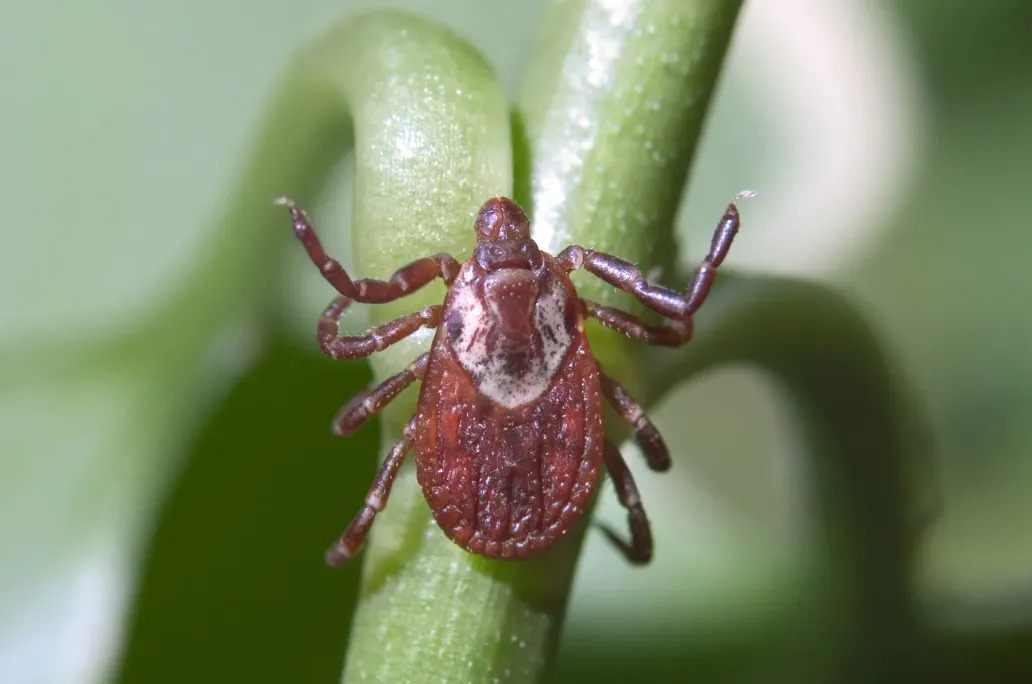
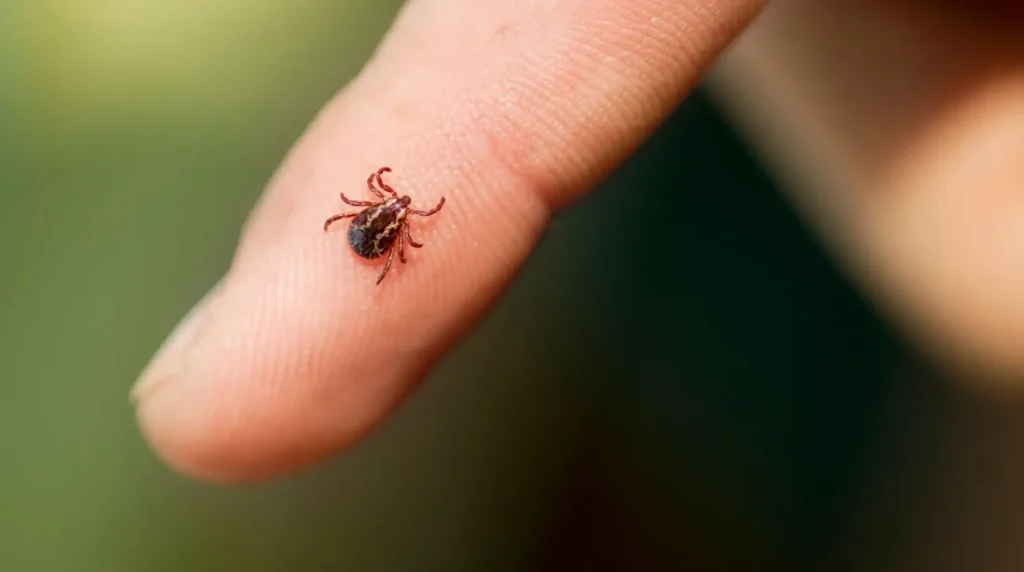
What ticks look like depends on their stage of development. Larvae are extremely tiny and have six legs. Nymphs and adults have eight legs. Adult ticks may become swollen after feeding.
Seed ticks usually refer to larval ticks. They are small, often found in clusters, and can be difficult to remove if many attach at once.
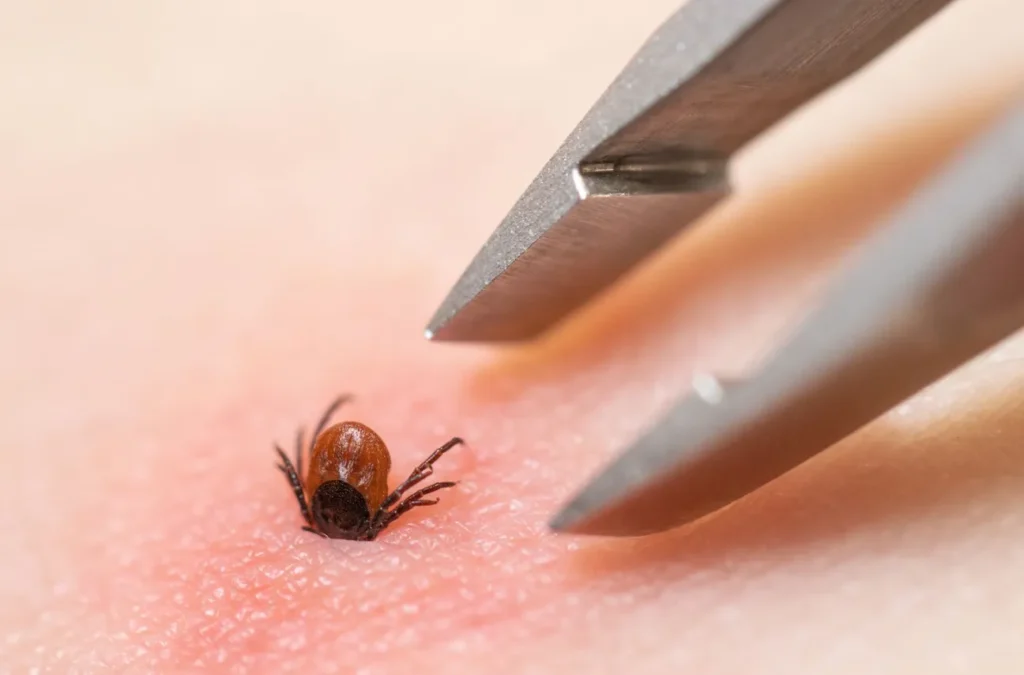
Ticks on humans may appear after hiking, gardening, farming, camping, or walking through tall grass. Early checking and proper removal reduce risk.
The phrase “funding ticks” is not a standard biological term. In tick-related searches, people may actually mean finding ticks, especially after outdoor activity.
The History of Their Scientific Naming
The scientific naming of ticks is based on their place in the animal classification system. They are not grouped with insects because adult ticks have eight legs, not six. Scientists place ticks under Arachnida, the same broad class that includes spiders, mites, and scorpions.
Important naming points:
- Ticks belong to the order Ixodida.
- Most living ticks are grouped into three families: Ixodidae, Argasidae, and Nuttalliellidae.
- Ixodidae means hard ticks. These ticks have a hard shield-like plate called a scutum.
- Argasidae means soft ticks. These ticks have a softer, leathery body and often feed for shorter periods.
- Nuttalliellidae is a rare family represented by Nuttalliella namaqua, a species known from Africa.
Scientific names help researchers separate one tick species from another. This matters because each species may have different hosts, habitats, feeding behavior, and disease risks.
Their Evolution And Their Origin
The origin of ticks goes back deep into Earth’s history. Fossil evidence shows that tick-like parasites were already living during the time of dinosaurs. One famous discovery from amber showed a hard tick caught near a feather around 99 million years ago, giving researchers evidence that ancient ticks may have fed on feathered dinosaurs or early bird-like animals.
Ticks evolved as blood-feeding ectoparasites. An ectoparasite lives on the outside of another animal’s body. Over millions of years, ticks developed body parts that helped them attach, feed slowly, sense hosts, and survive long periods without food.
Their body design is highly specialized. A tick can detect heat, smell, carbon dioxide, vibration, humidity, and animal movement. Many ticks use a behavior called questing, where they hold onto grass or leaves with their back legs and stretch their front legs outward, waiting for a host to brush past.
The rise of mammals, birds, reptiles, and other land animals provided ticks with many potential hosts. This helped different types of ticks spread into forests, grasslands, caves, animal nests, farms, and human-made environments.
Ticks are ancient because their survival system is effective. They do not need to chase prey. They wait, attach, feed, drop off, molt, and repeat the cycle. This slow, patient method helped them survive major environmental changes over time.
Today, ticks live on nearly every continent where suitable hosts and climate conditions exist. Their long evolutionary history explains why they are so difficult to remove from ecosystems completely.
Their main food and its collection process
The main food of ticks is blood. They feed on the blood of mammals, birds, reptiles, and sometimes amphibians. Unlike mosquitoes, ticks do not take a quick sip and leave. Many hard ticks stay attached for days while feeding.
Their food collection process is slow and careful.
- Host detection: Ticks sense carbon dioxide, body heat, smell, moisture, and movement. These signs tell them that a host is nearby.
- Questing: Many hard ticks climb onto grass, leaves, or low plants. They hold on with their back legs and reach forward with their front legs.
- Attachment: When a host brushes past, the tick grabs onto skin, fur, feathers, or clothing.
- Finding a feeding spot: The tick may crawl for minutes or hours to find a thin spot of skin. On dogs, common areas include the ears, neck, toes, armpits, and under the collar.
- Biting: The tick cuts into the skin and inserts its mouthparts.
- Anchoring: Some ticks produce a cement-like substance that helps hold them in place.
- Feeding: The tick slowly takes blood while its saliva helps reduce pain and keeps blood flowing.
- Dropping off: After feeding, the tick falls off the host and molts or lays eggs, depending on its stage.
This feeding process is why ticks on humans may go unnoticed at first. Tick bites are often painless. The tick’s small size, hidden feeding sites, and slow feeding rate make body checks after outdoor activities important.
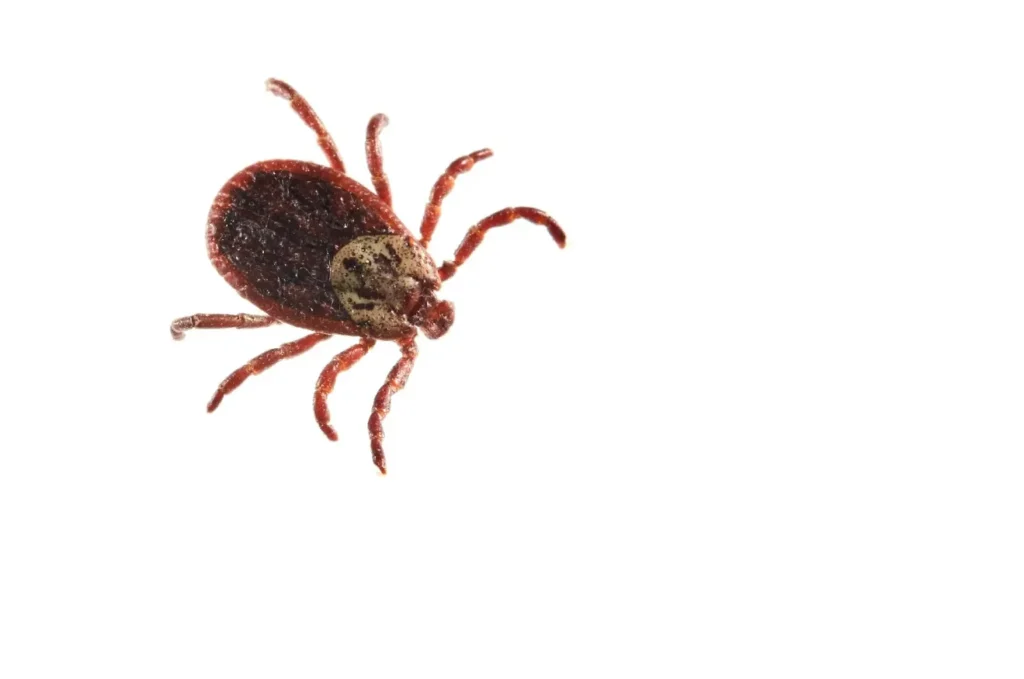
Their life cycle and ability to survive in nature
Egg Stage
The life cycle begins when an adult female tick lays eggs in a protected place. This may be in leaf litter, soil, cracks, animal bedding, or shaded ground. A single female hard tick may lay many eggs after feeding, depending on the species.
Eggs need a suitable temperature and moisture. Dry, exposed areas can reduce survival, while humid, shaded areas help eggs develop.
Larva Stage
After hatching, the larva appears with six legs. This is one reason larval ticks are often called seed ticks. They are very small and may be found in groups.
Larvae usually search for small hosts such as mice, birds, or reptiles. Some may attach to dogs or humans if they come into contact with them.
Nymph Stage
After feeding, the larva drops off and molts into a nymph. Nymph ticks have eight legs and are often very small. In many species, this stage is important because nymphs can be hard to notice.
A nymph must feed again before becoming an adult.
Adult Stage
Adult ticks are larger and search for a final host. Males and females may mate on the host. After feeding, the female drops off and lays eggs, restarting the cycle.
Ticks survive by waiting patiently, using shaded habitats, feeding only when necessary, and slowing their activity when conditions are poor.
Their Reproductive Process and raising their children
Ticks do not raise their young like birds or mammals. Their reproductive process is based on high egg production and survival through numbers.
Important points:
- Mating: In many hard tick species, adult males and females meet on a host animal.
- Female feeding: The female often needs a large blood meal before she can produce eggs.
- Egg laying: After feeding, the female drops off the host and lays eggs in a protected place.
- No parental care: Once eggs are laid, the mother does not feed, guard, or teach the young.
- Egg clusters: Tick eggs are usually laid in groups, often hidden in leaf litter or soil.
- Hatching: Larvae hatch when the temperature and moisture are suitable.
- Independent survival: New larvae must find hosts on their own.
This method may seem harsh, but it works well in nature. Many eggs and larvae die due to heat, dryness, predators, fungi, or a failure to find a host. But enough survive to keep the species going.
Strong survival skills compensate for the lack of parental care. Young ticks can wait, sense nearby hosts, and feed when the right host passes by. Some tick species can survive months without feeding if the environment is suitable.
This reproductive pattern also explains why tick control is difficult. If only adult ticks are removed, eggs and larvae may remain in the environment.
The importance of them in this Ecosystem
Part of the Food Web
Although ticks are harmful parasites from a human and pet health perspective, they still have a place in nature. Many small animals, birds, reptiles, ants, beetles, spiders, and other predators may feed on ticks when they find them.
Ticks also support microscopic life. Some fungi, bacteria, and parasites interact with ticks in natural systems.
Population Pressure on Hosts
Ticks can affect wildlife health. Heavy tick infestations may weaken animals, reduce energy levels, and affect survival. In this way, ticks can act as a natural pressure within ecosystems.
This does not mean ticks are “good” for pets or humans. It means they are part of a larger biological network.
Disease Ecology
Ticks are important in disease ecology because some species can carry and transmit pathogens. This makes them significant to public health, veterinary science, wildlife biology, and environmental research. Hard ticks are particularly important disease vectors due to their host-seeking behavior and longer feeding periods.
Indicator of Environmental Change
Tick activity can change with climate, host populations, land use, deer movement, rodent numbers, forest edges, and human expansion into wild areas.
When tick numbers rise in a region, it may reflect changes in wildlife movement, vegetation, humidity, or local animal populations.
So, ticks are not just pests. They are also biological signals in the environment.
What to do to protect them in nature and save the system for the future
This section needs balance. We do not need to protect ticks around homes, schools, pets, farms, or children. But we should avoid damaging whole ecosystems while managing tick risk.
- Protect natural predators: Birds, ants, beetles, spiders, and other small predators can help keep tick numbers in check naturally.
- Avoid unnecessary chemical use: Pesticides can reduce tick populations in treated areas, but they should be used carefully and in accordance with local rules. Overuse may harm beneficial insects and soil life.
- Keep yards clean without destroying habitat: Remove leaf piles near homes, trim tall grass, and create clear paths, but avoid clearing every natural area without reason.
- Support healthy wildlife balance: Overcrowded host populations, such as deer or rodents in some areas, may support more ticks.
- Use pet protection responsibly: For tick prevention on dogs, use veterinarian-recommended products rather than DIY remedies.
- Check humans and pets after outdoor activities: This protects people without poisoning large natural areas.
- Protect wetlands, forests, and grasslands: Healthy ecosystems usually have more balanced predator-prey relationships.
- Educate communities: Teach people what ticks look like, where they hide, and how to remove them safely.
- Remove attached ticks properly: Use fine-tipped tweezers and steady pressure. Do not twist, burn, crush, or cover ticks with oil.
- Focus on smart control, not destruction: The goal is lower risk near people and pets while maintaining a stable, wider ecosystem.
Frequently Asked Questions (FAQs)
Q1: What is the life cycle of ticks?
A: The life cycle of ticks includes four stages: egg, larva, nymph, and adult. After hatching, ticks usually need a blood meal before moving to the next stage.
Q2: How long does the tick’s life cycle take?
A: It depends on the species and climate. Some blacklegged ticks complete their life cycle in about two to three years.
Q3: What do ticks look like?
A: Ticks are small, flat arachnids before feeding. Larvae have six legs, while nymphs and adults have eight legs. After feeding, their bodies become larger and swollen.
Q4: What are seed ticks?
A: Seed ticks are usually larval ticks. They are very tiny, often appear in groups, and may attach to animals or humans.
Q5: Are ticks on dogs dangerous?
A: Ticks on dogs can cause irritation, blood loss in heavy infestations, and may transmit diseases depending on tick species and region. Pet owners should use veterinarian-approved prevention.
Q6: Can ticks live on humans?
A: Ticks do not live permanently on humans, but they can attach and feed. Ticks on humans should be removed as soon as possible using proper technique.
Q7: What are the main types of ticks?
A: The main types of ticks are hard ticks from Ixodidae and soft ticks from Argasidae. A rare third family is Nuttalliellidae.
Q8: How can I prevent tick bites?
A: Wear protective clothing, avoid tall grass, check your body after outdoor activity, shower after coming inside, use approved repellents, and check pets regularly.
Conclusion
The life cycle of ticks shows how a tiny creature can survive through patience, strong senses, and careful feeding. From egg to larva, from nymph to adult, each stage has a clear purpose. Ticks wait for hosts, feed on blood, drop back into the environment, and continue the cycle when conditions are right.
They can be dangerous to humans, dogs, livestock, and wildlife because some species carry disease-causing organisms. At the same time, ticks are part of natural food webs and disease ecology. The best approach is not to panic or to use chemicals carelessly. It is smart prevention.
Learn what ticks look like, check for ticks on dogs and people, remove attached ticks correctly, and manage outdoor spaces wisely. When people understand the biology of ticks, they can protect their families, pets, and the environment with better decisions.
Also Read: life cycle of a honey bee