The life cycle of a cat is a fascinating journey that begins with a tiny newborn kitten and continues through growth, independence, adulthood, reproduction, and senior life. Cats are among the most adaptable mammals in the world. Whether we talk about a domestic cat, wild-living feral cats, or famous cat breeds like the Siberian cat, Munchkin cat, and Norwegian Forest cat, their life stages follow a similar biological pattern.
Cats are known for their sharp senses, flexible bodies, hunting skills, and strong survival instincts. From birth, kittens depend fully on their mother for warmth, milk, cleaning, and protection. As they grow, they learn to walk, play, hunt, communicate, and defend themselves. These early skills shape their ability to survive in nature.
Understanding the life cycle of a cat is important for pet owners, students, animal lovers, and anyone interested in wildlife and ecosystems. It helps us learn how cats grow, what they eat, how they reproduce, and why they matter in the environment.
Q: How many stages are in the life cycle of a cat?
A: A cat’s life cycle usually has five main stages: kitten, juvenile, young adult, mature adult, and senior cat.
Q: How long do cats usually live?
A: Domestic cats commonly live around 12 to 18 years, while some well-cared-for cats may live over 20 years.
Q: At what age can a cat reproduce?
A: Many cats can reproduce from around 5 to 9 months old, although responsible breeding should only happen when the cat is fully healthy and mature.
Quick Life Cycle Table
| Life Stage | Approximate Age | Main Features | Survival Ability |
| Newborn Kitten | 0–2 weeks | Eyes closed, fully dependent on mother, drinks milk | Very low without mother |
| Growing Kitten | 2–8 weeks | Opens eyes, starts walking, playing, and socializing | Still dependent |
| Juvenile Cat | 2–6 months | Learns hunting, grooming, climbing, and communication | Improving quickly |
| Young Adult Cat | 6 months–2 years | Physically active, may become reproductively mature | Strong survival skills |
| Mature Adult Cat | 3–10 years | Fully developed body, stable behavior, skilled hunter | High survival ability |
| Senior Cat | 11+ years | Slower movement, possible health issues, needs care | Lower in harsh nature |

The History of Their Scientific Naming
Scientific naming helps distinguish the domestic cat from other wild members of the cat family. The domestic cat is commonly known as Felis catus.
Key points about the scientific naming history include:
- Felis refers to the small cat genus that includes domestic cats and their close wild relatives.
- Catus is used to identify the domestic cat as a separate species or domesticated form.
- Earlier scientific discussions sometimes connected domestic cats with the wildcat under names such as Felis silvestris catus.
- The naming reflects the close relationship between house cats and ancient wildcats.
- Scientific naming helps researchers study cat behavior, genetics, evolution, reproduction, and health more clearly.
The name Felis catus is important because it shows that modern domestic cats are not just pets; they are part of a larger biological group. They belong to the family Felidae, which includes lions, tigers, leopards, and many wild cat species.
Their Evolution And Their Origin
The origin of the modern cat is deeply connected to wildcats that lived thousands of years ago. Domestic cats are believed to have developed from small wildcats that lived around human settlements. These wildcats were attracted to places where humans stored grain because grain storage attracted rats and mice.
Over time, humans began to tolerate and value these cats because they naturally controlled pests. Unlike many animals that humans have directly trained, cats likely followed a process of self-domestication. This means they came closer to humans because the relationship gave them food and shelter, while humans benefited from fewer rodents.
Cats kept many wild traits even after domestication. Their sharp claws, night vision, silent walking, strong jumping ability, and hunting behavior are all signs of their wild origin. This is why even a well-fed house cat may still chase insects, birds, or small animals.
Different cat breeds developed later through natural adaptation and selective breeding. For example, the Siberian cat adapted to cold climates with a thick coat, while the Norwegian Forest cat became known for strength, climbing ability, and long fur. The Munchkin cat, on the other hand, is recognized for its short legs, a genetic trait.
The evolution of cats shows a balance between wild instinct and domestic life. They can live comfortably with humans, but their bodies and behavior still carry the survival skills of their ancestors.
Their main food and its collection process
Cats are obligate carnivores, meaning their bodies are designed to depend mainly on animal-based foods. In nature, cats eat meat from small prey animals. Their teeth, digestive system, claws, and hunting style all support a meat-based diet.
Main foods of cats include:
- Small mammals such as mice, rats, and young rabbits
- Birds and small ground-nesting species
- Reptiles such as lizards in some regions
- Insects and other small moving creatures
- Commercial cat food for domestic cats, including wet and dry food
- Mother’s milk for newborn kittens during the first weeks of life
A cat’s food collection process requires patience, silence, and quick action. A cat usually watches its prey carefully before moving closer. It lowers its body, walks quietly, and uses its whiskers, ears, and eyes to judge distance and movement.
When the cat gets close enough, it jumps quickly and uses its claws to catch the prey. This hunting method is called stalking and pouncing. It is one of the most important survival skills in a cat’s life cycle.
Domestic cats do not always need to hunt because humans provide food. However, many still show natural hunting behavior through play. Toys, moving strings, and balls often activate the same instincts used in real hunting.
A balanced diet is very important for pet cats. They need protein, fat, vitamins, minerals, and clean water. Poor food can affect growth, reproduction, immunity, and lifespan.
Their life cycle and ability to survive in nature
Newborn Stage
The newborn kitten stage is the most delicate phase of a cat’s life cycle. At birth, kittens are blind, deaf, weak, and unable to control body temperature properly. They depend completely on their mother for milk, warmth, cleaning, and safety.
During this stage, survival in nature is very difficult without the mother. The mother cat usually keeps her kittens in a hidden, warm, and quiet place.
Kitten Growth Stage
After about two weeks, kittens begin opening their eyes and responding to sounds. They slowly learn to crawl, walk, play, and interact with their siblings. Play is not only fun; it teaches balance, biting control, hunting movement, and social behavior.
At this stage, kittens begin to develop confidence and curiosity.
Juvenile Stage
The juvenile stage is when young cats become more independent. They learn to groom, climb, hide, chase, and recognize danger. These skills are essential for cats living outdoors or in wild conditions.
Their survival ability improves because they can move faster and respond more quickly.
Adult Stage
Adult cats are strong, alert, and skilled hunters. They can protect territory, find food, escape danger, and reproduce. Their senses of smell, hearing, and night vision give them a strong advantage.
Senior Stage
Senior cats become slower and less flexible. In nature, older cats may struggle to compete, hunt, or avoid threats. Domestic senior cats can live longer when they receive proper care, soft food, medical support, and a safe home.
Their Reproductive Process and raising their children
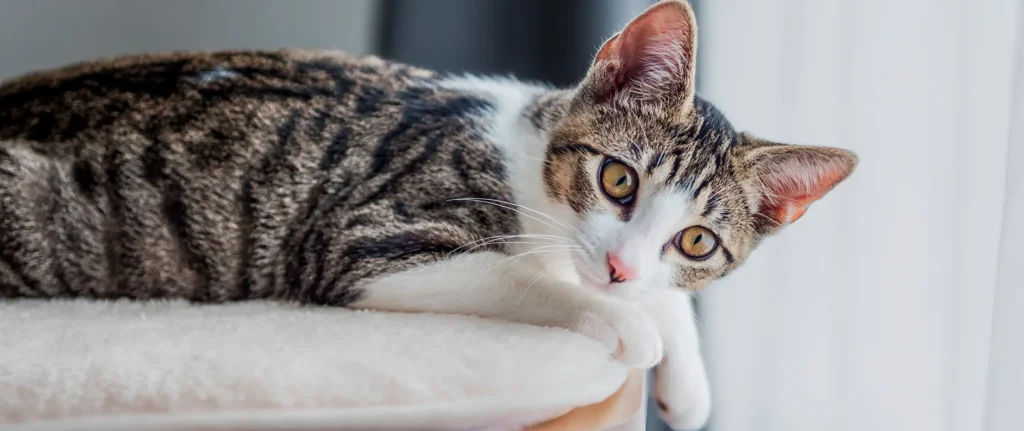
The reproductive process of cats is an important part of their life cycle. Female cats are called queens, and male cats are called toms. Cats can become sexually mature at a young age, often within the first year of life.
Important points about cat reproduction include:
- Female cats go through a heat cycle, also called estrus.
- During heat, a female cat may call loudly, become restless, and show mating behavior.
- Male cats can detect females in heat through scent and sound.
- After mating, the female cat may become pregnant.
- The pregnancy period of a cat is usually about 63 to 65 days.
- A mother cat usually gives birth to a litter of several kittens.
When kittens are born, the mother cleans them, helps them breathe, and allows them to drink milk. The first milk is especially important because it supports the immune system.
The mother cat cares for her kittens with great care. She feeds them, keeps them warm, moves them to safer places if needed, and protects them from danger. As the kittens grow, she teaches them important behaviors through example.
Kittens begin eating soft food after a few weeks but still depend on the mother during early development. By around 8 to 12 weeks, they become more independent and socially developed.
Responsible pet owners should control unwanted breeding through proper veterinary advice. This helps reduce stray cat populations and improves animal welfare.
Important Things That You Need To Know
When learning about the life cycle of a cat, it is also useful to understand related topics that people often search for. These terms help readers connect cat biology with daily life, pet care, culture, and breed knowledge.
A cat can be a domestic pet, a working hunter, or a free-living animal in nature. Different cat breeds have different body shapes, coat types, personalities, and care needs. For example, the Siberian cat is known for its thick fur and strong body. In contrast, the Norwegian Forest cat is famous for its climbing ability, long coat, and cold-weather adaptation.
The Munchkin cat is popular for its short legs, but owners should understand its body structure and potential health concerns before choosing one. Breed knowledge helps people select a cat that matches their home, climate, time, and care ability.
Some LSI terms, such as cat meme, cat drawing, and black cat 4s, are more closely associated with online culture, art, fashion, and entertainment than with cat biology. A cat meme shows how popular cats are on the internet, while cat drawing is common in education, children’s learning, and creative work. Black cat 4s is not part of cat science, but the phrase may appear in search trends because “black cat” is a popular cultural term.
Knowing these related terms improves understanding of how cats appear in science, lifestyle, art, online searches, and pet ownership.
The importance of them in this Ecosystem
Natural Pest Control
Cats play an important role in controlling small animals such as rodents. In farms, homes, and human settlements, cats may reduce mouse and rat populations. This can help protect stored food and reduce some pest-related problems.
However, balance is important because too many free-roaming cats may harm local wildlife.
Predator and Prey Balance
Cats are predators, and predators influence the behavior and number of prey animals. Their hunting activity can affect small mammals, birds, reptiles, and insects. In natural systems, predator-prey relationships help shape biodiversity.
Domestic cats living outdoors can disturb this balance if their population becomes too high.
Relationship With Humans
Cats have lived close to humans for thousands of years. They provide companionship, emotional comfort, and pest control. Many people keep cats as pets because they are independent, affectionate, clean, and intelligent.
This relationship also creates responsibility. Humans must provide food, shelter, healthcare, and protection.
Role in Education and Research
Cats are also important in education. Studying the life cycle of a cat helps students understand mammal growth, reproduction, behavior, adaptation, and survival.
They also help people learn about responsible pet care, animal welfare, and the balance of ecosystems.
What to do to protect them in nature and save the system for the future
Protecting cats and the Ecosystem requires a balanced approach. Cats deserve care, but wildlife also needs protection. Responsible human action can help both.
- Provide safe shelter: Domestic cats should have a safe place away from traffic, extreme weather, and predators.
- Support responsible feeding: Cats need proper food and clean water. Avoid giving harmful foods such as chocolate, onions, alcohol, or unsafe bones.
- Control unwanted breeding: Spaying and neutering help reduce stray cat populations and prevent suffering.
- Keep pet cats indoors when possible: Indoor cats usually live longer and are less likely to harm birds or small wildlife.
- Use collars carefully: A safe breakaway collar with an ID tag can help lost cats return home.
- Protect local wildlife: Avoid allowing cats to hunt in sensitive wildlife areas, nesting zones, or conservation sites.
- Provide regular veterinary care: Vaccination, parasite control, and health checkups improve a cat’s quality of life.
- Adopt instead of buying when possible: Adoption can give homeless cats a second chance.
- Educate children: Teach children to treat cats gently and respect animals in nature.
- Support animal welfare programs: Community programs for rescue, treatment, and population control help both cats and ecosystems.
A healthy future depends on kindness, knowledge, and responsible action.
Frequently Asked Questions (FAQs)
Q1: What is the life cycle of a cat?
A: The life cycle of a cat includes birth, kitten growth, juvenile development, adulthood, reproduction, and senior life. Each stage has different needs, behaviors, and survival abilities.
Q2: How long is a cat considered a kitten?
A: A cat is generally considered a kitten from birth to around 6 months old. However, young cats may continue to grow and develop behaviorally for up to 1 year.
Q3: When do kittens open their eyes?
A: Kittens usually open their eyes within the first 1 to 2 weeks after birth. Their vision develops gradually after the eyes open.
Q4: What do newborn kittens eat?
A: Newborn kittens drink their mother’s milk. If the mother is not available, they need a proper kitten milk replacer under careful guidance. Cow’s milk is not a suitable main food for kittens.
Q5: How long is a cat pregnant?
A: A cat’s pregnancy usually lasts around 63 to 65 days. The exact time can vary slightly depending on the individual cat.
Q6: At what age can cats start reproducing?
A: Cats may become reproductively mature from around 5 to 9 months old. Responsible owners should speak with a veterinarian about spaying or neutering to prevent unwanted litters.
Q7: Do all cat breeds have the same life cycle?
A: Yes, most cat breeds follow the same basic life cycle. However, growth rate, body size, coat care, health risks, and lifespan may vary among breeds such as the Siberian, Munchkin, and Norwegian Forest cats.
Q8: Why are cats important to humans?
A: Cats are important because they offer companionship, help control pests, teach responsibility, and support emotional well-being. They are also valuable for learning about animal behavior and mammal life cycles.
Conclusion
The life cycle of a cat is a complete story of growth, learning, survival, reproduction, and aging. From a helpless newborn kitten to a skilled adult hunter and finally a senior companion, every stage has its own purpose and beauty. Cats are intelligent, adaptable, and deeply connected with both humans and nature.
Understanding their life cycle helps us better care for them. It teaches us why kittens need warmth and milk, why adult cats need proper nutrition and safety, and why senior cats need patience and health support.
Cats also play a meaningful role in the Ecosystem, especially in pest control and human companionship. At the same time, responsible care is necessary to protect wildlife and reduce stray populations.
By giving cats proper food, shelter, medical care, and protection, we can support both their future and the balance of nature.
Also Read: house fly life cycle