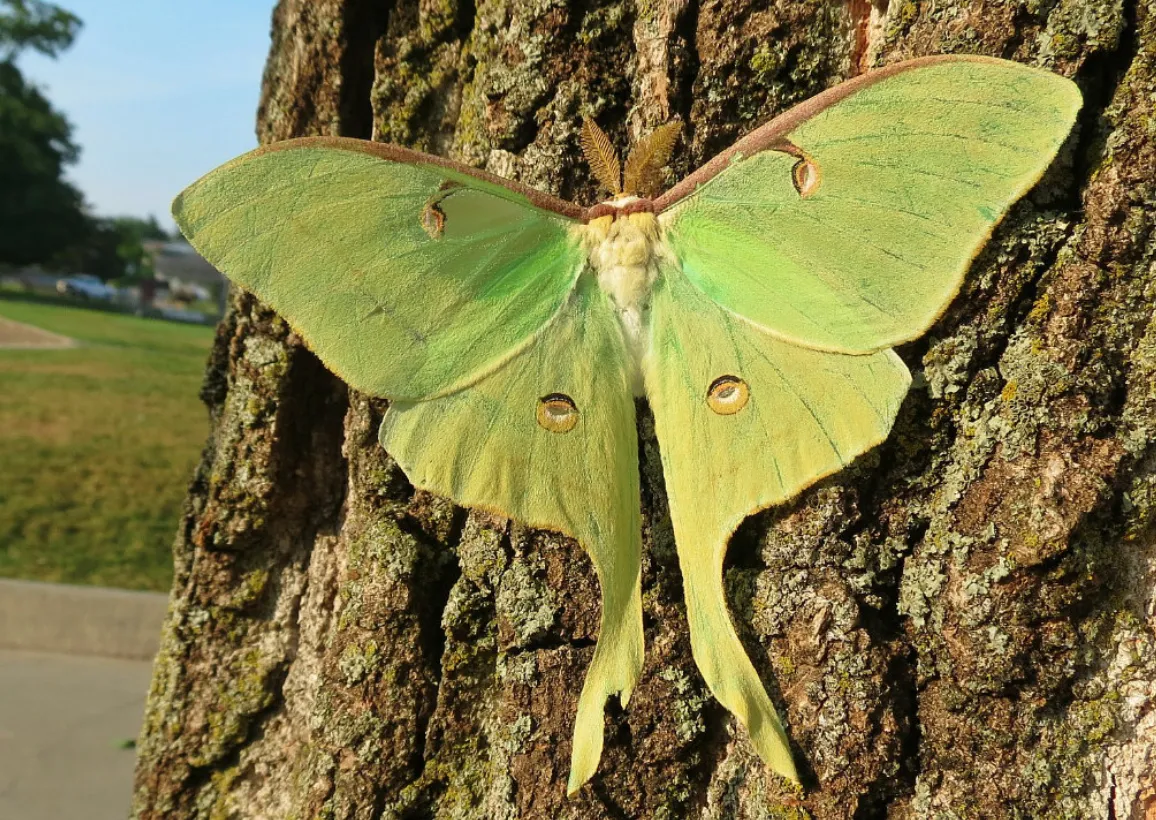
The Luna moth life cycle is one of nature’s most fascinating transformations. Known for its striking green wings, long tails, and ethereal presence, the luna moth (scientifically Actias luna) inspires awe among nature lovers, gardeners, and butterfly enthusiasts. Unlike many insects that spend most of their lives as adults, a luna moth lives only briefly as an adult, making its dramatic developmental stages even more important to observe and understand.
Here are three of the most common quick questions people ask about this magical creature:
Q1: What is the typical lifespan of a luna moth?
A: Most adult luna moths live only 7–10 days, because they do not eat during adulthood and instead focus solely on reproduction.
Q2: What stages are there in the luna moth life cycle?
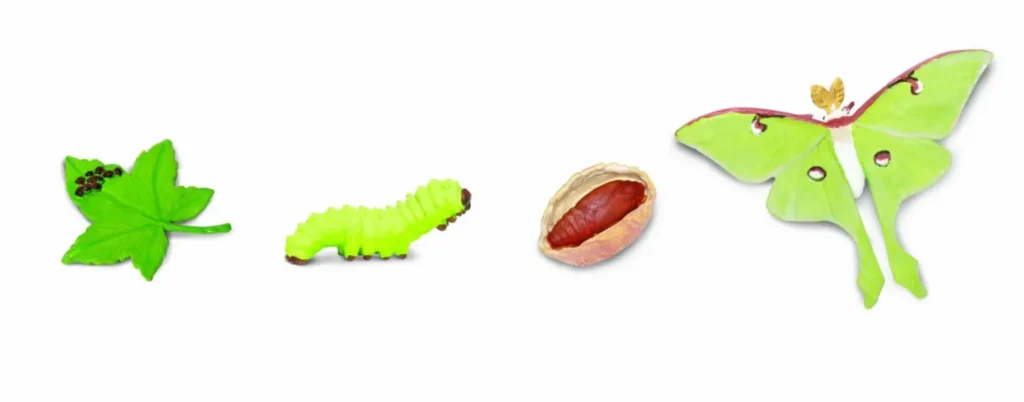
A: The luna moth goes through four main stages: egg → caterpillar → cocoon (pupa) → adult moth.
Q3: Why is a luna moth so rare to see?
A: Because the adult stage is very short and they are active mainly at night, sightings are uncommon despite the species being widespread.
As you continue reading this article, you will get deep, real‑time insights into their biology, habitat, reproduction, evolution, ecological importance, and how to protect them for future generations.
Quick Life Cycle Table
| Stage | Description | Average Duration |
| Egg | Tiny pale green eggs are laid on host leaves | 8–14 days |
| Caterpillar | Hungry green larva that molts several times | 3–5 weeks |
| Cocoon / Pupa | Protective shell where metamorphosis occurs | 3–8 weeks |
| Adult Moth | Winged adult with no feeding ability | 7–10 days |
This table shows the core life cycle stages of the luna moth in a mobile-friendly format. Scroll easily and understand how long each stage takes.
The History of Their Scientific Naming
The luna moth’s scientific name is Actias luna.
- This name was first given by Johan Christian Fabricius in 1775.
- The genus name Actias comes from ancient Greek, meaning “ray” or “beam,” likely referring to the elongated tails on the wings.
- The species name luna means “moon” in Latin, inspired by its moon‑like coloring and nocturnal habits.
- Over the centuries, naturalists classified this moth in the family Saturniidae, also known as the giant silk moth family.
- Many early entomologists studied Actias luna as a representative of North American silk moths because of its large size and dramatic transformation.
- The name has remained stable in the scientific literature due to its distinct characteristics, which set it apart from related species.
This naming history shows how early naturalists connected nature’s beauty—with moonlit symbolism—to scientific classification.
Their Evolution and Their Origin
The evolution of the luna moth is part of a broader story of how silk moths adapted to survive. Members of the family Saturniidae—which includes luna moths—evolved over tens of millions of years.
The earliest ancestors of silk moths appeared during the Paleogene period, when flowering plants, forests, and diverse ecosystems expanded dramatically across what would become North America, Europe, and Asia. As forests diversified, so did the trees on which moth larvae feed. This created ecological opportunities for insects, such as luna moths, to specialize in specific plant species.
Unlike butterflies, which often feed as adults, most giant silk moths, including luna moths, have evolved adults that do not feed. Instead, they channel all energy into mating and reproduction. This reflects a deep evolutionary strategy: invest early life in gathering energy (as caterpillars), then transform and reproduce quickly as adults.
Luna moths emerged in North America, with their range spanning from eastern Canada through the eastern United States. Their origin is closely linked to deciduous forests where host trees such as sweetgum, hickory, walnut, and sumac are plentiful.
Over evolutionary time:
- They developed bright green wings to camouflage against leaves.
- They evolved long tails that may help evade predators like bats by deflecting echolocation signals.
- Their rapid metamorphosis and short adult life are adaptations that help them evade predation and maximize reproductive success.
Today, the luna moth represents an evolutionary design that balances striking beauty with survival efficiency in forest ecosystems.
Their Main Food and Its Collection Process
The luna moth caterpillar has a distinct feeding pattern that supports its rapid growth. These larvae are voracious eaters, using their mandibles to munch on leaves.
Main Food Sources:
- Leaves of Sweetgum Trees
- Hickory Leaves
- Walnut Leaves
- Sumac
- Birch and Alder in some regions
How Caterpillars Collect Food:
- Selecting Younger Leaves:
- Young leaves are softer and easier to chew, allowing efficient nutrient intake.
- Nocturnal Feeding:
- Caterpillars often feed at night to avoid predators such as birds.
- Caterpillar Positioning:
- They crawl along stems and leaf surfaces, consuming leaf margins first and minimizing exposure.
- Repeated Molting:
- As the caterpillar grows, it molts (sheds skin) several times, increasing its capacity to eat and process leaves.
- Continuous Growth Feeding:
- Feeding continues almost nonstop throughout their larval phase until they reach maximum size, at which point they enter the cocoon stage.
Key Points:
- Adult luna moths do not feed at all—they rely on stored energy accumulated during the caterpillar stage.
- Most nutrient intake occurs before pupation, making the larval food phase critical to successful metamorphosis.
This feeding strategy allows luna moths to grow large quickly, preparing them for transformation into winged adults.
Their Life Cycle and Ability to Survive in Nature
Life Cycle Breakdown
Egg Stage
- Female moths lay up to 200 eggs.
- Eggs are clustered on host leaves.
- Hatch within about 1–2 weeks.
Caterpillar Stage
- Larvae start tiny, then go through five instars (molts).
- They turn bright green with yellow stripes.
- Feed heavily to store fat.
Pupa / Cocoon Stage
- Caterpillar forms a silken cocoon on tree bark or leaf litter.
- Inside, metamorphosis transforms it into an adult.
Adult Stage
- Emerges under the cover of darkness.
- Seeks mates immediately.
- Lives about 1 week.
Survival Mechanisms in Nature
Natural Camouflage:
Bright green coloration blends with foliage, hiding larvae and adults from predators.
Nocturnal Activity:
Feeding and mating at night reduce the risk of daytime predators.
Tail Deflection:
Long hindwing tails are believed to confuse bats’ sonar, protecting flying adults.
Seasonal Timing:
Emergence aligns with warm seasons when host plants are abundant, and predators are less active.
Fat Reserves:
Adults store energy, allowing them to mate without eating.
Overall, the luna moth life cycle is finely tuned to survive within forest habitats—leveraging camouflage, timing, and rapid development to maximize reproductive success.
Their Reproductive Process and Raising Their Children
Luna moths reproduce in a unique, time‑compressed process. Because adults do not feed, everything they do after emerging focuses on reproduction.
Reproductive Steps
- Mating at Night:
- Females release pheromones to attract males.
- Males use their feathered antennae to follow chemical trails.
- Copulation Process:
- Once paired, they remain linked for many hours.
- This ensures successful fertilization.
- Egg Depositing:
- Females fly short distances to suitable host plants.
- They lay clusters of pale green eggs on leaf undersides.
- No Parental Care:
- After laying eggs, the female does not care for the eggs.
- Survival depends on selecting appropriate leaf sites.
- Larvae Hatch:
- Eggs hatch into tiny caterpillars that immediately begin feeding.
- They instinctively find tender leaves to eat.
Key Points About Raising Offspring
- Luna moths do not feed or care for their young as social insects do.
- Instead, their entire reproductive success depends on correct host plant choice and timing.
- Caterpillars fend for themselves from the moment they hatch.
This breeding strategy is common among moths and butterflies, prioritizing egg production and distributing eggs across many leaves.
Important Things That You Need To Know (LSI Integration)
Luna Moth — Deeper Insights Into LSI Keywords: luna moth caterpillar, luna moth tattoo, luna moth meaning, luna moth lifespan, purple luna moth
The luna moth stands out not just biologically but symbolically. Many people connect to its delicate appearance and life story.
- Luna moth caterpillar: Before it becomes a winged adult, the caterpillar stage is when the insect eats and stores energy. These caterpillars are bright green with light yellow bands, and they are considered important indicators of healthy forest ecosystems.
- Luna moth meaning: Across cultures, the luna moth is associated with transformation, rebirth, intuition, and renewal—themes that are popular in art and spirituality.
- Luna moth tattoo: This iconic insect has become a meaningful tattoo design for many, symbolizing growth, change, and ephemeral beauty.
- Luna moth lifespan: As previously noted, the adult form lives only about 7–10 days. This short lifespan highlights nature’s emphasis on rapid life transitions and reproduction.
- Purple luna moth: While traditional luna moths are green, some photography and art highlight them in shades of purple, either through lighting or artistic enhancement. Real luna moths may appear slightly different in hue depending on season, lighting, or wear on their wings.
By understanding LSI keywords like luna moth caterpillar and luna moth meaning, this article aligns both search intent and scientific interest—giving readers rich, relevant context.
Importance of Them in This Ecosystem
Why Luna Moths Matter
1. They’re Food Web Contributors
- Caterpillars serve as prey for birds, small mammals, and predatory insects.
- Adult moths feed on nocturnal predators like bats.
2. Indicators of Forest Health
- Their presence signals robust tree populations and balanced ecosystems.
- Declines can hint at habitat loss or pollution.
3. Pollination Contributors
- While adults don’t eat, adult flying activity may incidentally move pollen at night.
4. Nutrient Cycling
- Larvae help defoliate leaves, aiding leaf breakdown and returning nutrients to the soil.
5. Scientific and Cultural Inspiration
- Luna moths appear in biodiversity studies, art, and education.
Their Ecological Impact
Their short adult lifespan contrasts with a long developmental phase, during which they interact across multiple trophic levels—making them indispensable players in temperate forests.
What to Do to Protect Them in Nature and Save the System for the Future
To ensure that luna moths continue thriving, here are important conservation steps:
- Protect Native Forests:
- Preserve trees like sweetgum, walnut, and hickory.
- Avoid Pesticides:
- Reduce chemical use in gardens and woodlands.
- Plant Host Trees:
- Grow species that caterpillars depend on.
- Create Safe Habitats:
- Maintain leaf litter and avoid excessive clearing.
- Educate Communities:
- Teach local groups about nocturnal pollinators and the biodiversity of moths.
- Support Research:
- Participate in citizen science projects that track moth populations.
- Reduce Light Pollution:
- Use dim, insect‑friendly lighting to protect nocturnal behaviors.
- Encourage Protected Areas:
- Advocate for forests to stay undisturbed by development.
These actions help both luna moths and the larger ecosystems they live in, ensuring future biodiversity for generations.
Frequently Asked Questions (FAQs)
Q1: What exactly is the luna moth life cycle?
A: It includes egg → caterpillar → cocoon (pupa) → adult moth.
Q2: Why don’t adult luna moths eat?
A: They lack fully‑formed mouthparts; all nourishment is stored as a caterpillar.
Q3: How long does each stage last?
A: Eggs ~10 days, caterpillar ~3–5 weeks, cocoon ~3–8 weeks, adult ~7–10 days.
Q4: Are Luna moths endangered?
A: They are not currently endangered but face habitat threats.
Q5: Can you raise luna moths at home?
A: With proper host leaves and care, yes—only caterpillars can be housed until pupation.
Q6: Do Luna moths migrate?
A: No; they typically stay within their regional forest range.
Q7: What eats luna moths?
A: Birds, bats, spiders, and parasitic wasps target different stages.
Q8: What is the meaning of a luna moth sighting?
A: Many cultures see it as a symbol of transformation and renewal.
Conclusion
The luna moth life cycle represents one of nature’s most incredible forms of metamorphosis. From the tiny egg through a voracious caterpillar phase, into a cocoon of transformation, and finally emerging as a majestic but short‑lived adult—this insect embodies change and beauty. Their role in ecosystems as prey, indicators of forest health, and contributors to nutrient cycles underscores their importance in natural environments across North America.
By understanding their lifecycle, evolutionary history, habitat needs, and ecological importance, we can better protect these spectacular moths and the forests they enrich. Whether you’re a student, gardener, naturalist, or curious reader, the luna moth offers enduring lessons about resilience, adaptation, and the fleeting brilliance of life.
Also Read: lion life cycle