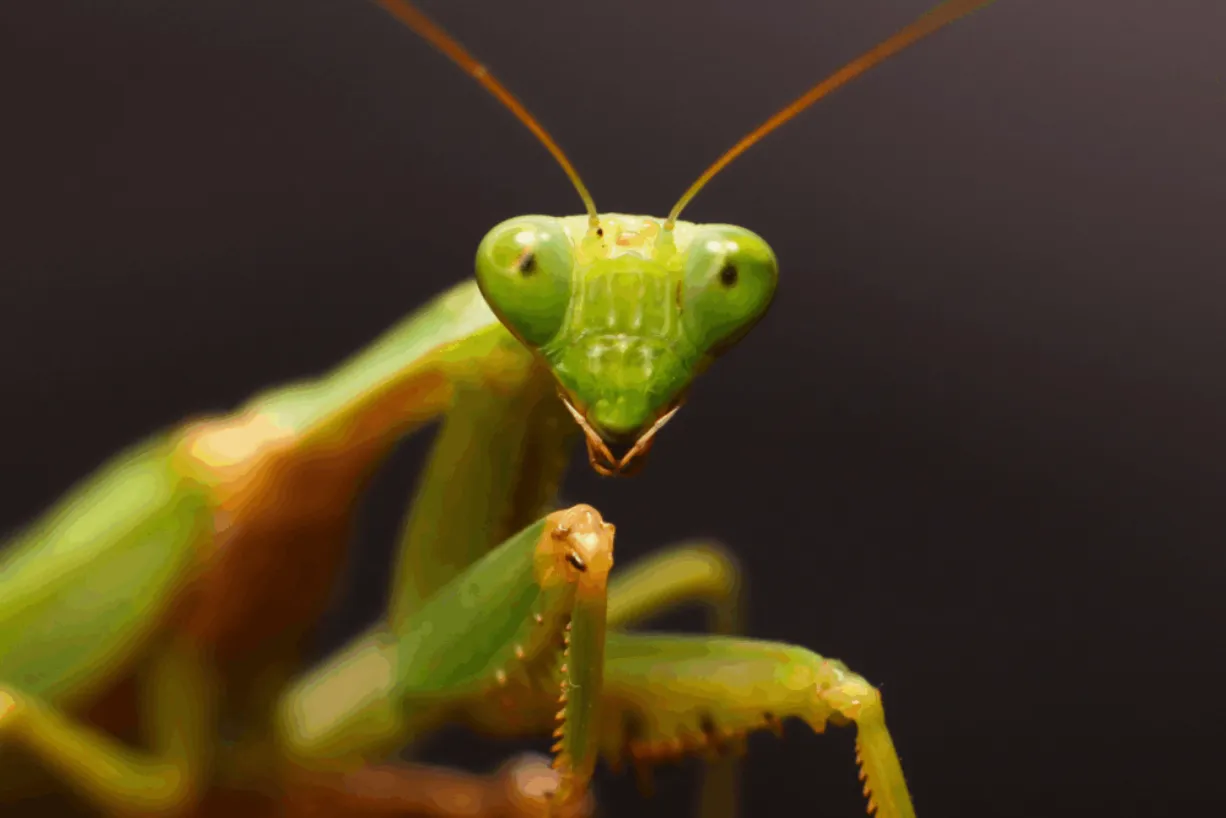
The praying mantis’ life cycle is one of the most fascinating biological processes found in the insect world. Known for their distinctive posture that resembles prayer, praying mantises are remarkable predators that play an important role in maintaining ecological balance. Their triangular heads, large compound eyes, and powerful forelegs make them one of the most efficient insect hunters in nature.
Praying mantises belong to the order Mantodea and can be found in many parts of the world, especially in tropical and subtropical environments. These insects are famous not only for their hunting ability but also for their unusual reproductive behavior and intriguing developmental stages. From tiny praying mantis eggs to fully grown predators, their transformation is a perfect example of incomplete metamorphosis.
Many people wonder about various aspects of mantises, such as what they eat, whether they bite, and how baby mantises survive in the wild. These questions highlight the curiosity surrounding these insects and their unique adaptations.
One particularly striking species is the orchid praying Mantis, which mimics flowers to ambush prey. This incredible camouflage demonstrates how evolution has shaped mantises to become master hunters.
Understanding the praying mantis’ life cycle helps scientists and nature enthusiasts appreciate their ecological importance. These insects act as natural pest controllers, feeding on harmful insects that damage crops and plants.
In this comprehensive article, we will explore the evolution, scientific history, life cycle, reproductive behavior, and ecological importance of praying mantises. You will also learn how humans can protect them and why preserving their habitats is essential for maintaining healthy ecosystems.
Their Evolution And Their Origin
The evolutionary history of the praying Mantis stretches back millions of years, making them one of the most ancient groups of predatory insects on Earth. Fossil records suggest that mantises first appeared during the Cretaceous period, approximately 135 million years ago.
Scientists believe mantises evolved from cockroach-like ancestors. Over time, they developed specialized adaptations that allowed them to become efficient ambush predators.
Ancient Origins
Early mantis fossils discovered in amber show primitive forms that already possessed raptorial forelegs used for capturing prey. These early mantises looked similar to modern species but lacked some advanced hunting features.
During their evolution, mantises developed several unique characteristics:
- Rotating triangular heads that allow a wide field of vision
- Large compound eyes for detecting movement
- Powerful forelegs designed for grasping prey quickly
These features allowed them to become dominant insect predators in many ecosystems.
Evolutionary Adaptations
Over millions of years, praying mantises diversified into more than 2,400 species worldwide. Different species evolved specialized camouflage and hunting techniques suited to their environments.
For example:
- Leaf mantises resemble leaves to hide among foliage
- Flower mantises, such as the orchid mantis, mimic blossoms to attract prey
- Stick mantises blend into branches and twigs
These adaptations helped mantises survive environmental changes and predators.
Global Distribution
Mantises are now found on almost every continent except Antarctica. Their highest diversity occurs in tropical forests, grasslands, and warm climates.
Human activity has also helped spread mantises to new regions. In some countries, certain mantis species were introduced to control agricultural pests.
Evolutionary Success
The evolutionary success of mantises comes from three key survival traits:
- Exceptional camouflage
- Lightning-fast predatory strikes
- Highly adaptable reproductive strategies
These characteristics allowed mantises to survive for millions of years with relatively little change in their overall body structure.
Today, scientists continue studying mantis evolution to understand insect adaptation and predator-prey relationships in ecosystems.
The History of Their Scientific Naming
The scientific classification of the praying Mantis has an interesting history that reflects centuries of biological research.
Here are key points in the history of their scientific naming:
1. Early Observations
Early naturalists observed mantises long before modern scientific classification existed. Their unique posture inspired the name “praying mantis.”
The word Mantis comes from the Greek “mantikos,” meaning “prophet” or “seer,” because the insect appears to be in a prayer-like pose.
2. Linnaean Classification
In the 18th century, Swedish scientist Carl Linnaeus, the father of modern taxonomy, formally classified many mantis species.
He placed them under the genus Mantis within the insect class Insecta.
3. Creation of the Order Mantodea
Later scientific research led to the creation of the insect order Mantodea, which includes all mantis species.
This order distinguishes mantises from similar insects such as grasshoppers or cockroaches.
4. Expansion of Species Identification
As entomologists explored different parts of the world, hundreds of new mantis species were discovered.
Each species was given a unique scientific name using binomial nomenclature, a system that includes a genus and a species name.
5. Modern Genetic Research
Today, scientists use DNA analysis and molecular biology to study mantis relationships.
These modern techniques help researchers better understand how mantis species evolved and how they are related to each other.
Important Things That You Need To Know
Before exploring the praying mantis life cycle in detail, it is helpful to understand some key facts about mantises that many people search online.
Praying mantis meaning
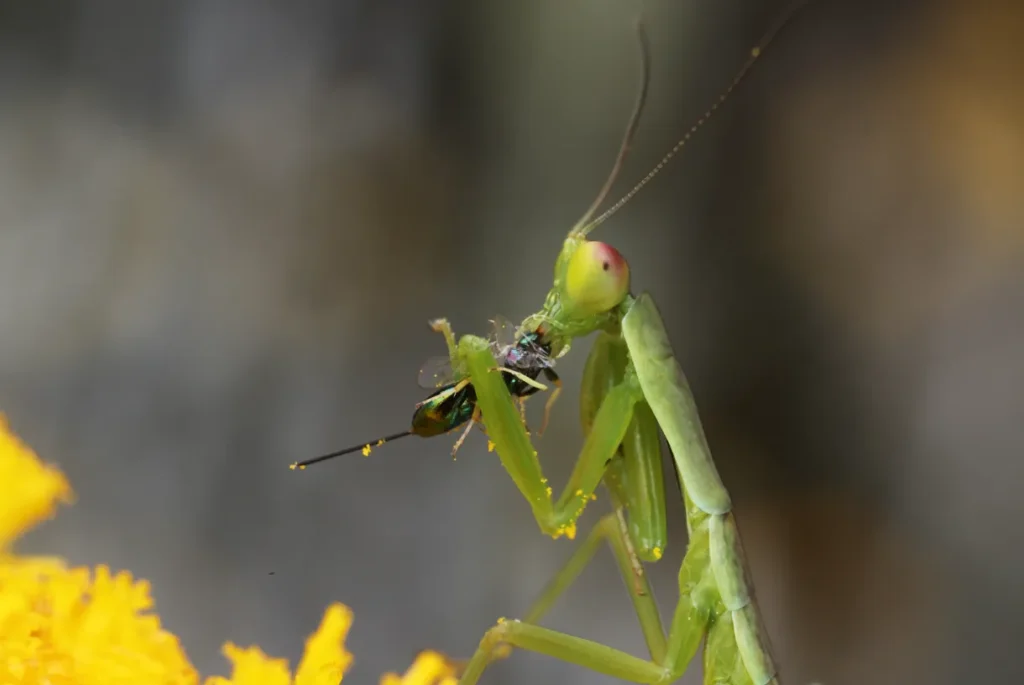
The term praying Mantis refers to the insect’s distinctive posture, in which its front legs are folded together as if in prayer. This posture actually helps them prepare to capture prey.
Praying mantis eggs
Female mantises lay their eggs in a protective case called an ootheca. This foamy structure hardens and protects dozens or even hundreds of eggs during winter or harsh conditions.
What do praying mantises eat
Mantises are carnivorous insects. Their diet includes:
- Flies
- Beetles
- Crickets
- Grasshoppers
- Small spiders
In rare cases, larger mantises may even eat small frogs or lizards.
Do praying mantis bite
Many people ask whether mantises are dangerous. The answer is yes, they can bite, but it is extremely rare. A praying mantis’s bite is usually harmless to humans and occurs only when they feel threatened.
Baby praying Mantis
Newly hatched mantises are called nymphs or baby praying mantises. They look like miniature adults and begin hunting small insects almost immediately after hatching.
Learning these facts helps people better understand the fascinating behavior and biology of these unique insects.
Their life cycle and ability to survive in nature
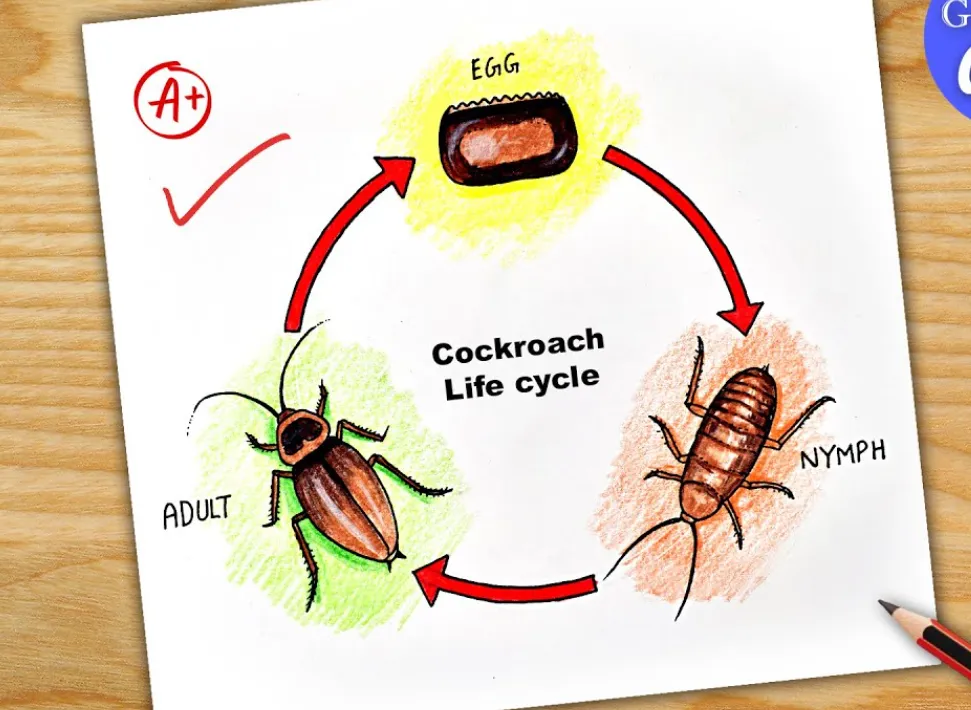
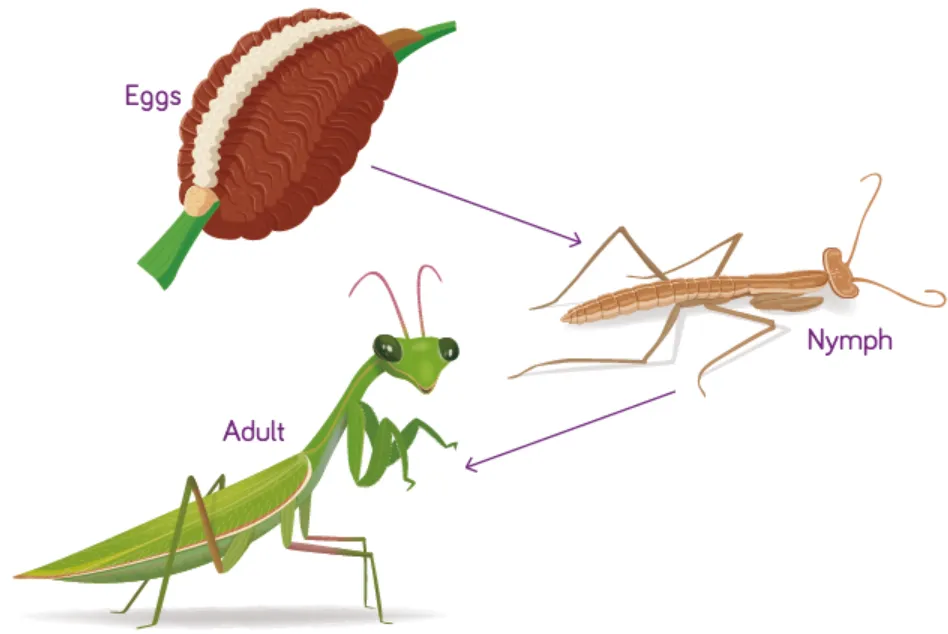
The praying mantis’ life cycle consists of three main stages. Unlike butterflies, mantises undergo incomplete metamorphosis, meaning they do not have a pupal stage.
1. Egg Stage
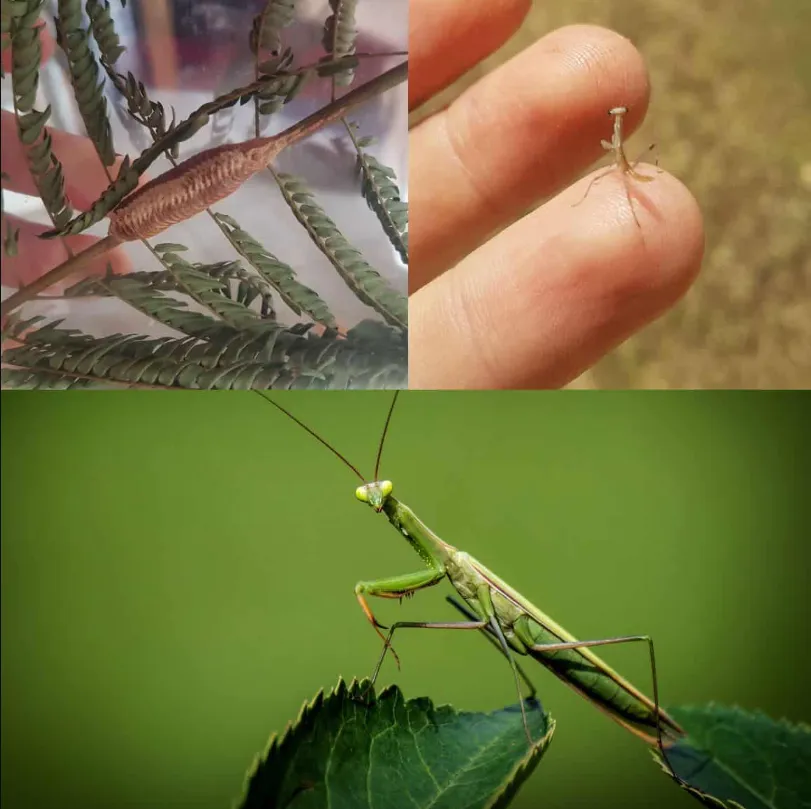
The life cycle begins when female mantises lay eggs in a foamy structure known as an ootheca.
Key features of this stage:
- Each egg case may contain 50–200 eggs
- The ootheca protects eggs from predators and weather
- Eggs typically hatch in spring
This stage ensures that the next generation survives through winter.
2. Nymph Stage
When the eggs hatch, tiny mantises called nymphs emerge.
Important characteristics:
- Nymphs resemble small adult mantises
- They immediately begin hunting tiny insects
- They grow by shedding their exoskeleton through a process called molting
During this stage, mantises molt multiple times as they grow larger.
3. Adult Stage
After several molts, mantises become fully developed adults.
Adult mantises:
- Have fully developed wings (in many species)
- Become efficient predators
- Begin searching for mates
The entire life cycle usually lasts one year, although this may vary depending on climate and species.
Mantises survive in nature because of their excellent camouflage, speed, and ability to hunt a wide variety of insects.
Their Reproductive Process and raising their children
The reproductive behavior of praying mantises is one of the most fascinating aspects of their biology.
Here are the main stages of their reproductive process:
1. Courtship Behavior
Male mantises approach females carefully to avoid being mistaken for prey.
They often perform slow movements and special behaviors to signal that they are potential mates.
2. Mating Process
During mating, the male climbs onto the female’s back.
In some cases, females may eat the male during or after mating. This behavior is known as sexual cannibalism.
Although dramatic, it does not occur in every mating event.
3. Egg Laying
After mating, the female produces a protective egg case called an ootheca.
Key facts about this stage:
- Each ootheca can hold dozens or hundreds of eggs
- The foamy material hardens to protect the eggs
- Females may produce several oothecae in their lifetime
4. Early Survival of Nymphs
When baby praying mantises hatch, they must immediately fend for themselves.
There is no parental care after egg laying.
Young mantises survive by:
- Hunting small insects
- Avoiding predators
- Molting to grow larger
Despite the lack of parental care, mantises exhibit high reproductive output, ensuring that some individuals survive to adulthood.
The importance of them in the ecosystem
Praying mantises play a crucial role in maintaining ecological balance.
Here are several ways they benefit ecosystems:
1. Natural Pest Control
Mantises consume many insects that damage crops.
Farmers often appreciate mantises because they reduce pest populations naturally without chemicals.
2. Biodiversity Support
Mantises are part of complex food webs.
They act both as predators and prey for animals such as:
- Birds
- Bats
- Reptiles
3. Maintaining Population Balance
By eating many types of insects, mantises help regulate insect populations.
This prevents certain species from becoming overly dominant.
4. Indicator of Environmental Health
Healthy mantis populations often indicate a balanced ecosystem.
A decline in mantises may signal environmental problems such as pesticide overuse.
5. Scientific Research Value
Scientists study mantises to understand:
- Predator-prey interactions
- Camouflage and mimicry
- Evolutionary adaptations
These studies help expand our knowledge of insect biology and ecology.
What to do to protect them in nature and save the system for the future
Protecting praying mantises is important for maintaining healthy ecosystems.
Here are practical steps to help protect them:
- Reduce pesticide use in gardens and farms to prevent accidental killing of mantises.
- Plant diverse vegetation to provide habitat and shelter for mantises and other beneficial insects.
- Avoid destroying egg cases (oothecae) during winter when mantises are developing inside them.
- Encourage natural gardening practices that support biodiversity.
- Educate people about beneficial insects so mantises are not mistaken for pests.
- Protect forests and grasslands where mantises naturally live.
- Support conservation programs that preserve insect habitats.
- Create insect-friendly gardens with flowers, shrubs, and natural hiding spots.
These simple actions can help protect mantises and the ecological balance they support.
Frequently Asked Questions (FAQs)
1. How long does a praying mantis live?
Most praying mantises live about 10–12 months, completing their life cycle within a year.
2. Are praying mantises dangerous to humans?
No. Although they can bite, a praying mantis’ bite is rare and harmless to humans.
3. What do praying mantises eat?
Mantises eat many insects, including flies, crickets, beetles, and grasshoppers.
4. What is an orchid praying Mantis?
The orchid praying Mantis mimics orchid flowers to attract and capture prey.
5. How many eggs does a praying mantis lay?
A female mantis can lay 50–200 eggs in a single egg case.
6. Do baby mantises look like adults?
Yes. Baby praying mantises resemble miniature versions of adults but lack wings.
7. Can praying mantises fly?
Many adult mantis species can fly, especially males, although some species rarely use their wings.
8. Why do female mantises sometimes eat the male?
This behavior, called sexual cannibalism, may provide extra nutrients for egg production.
Conclusion
The praying mantis life cycle is a remarkable example of nature’s complexity and adaptation. From tiny eggs hidden inside protective oothecae to powerful adult predators, mantises demonstrate extraordinary survival strategies that have evolved over millions of years.
Their life cycle includes three main stages: egg, nymph, and adult. Each stage plays a crucial role in ensuring the continuation of the species. The egg stage protects harsh conditions, the nymph stage allows rapid growth and development, and the adult stage focuses on reproduction and maintaining ecological balance.
Beyond their fascinating biology, mantises are extremely important for ecosystems. They help control pest populations, support biodiversity, and contribute to natural food chains. Farmers and gardeners often benefit from their presence because they naturally reduce the population of harmful insects.
Understanding mantises also highlights the importance of protecting insect habitats. Activities such as excessive pesticide use, habitat destruction, and climate change can threaten mantis populations and disrupt ecosystems.
By adopting environmentally friendly practices and spreading awareness about the benefits of beneficial insects, humans can help protect these incredible predators.
Whether observing a baby praying Mantis, discovering a mantis egg case in the garden, or watching an adult mantis hunt, these insects remind us of the incredible diversity of life on Earth.
Protecting mantises ultimately means protecting the delicate balance of nature that supports all living organisms.