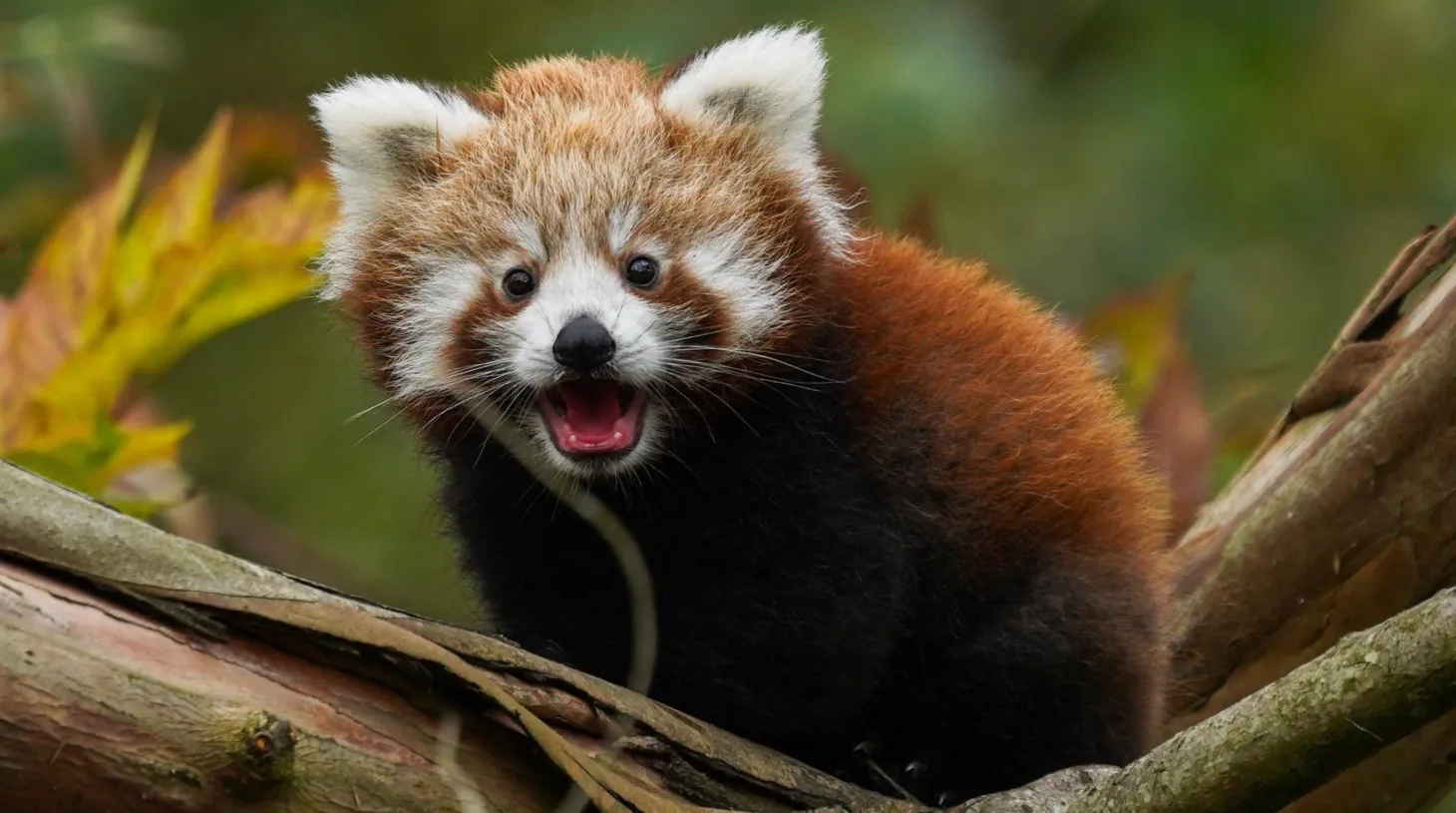
The red panda life cycle is one of the most fascinating stories in the Himalayan forests. A red panda begins life as a tiny, blind, fully furred cub hidden inside a tree hollow, rock crevice, or safe nesting space. With patient care from its mother, the cub slowly grows into an agile, tree-climbing animal that can survive cold mountain forests, steep slopes, and bamboo-rich habitats.
The red panda is scientifically known as Ailurus fulgens. It is not a small version of the giant panda. Instead, it belongs to its own family, Ailuridae, and is more closely linked to the broader musteloid group than to bears. Red pandas live mainly in high-altitude temperate forests across Nepal, India, Bhutan, Myanmar, China, and Tibet, where bamboo is a key part of their survival. Smithsonian notes that bamboo makes up about 95% of their diet, especially nutritious leaf tips and tender shoots.
Today, red pandas are listed as Endangered, with WWF estimating their current population at about 10,000 individuals. Their biggest threats include habitat loss, bamboo decline, poaching, traps, forest fragmentation, and human pressure.
Quick Answers: Most Common Questions
Q: What is the red panda’s life cycle?
A: The red panda life cycle starts with birth as a blind cub, followed by nursing, nest life, first exploration, juvenile growth, sexual maturity at around 18 months, adulthood, breeding, and eventually aging.
Q: How long do red pandas live?
A: In the wild, red pandas commonly live around 8 to 10 years, while some may live longer in protected or managed care environments.
Q: What does a baby red panda eat?
A: A baby red panda first depends on its mother’s milk. Later, it gradually learns to eat bamboo leaves, tender shoots, fruits, and small seasonal foods.
Quick Life Cycle Table
| Life Stage | Age Range | Key Changes |
| Newborn cub | Birth to 1 month | Blind, helpless, fully dependent on mother |
| Nesting cub | 1 to 3 months | Stays hidden, nurses, grows stronger |
| Exploring cub | Around 3 months | Begins leaving nest at night |
| Juvenile | 4 to 12 months | Learns climbing, feeding, and survival skills |
| Young adult | 12 to 18 months | Reaches adult size and becomes sexually mature |
| Adult | 18 months onward | Solitary life, territory marking, breeding |
| Older adult | 8+ years in the wild | Lower energy, survival depends on food and habitat quality |
Important Things That You Need To Know
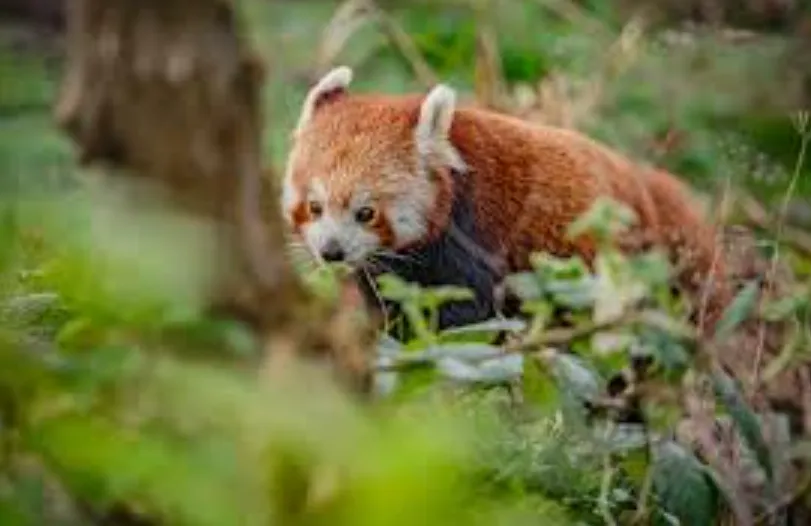
Before studying the full red panda life cycle, it helps to understand the search terms people commonly use around this animal. Many readers look for red panda facts because the species is unusual: it looks like a mix of a fox, raccoon, and small bear, but it is not truly any of them. Its scientific identity is unique, and modern classification places it in its own family, Ailuridae.
People also search for red panda habitat because habitat decides almost everything in a red panda’s life. These animals need cool, moist, high-altitude forests with thick bamboo understories. Red Panda Network describes their habitat as temperate broadleaf forests at elevations of about 2,400 to 3,900 meters.
The phrase baby red panda is popular because cubs are extremely small, soft, and dependent on their mother. However, their cuteness should not hide the serious conservation problem. A cub cannot survive if the mother cannot find safe nesting trees, bamboo, and quiet forest cover.
Search terms such as red panda drawing, cute red panda, and red panda Disney are often driven by art, animation, and pop culture interests. These can help children and young audiences learn about wildlife, but real red pandas are endangered wild animals, not pets.
The term “red panda performer” often refers to a human acrobat using the stage name “Red Panda,” not to the animal. The term red panda injury may refer either to wild red pandas injured by traps, dogs, or habitat disturbance, or to news about that performer. This article focuses on the real animal.
The History of Their Scientific Naming
The scientific naming history of the red panda is important because this animal confused scientists for many years.
- The red panda was formally described in 1825 by French zoologist Frédéric Cuvier.
- Its scientific name became Ailurus fulgens. The word Ailurus is linked to the Greek word for “cat,” while fulgens means shining, bright, or fire-colored.
- The red panda was described before the giant panda, which is why many conservationists call it the original panda or first panda. Red Panda Network notes that western scientists described the red panda about 50 years before the giant panda.
- For many years, scientists debated whether the red panda belonged with raccoons, bears, or another group.
- Modern research places it in its own family, Ailuridae, within the broader Musteloidea superfamily.
- Two major forms are commonly recognized: Ailurus fulgens fulgens, found mainly in the western part of the range, and Ailurus fulgens styani, found more toward China and Myanmar.
This naming history shows that the red panda is not just a beautiful animal; it is also a biologically unique species with a deep evolutionary identity.
Their Evolution And Their Origin
The red panda has an ancient evolutionary story. Although it shares the name “panda” with the giant panda, the two animals are not close relatives. Their similarity comes mostly from diet and adaptation, especially their shared dependence on bamboo.
One of the most interesting examples of this is the false thumb. Both red pandas and giant pandas have an enlarged wrist bone that helps them grip bamboo. However, Red Panda Network explains that this feature is an example of convergent evolution: two unrelated animals developed similar tools because they faced similar environmental challenges.
The red panda’s ancestors were more carnivorous than today’s bamboo-eating red pandas. Over time, the modern red panda became highly specialized for life in mountain forests. Its sharp claws, flexible ankles, strong tail, and climbing ability helped it survive in trees. Its red-brown fur also works as camouflage among reddish moss, tree bark, and forest shadows.
The origin of today’s red panda is closely tied to the Himalayan and nearby mountain regions of Asia. Its current range includes Nepal, India, Bhutan, Myanmar, China, and Tibet. Smithsonian describes red pandas as animals of high-altitude temperate forests with bamboo understories.
Evolution shaped the red panda into an energy-saving specialist. Bamboo is widely available in its habitat, but it is not very energy-rich. Because of this, red pandas spend much of their day resting, climbing carefully, feeding selectively, and avoiding unnecessary movement.
Their origin is not only biological but also ecological. The red panda evolved alongside forests, bamboo, a cold climate, and tree canopies. If these forests disappear, the evolutionary success of this rare animal becomes a matter of survival.
Their main food and its collection process
The main food of the red panda is bamboo. Although red pandas belong to the order Carnivora, their daily diet is mostly plant-based. Smithsonian reports that bamboo makes up about 95% of their diet, especially leaf tips and tender shoots.
Red pandas are selective feeders. They do not eat every part of the bamboo plant. They usually prefer the most nutritious parts because their digestive systems are less efficient than those of true herbivores.
Key foods include:
- Bamboo leaves: The most important year-round food.
- Tender bamboo shoots: Highly preferred when available because they are softer and more nutritious.
- Fruits and berries: Seasonal supplements that provide extra energy.
- Roots and grasses: Occasional foods when bamboo quality changes.
- Insects and grubs: Small protein sources are sometimes eaten.
- Bird eggs or tiny animals: Rarely eaten, but possible in the wild.
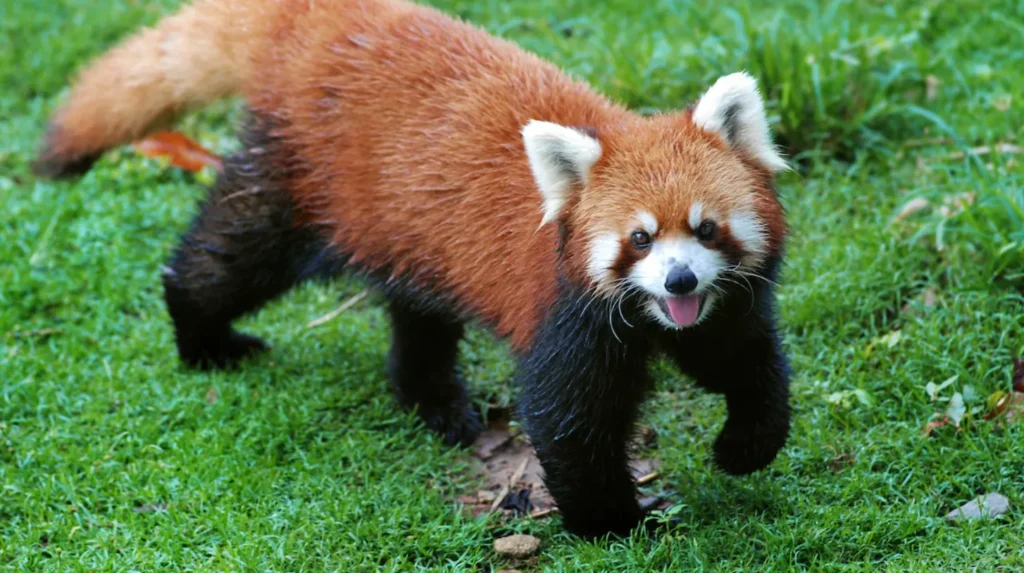
The collection process is simple but skillful. A red panda uses its forepaws and false thumb to pull bamboo stems toward its mouth. Then it strips leaves using its teeth. It may sit upright while feeding, almost like a small bear or raccoon.
Because bamboo is low in calories, red pandas must feed carefully and conserve energy. They often move slowly through trees and forest edges, choosing food patches where bamboo is dense and safe. In winter, when food quality drops, survival becomes harder. That is why healthy bamboo forests are essential to every stage of the red panda life cycle.
Their life cycle and ability to survive in nature
Birth and early nest life
The red panda life cycle begins when the mother gives birth in a protected nest. In the wild, this may be a hollow tree, a rock crevice, or a hidden forest space. Cubs are born small, blind, and fully dependent on their mother.
Animal Diversity Web notes that red panda litters usually range from 1 to 4 young, with an average of 2, and that newborns remain highly dependent during early life.
Growth and learning
For the first few months, the cub stays close to the nest. The mother nurses, cleans, warms, and protects it. After around 90 days, young red pandas may begin leaving the nest, usually at night.
At this stage, the cub learns to climb, balance, recognize scents, and feed. These skills are essential because adult red pandas live mostly in trees and rely on forest cover for safety.
Adult survival in the wild
Adult red pandas are mostly solitary. They use scent marking to communicate and define their space. Their survival depends on three major abilities: climbing, hiding, and saving energy.
They use trees to escape predators, rest safely, and move through the forest. Their long bushy tail helps with balance and warmth. Their thick fur protects them from cold mountain weather.
However, survival is becoming harder because forests are being cleared, bamboo is being lost, and habitat patches are becoming separated. WWF reports that loss of nesting trees and bamboo is causing population declines across much of their range.
Their Reproductive Process and raising their children
The reproductive process of the red panda is seasonal and closely connected to climate, food, and daylight.
- Red pandas usually breed once per year.
- Mating commonly occurs in winter or early spring.
- Both males and females may mate with more than one partner in a season.
- The gestation period is around 134 days, according to Animal Diversity Web.
- Births usually happen in spring or summer, when forest conditions are better for raising cubs.
Before giving birth, the female prepares a nest. She collects leaves, grass, twigs, and other soft materials. The nest must be hidden and warm because newborn cubs are vulnerable.
After birth, the mother plays almost the entire parenting role. Males have little or no role in raising cubs. The mother stays close during the first days, then gradually leaves the nest for short feeding trips.
Animal Diversity Web notes that young red pandas remain nest-bound for around 90 days and first explore outside the nest at night. The mother continues to nurse, groom, and protect them as they grow.
Young red pandas reach adult size at around 12 months and sexual maturity at around 18 months.
This slow and careful raising process means each cub is important. If a mother loses her nesting tree or cannot find enough bamboo, the next generation is directly at risk.
The importance of them in this Ecosystem
Red pandas as an umbrella species
The red panda is important because protecting it also protects many other species. Red Panda Network describes the red panda as an umbrella species for the Eastern Himalayan broadleaf ecosystem. This means that when conservationists protect red panda habitat, they also protect forests used by many birds, mammals, insects, plants, and bamboo species.
Forest health indicator
Red pandas depend on healthy bamboo, mature trees, quiet forest zones, and connected habitat. If red pandas disappear from an area, it may signal that the forest is becoming degraded.
Their presence indicates that the Ecosystem still has sufficient bamboo, nesting trees, canopy cover, and low disturbance. In this way, red pandas serve as a warning light for the health of mountain forests.
Role in biodiversity protection
Red panda habitats are part of some of the most biodiverse mountain regions on Earth. These forests support animals such as Himalayan black bears, leopards, and pangolins, as well as birds, insects, and many plant species. Red Panda Network notes that red panda conservation helps protect the broader ecological community.
Cultural and educational value
Red pandas also have strong educational value. Their appearance attracts attention, especially from children and wildlife lovers. That attention can be used to teach people about endangered species, forest protection, climate change, and responsible tourism.
The red panda is not only a cute animal. It is a symbol of fragile mountain ecosystems.
What to do to protect them in nature and save the system for the future
Protecting red pandas means protecting forests, bamboo, local communities, and future biodiversity. Since their population is already endangered, conservation must be practical and long-term.
- Protect bamboo forests: Red pandas cannot survive without a habitat rich in bamboo. Forest clearing should be reduced in key red panda zones.
- Save nesting trees: Old trees with hollows are essential for mothers raising cubs.
- Stop illegal hunting and trade: Poaching for fur, pelts, or live animals must be strictly controlled.
- Remove traps and snares: WWF notes that red pandas are often killed in traps meant for other animals.
- Control free-ranging dogs: Dogs can attack red pandas, spread disease, or disturb mothers with cubs.
- Support local communities: Conservation works best when nearby people benefit from protecting forests.
- Promote eco-friendly tourism: Responsible tourism can create income without destroying habitat.
- Restore forest corridors: Connected forests help red pandas move, breed, and maintain healthy populations.
- Reduce firewood pressure: Alternative fuel sources can reduce the need for tree cutting in mountain communities.
- Support scientific monitoring: Camera traps, field surveys, and habitat studies help conservationists understand population trends.
- Educate children and communities: Awareness can reduce hunting, forest damage, and accidental harm.
- Choose conservation-based donations: Supporting trusted red panda conservation programs can help protect habitat and fund local forest guardians.
The future of red pandas depends on forest protection. Saving them is not only about one animal; it is about saving an entire mountain ecosystem.
Frequently Asked Questions (FAQs)
Q1: What is the red panda’s life cycle?
A: The red panda life cycle includes birth, nest life, cub growth, first exploration, juvenile learning, young adulthood, breeding, and older adulthood. Cubs are born helpless and gradually learn climbing, feeding, and survival skills from their mother.
Q2: Where do red pandas live?
A: Red pandas live in high-altitude forests across Nepal, India, Bhutan, Myanmar, China, and Tibet. They prefer temperate forests with bamboo understories and strong tree cover.
Q3: What does a red panda eat?
A: A red panda mainly eats bamboo leaves and tender shoots. It may also eat fruits, berries, grasses, roots, insects, grubs, and occasionally small animals. Bamboo forms most of its diet.
Q4: Is a red panda related to a giant panda?
A: No, not closely. Red pandas and giant pandas both eat bamboo and have a false thumb, but they belong to different biological families. Red pandas belong to Ailuridae.
Q5: How long is a red panda pregnant?
A: The red panda gestation period is around 134 days. After that, the female usually gives birth to one to four cubs.
Q6: How many babies does a red panda have?
A: A red panda usually gives birth to one to four cubs, with two being common. The mother raises the cubs alone and protects them in a hidden nest.
Q7: Why are red pandas endangered?
A: Red pandas are endangered because of habitat loss, bamboo decline, forest fragmentation, poaching, accidental trapping, and human disturbance. WWF estimates its population at about 10,000.
Q8: Can red pandas be pets?
A: No. Red pandas are wild, endangered animals. They need specialized forest habitat, bamboo diets, and legal protection. Keeping them as pets is harmful and illegal in many places.
Conclusion
The red panda life cycle is a delicate journey from a blind newborn cub to a skilled tree-climbing adult. Every stage depends on safe nesting spaces, healthy bamboo, quiet forests, and strong maternal care. Red pandas are beautiful, but their importance goes far beyond appearance. They are a unique species with a special scientific history, ancient evolutionary roots, and a powerful role in protecting Himalayan biodiversity.
Their future is now under pressure. Habitat loss, forest fragmentation, poaching, traps, and bamboo decline continue to threaten their survival. Because red pandas are an umbrella species, protecting them also helps protect many other plants and animals that share their Ecosystem.
The best way forward is clear: protect forests, restore habitat, support local communities, stop illegal wildlife trade, and educate people about conservation. If these actions continue, the red panda can remain a living symbol of healthy mountain forests for future generations.
Also Read: life cycle penguins